
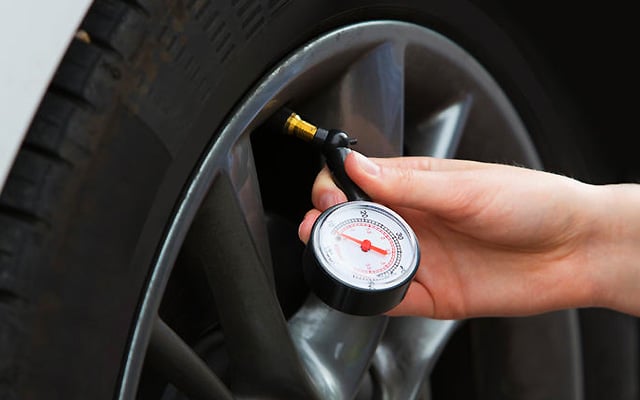
Tyre pressure is one of the simplest checks you can do, but it has a big effect on grip, fuel use and tyre wear. For UK drivers, the key is to check tyres when they are cold, use the manufacturer’s recommended pressure and inspect for damage at the same time.
Key Points
- Check tyre pressure when the tyres are cold.
- Use the pressure recommended by the vehicle manufacturer.
- Inspect tread depth, sidewalls and visible damage at the same time.
- Check the spare tyre if the car has one.
- Avoid overloading the vehicle, especially for holidays.
- Recheck pressure regularly, not just before long trips.
Why Tyre Pressure Matters
Correct tyre pressure helps the car steer properly, brake more effectively and use fuel more efficiently. Under-inflated tyres can overheat and wear faster, while over-inflated tyres can reduce comfort and worsen wear in the centre of the tread.
It also matters more in hot weather and on long journeys. Heat, speed and heavy loads all add stress, so a tyre that is already slightly wrong can become more of a problem once the car is fully loaded and running for longer.
How To Check It
The best time to check tyre pressure is when the tyres are cold, ideally before driving or after the car has been parked for several hours. Use the pressure figure specified by the manufacturer, which is usually shown in the handbook, on a door sticker or near the fuel flap.
Remove the valve cap, press the gauge firmly onto the valve and read the number. If you need to add air, do it in small amounts and recheck until the pressure matches the recommended level.
What Else To Inspect
Tyre pressure alone is not enough. While you are checking pressure, look for cuts, bulges, cracking, uneven wear and anything trapped in the tread.
The legal minimum tread depth in the UK is 1.6 mm, but a deeper tread is usually safer in wet conditions. If the spare tyre is usable, it should be checked too, because it is easy to forget until the day you actually need it.
Summer And Holiday Driving
Hot roads and heavier holiday loads can put extra strain on tyres. That is one reason tyre checks are especially important before a long trip, particularly if the car is carrying passengers, luggage or roof-box weight.
In my experience, many drivers notice tyre issues only when the car is loaded up for a journey and the handling feels slightly different. A quick pressure check before departure is one of the easiest ways to avoid that surprise.
When should I check tyre pressure?
Check it when the tyres are cold, preferably before driving or after the car has been parked for several hours.
How often should I do it?
A monthly check is sensible, and it is also worth checking before long trips.
Where do I find the correct pressure?
Look in the vehicle handbook, on the door jamb sticker or near the fuel flap.
Should I check the spare tyre too?
Yes, if the vehicle has a spare. It is often overlooked, but it can be essential in an emergency.
Is the legal tread depth enough?
The legal minimum is 1.6 mm, but more tread is generally better for wet-weather grip.
Can hot weather change tyre pressure?
Yes. Heat can affect pressure, which is why checking tyres when they are cold is important.
What if one tyre keeps losing pressure?
That can suggest a puncture, damaged valve or slow leak, and it should be checked properly.
Conclusion
Tyre pressure is a small task that makes a real difference to safety, comfort and running costs. The best habit is simple: check it cold, use the manufacturer’s figure and inspect the tyres properly rather than treating pressure as a quick glance.





