
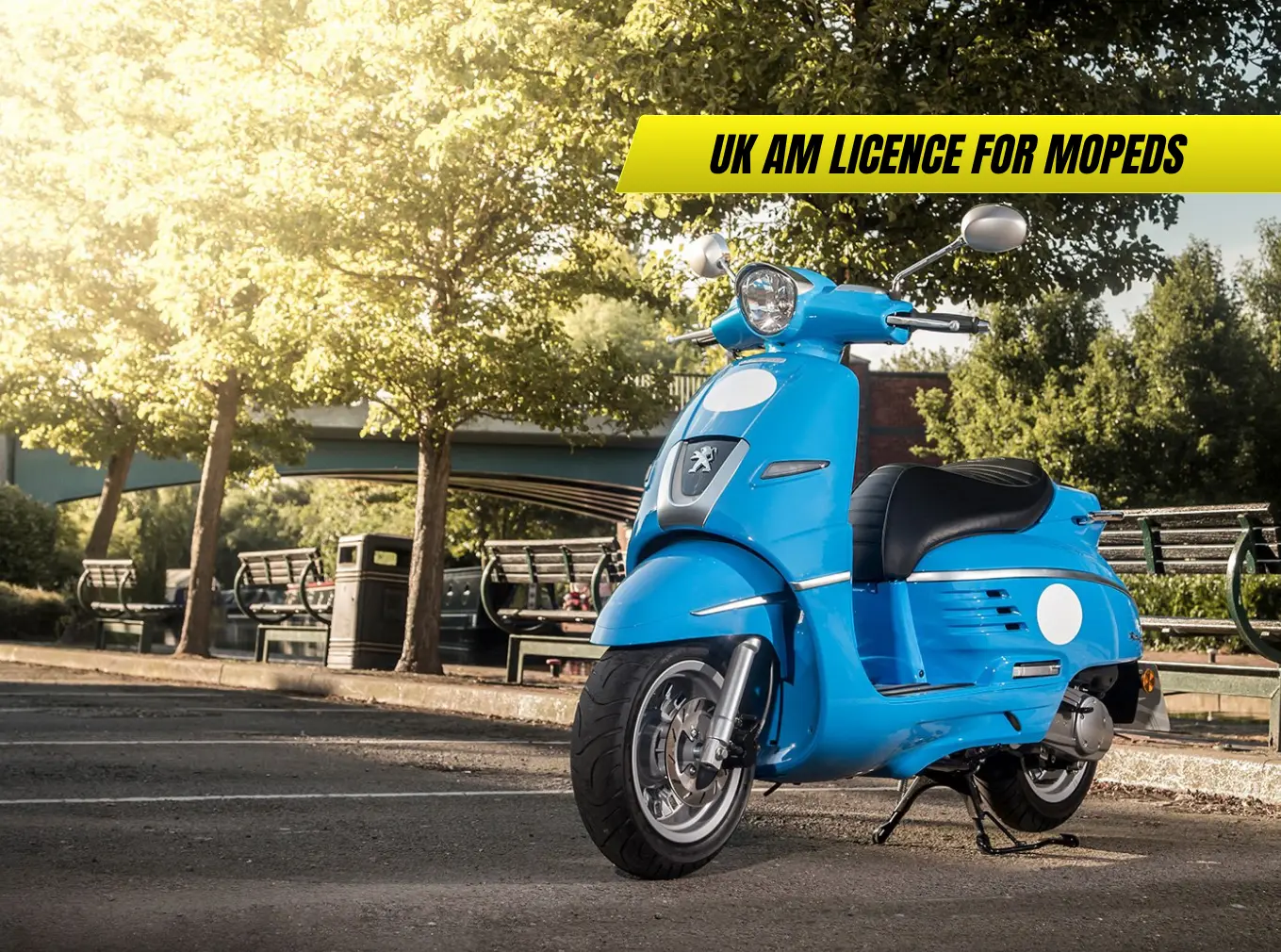
Complete UK AM licence guide for mopeds and light vehicles. Age requirements, DVLA tests, documents needed, and costs for 2025 moped licensing.
The UK AM licence category provides the entry point into powered two-wheeler transport, covering mopeds and light quadricycles for riders from age 16. This foundational licence category offers independence and practical transport solutions whilst requiring appropriate training and assessment to ensure road safety. In my experience, the AM licence represents an excellent introduction to powered vehicle operation that develops essential road skills and safety awareness for young riders.
Key Highlights: UK AM Licence Category
• Minimum age requirement: 16 years for moped access with appropriate training • Vehicle coverage: Mopeds up to 50cc and 45km/h, plus light quadricycles • Training requirement: Compulsory Basic Training (CBT) before road use • Theory test: Required for full AM licence entitlement • Practical test: Two-part assessment covering vehicle control and road riding • Helmet requirement: Legal obligation for all moped and motorcycle operation
Understanding AM Licence Category
The AM licence category in the UK covers light two-wheeled vehicles and quadricycles that provide accessible powered transport for younger riders whilst maintaining appropriate safety standards. This category serves as both standalone transport solution and stepping stone to higher motorcycle categories.
The licence covers mopeds with automatic or manual transmission, electric equivalents, and light quadricycles within specific technical parameters. Understanding these limitations ensures legal operation whilst maximizing transport utility within category constraints. For broader motorcycle licensing context, our guide on spanner warning lightsprovides essential vehicle maintenance information.
Vehicle Categories and Specifications
Moped Technical Requirements
Moped specifications under AM licence category include specific limitations on engine capacity, power output, and maximum speed that define legal operation parameters and safety considerations.
AM Category Moped Specifications:
- Maximum engine capacity: 50cc (internal combustion)
- Maximum power: 4kW (5.4hp) for electric mopeds
- Maximum design speed: 45 km/h (28 mph)
- Minimum age for operation: 16 years
- Two wheels with automatic or manual transmission
Electric Moped Equivalents:
- Power limited to 4kW continuous rating
- Speed limitation to 45 km/h maximum
- Battery and motor specifications must comply
- Registration and licensing identical to petrol mopeds
The technical specifications ensure mopeds remain within appropriate performance parameters for young or inexperienced riders whilst providing practical urban transport capabilities.
Light Quadricycles (L6e)
Light quadricycles also fall within AM licence category, though their practical availability and popularity in the UK remains limited compared to moped options.
L6e Quadricycle Specifications:
- Maximum weight: 425kg (excluding batteries)
- Maximum power: 4kW (5.4hp) for internal combustion
- Maximum power: 6kW (8hp) for electric vehicles
- Maximum speed: 45 km/h (28 mph)
- Two seats maximum including driver
These vehicles provide weather protection and cargo capacity advantages over mopeds whilst remaining within AM licence parameters.
Age Requirements and Eligibility
Minimum Age and Restrictions
AM licence eligibility begins at age 16, making it the earliest powered vehicle access available to UK residents. This early access recognizes moped utility for education, employment, and independence whilst maintaining appropriate safety oversight.
Age-Related Requirements:
- Minimum age: 16 years for moped operation
- Provisional entitlement available from 15 years 9 months
- CBT completion required before road use
- Adult supervision required during training phases
- Helmet wearing mandatory at all times
Eligibility Criteria:
- UK residence or legal entitlement to drive
- Medical fitness for powered vehicle operation
- No disqualifying medical or legal conditions
- Parental consent for applicants under 18 years
- Payment of appropriate DVLA fees
The age requirement reflects the balance between transport needs and safety considerations for younger riders entering powered vehicle operation.
Medical and Physical Requirements
Medical standards for AM licence follow Group 1 requirements adapted for the specific risks and responsibilities of moped operation, ensuring riders can operate vehicles safely.
Medical Requirements:
- Adequate vision for safe riding (corrective lenses permitted)
- Physical coordination for vehicle control
- Mental capability for traffic integration
- No conditions affecting safe operation
- Declaration of relevant medical conditions
Eyesight Standards:
- Ability to read number plate at 20 metres
- Adequate peripheral vision for traffic awareness
- Colour vision sufficient for traffic light recognition
- Corrective lenses acceptable if required
Most young people meet medical requirements without difficulty, though specific conditions may require medical assessment or restrict licensing.
Compulsory Basic Training (CBT)
CBT Course Structure and Requirements
Compulsory Basic Training forms the foundation of AM licence acquisition, providing essential skills and safety awareness before independent road use. CBT must be completed with an approved training provider using appropriate training vehicles.
CBT Course Elements:
- Element A: Introduction and eyesight check
- Element B: Practical on-site training
- Element C: Practical on-site riding
- Element D: Practical on-road training
- Element E: Practical on-road riding
Course Duration:
- Typically one full day (6-8 hours)
- Extended to multiple days if required
- Individual progress determines completion time
- Minimum training hours specified by regulation
The course ensures riders understand basic vehicle operation, traffic rules, and safety considerations before independent operation on public roads.
CBT Training Providers
Approved CBT schools throughout the UK provide standardized training using qualified instructors and appropriate vehicles. Choosing quality training providers enhances learning effectiveness and safety preparation.
Training Provider Selection:
- DVSA approved training school status
- Qualified instructors with appropriate ratings
- Well-maintained training vehicles and equipment
- Comprehensive insurance coverage
- Good local reputation and pass rates
Training Costs:
- Typical CBT cost: £100-150
- Equipment hire: Usually included
- Motorcycle/moped provision: Included in course fee
- Certificate validity: 2 years from completion date
Quality training providers offer patient instruction adapted to individual learning speeds whilst maintaining safety standards throughout the training process.
Theory Test Requirements
Knowledge Assessment for AM Category
The AM theory test covers essential knowledge for safe moped operation including traffic rules, hazard awareness, and vehicle-specific safety considerations relevant to powered two-wheeler operation.
Theory Test Components:
- 50 multiple choice questions (43 correct required)
- Hazard perception test (44+ points required)
- Motorcycle-specific content emphasis
- Traffic integration and vulnerability awareness
- Safety equipment and protective clothing
Test Booking and Costs:
- Online booking through DVLA system
- Cost: £23 for standard theory test
- Test centres available throughout UK
- Results available immediately upon completion
- Certificate valid for 2 years
Theory Test Preparation:
- Official Highway Code study (motorcycle sections)
- DVLA theory test practice materials
- Motorcycle-specific preparation resources
- Hazard perception training videos
- Mock tests and practice sessions
Thorough preparation significantly improves first-time pass rates whilst building knowledge essential for safe road operation.
Practical Test Procedures
Two-Part Practical Assessment
The AM practical test consists of two distinct modules assessing vehicle control skills and road riding competency in real traffic conditions with qualified examiners.
Module 1: Off-Road Vehicle Control
- Slow speed maneuvering exercises
- Emergency stop demonstrations
- U-turn and figure-of-eight exercises
- Slalom course navigation
- Vehicle control and balance assessment
Module 2: On-Road Riding Assessment
- Traffic integration and positioning
- Junction negotiation and safety
- Hazard recognition and response
- Speed management and control
- Independent riding demonstration
Test Requirements:
- Valid CBT certificate
- Valid theory test certificate
- Appropriate test vehicle provision
- L-plates correctly displayed
- Protective equipment worn correctly
Both modules must be passed to obtain full AM licence entitlement, with separate booking and fee requirements for each component.
Test Vehicle and Equipment Requirements
Test vehicle standards ensure appropriate equipment and safety standards whilst allowing candidates to demonstrate competency on suitable machines representative of category capabilities.
Vehicle Requirements:
- AM category specification compliance
- Roadworthy condition with valid MOT
- Appropriate insurance coverage
- All lights and indicators functional
- Mirrors providing adequate visibility
Protective Equipment:
- Approved motorcycle helmet (compulsory)
- Appropriate protective clothing recommended
- Gloves and suitable footwear advised
- High-visibility clothing for training and testing
Documentation and Application Process
Required Documents for AM Licence
AM licence application requires specific documentation to verify identity, eligibility, and medical fitness whilst ensuring appropriate legal entitlement to operate powered vehicles in the UK.
Essential Documents:
- Completed D1 application form
- Proof of identity (passport or birth certificate)
- Proof of residence (utility bills or bank statements)
- Recent colour photograph (passport standard)
- CBT completion certificate
- Theory test pass certificate
Additional Requirements:
- Application fee payment (£34 online, £43 postal)
- Parental consent if under 18 years
- Medical declaration if applicable
- Previous licence documentation if relevant
Application Process:
- Online application preferred for speed and cost
- Postal applications accepted but slower processing
- Document verification through original or certified copies
- Processing time typically 1-2 weeks for complete applications
Proper document preparation prevents delays and ensures smooth application processing through DVLA systems.
Legal Requirements and Road Rules
Operating Requirements for AM Vehicles
AM licence holders must comply with specific legal requirements and road rules that reflect vehicle capabilities and rider experience levels whilst ensuring public safety.
Legal Obligations:
- Valid driving licence carried whilst riding
- Helmet wearing compulsory at all times
- L-plates displayed until full licence obtained
- No motorway access permitted
- Insurance and registration requirements
- Vehicle MOT if over 3 years old
Road Rule Considerations:
- Positioning appropriate to vehicle performance
- Speed limitations based on road type and conditions
- Parking restrictions and designated areas
- Traffic signal compliance and priority rules
- Passenger restrictions (single seat vehicles only)
Penalty Considerations:
- Points system applies to AM licence holders
- Penalty levels appropriate to licence category
- Potential licence loss through accumulation
- Enhanced penalties for serious offences
- Impact on progression to higher categories
Understanding legal requirements prevents penalties whilst ensuring safe, responsible operation within AM category parameters.
Insurance and Registration
Moped Insurance Requirements
Moped insurance requires specific coverage types and considerations that reflect vehicle characteristics and typical usage patterns whilst providing legal compliance and financial protection.
Insurance Requirements:
- Third party coverage minimum legal requirement
- Comprehensive coverage recommended for newer vehicles
- Theft protection important for moped security
- Personal injury coverage for rider protection
- Recovery and breakdown assistance beneficial
Cost Factors:
- Rider age significantly affects premiums
- Training and qualification history considered
- Vehicle value and theft risk assessment
- Usage patterns and annual mileage
- Security measures and storage arrangements
Young Rider Considerations:
- Higher premiums reflect experience and risk factors
- Pass Plus courses may reduce insurance costs
- Advanced training demonstrates commitment to safety
- Security devices and storage improvements help costs
- Comparison shopping essential for best rates
Specialist motorcycle insurers often provide better coverage and understanding of moped-specific requirements compared to general car insurers.
Costs and Financial Planning
Total AM Licence Costs
Complete AM licence acquisition involves multiple fees and training costs that vary based on individual learning requirements and chosen training providers across different UK regions.
Estimated Cost Breakdown:
- Provisional licence: £34 (online application)
- CBT training: £100-150
- Theory test: £23
- Practical test Module 1: £15.50
- Practical test Module 2: £75
- Total minimum: £247.50-£282.50
Additional Potential Costs:
- Theory test preparation materials: £20-40
- Additional CBT training if required: £100-150
- Test retake fees: Module costs repeat
- Equipment purchase: £200-500 for protective gear
- Vehicle purchase or rental: Variable costs
Regional Variations:
- Training costs higher in London and Southeast
- Rural areas may have limited training availability
- Test centre availability affects booking ease
- Travel costs for training and testing
Planning appropriate budgets prevents financial stress during the learning process whilst ensuring access to quality training and appropriate safety equipment.
Safety Equipment and Protective Gear
Essential Safety Equipment
Protective equipment for moped riders provides crucial safety benefits that significantly reduce injury risk whilst ensuring legal compliance and demonstrating responsible riding attitudes.
Compulsory Equipment:
- Approved motorcycle helmet (ECE 22.05 or equivalent)
- Helmet must fit properly and be fastened correctly
- Regular inspection for damage or deterioration
- Replacement after any significant impact
Recommended Protection:
- Motorcycle jacket with armour protection
- Protective gloves with knuckle and palm protection
- Appropriate footwear covering ankles
- High-visibility clothing for improved conspicuity
- Eye protection if helmet lacks visor
Equipment Selection:
- Quality equipment provides better protection
- Proper fit essential for protection effectiveness
- Weather-appropriate gear for year-round riding
- Maintenance and care extends equipment life
- Budget considerations balanced with safety requirements
Investment in quality protective equipment demonstrates commitment to safety whilst providing essential protection that justifies the expense through injury prevention.
Progression to Higher Licence Categories
Advancement Opportunities
AM licence holders can progress to higher motorcycle categories through additional training and testing, building upon foundation skills developed during initial moped experience.
Progression Pathways:
- A1 licence (125cc motorcycles) from age 17
- A2 licence (restricted motorcycles) from age 19
- A licence (unlimited motorcycles) from age 24
- Direct access routes available for older riders
- Car licence progression also possible
Progressive Training Benefits:
- Foundation skills transfer to larger machines
- Traffic experience reduces learning requirements
- Understanding of motorcycle operation principles
- Developed safety awareness and hazard perception
- Established riding habits and techniques
Timing Considerations:
- Minimum periods between category progression
- Training requirements for each category level
- Cost implications of multiple licence acquisitions
- Insurance considerations for category changes
- Vehicle access and practical requirements
Early moped experience provides excellent foundation for advancement to higher motorcycle categories whilst developing essential road skills and safety awareness.
Frequently Asked Questions
What age can I get an AM licence in the UK?
AM licence is available from age 16 with CBT completion required before road use. Provisional entitlement can be applied for from age 15 years 9 months, allowing theory test preparation before training begins.
Do I need CBT if I already have a car licence?
CBT is required for all moped riders regardless of other licence categories held. Car licence holders still must complete CBT before riding mopeds, though theory test may be exempted in some circumstances.
How long does CBT last and can it be renewed?
CBT certificates last 2 years from completion date. They can be renewed by taking another CBT course, though full licence acquisition eliminates renewal requirements and provides permanent entitlement.
Can I carry passengers on an AM licence moped?
Passenger carrying depends on vehicle design and rider licence status. Most mopeds are single-seat only, whilst some accommodate passengers. Full licence (not CBT) required for passenger carrying.
Do AM mopeds need MOT and insurance?
MOT required for mopeds over 3 years old, with annual testing thereafter. Insurance is mandatory with minimum third-party coverage, whilst registration and road tax may apply depending on vehicle specifications.
Can I ride AM mopeds on dual carriageways or motorways?
Motorways are prohibited for AM vehicles, whilst dual carriageways may be used with caution. The 45km/h speed limitation makes many dual carriageways inappropriate for safety reasons.
What happens if I get points on my AM licence?
Points system applies to AM licences with potential disqualification if accumulated. Young riders face enhanced penalties, whilst points may affect progression to higher licence categories and insurance costs.
Conclusion
The UK AM licence category provides excellent entry-level access to powered vehicle independence whilst developing essential road skills and safety awareness for young riders. From my perspective, the structured progression through CBT, theory, and practical testing ensures appropriate competency before independent operation.
I would recommend AM licence acquisition for 16-17 year olds seeking practical transport solutions, particularly in areas with limited public transport or where moped use supports education or employment opportunities. The foundation skills transfer effectively to higher motorcycle categories or car driving later.
The AM licence represents responsible introduction to powered vehicle operation that balances independence with safety requirements. For young people considering this option in 2025, proper training investment and quality safety equipment provide the foundation for safe, enjoyable moped operation that can serve transport needs effectively whilst developing lifelong road skills.





