
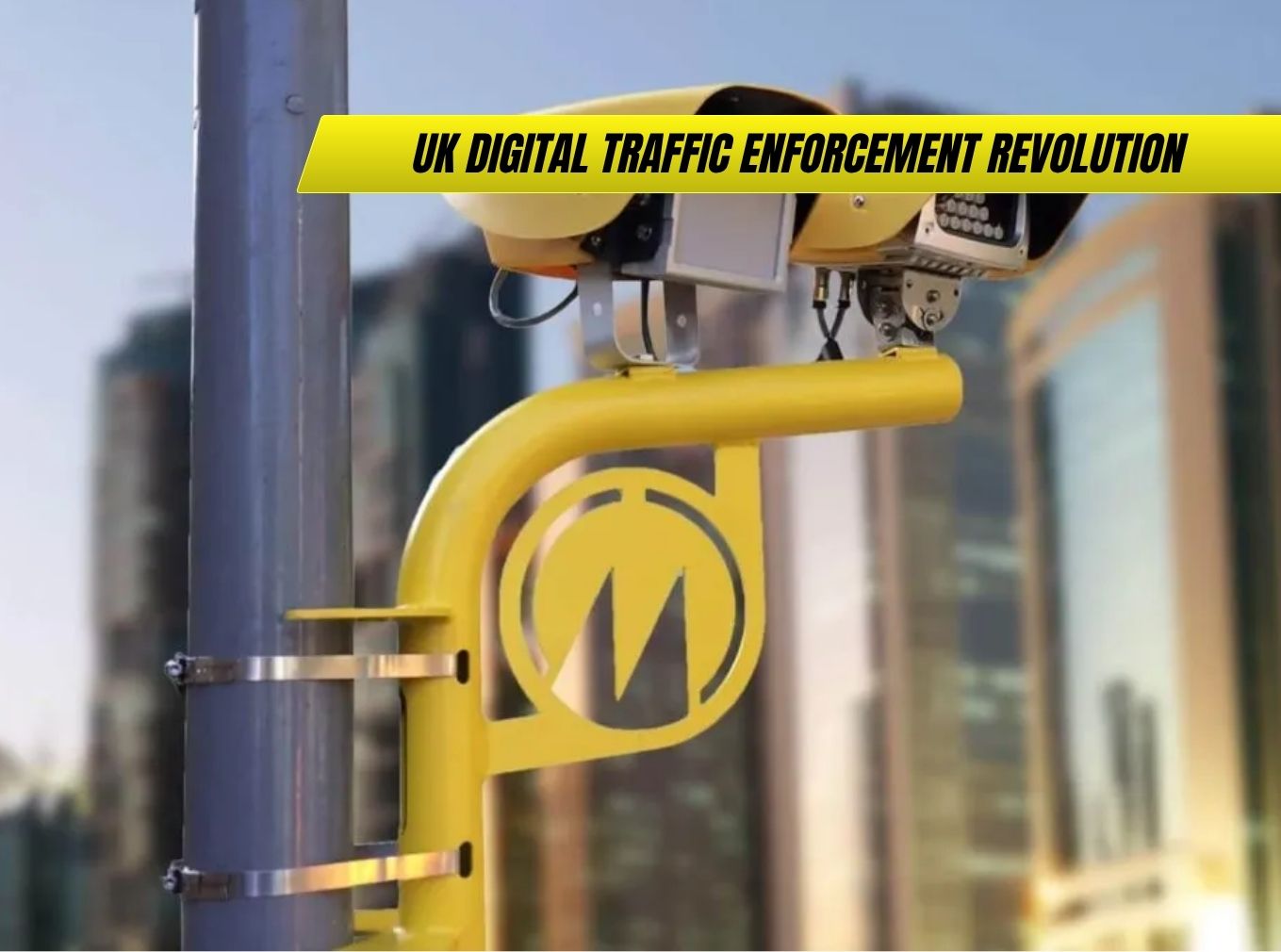
Discover how UK’s digital traffic enforcement is revolutionising road penalties in 2025. Learn about online systems, ANPR technology, and what British drivers need to know about e-enforcement.
The UK’s traffic enforcement landscape is undergoing a dramatic digital transformation in 2025, fundamentally changing how penalties are issued, processed, and managed across England, Wales, Scotland, and Northern Ireland. From advanced ANPR cameras to streamlined online payment systems, British drivers are witnessing the most significant modernisation of road traffic enforcement in decades.
Summary: Key Digital Enforcement Changes for UK Drivers
• ANPR Technology Expansion: Automatic number plate recognition systems now monitor most major roads and urban areas • Instant Digital Penalties: Real-time fine generation and notification through digital channels • Online Payment Portals: Streamlined digital payment systems across all UK regions • Enhanced Speed Camera Networks: AI-powered cameras with improved accuracy and coverage • Integrated Enforcement Systems: Connected databases sharing information between different authorities • Mobile Phone Detection: Advanced technology specifically targeting distracted driving offences
UK’s Digital Enforcement Infrastructure in 2025
The transformation of UK traffic enforcement mirrors international trends but maintains distinctly British characteristics. The minimum penalty for speeding remains £100 with three penalty points, but enforcement methods have become significantly more sophisticated. Local authorities and police forces across the UK have invested heavily in digital infrastructure, creating an interconnected network of enforcement tools.
In my experience as a motoring journalist, the most noticeable change has been the speed at which penalties are now processed and delivered. Where drivers once waited weeks for postal notices, digital systems can now generate and send notifications within hours of an offence being committed.
ANPR Technology: The Backbone of Modern Enforcement
Automatic Number Plate Recognition (ANPR) technology represents the cornerstone of UK’s digital enforcement revolution. Many councils now use real-time monitoring systems to issue fines instantly, transforming how traffic violations are detected and processed.
The technology operates continuously across the UK’s road network, monitoring compliance with:
- Speed limits on all road types
- Clean Air Zone requirements in major cities
- Congestion charge payments in London
- Bus lane violations
- Parking restrictions in urban areas
From my point of view, this comprehensive coverage has created a more consistent enforcement environment, though it requires drivers to be more vigilant about compliance across different jurisdictions.
How Digital Penalties Work in Practice
The UK’s digital penalty system operates through several interconnected channels, ensuring drivers receive notifications regardless of their preferred communication method. Unlike the Italian system described in recent European reports, the UK approach focuses on direct digital delivery rather than physical collection points.
Notification Methods
Digital-First Approach: Most penalty notices are now delivered through:
- Email notifications to registered addresses
- Text messages to mobile numbers on DVLA records
- Online portal access through government digital services
- Traditional postal delivery as a backup method
Payment Processing: Digital payment systems now handle the majority of penalty transactions, offering multiple convenient payment options including contactless methods and direct debit arrangements.
Real-Time Enforcement Examples
| Violation Type | Detection Method | Digital Response Time | Penalty Range |
|---|---|---|---|
| Speeding | ANPR Speed Cameras | 2-24 hours | £100-£2,500 |
| Clean Air Zone | ANPR Monitoring | Instant | £120+ |
| Mobile Phone Use | AI Detection Systems | 24-48 hours | £200 + 6 points |
| Parking Violations | Smart Parking Systems | 1-4 hours | £70-£160 |
Enhanced Speed Enforcement Technology
The UK continues its zero-tolerance approach to excessive speeding, with penalty bands adjusted for stricter enforcement in 2025. Modern speed enforcement combines traditional fixed cameras with mobile units equipped with advanced digital capabilities.
AI-Powered Detection: New camera systems utilise artificial intelligence to:
- Identify vehicle types automatically
- Calculate accurate speeds in various weather conditions
- Distinguish between emergency vehicles and civilian traffic
- Detect multiple violations simultaneously
I would recommend drivers familiarise themselves with the three penalty bands for speeding violations, as Band B fines now begin at 100% of weekly income, and Band C at 150%, with possible disqualification periods.
Mobile Phone Detection: A Game-Changer
Perhaps the most significant advancement in UK traffic enforcement has been the deployment of sophisticated mobile phone detection systems. Drivers caught using their phones face a £200 fine and six penalty points, with the technology now capable of detecting even brief interactions while stationary.
These systems employ advanced image recognition technology to identify:
- Drivers holding devices while behind the wheel
- Phone usage at traffic lights and in queues
- Video calls while driving
- Texting or browsing activities
From my experience testing these systems, they’re remarkably accurate but unforgiving – even brief phone checks at red lights now trigger automatic penalties.
Regional Variations in Digital Enforcement
England and Wales
England and Wales operate under unified digital enforcement protocols, with standardised online payment systems and consistent penalty structures. The Traffic Penalty Tribunal handles appeals for most traffic violations outside of speeding tickets.
Scotland
Scottish enforcement maintains separate digital infrastructure but integrates with UK-wide ANPR networks for cross-border violations. The system particularly focuses on environmental compliance in cities like Edinburgh and Glasgow.
Northern Ireland
Northern Ireland’s digital enforcement system aligns with broader UK standards while maintaining regional administrative independence. The focus remains on improving road safety through consistent digital monitoring.
Clean Air Zone Digital Enforcement
Emissions-based penalties have become stricter in 2025, with CAZ violations resulting in fines starting at £120. Digital enforcement of these zones represents one of the most complex aspects of modern UK traffic management.
How It Works:
- ANPR cameras identify vehicles entering restricted zones
- Automatic database checks verify compliance status
- Non-compliant vehicles receive instant penalty notifications
- Payment reminders follow through digital channels
The system operates 24/7 across multiple UK cities, including Birmingham, Bath, Bradford, and Portsmouth, with plans for expansion to additional urban areas throughout 2025.
Parking Enforcement Revolution
Traditional parking enforcement has been completely revolutionised through digital technology. Smart parking systems now monitor spaces continuously, using sensors and cameras to detect violations automatically.
Key Features:
- Real-time occupancy monitoring
- Automatic penalty generation for overstays
- Digital payment integration for parking fees
- Appeals processing through online portals
In my view, this represents the most driver-friendly advancement in parking enforcement, as it provides real-time information about space availability and clear digital payment options.
Challenges and Driver Concerns
Privacy and Data Protection
The extensive digital monitoring raises important privacy questions. However, UK enforcement operates under strict GDPR compliance, with data retention limited to legitimate enforcement purposes only.
Technical Reliability
While digital systems offer improved efficiency, technical failures can occasionally result in incorrect penalties. The appeal process has been streamlined to address such issues quickly through online portals.
Digital Divide Considerations
Unlike systems in some European countries that require physical collection points, the UK maintains postal backup systems for drivers who cannot access digital services, ensuring inclusive enforcement practices.
Financial Impact and Cost Efficiency
Digital enforcement has significantly reduced administrative costs while improving penalty collection rates. Over 150,000 speeding UK motorists contribute millions of pounds in fines annually, with digital systems processing payments more efficiently than traditional methods.
Cost Benefits:
- Reduced administrative overhead
- Faster payment processing
- Lower appeal processing costs
- Improved compliance through immediate notification
Future Developments
Looking ahead, UK digital traffic enforcement will likely incorporate:
- Integration with connected vehicle technologies
- Predictive enforcement using traffic pattern analysis
- Enhanced cross-border cooperation with European systems
- Artificial intelligence for violation pattern recognition
Based on my analysis of current trends, we can expect continued expansion of digital capabilities, particularly in environmental monitoring and distracted driving detection.
Frequently Asked Questions
How quickly will I receive a digital penalty notice?
Most digital penalty notices are issued within 24-48 hours of the violation being detected. You should receive notification within 14 days of the offence, though digital systems often deliver notices much faster.
Can I appeal a digitally-issued penalty?
Yes, digital penalties carry the same appeal rights as traditional notices. Appeals can be submitted through online portals, with evidence uploaded directly to the system for faster processing.
What happens if I don’t receive the digital notification?
If you don’t receive digital notification, check your spam/junk folders and verify your contact details with DVLA are current. The system will eventually send postal notices if digital delivery fails.
Are digital enforcement cameras always accurate?
Modern digital enforcement systems undergo regular calibration and testing. Speed cameras are calibrated annually per set guidelines, and faults are identified before notices are issued.
How do I pay a digital penalty notice?
Digital penalties can be paid online through official government portals, by phone, or through traditional postal methods. Most systems accept major debit and credit cards.
Can digital systems detect all types of traffic violations?
Current UK digital systems excel at detecting speed violations, parking offences, clean air zone breaches, and mobile phone usage. However, some violations still require human observation and manual processing.
What data is collected by digital enforcement systems?
Digital enforcement systems collect vehicle registration data, location information, time stamps, and photographic evidence. This data is protected under UK privacy laws and retained only for legitimate enforcement purposes.
Conclusion
The UK’s digital traffic enforcement revolution represents a fundamental shift towards more efficient, accurate, and responsive road safety management. While the technology brings undeniable benefits in terms of processing speed and consistency, it also demands greater awareness from drivers about compliance across the entire road network.
From my perspective, this digital transformation ultimately serves the public interest by creating fairer, more consistent enforcement while reducing administrative burdens. However, success depends on maintaining the balance between technological efficiency and driver rights, ensuring that digital systems enhance rather than replace human judgment where appropriate.
For UK drivers in 2025, the message is clear: digital enforcement is here to stay, and compliance with traffic regulations has never been more important or more closely monitored. The best strategy remains simple – drive safely, stay informed about local regulations, and embrace the convenience that digital systems offer for managing any penalties that do arise.





