
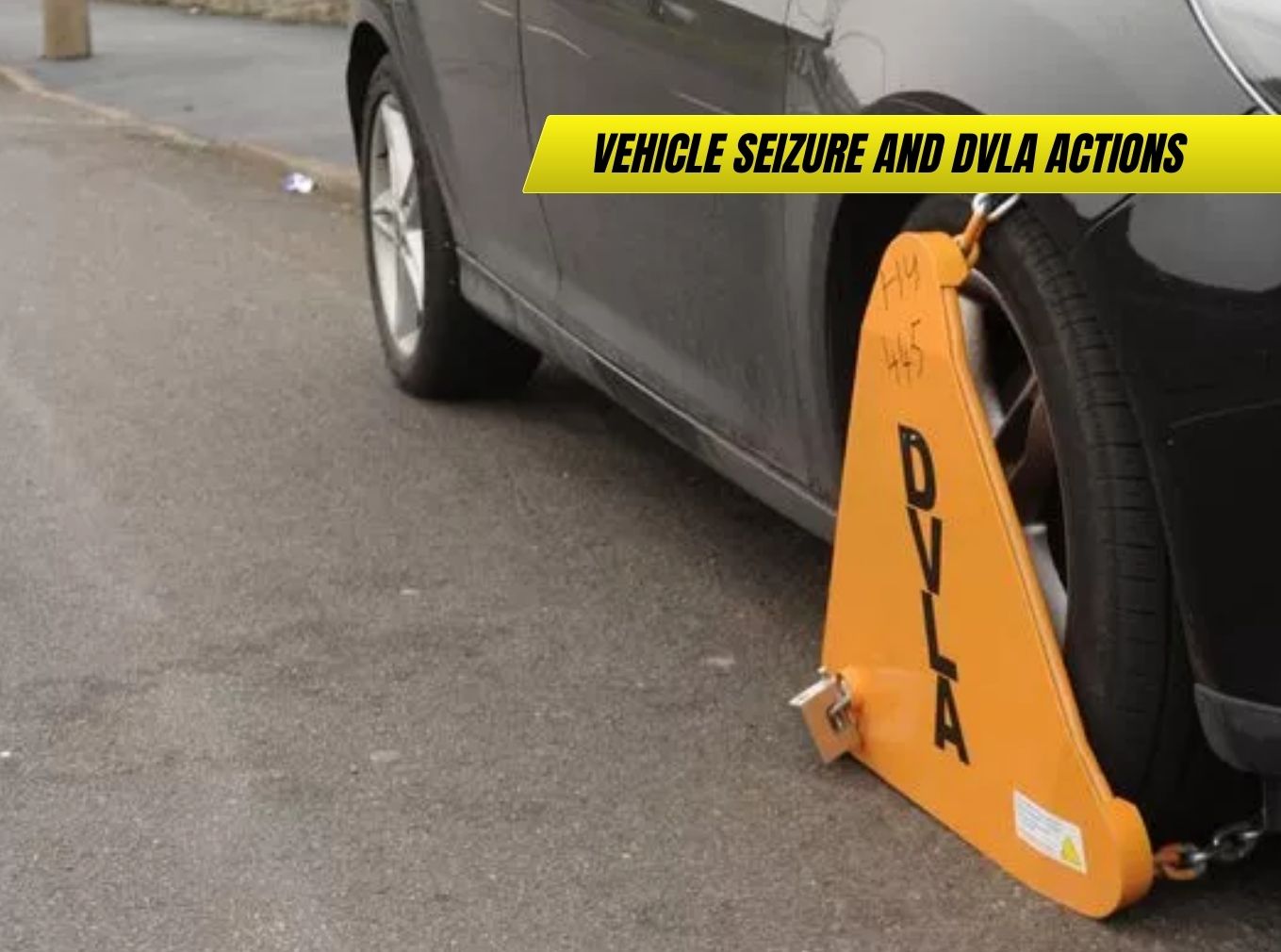
Complete UK guide to vehicle seizure, DVLA enforcement, clamping procedures, and how to recover your car. Essential legal advice for British drivers.
Understanding vehicle seizure and DVLA enforcement actions remains crucial for all UK drivers, as authorities possess extensive powers to clamp, tow, or seize vehicles for various legal violations. From unpaid fines and invalid insurance to tax evasion and parking violations, the consequences of non-compliance can result in substantial costs and lengthy recovery procedures that significantly impact daily life.
This comprehensive guide explains the entire process of vehicle seizure in the UK, the legal framework surrounding these actions, and most importantly, the step-by-step procedures for recovering your vehicle and avoiding future enforcement issues. Whether you’re facing an immediate seizure situation or seeking to understand your rights and obligations as a vehicle owner, this guide provides essential information every British driver needs to know.
Key Points Summary
• Multiple authorities can seize vehicles including DVLA, police, councils, and private companies • Common reasons include unpaid fines, invalid insurance, expired MOT, and parking violations • Recovery costs typically range from £150-£500+ depending on circumstances and storage time • Time limits apply – vehicles may be crushed or sold after 14-28 days if unclaimed • Legal rights exist to challenge seizures and seek compensation for wrongful actions • Prevention strategies can help avoid seizure situations entirely
Understanding Vehicle Seizure Powers in the UK
Who Can Seize Your Vehicle?
Multiple authorities possess powers to seize, clamp, or tow vehicles under various circumstances. The Driver and Vehicle Licensing Agency (DVLA) leads enforcement actions for tax-related offences, while local police forceshandle insurance violations, dangerous driving, and criminal investigations. Local councils manage parking enforcement and environmental issues, while certified bailiffs act on behalf of courts for debt collection.
Each authority operates under specific legal frameworks with defined procedures, though the practical impact on vehicle owners remains similar: immediate loss of vehicle use, substantial recovery costs, and potential long-term consequences for persistent violations.
In my experience advising drivers on enforcement matters, understanding which authority has seized your vehicle proves crucial for determining the correct recovery procedure and identifying potential grounds for appeal or compensation claims.
Legal Framework and Powers
The legal basis for vehicle seizure derives from multiple pieces of legislation including the Road Traffic Act 1988, Vehicle Excise and Registration Act 1994, and various local government powers. These laws provide authorities with extensive enforcement capabilities while establishing procedural requirements designed to protect citizens’ rights.
Key enforcement powers include:
- Immediate seizure for driving without insurance or licence
- Clamping for unpaid vehicle excise duty (road tax)
- Towing for parking violations and obstruction
- Forfeiture proceedings for serious or persistent violations
- Criminal prosecution for attempting to avoid seizure
The procedural requirements mandate proper notices, reasonable recovery opportunities, and appeals processes, though the practical reality often favours authorities due to the complexity of challenging enforcement actions.
Common Reasons for Vehicle Seizure
DVLA Enforcement Actions
The DVLA possesses perhaps the most extensive seizure powers, primarily targeting vehicle excise duty (VED) violations. Untaxed vehicles represent the largest category of DVLA seizures, with automatic number plate recognition (ANPR) systems identifying violations nationwide. The agency can seize vehicles immediately upon detection, regardless of location or circumstances.
Additional DVLA enforcement triggers include:
- Failure to notify change of ownership (V5C issues)
- Operating vehicles without valid MOT certificates
- Using SORN vehicles on public roads
- Providing false information on vehicle documentation
DVLA enforcement often catches owners unexpectedly, particularly when administrative errors or postal delays affect renewal notices. The agency’s efficiency in detection contrasts sharply with the complexity owners face in recovery procedures.
For essential information about vehicle warning systems that might indicate enforcement attention, our comprehensive guide to spanner warning lights provides crucial diagnostic information.
Police Seizure Powers
Police seizure typically occurs during traffic stops or criminal investigations, with driving without insurancerepresenting the most common trigger. The Police and Criminal Evidence Act 1984 (PACE) provides officers with immediate seizure powers when drivers cannot provide valid insurance documentation.
Common police seizure scenarios:
- No valid insurance certificate at time of stop
- Unlicenced drivers operating vehicles
- Vehicles used in criminal activities
- Dangerous or defective vehicles posing safety risks
- Failure to stop or comply with police directions
Police seizures often occur during routine traffic enforcement, making valid documentation essential for all journeys. The immediate nature of police seizures provides limited opportunity for explanation or appeal at the roadside.
Council and Parking Enforcement
Local councils exercise extensive parking enforcement powers, with persistent parking violations leading to vehicle removal. Environmental offences, including abandoned vehicles or emissions violations, also trigger council enforcement actions.
Council seizure triggers include:
- Multiple unpaid parking tickets
- Parking in restricted zones or disabled bays
- Abandoned vehicle reports
- Environmental health violations
- Obstruction of highways or emergency access
Council enforcement varies significantly between authorities, with some operating aggressive removal policies while others prefer administrative penalties. Understanding local enforcement patterns helps predict potential seizure risks.
The Seizure Process: What Happens to Your Vehicle
Immediate Actions and Documentation
When authorities seize your vehicle, specific procedural requirements mandate proper documentation and notification. Seizure notices must provide clear information about the reasons for action, recovery procedures, and time limits for reclaiming the vehicle.
The seizing authority should provide immediate documentation including seizure reference numbers, storage location details, and contact information for recovery procedures. Photographic evidence of the vehicle’s condition at seizure protects both parties from subsequent damage claims.
Essential seizure documentation includes:
- Seizure notice with reference number and legal basis
- Vehicle condition report with photographic evidence
- Storage location and contact details
- Recovery procedure instructions and cost estimates
- Appeals process information and time limits
Proper documentation enables effective recovery procedures and provides evidence for potential legal challenges. Missing or incomplete documentation may indicate procedural errors that could invalidate the seizure.
Storage and Ongoing Costs
Vehicle storage costs accumulate daily from the point of seizure, creating mounting financial pressure on owners. Daily storage rates typically range from £12-£25 depending on location and authority, though specialist facilities charge higher rates for valuable or unusual vehicles.
The combination of initial seizure costs (£150-£200), towing fees (£100-£150), and daily storage charges can result in total costs exceeding £500 within two weeks. These costs continue accumulating regardless of appeals or legal challenges, creating significant financial incentive for rapid resolution.
Typical cost breakdown:
- Seizure/administration fee: £150-£200
- Vehicle recovery/towing: £100-£200
- Daily storage: £12-£25 per day
- Documentation fees: £25-£50
- Out-of-hours recovery: Additional £50-£100
Storage costs often exceed vehicle value for older cars, leading many owners to abandon recovery attempts. Authorities typically sell or crush unclaimed vehicles after 14-28 days to recover costs.
Step-by-Step Vehicle Recovery Process
Immediate Response Actions
Act quickly upon discovering vehicle seizure, as storage costs accumulate daily and time limits apply for recovery procedures. Contact the seizing authority immediately using the reference number provided on seizure documentation to confirm storage location and recovery requirements.
Priority actions within 24 hours:
- Contact seizing authority with seizure reference number
- Confirm storage location and opening hours
- Gather required documentation (see below)
- Calculate total recovery costs including projected storage
- Arrange payment method (cash/card acceptance varies)
- Plan recovery timing to minimize additional costs
Prompt action minimizes costs and demonstrates good faith cooperation that may assist with any appeals or challenges. Delays often result in disproportionately higher costs and reduced recovery options.
Required Documentation for Recovery
Vehicle recovery requires comprehensive documentation proving ownership, compliance with legal requirements, and payment of outstanding obligations. Missing documentation significantly delays recovery and increases costs, making preparation essential.
Essential documents for recovery:
- V5C registration certificate (or police crime reference if stolen)
- Valid driving licence for person collecting vehicle
- Current MOT certificate (if required for vehicle age)
- Valid insurance certificate covering recovery and future use
- Proof of payment for outstanding obligations (tax, fines, etc.)
- Proof of identity (passport/photocard driving licence)
- Payment for recovery and storage costs
Some authorities accept copies or temporary documents, particularly for insurance and MOT certificates, though original documentation expedites the process. Preparing documentation in advance prevents delays and additional storage costs.
For information about potential mechanical issues that might affect recovery, our guide to timing chain problemsprovides essential maintenance information.
Payment and Collection Procedures
Recovery costs must typically be paid in full before vehicle release, with cash payments preferred by many storage facilities. Card payments may incur additional fees, while some authorities refuse personal cheques due to security concerns.
Collection procedures typically require:
- Full payment of all costs before vehicle inspection
- Signed acknowledgment of vehicle condition
- Proof of current insurance before driving away
- Valid licence check for person collecting vehicle
- Confirmation of resolved underlying compliance issues
Collection outside normal hours incurs additional fees (£50-£100 typically), though emergency arrangements may be available. Vehicle inspection before departure identifies any damage during seizure or storage, though challenging such damage often proves difficult.
Legal Rights and Appeals Process
Grounds for Challenging Seizure
Legitimate grounds exist for challenging vehicle seizures, particularly when procedural errors or factual mistakesoccur during enforcement actions. Successful challenges can result in cost refunds and compensation, though the appeals process requires prompt action and comprehensive documentation.
Common grounds for appeal include:
- Administrative errors (wrong vehicle, invalid addresses)
- Procedural failures (inadequate notices, improper seizure)
- Documentation problems (postal delays, system errors)
- Disproportionate enforcement action
- Human rights violations or discrimination
Valid circumstances for compensation:
- Seizure of correctly taxed/insured vehicles due to system errors
- Excessive storage costs due to authority delays
- Damage during seizure or storage operations
- Loss of earnings due to wrongful seizure
- Costs incurred resolving administrative errors
Appeals must typically be submitted within specific time limits (usually 28 days) with comprehensive supporting evidence. Success rates vary significantly between authorities and circumstances.
Formal Complaints and Ombudsman Services
When appeals fail or authorities refuse reasonable requests, formal complaints procedures provide additional recourse. The Local Government Ombudsman handles council-related seizures, while the Parliamentary and Health Service Ombudsman addresses DVLA actions.
Ombudsman investigations typically take 6-12 months but can result in compensation orders and procedural improvements. Success requires comprehensive documentation demonstrating maladministration or service failure affecting the complainant.
Police complaints follow different procedures through the Independent Office for Police Conduct (IOPC), though vehicle seizure complaints typically address procedural failures rather than the seizure decision itself.
Prevention Strategies and Best Practices
Maintaining Compliance
Prevention represents the most effective strategy for avoiding vehicle seizure, requiring consistent attention to legal obligations and documentation. Automated reminders and direct debits eliminate most administrative failures that trigger enforcement action.
Essential compliance checklist:
- Vehicle excise duty (road tax) – set up direct debit
- MOT certificate – book renewal 2-4 weeks early
- Insurance coverage – continuous insurance enforcement applies
- Vehicle registration – notify DVLA of address/ownership changes
- Outstanding fines – resolve promptly before bailiff action
Digital solutions including DVLA online services, insurance comparison sites, and MOT reminder services streamline compliance management. Many violations result from administrative oversight rather than deliberate evasion.
For guidance on selecting appropriate vehicles that minimize compliance risks, our comprehensive guide to best cars under £25,000 explores reliable options with lower maintenance demands.
Documentation Management
Maintaining organized vehicle documentation prevents delays during enforcement encounters and expedites any recovery procedures. Digital copies stored securely online provide backup access when original documents are unavailable.
Essential document organization:
- Current documents in vehicle glove compartment
- Photocopies stored securely at home
- Digital copies accessible via smartphone
- Insurance certificate downloadable via insurer’s app
- MOT certificate verifiable via gov.uk check service
Regular documentation reviews (quarterly) identify approaching renewal dates and potential compliance gaps. Early renewal prevents lapses that trigger automatic enforcement systems.
Understanding Enforcement Patterns
Enforcement intensity varies significantly between regions, times, and circumstances, with ANPR coverageparticularly dense around urban areas and major transport routes. Understanding local patterns helps identify higher-risk situations requiring extra caution.
High-risk enforcement scenarios:
- Urban areas with extensive ANPR coverage
- Major trunk roads and motorway services
- Hospital and shopping centre car parks
- Areas with persistent parking problems
- Tourist destinations during peak seasons
Awareness of enforcement patterns enables strategic route planning and parking choices that minimize seizure risks, particularly for vehicles with marginal compliance status.
Cost Management and Financial Implications
Understanding Total Costs
Vehicle seizure costs extend beyond immediate recovery expenses to include indirect costs that often exceed the direct charges. Lost wages, alternative transport, insurance implications, and administrative time create substantial hidden expenses.
Complete cost analysis:
- Direct recovery costs: £200-£500+ typical
- Lost wages during recovery process: £100-£300
- Alternative transport costs: £50-£200
- Insurance implications: Potential premium increases
- Administrative time: 10-20 hours typical
- Legal costs if appeals necessary: £500+
Total seizure costs frequently exceed £1,000-£1,500 when indirect expenses are included, making prevention strategies highly cost-effective even when requiring minor additional expenditure.
Insurance and Legal Protection
Motor legal protection insurance provides valuable coverage for seizure-related costs and appeals procedures, though exclusions often apply for routine compliance failures. Specialist vehicle recovery insurance offers broader coverage including storage costs and alternative transport.
Some premium insurance policies include seizure protection and legal advice services, though coverage varies significantly between providers. Professional advice proves valuable for complex cases involving substantial vehicles or disputed circumstances.
For information about alternative transport options during seizure recovery, our guide to best family SUVs explores reliable rental and purchase options.
Frequently Asked Questions
Can authorities seize my car from private property like my driveway? Yes, but powers vary by authority and circumstances. DVLA can seize untaxed vehicles from private land if accessible from public roads. Police require additional grounds like criminal investigation. Private parking companies generally cannot seize vehicles but can issue penalty notices. Gated private property provides some protection, though court orders can override this.
How long do I have to collect my seized vehicle before it’s destroyed? Time limits vary by authority: DVLA typically allows 14 days, police 14-28 days, councils 7-14 days. Extensions may be possible for genuine hardship cases. Valuable vehicles may be auctioned rather than destroyed. Contact the authority immediately as costs accumulate daily and time limits are strictly enforced.
What happens if storage costs exceed my vehicle’s value? You can abandon the vehicle to avoid further costs, though existing charges remain payable. Some authorities accept partial payments for low-value vehicles. The vehicle will be disposed of to recover costs. Consider whether third-party claims (insurance excess, outstanding finance) make recovery worthwhile despite high costs.
Can I recover my personal belongings from a seized vehicle? Yes, personal belongings must be returned separately from vehicle recovery. Contact the storage facility to arrange collection – this usually doesn’t require paying vehicle recovery costs. Valuable items should be itemized and their condition documented. Some restrictions apply to items that could be evidence in criminal proceedings.
Does vehicle seizure affect my driving licence or insurance? Seizure for driving without insurance results in 6-8 penalty points and potential licence endorsement. Insurance companies may increase premiums for seizure-related convictions. Seizure for administrative issues (unpaid tax) typically doesn’t affect licences but may impact insurance applications requiring disclosure of enforcement action.
Can I challenge a seizure if the enforcement notice was sent to an old address? Yes, postal service failures provide grounds for appeal if you can demonstrate reasonable attempts to maintain correct address records with relevant authorities. You must prove the address change was properly notified and processed. Success often depends on timing and documentation quality. Consider whether the vehicle was legitimately used at the old address.
What rights do I have if my vehicle is damaged during seizure or storage? You can claim compensation for damage not present at seizure. Photograph the vehicle immediately upon collection and compare with seizure documentation. Submit claims promptly with evidence. Success varies – authorities often dispute pre-existing damage claims. Consider independent vehicle inspection for valuable vehicles.
Conclusion and Key Recommendations
Vehicle seizure represents a serious disruption that creates substantial costs and complications for UK drivers, but understanding the system and maintaining consistent compliance provides effective protection against most enforcement actions. The key to avoiding seizure lies in recognizing that prevention costs significantly less than recovery, both financially and in terms of time and stress.
In my experience advising drivers on enforcement matters, the most successful approach combines proactive compliance management with comprehensive documentation practices. Setting up direct debits for vehicle excise duty, maintaining current insurance coverage, and organizing renewal reminders prevents most administrative failures that trigger enforcement action.
When seizure does occur, prompt action and thorough preparation minimize costs and maximize recovery success. Understanding your rights and the appeals process provides important protection against procedural errors or disproportionate enforcement, while proper documentation enables effective challenge procedures when circumstances justify them.
Looking ahead, increasing automation in enforcement systems means that administrative errors become less common but procedural failures more difficult to challenge. The expansion of ANPR coverage and integrated enforcement systems reduces opportunities for avoiding detection while potentially increasing risks from system errors affecting compliant drivers.
The most important lesson for UK drivers is that vehicle seizure powers exist primarily for legitimate enforcement purposes, but the complexity of the system and severity of consequences make professional advice valuable for serious situations. Prevention through consistent compliance remains the most cost-effective strategy, supported by understanding your rights and responsibilities within the increasingly sophisticated enforcement environment.
For drivers facing seizure situations, remember that prompt action, comprehensive documentation, and professional advice when needed provide the best foundation for successful resolution while minimizing costs and long-term implications.





