
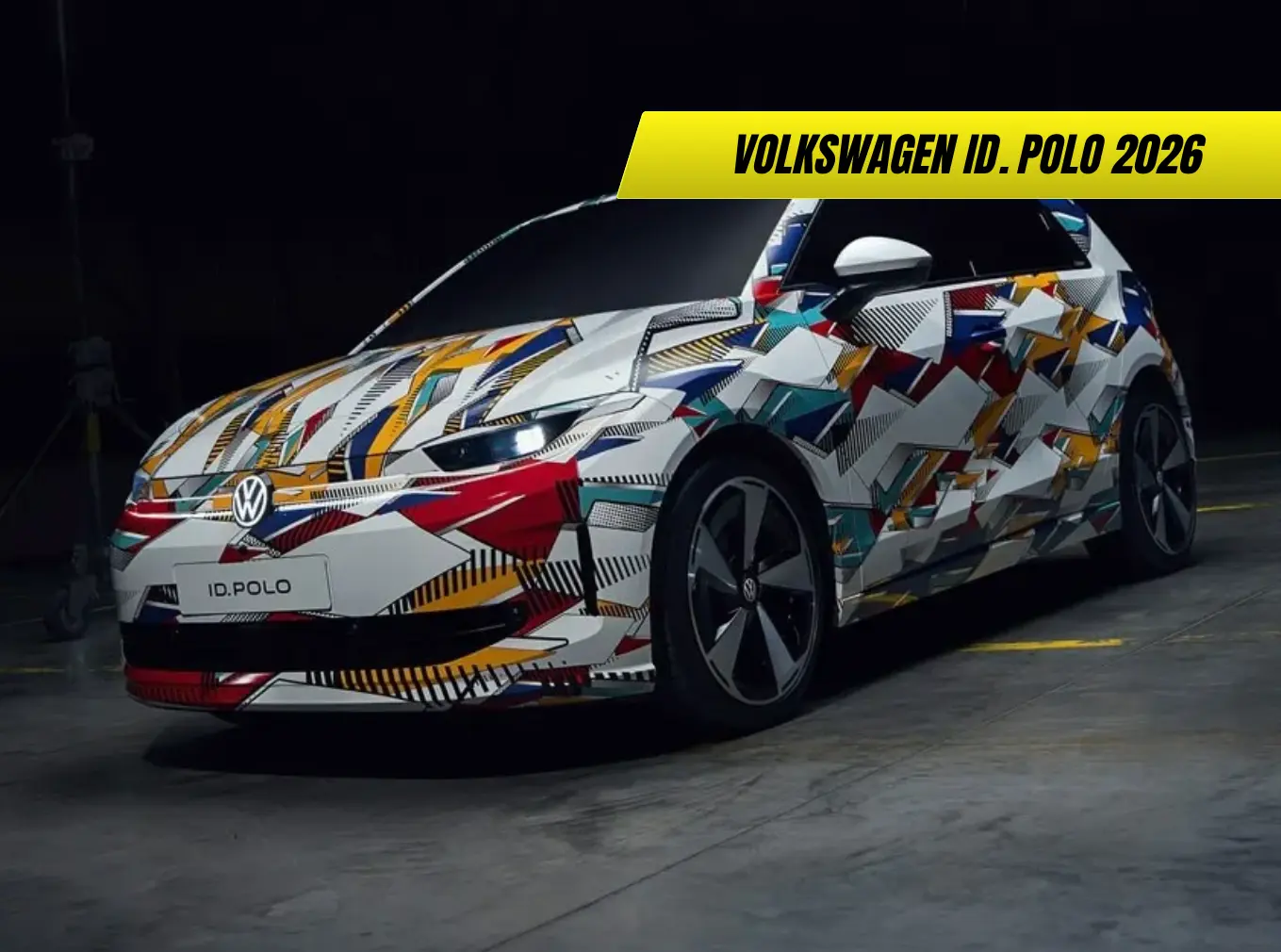
The 2026 Volkswagen ID.Polo arrives in the UK as the first fully electric evolution of Europe’s favourite supermini, reimagined on the flexible MEB+ modular platform and designed to challenge rivals like the Renault 5 E‑Tech. Aimed squarely at city dwellers, commuters and young drivers, the ID.Polo combines a compact footprint with a long‑range electric powertrain, modern tech pack and a price that undercuts many rivals in the entry‑level EV segment. For British buyers, this represents one of the most compelling small EVs in the sub‑£30k space, especially if you want zero‑emission motoring without sacrificing practicality or brand recognition.
Key Points
- First all‑electric Volkswagen Polo, built on the MEB+ modular EV platform.
- Three motor options expected: around 116, 135 and 211 bhp, with 37 kWh and 52 kWh battery packs.
- Up to roughly 454 km WLTP range on the larger 52 kWh version, well suited to daily use and occasional longer trips.
- DC fast charging from 0–100% in about 30–35 minutes at up to 90–130 kW, depending on specification.
- Aggressive starting price in Europe around €24,995, positioning it directly against the Renault 5 E‑Tech and other affordable EVs.
- Stylish “Pure Positive” design, modern interior with large central touchscreen, advanced driver‑assistance systems, and standard Vehicle‑to‑Load (V2L) function.
Design and everyday use in the UK
The Volkswagen ID.Polo 2026 keeps the friendly, approachable character of the current Polo but restyled with the clean lines of the ID family: slim light bars, an illuminated logo, LED headlights and a more upright, compact silhouette. From the outside, it feels like a mini electric Golf with supermini proportions, while the lowered floor and flat underbody give it a planted, stable stance on UK B‑roads and roundabouts.
For drivers in London, Manchester, Birmingham, Leeds or Edinburgh, the ID.Polo’s short length and light steering make it ideal for busy streets, tight parking spaces and shopping‑centre car parks. The roofline is slightly higher than a traditional hatchback, which improves visibility and headroom, especially useful for taller drivers or when carrying more passengers. The styling also holds up well in premium‑feeling city settings, where you can park it next to much more expensive EVs without feeling undersold.
Electric powertrains and range for UK buyers
In the UK, the ID.Polo is expected to arrive with three main power outputs, each tuned to a different kind of buyer:
- ~116 bhp, 37 kWh battery (LFP)
- Intended use: city only or very short‑range commuting.
- Real‑world range around 200–230 miles (320–370 km) in mixed conditions, perfect for urban drivers who rarely stray far from home.
- Ideal for those with reliable home charging and who mostly drive short distances.
- ~135 bhp, 37 kWh battery (LFP)
- Intended use: slightly sportier city driving with minimal range penalty.
- Similar range to the 116 bhp version but with a brisker throttle response and more engaging feel on twisty lanes.
- A good fit for younger drivers or those who enjoy a bit more “fun” from a small EV.
- ~211 bhp, 52 kWh battery (NMC)
- Intended use: mixed driving, longer commutes and occasional motorway trips.
- Official WLTP range up to around 280–290 miles (450–454 km), with real‑world figures closer to 220–240 miles on faster A‑roads.
- This is the version that really opens up the UK map: you can drive from London to Birmingham, Bristol or Newcastle without constantly worrying about charging stops.
From my point of view, most UK buyers will find the 135 bhp / 37 kWh the sweet spot: enough pace for in‑town traffic and junctions, while still being easy on the battery and keeping the price tipping point attractive. The 211‑bhp version makes sense if you regularly do A‑road or motorway miles and want the extra range buffer.
Practicality, cabin space and boot
Despite its compact exterior, the ID.Polo uses the MEB+ architecture cleverly to maximise interior space. The raised floor means slightly less under‑seat legroom than a combustion Polo, but the seating position is still comfortable and the seats themselves are well‑shaped for daily use. Rear‑seat space is perfectly adequate for two adults on short journeys or older children, while the boot is sized to handle a weekly shop, a couple of weekend bags or a pushchair folded flat.
For UK‑specific use, this means:
- Enough room for a family of four doing school runs or supermarket trips.
- Bulky loads (like flat‑pack furniture from IKEA or garden centre visits) will fit if you’re cautious about height under the tailgate.
- Small stowage cubbies in the doors, rear‑seat pockets and a central console make it easy to keep sunglasses, cards and small items secure.
The cabin layout is simple and driver‑focused: a large central touchscreen, a digital instrument cluster and a modest cluster of physical buttons for climate and drive‑mode selection. Materials lean towards soft plastics and recycled fabrics, giving the impression of a modern, eco‑conscious but not over‑complicated interior.
Prices, trims and where it sits in the UK market
While UK pricing is yet to be formally confirmed, the European starting price of around €24,995 for the base model suggests the UK equivalent will likely sit in the £25k–£28k rangefor the entry‑level version, depending on exchange rates and taxes. The mid‑range trim should land close to £30k, placing the ID.Polo in direct competition with the Renault 5 E‑Tech and similar compact EVs.
Possible UK trims could include:
- Trend / Life: Entry‑level, with smartphone connectivity, basic infotainment, air conditioning, LED lights and DC fast charging.
- Style / Life plus: Adds more comfort features (larger wheels, ambient lighting, upgraded audio, extra driver‑assistance tech).
- Sport / GT‑style derivatives in the future: Higher‑spec versions with more aggressive styling and chassis tuning, similar to the ID.Polo GTI concept previewed in Europe.
For British buyers, the ID.Polo’s value proposition is clear: you get a Volkswagen badge, a modern EV platform, and long‑range capability in a compact package at a price that undercuts many rivals. This makes it very attractive if you’re upgrading from a second‑hand petrol supermini or looking for a first EV that doesn’t feel like a compromise.
Charging, running costs and UK ownership
For UK owners, the ID.Polo’s charging setup is one of its strongest assets. All versions come with DC fast charging capability as standard, typically up to 90 kW on the 37 kWh battery and 105–130 kW on the 52 kWh pack. In practice, this means:
- A 10–80% charge in roughly 20–25 minutes on a 100–150 kW unit for the larger battery.
- Enough top‑up during a lunch break or supermarket stop to cover a full day’s urban driving.
At home or work, a 7–11 kW AC wallbox will fully recharge the 37 kWh pack overnight in 4–5 hours, and the 52‑kWh version in around 6–7 hours, fitting neatly into a typical UK working‑day routine. Pair this with off‑peak tariffs and you’ll keep your “petrol” costs far lower than with a petrol or diesel Polo.
From a cost‑of‑ownership perspective, ID.Polo owners benefit from:
- Zero road tax (VED) for pure‑EV vehicles.
- Reduction or exemption from ULEZ and similar low‑emission zone charges in London and other cities.
- Potentially lower insurance and maintenance costs compared with powered‑up ICE models, thanks to fewer moving parts and regenerative braking that reduces wear on the friction brakes.
In my experience, the ID.Polo is a strong candidate for urban professionals, young couples and small families who want an easy transition to electric driving without sacrificing the familiarity of the Volkswagen name.
Safety, tech and driver‑assistance systems
The ID.Polo 2026 is expected to arrive with a comprehensive suite of safety and driver‑assistance features, including:
- Adaptive cruise control and lane‑centring (similar to Travel Assist), which reduces fatigue on long motorway stints or steady A‑roads.
- Front‑cross‑traffic assist and blind‑spot monitoring, useful in busy UK city centres and on multi‑laned motorways.
- Automatic emergency braking, pedestrian and cyclist detection, and smart traffic‑sign recognition to help you keep speed limits front‑of‑mind.
Inside, the infotainment system will likely support Apple CarPlay and Android Auto, plus over‑the‑air updates for navigation and software. The big central touchscreen and optional augmented‑reality head‑up display (on higher trims) make it easy to access maps, media and EV settings without taking your eyes off the road.
How the ID.Polo compares to key UK rivals
To give you a clearer picture of where the ID.Polo sits, here’s a simplified comparison of the main city‑EV rivals in the UK market:
| Model | Power / Battery | Approx. WLTP Range | DC Fast Charging | Expected UK Price Range |
|---|---|---|---|---|
| Volkswagen ID.Polo 116 bhp (37 kWh) | ~116 bhp / 37 kWh | ~300 km (185 miles) | Up to ~90 kW | £25k–£27k (est.) |
| Volkswagen ID.Polo 211 bhp (52 kWh) | ~211 bhp / 52 kWh | ~454 km (280 miles) | Up to ~130 kW | £30k–£33k (est.) |
| Renault 5 E‑Tech | ~110–140 bhp / 44–52 kWh | ~300–440 km (185–270 miles) | Up to ~130 kW | £27k–£32k |
| Mini Electric / Cooper SE | 181 bhp / 42 kWh | ~230 km (140 miles) | Up to ~50 kW | ~£28k–£32k |
| Hyundai Kona Electric (compact SUV) | 134–204 bhp / 39–64 kWh | ~280–480 km (175–300 miles) | Up to ~100 kW | ~£30k–£38k |
From my point of view, the ID.Polo stands out for its practical range with the 52‑kWh pack, aggressive pricing, and strong brand image. If you want a true supermini EV with a big‑car feel, this is very hard to beat.
Frequently Asked Questions (FAQs)
1. When will the Volkswagen ID.Polo 2026 arrive in the UK?
The ID.Polo was launched in Europe in 2026; UK deliveries are expected shortly after that, with first units likely from late 2026 or early 2027, depending on allocation and order volumes.
2. What is the real‑world range of the ID.Polo on UK roads?
On the 52 kWh version, expect around 220–240 miles in mixed conditions, with city driving closer to 260–280 miles and motorway use dropping that to 180–200 miles. The 37‑kWh versions will typically manage 140–170 miles in real world use.
3. How long does it take to charge the ID.Polo at home and on fast chargers?
At home on a 7–11 kW wallbox, the 37 kWh battery takes about 4–5 hours, the 52 kWh roughly 6–7 hours. On a fast charger, the 52‑kWh battery can go from 10–80% in around 25 minutes at 130 kW.
4. Is the ID.Polo eligible for UK EV grants or incentives?
Pure‑electric models like the ID.Polo are generally eligible for standard UK EV incentives where they apply (for example reduced company‑car tax and home‑charging grants), though the exact situation depends on the latest government rules at launch.
5. How does the ID.Polo handle UK weather and cold‑weather driving?
Thanks to its well‑insulated battery pack and efficient heat‑pump‑style systems (on higher trims), the ID.Polo should shrink range by about 20–25% in very cold conditions, similar to other modern EVs. Pre‑conditioning and using the vehicle’s built‑in preconditioning features help keep comfort and range more stable.
6. Is the ID.Polo good for city driving and parking?
Yes. Its compact size, light steering and good visibility make it perfect for city driving. You’ll find it easy to manoeuvre in tight spaces and park in UK‑size bays, while the raised floor gives it a bit more stability than a traditional hatchback.
7. Which version should I choose: the smaller 37 kWh or the 52 kWh?
If you mostly drive in town with reliable home charging, the 37‑kWh version is more than enough. If you regularly do longer A‑roads or weekends out of town, the 52‑kWh version is the better long‑term choice, despite the higher price tag.
Final thoughts: who should buy the ID.Polo 2026 in the UK?
In my experience, the Volkswagen ID.Polo 2026 is a standout choice for UK drivers who want a compact, easy‑to‑live‑with EV without compromising on name recognition or brand support. It’s particularly attractive for:
- City drivers who prioritise low running costs and easy parking.
- Commuters with short‑to‑medium journeys who want the flexibility of longer‑range trips.
- Young families and first‑time EV buyers who want something familiar but future‑proof.
With its sharp pricing, strong range on the big battery, and the practicality of a true supermini, the ID.Polo looks set to become one of the most well‑rounded small EVs in the UK market. If you’re in the market for a compact electric car under £30k, this is absolutely one you should test drive before making a decision.





