
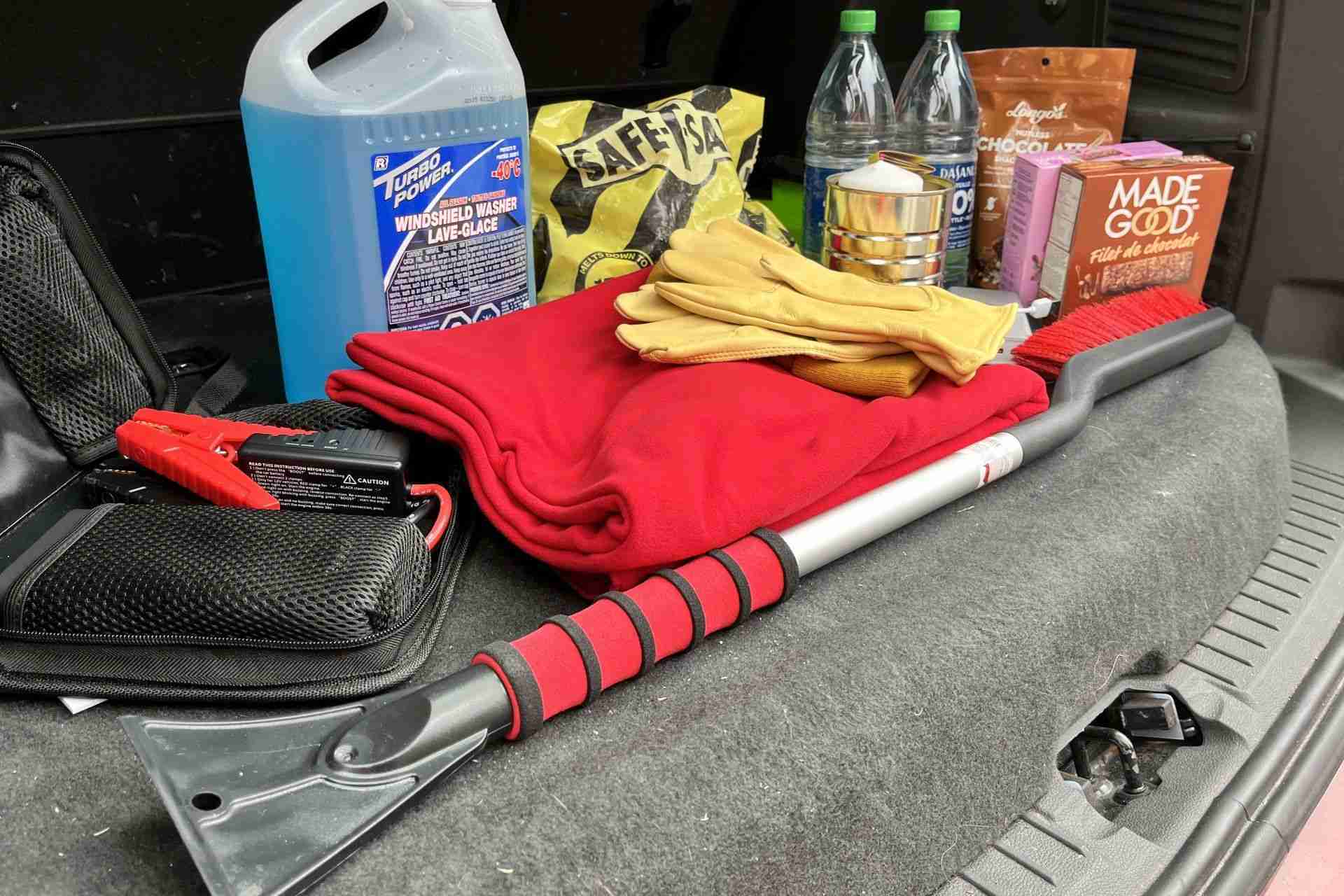
A breakdown or getting stuck in snow on a UK winter road is not just inconvenient — in severe conditions, it can be genuinely dangerous. The difference between a managed inconvenience and a serious situation is often determined by what you have in the boot. This is the definitive kit list for UK drivers.
Why a Winter Emergency Kit Matters on UK Roads
The UK’s winter road network presents a specific challenge: conditions can deteriorate rapidly — a clear motorway can become gridlocked in drifting snow within minutes — and recovery services in severe weather face demand that extends callout times significantly. The RAC and AA both recommend that every UK driver carries a basic emergency kit between October and March, adjusted for the severity of conditions in their area.
The kit does not need to be large, expensive, or permanently fixed in the boot — a bag that takes up the space of a small holdall covers all practical eventualities for under £50.
| Item | Purpose | Approximate Cost |
|---|---|---|
| Ice scraper and de-icer spray | Clear all glass before moving | £5–£10 |
| Hi-visibility vest | Visibility at roadside in darkness | £3–£8 |
| Warning triangle | Alert approaching traffic at a breakdown | £5–£15 |
| Jump leads or portable jump starter | Restart a flat battery | £15–£60 |
| Torch with spare batteries | Darkness breakdowns and inspections | £8–£20 |
| Warm blanket or sleeping bag | Heat retention if stranded | £10–£30 |
| Warm waterproof jacket and gloves | Working in cold conditions | Variable |
| Compact folding shovel | Dig out from snow | £10–£25 |
| Traction mats or cat litter | Grip under spinning driven wheels | £15–£25 |
| Tow rope | Recovery assistance | £10–£20 |
| First aid kit | Basic injury treatment | £8–£20 |
| Bottled water and snacks | Sustained wait in severe conditions | £5–£10 |
| Fully charged mobile phone or power bank | Breakdown callout and emergency contact | £15–£40 for power bank |
The Non-Negotiable Essentials
Ice Scraper and De-Icer
The most immediately relevant item on any winter morning. A quality plastic ice scraper — not a credit card, not an improvised substitute — combined with a 500ml de-icer spray covers the most common winter morning delay in under five minutes. Keep both in an accessible location rather than in a locked boot that itself may be frozen shut: under the front seat or in the driver’s door pocket keeps them accessible regardless of boot access.
Hi-Visibility Vest and Warning Triangle
Rule 274 of the Highway Code recommends placing a warning triangle at least 45 metres behind a broken-down vehicle on the approach side of the road. In winter darkness or poor visibility conditions, a warning triangle provides the time and distance for approaching drivers to react. A hi-vis vest ensures that any driver working at the roadside — changing a tyre, attaching a tow rope, or examining the vehicle — is visible to passing traffic. These two items together cost under £25 and could prevent a secondary collision in a motorway breakdown.
Note: on motorways and smart motorways, do not place a warning triangle behind the vehicle — exit the motorway via the nearest emergency refuge area and call for help from there. The warning triangle recommendation applies to A-roads and other non-motorway situations.
Jump Leads or Portable Jump Starter
A flat battery is the most common cause of winter breakdowns — and with a set of jump leads or a quality portable jump starter (a lithium-ion battery pack that starts a car without needing another vehicle), the majority of flat battery situations are self-recoverable without a callout.
Portable jump starters have become significantly more capable and affordable since 2020 — a quality unit capable of starting a 2.0-litre petrol engine costs £40–£60, fits in a glovebox, and holds charge for months between uses. For drivers who regularly park overnight in remote locations or who have an older battery, a portable jump starter is arguably the most valuable single item in the winter emergency kit.
For background on why batteries fail in winter and how to identify a failing battery before it leaves you stranded, our car battery warning signs guide covers every indicator of impending battery failure.
Compact Folding Shovel and Traction Mats
A compact folding shovel — available from most outdoor and motoring retailers for £10–£25 — allows a vehicle stuck in a shallow drift to be freed without waiting for recovery. Clear snow from in front of and behind all four driven wheels, then use traction mats or cat litter under the tyres before attempting to move.
Traction mats — purpose-made rubber or plastic grids that wedge under the driven wheels — provide immediate grip without the mess of cat litter and can be reused repeatedly. A set costs £15–£25 and folds flat for storage. For drivers in rural Scotland, Northern England, or Wales where road clearance is slower, these items are particularly valuable.
Clothing and Comfort: Often Overlooked
The most commonly omitted items from winter emergency kits are warm clothing and a blanket. A breakdown in winter — particularly on a motorway hard shoulder or a rural lane — requires waiting outside the vehicle or in a stationary car without engine heat. A car with the engine off loses cabin warmth rapidly in sub-zero temperatures.
- A fleece or warm waterproof jacket that lives in the boot rather than being worn and removed daily ensures warm clothing is always available at the point of need
- A compact fleece blanket — available from supermarkets for £5–£10 — provides meaningful warmth for occupants waiting in a stationary car without engine heat
- Waterproof gloves are essential for anyone who needs to work at the roadside in snow or frozen conditions — changing a tyre or attaching jump leads with cold bare hands is not only uncomfortable but dangerous through loss of manual dexterity
Digital Preparation: As Important as Physical Kit
A fully charged mobile phone is the most important emergency tool of all — but in winter conditions, cold temperatures reduce lithium-ion battery performance, and a phone that shows 40% charge in a warm house may show 15% after being left in a cold car overnight.
A power bank — a portable charging battery — kept in the car provides a reliable backup charge source regardless of the phone’s residual charge. Choose a power bank rated at 20,000mAh or above for meaningful charging capacity; units of this size can charge a modern smartphone three to four times from empty.
For drivers who are RAC or AA members, save the breakdown number in the phone before winter — searching for it at the roadside in cold and darkness adds unnecessary stress to an already stressful situation. The RAC recommends all members pre-register their vehicle details in the app so a breakdown can be reported with a single tap.
For broader guidance on driver responsibilities and road safety during adverse conditions, the gov.uk adverse weather driving guidance covers the full Highway Code provisions for winter road use, and our UK toll roads guide covers payment and procedure for tolled routes that may be encountered on longer winter journeys.
What is the most important item to keep in a car in winter?
A fully charged mobile phone or power bank is the most critical item — without communication, no other problem can be efficiently resolved. After that, a portable jump starter addresses the most common cause of winter breakdowns, and warm clothing addresses the most dangerous consequence of being stranded.
Are warning triangles legally required in the UK?
No — warning triangles are not legally required to be carried in the UK, unlike in many European countries where they are mandatory. However, the Highway Code recommends their use at breakdowns, and their presence significantly improves safety at roadside incidents. Any UK driver who regularly travels to mainland Europe should carry a warning triangle as it is legally required in most EU countries.
Should I keep traction aids in my boot all winter?
Yes, if you live in or regularly travel through areas that experience snow — Scotland, Northern England, North Wales, the Pennines, and rural areas generally. In southern England and urban areas where snow clearance is faster, traction mats are less frequently needed but add minimal weight and bulk for the security they provide.
How often should I check the contents of my winter emergency kit?
At the start of the season (October) to ensure everything is present and functional, and a brief check at the start of each month through March. Specific items to check: de-icer spray level, torch battery condition, phone or power bank charge, and that the kit bag itself is in the boot rather than having been removed during a summer clear-out.
What should I do if I get stuck in snow on a motorway?
Move to the hard shoulder or emergency refuge area if safe to do so. Switch on hazard warning lights. Exit the vehicle via the passenger side (away from traffic) and move behind the barrier if possible. Call 999 or use the roadside emergency phone — do not walk along the carriageway. The RAC and AA recommend waiting behind the barrier rather than in the vehicle on the hard shoulder where possible, due to the risk of being struck by inattentive drivers.
From my point of view, assembling a winter emergency kit takes under an hour and costs under £50 for a comprehensive setup — a trivial investment measured against the alternative. The items that matter most are invariably the simplest: a charged phone, warm clothing, jump leads, and a shovel. Everything else is a useful supplement to these four essentials.





