A full service history is valuable, but it does not guarantee that a car will reach its next appointment without a breakdown. A battery can reach the end of its useful life, while the alternator or another part of the charging system can fail between scheduled visits.
For UK drivers, that distinction matters because a flat battery and a charging-system fault can look similar at the roadside, even though the underlying problem may be different.
Servicing cannot stop battery ageing
Routine servicing is scheduled maintenance, not a promise that every component will remain healthy until the next visit. The RAC says car batteries commonly last around three to five years, although battery type, driving conditions, climate, storage and driving style all affect their lifespan. A car can therefore be properly maintained and still have a battery approaching the end of its service life. The RAC’s battery-life guide explains the main factors.
The way a car is used can also matter. Short or infrequent journeys may not put enough charge back into the battery after starting the engine. A vehicle left parked for long periods can gradually lose charge, and repeated deep discharge can permanently reduce its capacity. These issues are covered by Yuasa’s technical guide and AA advice on flat batteries.
That means a battery failure is not necessarily evidence that servicing was missed. The battery may simply have aged, been repeatedly undercharged or been affected by the car’s usage pattern.
What the alternator does
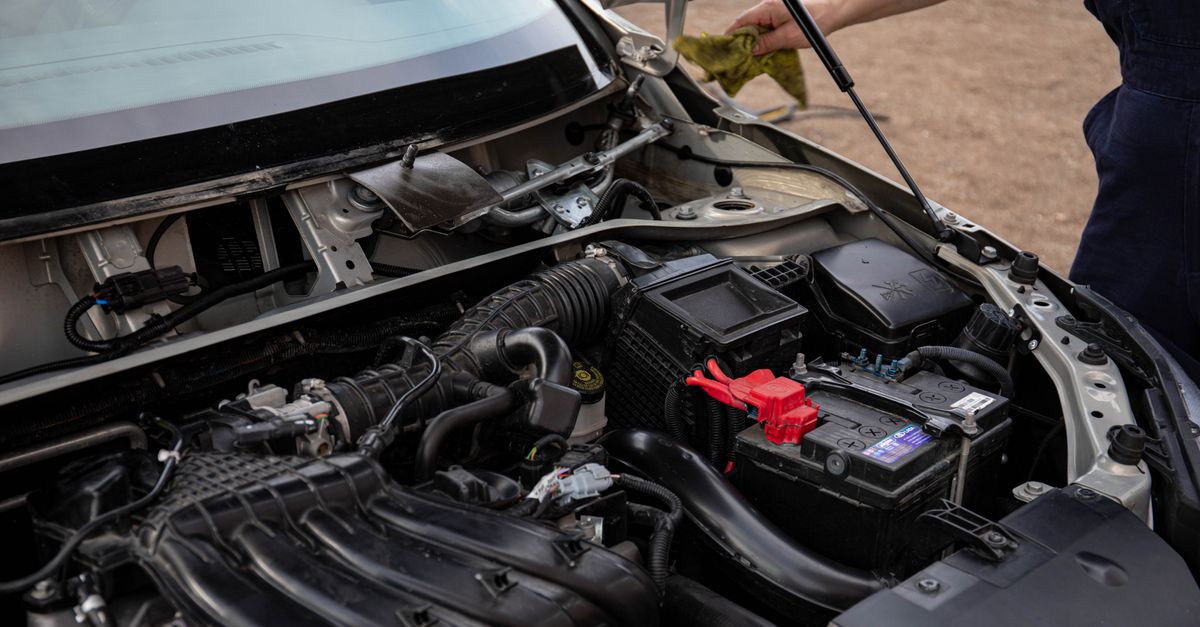
The alternator supplies electrical power while the engine is running and recharges the battery. If it stops working, the car may continue briefly using the battery’s stored energy, but the electrical systems can eventually stop operating and the engine may stall. RAC guidance on alternator faults and HELLA’s technical explanation describe this relationship.
An alternator problem can therefore leave a driver with what appears to be a flat battery. Replacing the battery alone may not solve the problem if the charging system is not replenishing it properly.
Warning signs to take seriously
Possible signs of a charging or battery problem include:
- a battery or charging warning light;
- headlights or interior lights that dim or flicker;
- electrical accessories behaving unusually;
- repeated flat batteries;
- unusual noise from the alternator or belt area; and
- a burning-rubber smell.
These symptoms do not prove that the alternator itself has failed. They indicate that the battery and charging system need proper assessment. The warning signs are also listed in guidance from the RAC and Approved Garages.
It may be another charging-system component
The alternator is only one possible cause. A worn drive belt, damaged wiring, a poor electrical connection, a faulty regulator, incorrect voltage sensing or a defective battery can all contribute to charging problems. DENSO’s diagnostic guidance and HELLA’s alternator-checking procedure both stress the need to assess the wider system rather than automatically replacing the alternator.
Modern cars can also use smart charging systems, meaning charging voltage varies between models and operating conditions. The RAC says professional diagnostic testing is the safest way to confirm an alternator fault, rather than relying on one generic voltage assumption.
What to do if the warning appears
If the charging warning light comes on, electrical systems begin to fail, or the car develops a burning smell or unusual belt noise, stop in a safe place and arrange qualified assistance. Continuing to drive until the remaining battery charge is exhausted could leave the engine and electrical systems unable to operate.
When the car is inspected, ask for the battery and the complete charging system to be tested. That should help distinguish an ageing battery from an alternator, belt, wiring or control-system fault. Avoid replacing parts solely because a warning light or flat battery appears; the symptoms are not specific enough to identify the failed component with certainty.
The takeaway
A well-serviced car can still suffer battery or alternator failure because servicing reduces risk but cannot prevent component ageing, usage-related discharge or an unexpected electrical fault. A battery that is around three to five years old, a car used mainly for short trips, or a vehicle that spends long periods parked may justify a battery and charging-system check. If warning lights, electrical glitches, belt noise or a burning smell appear, treat the problem as a potential charging-system failure and seek professional help promptly.
Source 1 · Source 2 · Source 3 · Source 4 · Source 5 · Source 6 · Source 7