
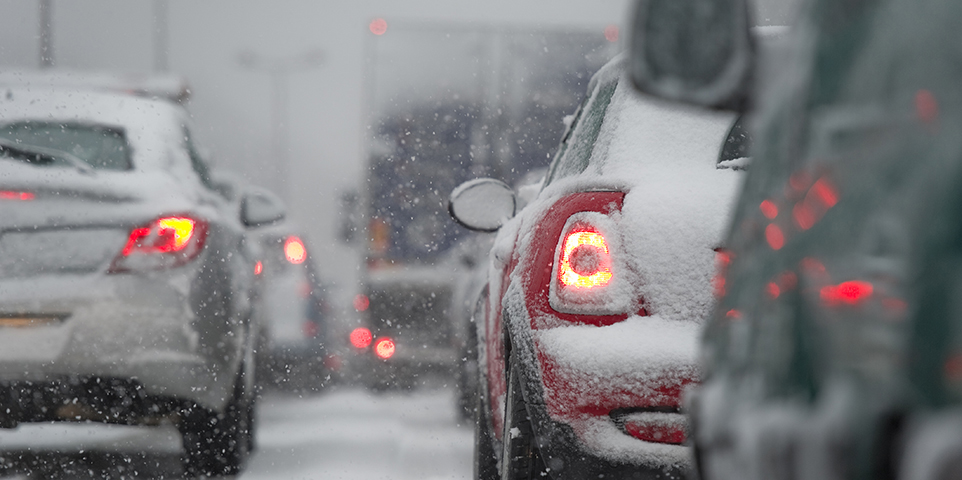
UK winters present road conditions that catch drivers unprepared every year — black ice, compacted snow, reduced visibility, and increased stopping distances combine to create a disproportionate accident rate between November and February. This guide covers every aspect of winter preparedness, technique, and vehicle management.
Key Points
- Stopping distances on ice are up to ten times greater than on dry roads — the two-second rule becomes a twenty-second rule
- Black ice — a thin, transparent layer of ice almost invisible on the road surface — is the most dangerous winter hazard and peaks in early morning hours
- Tyre choice matters more than any driving aid — winter or all-season tyres reduce stopping distances on cold, wet roads by up to 30% versus summer tyres below 7°C
- The DVSA recommends keeping at least a quarter tank of fuel in winter to prevent running out in slow or stationary traffic
- Smoothness is the single most important driving attribute in winter conditions — smooth acceleration, smooth braking, smooth steering
- Never warm up a car unattended on a public road — it is a criminal offence and invalidates insurance
Preparing the Car Before Winter Arrives
The majority of winter breakdown callouts respond to failures that were predictable and preventable. The RAC and AA consistently identify the same culprits: flat batteries, flat tyres, and empty fuel tanks.
Battery: Cold temperatures reduce battery output by up to 50%. A battery that starts reliably in October may fail to turn the engine over in January. Any battery over three years old should be tested before winter — most garages and Halfords branches offer free battery testing. A battery producing less than 70% of its rated capacity should be replaced before the cold weather arrives, not after a failure.
Tyres: Standard summer tyres have a compound designed to operate above 7°C — below this temperature, the rubber hardens and grip decreases significantly. Winter tyres — or all-season tyres as a compromise — use compounds that remain pliable at low temperatures, reducing stopping distances on cold wet roads by up to 30%. For UK drivers who face prolonged cold but not heavy snowfall, quality all-season tyres (Michelin CrossClimate, Continental AllSeasonContact) are the practical recommendation — no seasonal changeover required.
Antifreeze: Engine coolant requires the correct concentration of antifreeze to prevent freezing and subsequent engine damage. Most modern vehicles use long-life coolant that does not require annual replacement, but the concentration should be tested — a coolant tester strip costs under £2 and takes ten seconds to use. The correct concentration for UK winters is typically protection to -25°C.
Windscreen washer fluid: Ensure the reservoir is filled with a quality screenwash at the correct concentration for the ambient temperature — not water, which freezes in the nozzles and pipes. A concentration providing protection to -15°C is adequate for UK conditions in most years.
Wiper blades: Check blades for streaking, skipping, or smearing before the first frost. Replace any blades that do not clear cleanly — smeared vision in rain or sleet is dangerous, and modern beam blades perform significantly better than traditional frame designs in winter conditions.
The Winter Emergency Kit
A basic kit stored in the boot adds minimal weight but provides meaningful capability in the event of a breakdown or becoming stuck:
- Ice scraper and de-icer spray — the legal requirement is that the driver can see clearly before moving; driving with a porthole scraped in the windscreen is illegal and dangerous
- Blanket — essential if breakdown in cold conditions leads to a long wait
- Jump leads or a battery booster pack — a lithium battery booster pack the size of a paperback book can restart most petrol and smaller diesel engines and fits in the glovebox
- Traction aids — a bag of cat litter, sand, or purpose-made traction boards; placed under driven wheels when stuck
- High-visibility vest — required by law in several European countries; useful on UK roadsides
- Torch — phone torches work but a dedicated LED torch with spare batteries does not drain your communication device
- Spare screenwash concentrate — consumption increases dramatically in winter
Key Winter Driving Techniques
Acceleration and throttle control:
Pull away from rest in the highest gear that allows smooth movement — on ice, this is often second gear in a manual or the equivalent in an automatic. Apply throttle progressively and lightly. Wheelspin on ice is immediate and reduces traction to near zero — the moment the driven wheels spin freely, traction is lost and the car goes where momentum dictates rather than where you steer.
Modern traction control systems modulate power delivery automatically, but they cannot create grip that does not exist — they simply prevent the worst excesses of wheelspin. In very slippery conditions, switching the traction control off may allow a degree of controlled wheelspin to find purchase that the system would otherwise prevent — useful when stationary on an icy incline.
Braking:
Begin braking much earlier than normal — on dry roads, the two-second following distance is adequate; on ice, extend this to at least ten times the normal distance. Brake gently and progressively. Modern ABS systems prevent wheel lockup but cannot shorten stopping distances on ice — they simply maintain steering control during emergency braking. A car with ABS on ice takes the same distance to stop; it simply does not slide sideways in the process.
On a long descent in icy or snowy conditions, use engine braking by selecting a lower gear rather than riding the brakes — this distributes braking effect more evenly and reduces brake fade risk.
Steering:
Make all steering inputs slow and deliberate. Sudden steering movements on slippery surfaces transfer weight abruptly to one side of the car, potentially inducing a skid. If the front wheels begin to slide (understeer), ease off the throttle gently and wait for grip to return — attempting to steer further into the corner accelerates the slide.
Hills:
Approach any incline with enough momentum to carry through without needing to accelerate sharply partway up — unnecessary acceleration on an icy slope immediately causes wheelspin. If you must stop on an icy hill, consider whether you can safely continue — restarting on ice is significantly harder than maintaining momentum.
On descents, engage a lower gear before the slope and use engine braking throughout. Never coast in neutral.
Black Ice: The Specific Threat
Black ice forms when water freezes on the road surface as a thin, nearly transparent layer that is visually indistinguishable from wet asphalt. It is most common:
- Between midnight and 9am, when temperatures are at their lowest
- On bridges and elevated sections — air circulation underneath cools the road from below as well as above
- In sheltered sections — where the road is shaded by trees or buildings and never receives direct sunlight to thaw the surface
- On rural A-roads — less traffic means less heat generation from vehicles; less gritting priority than urban roads
The warning signs of black ice: the road surface appears darker and shinier than surrounding sections; other vehicles begin to move abnormally; steering feels unusually light. If black ice is suspected, reduce speed immediately and make no sudden inputs until you have confirmed grip.
FAQ
Do I legally have to clear all snow from my car before driving?
You must ensure you can see clearly in all required directions before moving — Highway Code Rule 229. This means clearing the entire windscreen, all side windows, wing mirrors, number plates, and snow that could slide off the roof onto following drivers. Driving with a porthole-only cleared windscreen is dangerous driving and can result in prosecution.
Should I use winter tyres in the UK?
For drivers in rural Scotland, Wales, and northern England who face regular winter snowfall, winter tyres are a worthwhile investment. For most UK drivers who face occasional frost and cold rain rather than sustained snow, high-quality all-season tyres provide a practical compromise without the inconvenience of seasonal changeovers.
What should I do if my car skids?
In a rear-wheel skid, steer gently into the direction of the skid — if the rear swings right, steer right — and ease off the throttle smoothly. In a front-wheel skid (understeer), ease off the throttle and allow the front wheels to regain grip before attempting to steer. Avoid sudden brake or throttle inputs in either scenario.
Is it illegal to leave my car running to defrost it?
Yes — leaving a car running and unattended on a public road is an offence under the Road Traffic Act 1988 (Rule 123 of the Highway Code). It also invalidates most insurance policies and makes the car an easy theft target. Use de-icer and a scraper — it takes no longer and carries no legal or insurance risk.
How does cold weather affect electric cars in winter?
Cold temperatures reduce EV battery range by 15–30% depending on the vehicle and temperature. Pre-conditioning — heating the cabin while still connected to the charger — reduces the range impact by warming the battery before departure. Most EVs offer pre-conditioning via smartphone app. Plan winter journeys with a reduced range assumption and ensure charging stops are identified in advance.





