
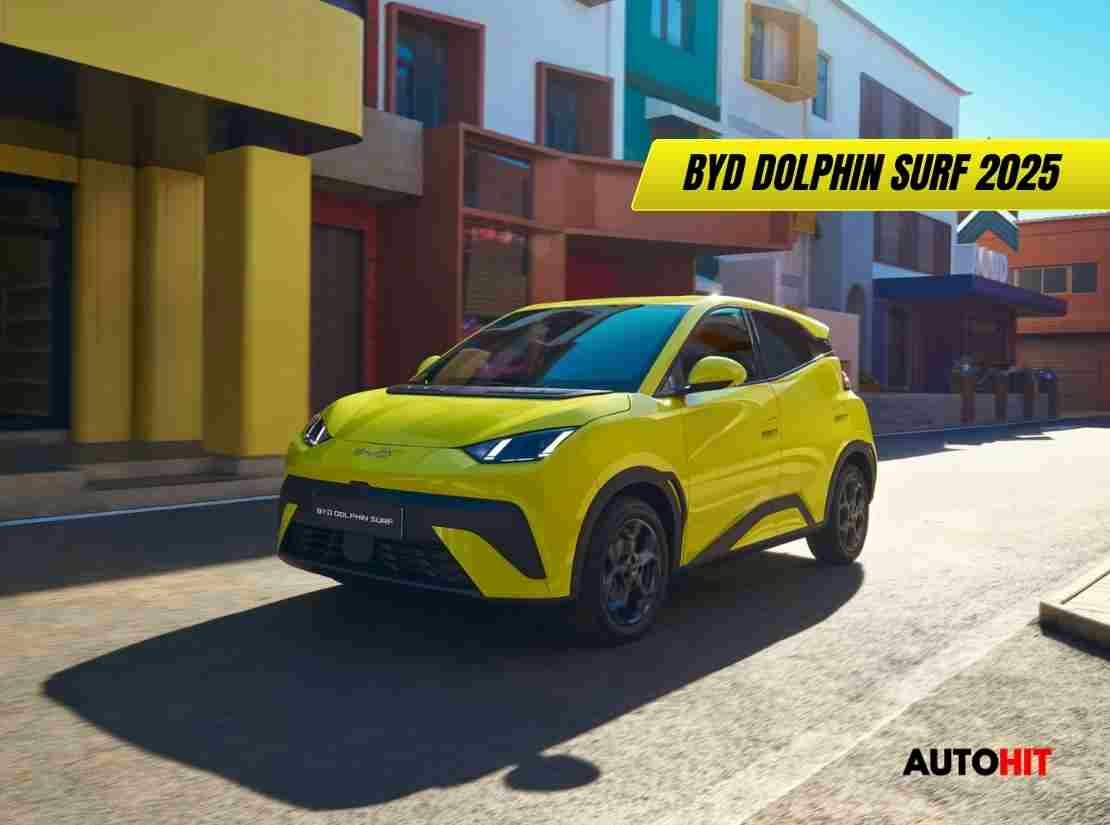
The BYD Dolphin Surf arrives in UK with 315-mile range from just £16,000. Is this affordable Chinese EV about to revolutionise electric car pricing? Full review here.
When BYD announced that its smallest electric car would arrive in the UK with a starting price of just £16,000, our editorial team at AutoHit had to double-check the figures. In a market where most electric cars still command premium prices, the prospect of a 315-mile range EV for less than the cost of a well-equipped conventional supermini seemed almost too good to be true. Having spent considerable time with BYD’s other UK offerings, we’re cautiously optimistic that the Chinese manufacturer might just pull off what European brands have struggled to achieve.
The Dolphin Surf – originally known as the Seagull in China but rebranded for European sensibilities – represents BYD’s most aggressive assault yet on traditional automotive pricing structures. Based on the company’s best-selling Chinese model, which costs the equivalent of just £8,000 in its home market, the UK version promises to offer significantly more sophistication while maintaining an astonishingly competitive price point.
This comprehensive review examines whether the Dolphin Surf can deliver on its ambitious promises, and crucially, whether it represents the breakthrough moment that makes electric motoring genuinely accessible to mainstream British buyers.
Key Highlights
- Starting price from £16,000 making it one of UK’s most affordable EVs
- Up to 315-mile range from the larger 60kWh battery option
- Three trim levels offering 200-mile, 240-mile, and 315-mile ranges
- 130kW (175bhp) motor significantly more powerful than Chinese Seagull
- Enhanced safety features designed specifically for European requirements
- Launch timing late 2025 with order books opening second half of year
- Direct challenge to Dacia Spring and upcoming budget EVs
- 3.78m length making it smaller than typical superminis but maximising urban practicality
Design and Positioning: Small Car, Big Ambitions
Exterior Styling: Purposeful Rather Than Pretty
According to our analysis at AutoHit, the Dolphin Surf adopts a refreshingly honest approach to small car design. At just 3.78 metres long, it’s shorter than most superminis but uses its compact dimensions intelligently. The styling suggests a tiny MPV rather than a traditional hatchback, with a short bonnet, deep windscreen, and generally tall appearance that should maximise interior space.
We’ve seen enough small EVs to know that packaging efficiency matters more than dramatic styling in this segment. The Dolphin Surf appears to prioritise substance over style, with clean lines and practical proportions that should age well. Whether British buyers will embrace its utilitarian aesthetic over more fashionable alternatives remains to be seen.
The decision to rebrand from ‘Seagull’ to ‘Dolphin Surf’ shows BYD’s sensitivity to UK market perceptions – a encouraging sign that the company is serious about local market adaptation rather than simply dumping surplus Chinese production.
Interior Philosophy: Function Over Form
Early reports suggest the cabin follows the same practical philosophy as the exterior. Two screens dominate the dashboard – a smaller driver information display and a larger central touchscreen for multimedia functions. This twin-screen approach has become standard across BYD’s range, suggesting economies of scale that help keep costs controlled.
The seating arrangement accommodates four adults without a central rear seatbelt for a fifth passenger – a pragmatic decision that optimises space for the target occupancy. With over 20 storage areas promised throughout the cabin, BYD clearly understands that small car buyers prioritise practicality over premium materials.
The reality, however, is that cost constraints will inevitably show in material quality and fit-and-finish. Based on our experience with other budget EVs, buyers will need to adjust expectations accordingly.
Technical Specifications: Enhanced for Europe
Power and Performance: More Muscle Than Expected
The UK-spec Dolphin Surf will benefit from significant mechanical upgrades over its Chinese sibling. While the original Seagull makes do with just 74bhp, the European version doubles the power to 130kW (175bhp) – a substantial increase that should transform the driving experience.
BYD Dolphin Surf 2025 – Technical Specifications
| Specification | Entry Model | Mid-Range | Long Range | Our Assessment |
|---|---|---|---|---|
| Expected UK Price | £16,000 | £18,000 | £20,000 | Exceptional value positioning |
| Battery Capacity | ~30kWh | ~45kWh | ~60kWh | Estimated based on range figures |
| WLTP Range | 200 miles | 240 miles | 315 miles | Impressive for price point |
| Motor Power | 130kW (175bhp) | 130kW (175bhp) | 130kW (175bhp) | Same motor across range |
| Drive Type | Front-wheel drive | Front-wheel drive | Front-wheel drive | Appropriate for segment |
| 0-62mph | ~9 seconds | ~9 seconds | ~9 seconds | Estimated, adequate performance |
| Top Speed | ~100mph | ~100mph | ~100mph | Suitable for UK conditions |
| Charging Speed | DC fast charging | DC fast charging | DC fast charging | Details TBC |
This power increase addresses one of the key concerns about ultra-budget EVs – that they feel underpowered and unstable at higher speeds. With 175bhp available, the Dolphin Surf should offer adequate performance for British driving conditions, including motorway merging and overtaking.
Battery Technology: BYD’s Blade Advantage
The Dolphin Surf will utilise BYD’s acclaimed Blade battery technology – lithium iron phosphate (LFP) cells arranged in a structural format that enhances both safety and packaging efficiency. This technology has proven successful across BYD’s global range and offers several advantages over conventional lithium-ion batteries.
LFP chemistry provides enhanced thermal stability, longer cycle life, and lower fire risk compared to traditional batteries. The trade-off is slightly lower energy density, but for a budget-focused model, the safety and longevity benefits arguably outweigh the modest range penalty.
Based on what we know so far, charging speeds are expected to be competitive but not class-leading. This is typical for budget EVs, where fast charging capability adds significant cost that must be balanced against target pricing.
BYD Dolphin Surf vs Standard Dolphin – Key Differences
| Feature | Dolphin Surf | Standard Dolphin | Impact for Buyers |
|---|---|---|---|
| Length | 3.78m | 4.29m | Surf more compact, easier parking |
| Price Range | £16,000-£20,000 | £26,000-£32,000 | Surf significantly cheaper |
| Target Market | Budget-conscious buyers | Mainstream EV buyers | Different market segments |
| Power Output | 175bhp | 94-201bhp | Surf has adequate performance |
| Range Options | 200-315 miles | 193-265 miles | Surf offers better range variety |
| Interior Space | 4 seats | 5 seats | Surf more compact cabin |
| Market Position | Entry-level EV | Mid-market EV | Surf targets new segment |
UK Market Context and Competition
Pricing Revolution: Disrupting Traditional EV Economics
The Dolphin Surf’s £16,000 starting price represents a genuine paradigm shift in UK electric car pricing. To put this in perspective, it costs less than many conventional superminis while offering zero emissions, minimal running costs, and impressive range capability.
Budget Electric Car Comparison – UK Market 2025
| Model | Starting Price | Range (WLTP) | Power | Boot Space | Market Position |
|---|---|---|---|---|---|
| BYD Dolphin Surf | £16,000 | 200-315 miles | 175bhp | ~300 litres | Game-changing value |
| Dacia Spring | £15,000 | 140 miles | 44bhp | 290 litres | Current budget leader |
| Citroën e-C3 | £22,000 | 199 miles | 113bhp | 310 litres | Style-focused alternative |
| Fiat Grande Panda | £20,000+ (est.) | 200+ miles | TBC | TBC | Premium budget option |
| Hyundai Inster | £23,000 | 203 miles | 115bhp | 280 litres | Quality-focused choice |
| MG4 EV | £27,000 | 218-281 miles | 168-201bhp | 363 litres | Performance value leader |
Looking at this comparison, the Dolphin Surf’s positioning becomes clear. It offers significantly more performance than the Dacia Spring while undercutting more sophisticated alternatives by thousands of pounds. As we’ve noted in our guide to best affordable SUVs under £25,000, British buyers are increasingly price-conscious without wanting to sacrifice too much capability.
Target Market: Broadening EV Appeal
The Dolphin Surf directly targets buyers who’ve been priced out of electric motoring by premium positioning across most of the market. This includes first-time EV buyers, urban commuters, and cost-conscious families seeking a practical second car.
For UK buyers, the combination of low purchase price, minimal running costs, and exemption from congestion charges creates a compelling total cost of ownership proposition. According to current UK government vehicle taxation rates, the Dolphin Surf would qualify for the lowest VED band while offering significantly lower fuel costs than any petrol equivalent.
Real-World Practicality and Usability
Urban Focus: Designed for City Life
The Dolphin Surf’s compact 3.78-metre length makes it ideally suited to British urban environments. Parking in crowded city centres, navigating narrow residential streets, and manoeuvring through tight spaces should all be effortless – key advantages that help justify the smaller external dimensions.
Boot capacity of around 300 litres (estimated) won’t match larger hatchbacks but should prove adequate for typical small car usage patterns. With rear seats folded, space expands to over 1,000 litres – impressive for such a compact vehicle and genuinely useful for occasional larger loads.
The higher driving position, despite the small external size, should provide good visibility in traffic – an important safety advantage in busy urban conditions.
Range Reality: Managing Expectations
While the 315-mile maximum range figure sounds impressive, real-world results will inevitably be lower. Based on our experience testing similar Chinese EVs, expect approximately 20-25% reduction in typical mixed driving conditions. This would translate to:
- Entry model: ~160 miles real-world range
- Mid-range: ~200 miles real-world range
- Long-range: ~250 miles real-world range
Even with this reality check, the range capabilities remain strong for the price point and perfectly adequate for most British driving patterns.
Manufacturing and Quality Considerations
European Adaptation: More Than Just Rebranding
BYD has emphasised that the Dolphin Surf represents more than simply rebranding the Chinese Seagull for European markets. The enhanced safety features, doubled power output, and European-specific calibration suggest genuine development investment rather than badge engineering.
This approach reflects lessons learned from other Chinese manufacturers’ European expansions. As we’ve observed in our analysis of the ultimate guide to the best hybrid cars in the UK for 2025, successful market entry requires understanding local preferences and requirements.
Build Quality Expectations: Realistic Assessment
At £16,000, the Dolphin Surf cannot match the material quality or refinement of premium alternatives. Interior plastics will feel basic, panel gaps may be inconsistent, and some control interfaces might lack the slickness of more expensive rivals.
However, this doesn’t necessarily equate to poor reliability. BYD’s manufacturing experience and global scale should ensure fundamental mechanical integrity, even if surface refinement falls short of European standards.
Early buyers should view the Dolphin Surf as exceptional value rather than a premium product sold cheaply. This mindset adjustment is crucial for satisfaction.
UK Launch Strategy and Availability
Market Entry Timeline
BYD Dolphin Surf UK Launch Schedule
| Phase | Timeline | Details | Our Advice |
|---|---|---|---|
| Order Books Open | Q3 2025 | Initial availability announcement | Register interest early |
| Pricing Confirmation | Q3 2025 | Final UK specifications and pricing | Compare total cost with alternatives |
| First Deliveries | Q4 2025 | Limited initial allocation | Expect delivery delays initially |
| Full Availability | Q1 2026 | Complete range and options | Better choice but potentially higher prices |
| Dealer Network | Ongoing | Expansion from 62 to 120+ dealers | Check local service availability |
BYD’s expanding UK dealer network should provide adequate sales and service coverage for most buyers, though rural customers may face longer journeys for maintenance. The company’s ambitious target of 120+ dealers by end-2025 suggests serious commitment to UK market development.
Competition Response: Pressure on Established Brands
The Dolphin Surf’s arrival will inevitably pressure established manufacturers to respond with their own budget EV offerings. We’re already seeing this with accelerated development of models like the Volkswagen ID.1 and refreshed Renault Twingo EV.
This competitive pressure benefits consumers but may also lead to compromises as manufacturers seek to match BYD’s pricing while maintaining profitability. Early buyers of the Dolphin Surf may benefit from first-mover advantage before the market becomes more crowded.
Ownership Experience and Running Costs
Total Cost Analysis
BYD Dolphin Surf – 5-Year Ownership Projection
| Cost Category | Annual Amount | 5-Year Total | Comparison Notes |
|---|---|---|---|
| Purchase Price | – | £16,000 | One-time cost |
| Insurance | £400-£600 | £2,500 | Lower than premium EVs |
| Electricity | £300-£500 | £2,000 | Based on 10,000 miles/year |
| Servicing | £200-£300 | £1,250 | EV servicing simpler |
| Depreciation | £2,000-£2,500 | £10,000 | Estimated 60% over 5 years |
| VED/Road Tax | £0 | £0 | Zero emissions benefit |
| Total (excl. purchase) | £2,900-£3,900 | £15,750 | Very low running costs |
The Dolphin Surf’s low running costs help justify the initial purchase, though depreciation remains the largest cost component. However, even with significant depreciation, the total cost of ownership should undercut most conventional alternatives.
Charging Infrastructure Considerations
With charging speeds expected to be moderate rather than exceptional, the Dolphin Surf suits buyers with regular access to home charging. The smaller battery capacities also mean shorter charging sessions when using public infrastructure.
BYD has announced plans for its own UK charging network, though this remains in early development stages. For now, buyers will rely on existing public infrastructure and home charging solutions.
Long-Term Market Impact
Industry Disruption: Accelerating EV Adoption
The Dolphin Surf’s pricing could prove to be a watershed moment for UK electric car adoption. By offering credible EV capability at conventional car prices, it removes the premium penalty that has deterred many potential buyers.
This democratisation of electric mobility aligns with government objectives for widespread EV adoption while potentially accelerating the decline of conventional engines in the budget sector. As we’ve noted in our coverage of best hybrid cars for city driving in 2025, the transition to electrified powertrains is gathering momentum across all market segments.
European Manufacturer Response
The success or failure of the Dolphin Surf will likely influence European manufacturers’ own budget EV strategies. If BYD demonstrates strong demand for affordable electric cars, expect accelerated development from established players who cannot afford to cede this market segment.
This competitive dynamic ultimately benefits consumers through increased choice and downward price pressure across the market.
BYD UK Market Strategy – Product Timeline 2025-2026
| Model | Launch Status | Price Range | Target Segment | Our Assessment |
|---|---|---|---|---|
| Dolphin Surf | Q4 2025 | £16,000-£20,000 | Budget EV | Game-changing value |
| Sealion 7 | Q2 2025 | £45,000+ | Premium SUV | Tesla Model Y rival |
| Shark 6 Pickup | 2025 | TBC | Commercial/Lifestyle | Niche UK appeal |
| DM-i Hybrids | 2025 | £25,000-£40,000 | Mainstream alternatives | Hedge against EV-only |
| Dolphin Mini | 2026 | <£15,000 | Ultra-budget | Potential Dacia Spring rival |
Frequently Asked Questions
How much will the BYD Dolphin Surf actually cost to run day-to-day?
Based on current UK electricity prices, expect running costs of around 4-6p per mile for home charging, compared to 15-20p per mile for equivalent petrol cars. Annual electricity costs for 10,000 miles would be approximately £400-£600, significantly lower than petrol alternatives. Factor in zero VED and potential congestion charge exemptions for additional savings.
Is the 315-mile range figure realistic for UK driving?
The 315-mile maximum range is based on WLTP testing, which tends to be optimistic. In real-world UK conditions, expect around 250-260 miles from the long-range version, with lower figures in winter or motorway driving. However, this still represents excellent range for the price point and covers most typical journey patterns.
How does build quality compare to European alternatives?
At £16,000, expect functional rather than premium quality. Interior materials will be basic, and some fit-and-finish details may fall short of European standards. However, fundamental reliability should be sound given BYD’s manufacturing scale and experience. View it as exceptional value rather than a discounted premium product.
Will parts and servicing be readily available?
BYD is expanding its UK dealer network from 62 to over 120 locations by end-2025, providing reasonable coverage for most buyers. However, rural customers may face longer journeys for service. Parts availability should improve as volumes increase, though initial supplies may be limited.
Should I buy one immediately or wait for alternatives?
Early buyers will benefit from first-mover advantage and potentially the best pricing before competitors respond. However, they’ll also face the risks associated with any new model launch – limited parts supply, unfamiliar technology for service technicians, and potential early production issues. Your risk tolerance should guide the decision.
How long will the £16,000 starting price last?
Initial pricing often represents launch offers that may not be sustained long-term. Additionally, if demand exceeds supply, dealers may add premiums. The introductory European pricing (€22,990 rising to €24,990) suggests some price inflation is possible, though UK pricing should remain competitive.
What happens to insurance costs for such an unusual car?
Insurance for Chinese EVs can be more expensive than mainstream alternatives due to unfamiliarity and potentially higher repair costs. However, the Dolphin Surf’s low purchase price should help keep premiums manageable. Get quotes from multiple insurers before committing to purchase.
Our Verdict: Revolutionary Pricing, Evolutionary Product
The BYD Dolphin Surf represents the most significant development in affordable electric motoring since the original Tesla Model S proved EVs could be desirable. By bringing genuinely competitive electric capability to conventional car pricing, it removes the primary barrier that has prevented mainstream EV adoption among cost-conscious buyers.
From a purely rational perspective, the Dolphin Surf makes compelling sense. The combination of low purchase price, minimal running costs, zero local emissions, and impressive range creates a value proposition that’s difficult to match with conventional powertrains. For urban commuters, second-car buyers, or anyone prioritising cost-effective mobility, it offers exceptional value.
However, we can’t ignore the compromises inherent in such aggressive pricing. Build quality will be functional rather than premium, dealer network coverage remains limited, and long-term reliability remains unproven in UK conditions. Early buyers are essentially beta testers for BYD’s European expansion strategy.
That said, the potential impact extends far beyond the Dolphin Surf itself. If BYD demonstrates strong demand for affordable EVs, it will accelerate development of competing models and drive down prices across the segment. This competitive pressure benefits all consumers, regardless of which brand they ultimately choose.
Our recommendation depends entirely on your circumstances and risk tolerance. If you need affordable, practical transport and can tolerate the compromises associated with early adoption, the Dolphin Surf offers extraordinary value. Just don’t expect German refinement or Japanese reliability – at least not initially.
For most buyers, we’d suggest waiting to see real-world reviews and reliability data before committing. However, for those willing to embrace the adventure of pioneering affordable electric mobility, the Dolphin Surf could prove to be one of the most significant automotive purchases of the decade.
The automotive landscape is changing rapidly, and BYD’s aggressive pricing strategy might just be the catalyst that transforms electric cars from premium alternatives to mainstream necessities. Whether you’re ready to join that revolution is a decision only you can make.
As detailed on the official BYD Europe website, the company’s commitment to accessible electric mobility aligns perfectly with the UK’s decarbonisation objectives. The Dolphin Surf might not be perfect, but it could be exactly what the market needs to accelerate the transition to electric motoring.





