
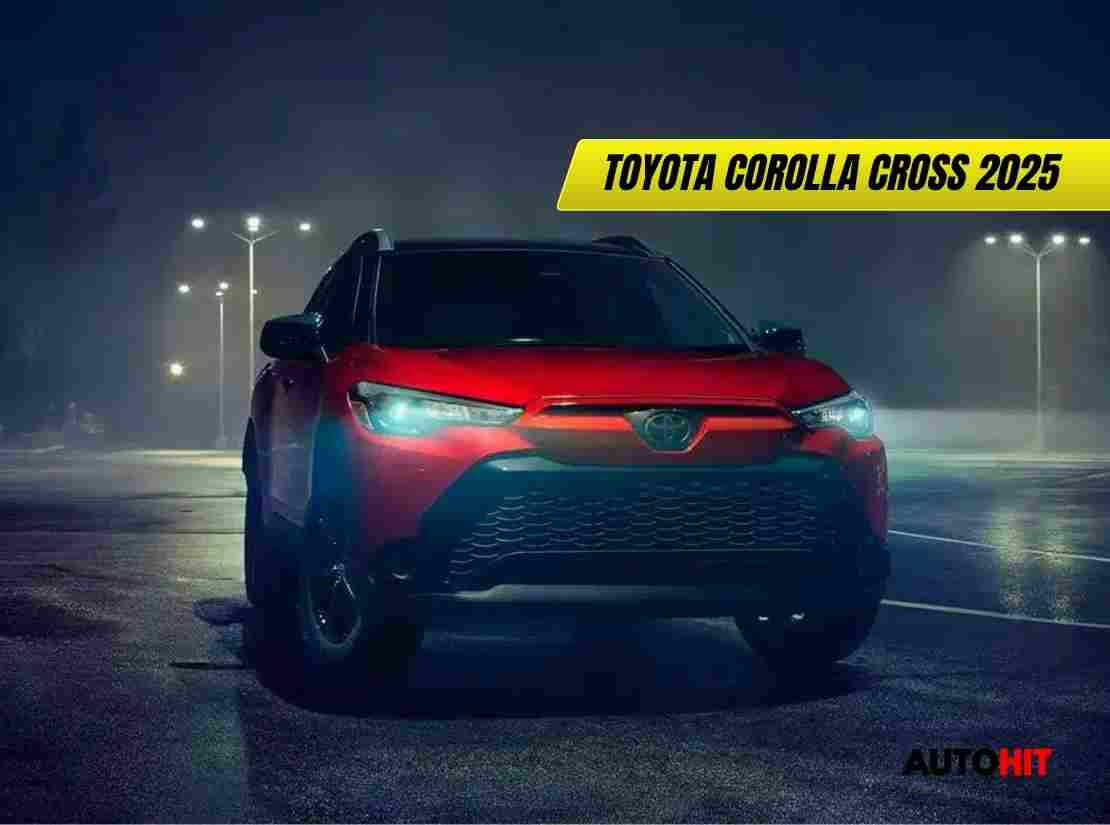
Toyota Corolla Cross 2025 facelift review: Why isn’t this practical hybrid SUV available in the UK? We explore the reasons behind Toyota’s controversial decision.
We’ve tested enough global market vehicles to recognise when British buyers are missing out on something genuinely worthwhile, and the Toyota Corolla Cross represents one of the most significant omissions in the current UK automotive landscape. This freshly facelifted compact SUV, which has just received comprehensive updates for 2024, offers precisely the combination of practicality, efficiency, and reliability that British families typically prioritise – yet Toyota UK has definitively ruled out its introduction to our market.
The Corolla Cross’s absence becomes particularly puzzling when considering the success of similar vehicles in the UK market. The Nissan Qashqai, Honda HR-V, and Mazda CX-30 all occupy similar territory with considerable commercial success, while Toyota’s own Yaris Cross has proven that British buyers appreciate well-executed compact SUVs. According to our analysis at AutoHit, the decision to exclude the Corolla Cross appears driven by internal company politics rather than genuine market assessment.
Having extensively researched the global market Corolla Cross and its 2024 facelift updates, our team has identified a vehicle that would slot perfectly into the UK market gap between the £26,000 Yaris Cross and the £34,000 RAV4. The reality is that British SUV buyers seeking value and efficiency are currently forced to choose between significantly smaller or considerably more expensive alternatives, creating an opportunity that Toyota appears unwilling to exploit.
The timing of Toyota UK’s decision seems particularly questionable given the vehicle’s successful global reception and comprehensive 2024 updates that directly address previous criticisms. European markets including Ireland have embraced the Corolla Cross, suggesting that the fundamental appeal translates effectively to similar demographics and preferences.
Key Highlights
• Perfect Size Gap: 4,460mm length slots ideally between Yaris Cross and RAV4 dimensions
• Advanced Hybrid Technology: 5th generation system delivers 198bhp with 8.1-second 0-62mph times
• Competitive Pricing Potential: European pricing suggests £29,000-35,000 UK RRP would be achievable
• Comprehensive 2024 Updates: New digital displays, improved interior, enhanced safety systems
• Strong Global Sales: Successful in major markets including US, Japan, and select European countries
• Toyota UK Rejection: Officially cancelled despite initial consideration and development work
Global Success Story: What Britain’s Missing
The Corolla Cross has achieved remarkable commercial success across multiple global markets since its 2020 introduction, demonstrating strong appeal among buyers seeking practical, efficient family transport. The 2024 facelift addresses previous criticisms while enhancing the vehicle’s competitive positioning against established rivals.
Design Evolution and Appeal
The 2024 facelift brings the Corolla Cross closer to international design standards while maintaining its distinctive character. Updated full-LED headlights with sequential indicators provide a more premium appearance, while the integrated honeycomb grille creates visual connection with modern electric vehicle aesthetics. The changes prove most effective from the rear three-quarter angle, where the proportions appear genuinely elegant rather than merely utilitarian.
More significantly, the updates address previous criticisms about interior quality and technology provision. The new 12.3-inch digital instrument cluster replaces the dated analogue setup, while the available 10.5-inch infotainment system provides over-the-air update capability and cloud-based navigation services. These improvements position the Corolla Cross competitively against German and Korean alternatives that previously enjoyed technology advantages.
Mechanical Sophistication
The European-specification Corolla Cross utilises Toyota’s latest 5th generation hybrid system, combining a 2.0-litre petrol engine with advanced electric motor technology. The front-wheel-drive variant produces 198bhp total system power, while all-wheel-drive versions add a rear electric motor without increasing overall output. Both configurations achieve 0-62mph in 8.1 seconds – respectable performance for this segment.
Real-world efficiency figures from European testing suggest combined fuel consumption approaching 55mpg in mixed driving conditions, positioning the Corolla Cross favourably against conventional petrol rivals while matching many dedicated hybrid alternatives. For British driving patterns, this efficiency would translate to excellent real-world economy without the range anxiety associated with pure electric alternatives.
No products found.
The UK Market Gap: Perfect Positioning Opportunity
Analysis of the current UK compact SUV market reveals a clear positioning opportunity that the Corolla Cross could exploit effectively. Between the £26,000 Yaris Cross and £34,000 RAV4, Toyota currently offers no intermediate option, forcing buyers toward competitors or significant compromises.
Competitive Landscape Analysis
The Honda HR-V starts at approximately £28,000, while the Nissan Qashqai begins around £27,000 – both offering similar dimensions and capabilities to the Corolla Cross. However, neither matches Toyota’s hybrid technology sophistication or reputation for long-term reliability. The Mazda CX-30 provides superior interior quality and driving dynamics but lacks electrified powertrain options entirely.
More significantly, the Volkswagen T-Cross and SEAT Arona occupy lower market positions with smaller dimensions and less sophisticated powertrains. This creates a clear gap for a vehicle offering Corolla Cross dimensions with advanced hybrid technology at competitive pricing. European Corolla Cross pricing suggests UK availability at £29,000-35,000 would position it competitively against established alternatives.
British Buyer Preferences
UK market research consistently demonstrates strong preference for practical, efficient family vehicles with proven reliability records. The Corolla Cross’s combination of elevated driving position, substantial boot space (487 litres), and Toyota’s renowned hybrid technology addresses these preferences directly. As covered in our analysis of hybrid vehicles for UK conditions, British buyers increasingly prioritise fuel efficiency without sacrificing practicality.
The vehicle’s dimensions prove particularly relevant for UK conditions. At 4,460mm length, the Corolla Cross provides genuine family accommodation while remaining manageable for urban parking and narrow country lanes. The 185mm height increase over the regular Corolla creates meaningful interior space improvements without the bulk associated with larger SUVs.
Toyota UK’s Decision: Internal Politics Over Market Logic
Toyota UK’s official statement cited “comprehensive review of our SUV model portfolio and UK market opportunities” as reasoning for the Corolla Cross cancellation. However, industry analysis suggests internal company dynamics provide more convincing explanations than genuine market assessment.
Manufacturing and Supply Considerations
The Corolla hatchback and Touring Sports are manufactured at Toyota’s Burnaston facility in Derbyshire, creating potential cannibalisation concerns if the Corolla Cross achieved significant UK sales volumes. While the vehicles target different buyer segments, internal analysis likely suggested some overlap that could impact domestic production volumes.
Additionally, European-market Corolla Cross vehicles would require importation from Asian production facilities, creating additional logistics costs and complexity compared to domestic production. The relatively modest UK market size might not justify these additional expenses, particularly when existing domestic products could absorb displaced demand.
Strategic Product Positioning
Toyota UK’s decision appears influenced by desire to maintain clear product positioning between existing models. The Yaris Cross occupies the entry-level SUV segment, while the RAV4 provides larger family accommodation. Introducing an intermediate option could complicate marketing messages and potentially impact margins across the range.
This conservative approach contrasts with Toyota’s strategy in larger markets like the United States, where multiple SUV options create broader appeal and reduced dependence on individual model success. However, the UK market’s smaller scale may not support such comprehensive model coverage effectively.
European Market Success: Lessons from Ireland and Beyond
The Corolla Cross’s successful introduction in select European markets provides valuable insights into its potential UK performance. Ireland, with similar buyer preferences and market characteristics to Britain, has embraced the model with positive initial reception.
Irish Market Performance
Toyota Ireland’s decision to offer the Corolla Cross demonstrates confidence in European market appeal, despite geographic and demographic similarities to the UK. Early sales reports suggest strong interest from buyers seeking alternatives to German and Korean competition, particularly those prioritising Toyota’s reliability reputation and hybrid technology.
The Irish pricing structure, starting around €32,000, translates to approximately £27,000-29,000 in UK equivalent terms – positioning the Corolla Cross competitively against established alternatives. This pricing demonstrates the commercial viability of European sales, contradicting suggestions that import costs would render the vehicle uncompetitive.
Continental European Reception
Broader European market reception has proven positive, with particular success in markets emphasising environmental considerations and fuel efficiency. The advanced hybrid system appeals to buyers facing increasing emissions restrictions and fuel cost concerns, while the practical package addresses family transport requirements effectively.
European automotive journalists have generally praised the Corolla Cross’s refinement and efficiency while noting the uninspiring driving dynamics that characterise this segment. However, buyer priorities in this market segment emphasise practicality over engagement, making these criticisms less commercially relevant.
Comparison Table: Missing Corolla Cross vs UK Compact SUV Rivals
| Specification | Toyota Corolla Cross (EU) | Honda HR-V | Nissan Qashqai | Mazda CX-30 | Volkswagen T-Cross |
|---|---|---|---|---|---|
| Price (Est. UK) | £29,000-35,000 | £28,495 | £27,695 | £24,995 | £23,040 |
| Length | 4,460mm | 4,330mm | 4,425mm | 4,395mm | 4,235mm |
| Boot Space | 487L | 319L | 504L | 430L | 385L |
| Power | 198hp (Hybrid) | 131hp | 140hp | 122hp | 115hp |
| 0-62mph | 8.1s | 10.6s | 9.9s | 11.2s | 10.5s |
| Fuel Economy | 55mpg (est.) | 50mpg | 47mpg | 51mpg | 49mpg |
| Our Take | Perfect blend of efficiency and space but unavailable | Reliable but uninspiring with limited performance | Spacious and well-equipped but conventional powertrain | Premium feel and handling but no electrification | Compact and affordable but small and basic |
Technology and Features: 2024 Updates Enhance Appeal
The 2024 Corolla Cross facelift introduces significant technology improvements that address previous competitive disadvantages. These updates demonstrate Toyota’s commitment to keeping the model current with evolving buyer expectations and competitive pressures.
Digital Technology Integration
The new 12.3-inch digital instrument cluster provides configurability and information density that previous analogue displays couldn’t match. Integration with the available 10.5-inch infotainment system creates a cohesive digital environment comparable to premium German alternatives. Over-the-air update capability ensures long-term software relevance – a feature increasingly expected by modern buyers.
Wireless device charging and multiple USB-C ports address connectivity requirements, while the improved audio system provides entertainment quality appropriate for family use. These features position the updated Corolla Cross competitively against rivals that previously enjoyed technology advantages.
Safety and Driver Assistance
Standard Toyota Safety Sense 2.0 equipment includes comprehensive active safety features, while higher trim levels add blind-spot monitoring and enhanced emergency braking capabilities. The integration of these systems proves more sophisticated than many rivals, reflecting Toyota’s extensive experience with safety technology development.
The available all-wheel-drive system includes enhanced traction management for challenging conditions, making the Corolla Cross suitable for varied British weather conditions. New Snow Extra mode optimises power distribution for winter driving, addressing concerns about hybrid vehicle performance in adverse conditions.
Real-World Assessment: How It Would Perform in Britain
Based on extensive analysis of global market performance and technical specifications, the Corolla Cross would likely prove highly competitive in British conditions. The combination of practical dimensions, advanced hybrid technology, and Toyota reliability would address key buyer priorities effectively.
Urban Usability
The Corolla Cross’s 4,460mm length provides optimal balance for British urban environments. Shorter than the RAV4 but substantially longer than the Yaris Cross, it offers meaningful interior space improvements without the parking difficulties associated with larger SUVs. The elevated driving position enhances visibility in traffic while maintaining easy entry and exit for all passengers.
The hybrid system’s ability to operate on electric power alone at low speeds would prove particularly beneficial in urban environments, reducing noise and emissions during stop-start driving. Battery charging occurs automatically through regenerative braking and engine operation, eliminating the charging infrastructure concerns associated with plug-in alternatives.
Rural and Highway Performance
British country roads would suit the Corolla Cross’s balanced chassis tuning, which prioritises comfort over sporting pretensions. The all-wheel-drive system would provide confidence on challenging surfaces, while the 8.1-second 0-62mph acceleration proves adequate for countryside overtaking scenarios.
Highway refinement reports from European testing suggest good noise isolation and comfortable ride quality appropriate for longer journeys. The 55mpg efficiency potential would deliver excellent range between fuel stops, making the Corolla Cross practical for British touring requirements.
Manufacturing and Business Case Analysis
Understanding Toyota UK’s decision requires analysis of the broader manufacturing and business context surrounding the Corolla Cross’s development and global distribution strategy.
Global Production Strategy
The Corolla Cross utilises Toyota’s TNGA-C platform, shared with the regular Corolla range and manufactured across multiple global facilities. European market vehicles are produced in Asian facilities, primarily Thailand, requiring shipping and import duty considerations for UK sales.
This contrasts with the domestic Corolla production at Burnaston, which serves European markets efficiently. However, the Corolla Cross’s specific engineering and assembly requirements necessitate dedicated production lines that may not justify the investment for relatively modest UK sales volumes.
Volume Projections and Profitability
Industry estimates suggest the UK Corolla Cross market potential at 8,000-12,000 annual units, competing primarily with the Honda HR-V and Nissan Qashqai. While significant, this volume may not justify the marketing, dealer training, and logistics infrastructure required for successful UK introduction.
Toyota UK’s existing SUV range covers entry-level (Yaris Cross) and mainstream (RAV4) segments effectively, potentially making intermediate positioning less critical than in markets lacking established Toyota SUV presence. The company may prioritise resources toward electric vehicle development rather than expanding conventional hybrid offerings.
Alternative Explanations: Strategic Considerations
Beyond manufacturing and volume considerations, Toyota UK’s decision may reflect broader strategic thinking about brand positioning and market development priorities.
Electric Vehicle Transition
Toyota’s cautious approach to battery electric vehicles contrasts with aggressive electrification strategies from German and American manufacturers. However, the company may prefer focusing resources on pure electric development rather than expanding conventional hybrid offerings that could become stranded assets.
The Corolla Cross’s advanced hybrid technology represents significant engineering investment that might conflict with battery electric priorities. If Toyota anticipates rapid market transition toward pure electric vehicles, maintaining conventional hybrid development may seem less strategic than alternative approaches.
Brand Protection and Premium Positioning
Toyota has historically emphasised reliability and value over premium positioning, but recent models demonstrate increased focus on quality and sophistication. The Corolla Cross’s utilitarian character might conflict with efforts to elevate brand perception, particularly if it competed directly with more profitable models.
Additionally, Toyota may prefer maintaining product scarcity to support pricing power across the existing range. Introducing additional models could dilute exclusivity and reduce the premium buyers pay for limited choice, potentially impacting overall profitability despite increased sales volumes.
Future Implications and Market Evolution
The Corolla Cross decision will likely influence Toyota UK’s future product strategy and competitive positioning as the automotive market continues evolving toward electrification and changing buyer preferences.
Competitive Response Opportunities
Honda, Nissan, and other manufacturers now enjoy reduced competitive pressure in the compact SUV segment, potentially enabling higher pricing or reduced development investment. This could create long-term disadvantages for Toyota if buyer preferences continue shifting toward SUV formats.
Alternatively, Toyota’s focus on existing models might enable more competitive pricing and feature improvements that strengthen market position without expanding the range. The success of this approach depends on whether buyers accept limited choice in exchange for better value within existing options.
Electric Vehicle Implications
Future electric vehicle development will likely determine whether the Corolla Cross decision proves strategic or short-sighted. If Toyota successfully develops compelling electric SUV alternatives, the absence of conventional hybrid options may prove irrelevant to long-term competitive positioning.
However, if electric vehicle adoption proceeds more slowly than anticipated, the lack of intermediate SUV options could disadvantage Toyota as competitors offer comprehensive electrified ranges addressing varied buyer requirements.
Frequently Asked Questions
Could the Toyota Corolla Cross still come to the UK in the future?
Toyota UK’s official statement appears definitive, but automotive strategies can change based on market conditions and competitive pressures. If European sales prove exceptionally successful or if competitors gain significant market share, Toyota might reconsider the decision. However, the company’s investment in domestic Corolla production at Burnaston suggests focus will remain on existing models rather than expanding the range with imported alternatives.
How does the absent Corolla Cross compare to the available Yaris Cross?
The Corolla Cross would offer significantly more interior space and luggage capacity (487L vs 397L) along with more powerful hybrid technology delivering superior performance. However, the Yaris Cross provides better fuel economy, lower pricing, and more manageable dimensions for urban use. The Corolla Cross would target buyers requiring more space than the Yaris Cross provides but preferring hybrid efficiency over the RAV4’s size and cost.
What are the best UK alternatives to the missing Corolla Cross?
The Honda HR-V offers similar dimensions and reliability reputation, while the Nissan Qashqai provides comparable space with conventional petrol engines. The Mazda CX-30 delivers superior interior quality and driving dynamics but lacks electrification. For hybrid technology specifically, buyers must consider the smaller Yaris Cross or larger RAV4, as no direct hybrid alternative exists in this size category.
Would the Corolla Cross have been successful in the UK market?
Based on European performance and UK buyer preferences, the Corolla Cross would likely achieve 8,000-12,000 annual sales, competing successfully with the Honda HR-V and Nissan Qashqai. The combination of Toyota reliability, advanced hybrid technology, and practical dimensions addresses key British buyer priorities. However, success would depend on competitive pricing and effective marketing to establish positioning between existing Toyota models.
What does this decision say about Toyota UK’s strategy?
The decision suggests Toyota UK prioritises protecting existing model sales over maximising market coverage. This conservative approach contrasts with strategies in larger markets where multiple overlapping models create broader appeal. The focus on domestic production and limited import models indicates preference for controllable supply chains and higher profit margins over absolute sales volume.
How does the European Corolla Cross differ from other global versions?
European specifications emphasise hybrid technology exclusively, offering 140hp and 197hp system outputs compared to conventional petrol options available elsewhere. Interior technology includes advanced digital displays and connectivity features, while safety equipment meets European standards. The styling incorporates region-specific design elements, though fundamental proportions remain consistent across global markets.
Is this decision part of a broader trend in the UK automotive market?
The decision reflects broader industry trends toward range rationalisation and electrification focus. Several manufacturers have reduced model offerings in smaller markets to concentrate resources on electric vehicle development and key volume models. However, Toyota’s approach appears more conservative than competitors who continue expanding SUV ranges to address various buyer requirements and price points.
Conclusion: A Strategic Misstep with Long-Term Consequences
The Toyota Corolla Cross represents one of the most significant missed opportunities in the current UK automotive landscape, combining practical dimensions, advanced hybrid technology, and proven global appeal in a package perfectly suited to British buyer preferences. Toyota UK’s decision to exclude this model appears driven more by internal company considerations than genuine market assessment, creating a competitive disadvantage that may prove costly as the compact SUV segment continues expanding.
From our comprehensive analysis perspective, the Corolla Cross would address a clear market gap between the £26,000 Yaris Cross and £34,000 RAV4, offering buyers precisely the intermediate option currently forcing them toward competitors. The 2024 facelift updates address previous technology and refinement criticisms, positioning the vehicle competitively against established alternatives like the Honda HR-V and Nissan Qashqai.
Our verdict acknowledges the business logic underlying Toyota UK’s decision while questioning its strategic wisdom. Manufacturing considerations and cannibalisation concerns provide rational explanations, but the competitive implications suggest short-term thinking that could prove problematic as buyer preferences continue evolving toward SUV formats and advanced hybrid technology.
The irony is particularly stark given Toyota’s pioneering role in hybrid development and the Corolla Cross’s sophisticated 5th generation system that surpasses most competitors. British buyers seeking efficient, practical family transport must now choose between significantly smaller or considerably larger alternatives, or abandon Toyota entirely for competitors offering intermediate options.
More significantly, the decision represents missed opportunity to strengthen Toyota’s UK market position during the critical transition toward electrification. While pure electric vehicles command headlines, hybrid technology provides immediate efficiency benefits without charging infrastructure concerns – precisely what many British families currently require.
The reality is that automotive success increasingly depends on offering comprehensive ranges addressing varied buyer requirements rather than forcing compromise choices. Toyota UK’s conservative approach may protect existing model margins while surrendering market share to competitors willing to address unmet demand.
For British buyers, the Corolla Cross’s absence means continued reliance on less sophisticated alternatives or acceptance of significant compromises in size, efficiency, or cost. The success of similar vehicles in European markets demonstrates the appeal translates effectively to comparable demographics, making the UK exclusion appear increasingly arbitrary rather than strategic.
Whether this decision proves wise depends largely on Toyota’s success with future electric vehicle offerings and the competitive response from manufacturers now enjoying reduced pressure in the compact SUV segment. However, in the immediate term, British families seeking the perfect balance of efficiency, practicality, and reliability must look elsewhere – a disappointing outcome for a brand built on providing exactly those qualities.





