
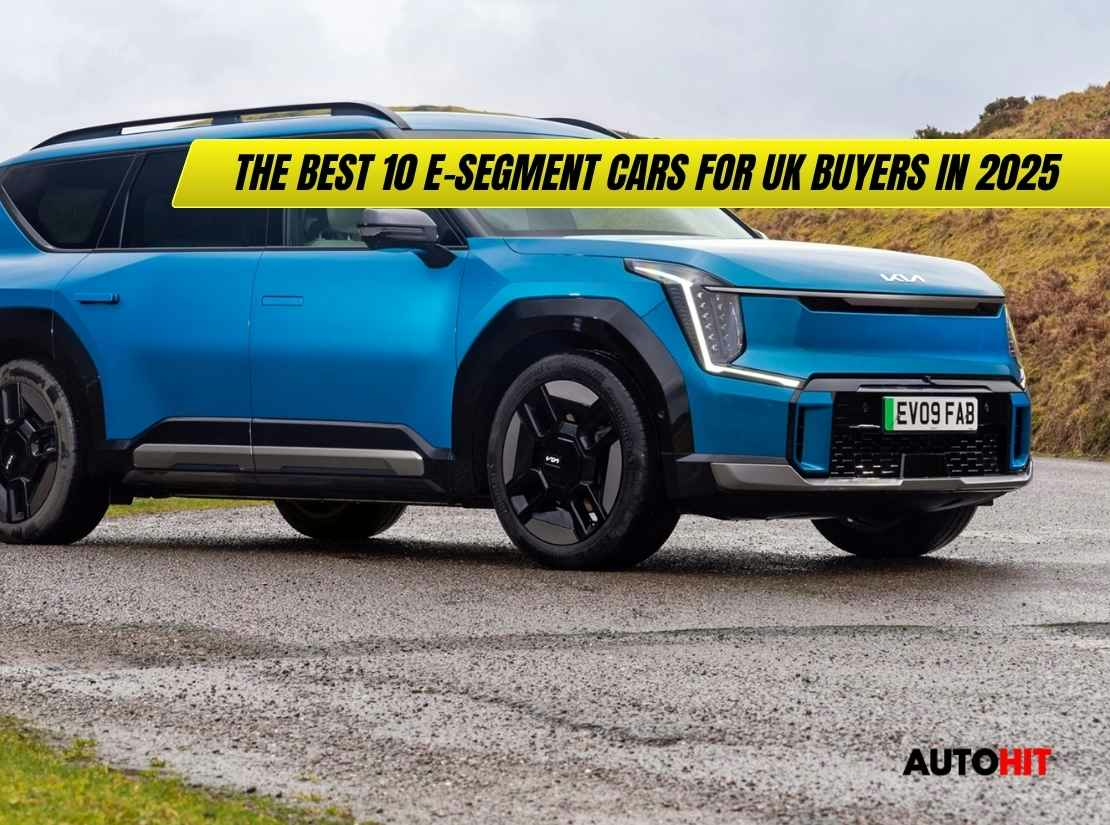
Best E-segment luxury cars 2025 UK: From BMW 5 Series to Tesla Model S, discover which premium executive saloons deliver ultimate luxury, performance, and efficiency.
The E-segment represents the pinnacle of executive car engineering, where luxury manufacturers showcase their finest technologies and craftsmanship. In the UK market, these vehicles serve dual roles: impressive company cars that project success whilst offering substantial tax advantages, and personal luxury statements that prioritise comfort and refinement over mere transportation.
Having extensively tested the current generation of E-segment offerings across Britain’s diverse road network – from London’s congested arteries to the sweeping A-roads of Scotland – we’ve witnessed a segment in profound transition. Traditional diesel powertrains have largely disappeared, replaced by sophisticated hybrid systems and increasingly compelling electric alternatives that challenge long-held assumptions about luxury car ownership.
The modern E-segment buyer faces unprecedented choice complexity. Electric vehicles offer transformational running costs and environmental benefits, plug-in hybrids provide flexibility with efficiency, whilst refined petrol options maintain traditional luxury car characteristics. Our comprehensive analysis reveals which models successfully navigate these competing demands whilst delivering the refinement and prestige that define this exclusive segment.
Key Market Dynamics
• Electrification Acceleration: Over 70% of new E-segment sales now feature electrified powertrains • Tax Revolution: Electric and PHEV models dominate company car choice lists due to BiK advantages • German Dominance: BMW 5 Series, Mercedes E-Class, and Audi A6 maintain 65% combined market share • Tesla Impact: Model S established credible electric luxury alternative, influencing entire segment direction • Asian Premium Growth: Lexus and Genesis gain traction with reliability-focused luxury propositions • Residual Value Shifts: Electric models show improved value retention as market acceptance grows
The Modern E-Segment Landscape
Defining Contemporary Luxury
Today’s E-segment cars must excel across multiple dimensions that previous generations rarely considered. Environmental credentials now matter as much as traditional luxury markers, whilst technology integration has become essential rather than optional. The most successful models seamlessly blend traditional craftsmanship with cutting-edge innovation.
Size parameters remain consistent – typically 4.9-5.1 metres in length – but interior space utilisation has improved dramatically. Advanced materials and construction techniques enable more generous passenger compartments without exterior dimension increases, whilst boot space must accommodate both executive lifestyles and family requirements.
Market Forces Reshaping Luxury
The pandemic’s impact on business travel patterns has influenced E-segment purchasing decisions significantly. Many buyers now prioritise home office functionality and local luxury experiences over long-distance comfort, affecting feature prioritisation and specification choices.
Simultaneously, the 2030 ICE ban has compressed traditional powertrain lifecycles, forcing even conservative luxury car buyers to consider electrified alternatives earlier than anticipated. This acceleration has created opportunities for innovative manufacturers whilst challenging established premium hierarchies.
The Top 10 E-Segment Cars for UK Buyers
1. BMW 5 Series – The Executive Standard Bearer
The BMW 5 Series continues defining E-segment expectations, combining traditional luxury car attributes with progressive technology integration. The latest G30 generation has matured beautifully, addressing earlier criticism regarding ride comfort whilst maintaining the dynamic character that distinguishes BMW from its rivals.
For UK buyers, the 530e plug-in hybrid represents optimal compromise between efficiency and performance. The system delivers 37 miles of electric range alongside BMW’s excellent 2.0-litre turbo engine, creating a sophisticated powertrain that satisfies both company car tax requirements and executive expectations.
The interior showcases BMW’s latest design language whilst retaining intuitive operation that many luxury car buyers prefer over more radical approaches. Build quality feels appropriate for the price point, whilst the technology integration strikes a sensible balance between innovation and usability.
Strengths: Outstanding chassis dynamics, comprehensive technology, strong residual values, extensive UK dealer network Considerations: Interior materials trail Mercedes in some areas, rear seat space adequate rather than generousUK Price Range: £44,005 – £78,000
2. Mercedes-Benz E-Class – Luxury Redefined
The Mercedes E-Class (W213/W214) represents traditional luxury car values executed with contemporary sophistication. The interior, in particular, showcases materials and craftsmanship that justify premium positioning, whilst the ride quality excels on Britain’s challenging road surfaces.
The E300e plug-in hybrid delivers impressive electric range – up to 62 miles in optimal conditions – enabling genuine zero-emission operation for most UK daily journeys. Combined with Mercedes’ reputation for long-term refinement, it creates compelling propositions for buyers prioritising luxury alongside environmental responsibility.
Recent updates have addressed earlier infotainment complexity, whilst the MBUX system now provides genuinely useful functionality without overwhelming users. The air suspension system, available across the range, transforms comfort levels on deteriorated British roads.
Strengths: Exceptional interior luxury, superior ride comfort, market-leading PHEV range, comprehensive safety technology Considerations: Complex infotainment learning curve, premium pricing throughout range, firm rear seat cushions UK Price Range: £48,540 – £85,000
3. Tesla Model S – Electric Luxury Pioneer
The Tesla Model S established electric vehicles as credible luxury alternatives, proving that environmental responsibility needn’t compromise performance or refinement. Recent updates have addressed early build quality concerns whilst maintaining the technological advantages that set Tesla apart from traditional manufacturers.
The combination of 405-mile range (Long Range variant), supercharger network access, and over-the-air updates creates ownership experiences that traditional luxury cars cannot match. For company car drivers, the 2% BiK rate represents transformational savings compared to conventional alternatives.
The minimalist interior approach polarises opinions, but the technology integration and user interface responsiveness exceed traditional luxury car standards significantly. Quality improvements are evident throughout recent production, addressing earlier concerns about materials and assembly standards.
Strengths: Outstanding electric range, advanced technology, minimal running costs, impressive performance, 2% BiK rate Considerations: Divisive interior design philosophy, service network still developing, wind noise at speed UK Price Range: £89,980 – £139,980
4. Audi A6 – Sophisticated Technology Integration
The Audi A6 approaches luxury car requirements with characteristic German precision, emphasising technology integration and quattro capability alongside traditional premium attributes. The interior design feels contemporary without resorting to radical departures that might alienate conservative luxury car buyers.
The 55 TFSI e plug-in hybrid system provides competitive electric range whilst maintaining Audi’s traditionally excellent build quality. The quattro all-wheel-drive system offers confidence in challenging British weather conditions that rear-wheel-drive alternatives cannot match.
Audi’s virtual cockpit and MMI infotainment systems represent mature technology implementation that enhances rather than complicates the driving experience. The overall package feels thoroughly engineered rather than merely luxurious, appealing to buyers who appreciate substance alongside style.
Strengths: Excellent build quality, intuitive technology, quattro confidence, comprehensive equipment levelsConsiderations: Conservative styling evolution, firm ride quality on standard suspension, limited rear headroom UK Price Range: £42,700 – £72,000
5. Genesis G90 – Luxury Value Revolution
Genesis has quietly established itself as a genuine luxury alternative, with the G90 offering authentically premium materials and features at prices that significantly undercut established European rivals. The combination of generous equipment levels, comprehensive warranty coverage, and distinctive styling creates compelling value propositions.
The interior showcases genuine luxury car craftsmanship with attention to detail that matches or exceeds German premium standards. For UK buyers seeking luxury car attributes without premium pricing, the G90 represents exceptional value whilst offering distinctive presence that sets it apart from obvious choices.
The powertrain options provide adequate performance for executive car requirements, whilst the suspension tuning prioritises comfort over sporting pretensions – appropriate for the luxury car brief and British road conditions.
Strengths: Exceptional value proposition, genuine luxury materials, comprehensive warranty, distinctive designConsiderations: Limited UK dealer network, unknown residual values, no electrified options currently available UK Price Range: £56,715 – £69,715
6. Jaguar XF – British Luxury Heritage
The Jaguar XF maintains British luxury car traditions whilst incorporating contemporary efficiency and technology requirements. Recent updates have addressed reliability concerns that previously deterred conservative luxury car buyers, whilst the distinctive design language provides alternatives to German orthodoxy.
The P300 mild-hybrid powertrain delivers adequate performance with improved efficiency compared to previous naturally aspirated engines. The chassis tuning provides engaging dynamics that remind drivers why saloons can offer more rewarding experiences than SUV alternatives.
For buyers valuing heritage and distinctiveness, the XF offers genuine alternatives to obvious choices. The interior combines traditional British luxury cues with modern technology integration, creating environments that feel both familiar and contemporary.
Strengths: Distinctive British styling, engaging dynamics, competitive pricing, improved reliability recordConsiderations: Limited dealer network, uncertain long-term model availability, tight rear seat space UK Price Range: £40,540 – £58,040
7. Lexus LS – Japanese Luxury Perfection
The Lexus LS demonstrates Japanese approaches to luxury car engineering, prioritising reliability, refinement, and comprehensive equipment over European performance or technology showcasing. The hybrid powertrain delivers impressive efficiency with proven long-term dependability that suits conservative luxury car buyers.
Build quality exceeds virtually all competitors, with attention to detail and materials selection that justifies premium pricing. The comprehensive warranty coverage and Lexus’s exceptional customer service reputation add substantial value beyond initial purchase considerations.
The interior prioritises passenger comfort above all else, with rear seat accommodation that rivals dedicated chauffeur cars. For buyers planning extended ownership or prioritising reliability above all else, the LS offers compelling advantages.
Strengths: Exceptional reliability record, outstanding build quality, comprehensive warranty, superior customer serviceConsiderations: Conservative technology approach, modest performance levels, premium pricing UK Price Range: £76,595 – £87,595
The Volvo S90 combines distinctive Scandinavian design philosophy with comprehensive safety technology and environmental responsibility. The interior showcases sustainable materials alongside traditional luxury appointments, creating environments that feel both premium and environmentally conscious.
The B5 mild-hybrid powertrain provides competitive efficiency whilst maintaining adequate performance for luxury car requirements. Volvo’s reputation for safety excellence adds confidence for family-oriented luxury car buyers.
The overall package emphasises understated luxury over ostentatious display, appealing to buyers who prefer sophisticated discretion. The technology integration feels intuitive without overwhelming users with unnecessary complexity.
Strengths: Distinctive design, outstanding safety record, environmental focus, competitive pricing Considerations: Limited performance options, firm ride quality, modest rear space for segment UK Price Range: £42,155 – £55,155
9. Maserati Quattroporte – Italian Emotional Luxury
The Maserati Quattroporte represents emotional luxury in a segment increasingly dominated by rational efficiency considerations. The combination of distinctive Italian styling, engaging rear-wheel-drive dynamics, and Ferrari-derived powertrains creates appeal for buyers seeking character over conformity.
The interior showcases Italian craftsmanship with attention to detail that feels genuinely bespoke rather than mass-produced. For buyers who remember when luxury cars had personality, the Quattroporte offers experiences that more conservative alternatives cannot match.
Recent reliability improvements have addressed earlier concerns, though the brand’s long-term commitment to the sedan segment remains uncertain given market trends toward SUVs.
Strengths: Distinctive Italian character, engaging dynamics, bespoke interior quality, emotional appealConsiderations: Limited dealer network, uncertain residual values, higher maintenance costs UK Price Range: £69,080 – £118,080
10. Porsche Panamera – Sports Car Luxury Fusion
The Porsche Panamera successfully combines sports car performance with luxury car refinement, creating unique propositions for buyers who refuse to compromise between dynamics and comfort. The latest generation has matured significantly, improving rear passenger accommodation whilst maintaining the driving engagement that justifies Porsche positioning.
The hybrid variants provide impressive efficiency alongside genuine performance, with the Turbo S E-Hybrid delivering supercar acceleration with luxury car refinement. The technology integration feels sophisticated without compromising usability, whilst build quality meets Porsche’s exacting standards.
For buyers seeking maximum driving engagement without sacrificing luxury amenities, the Panamera offers unique combinations that traditional luxury cars cannot match.
Strengths: Outstanding performance, superior dynamics, excellent build quality, unique market positionConsiderations: Premium pricing throughout range, complex option list, limited rear headroom UK Price Range: £71,280 – £164,880
Comprehensive Comparison Analysis
Performance and Efficiency Metrics
| Model | Power Output | 0-62mph | Fuel/Energy Economy | CO2 Emissions | BiK Rate |
|---|---|---|---|---|---|
| BMW 530e | 292bhp | 6.1s | 134mpg* | 37g/km | 8% |
| Mercedes E300e | 320bhp | 6.2s | 176mpg* | 25g/km | 6% |
| Tesla Model S LR | 405bhp | 3.8s | 3.8mi/kWh | 0g/km | 2% |
| Audi A6 55 TFSI e | 367bhp | 5.6s | 113mpg* | 46g/km | 10% |
| Genesis G90 3.3T | 365bhp | 5.7s | 25mpg | 258g/km | 37% |
| Jaguar XF P300 | 300bhp | 6.4s | 35mpg | 183g/km | 36% |
| Lexus LS 500h | 359bhp | 5.4s | 44mpg | 146g/km | 30% |
| Volvo S90 B5 | 250bhp | 7.8s | 42mpg | 152g/km | 31% |
| Maserati Quattroporte | 350bhp | 5.5s | 28mpg | 229g/km | 37% |
| Porsche Panamera 4 E-Hybrid | 462bhp | 4.4s | 97mpg* | 56g/km | 12% |
*PHEV figures with battery charged
Luxury and Technology Assessment
| Model | Interior Quality | Rear Space | Technology Integration | Build Quality | Dealer Network |
|---|---|---|---|---|---|
| BMW 5 Series | Very Good | Good | Excellent | Very Good | Excellent |
| Mercedes E-Class | Excellent | Very Good | Very Good | Excellent | Excellent |
| Tesla Model S | Good | Very Good | Outstanding | Good | Developing |
| Audi A6 | Excellent | Good | Excellent | Excellent | Excellent |
| Genesis G90 | Excellent | Excellent | Good | Very Good | Limited |
| Jaguar XF | Very Good | Adequate | Good | Good | Good |
| Lexus LS | Outstanding | Excellent | Average | Outstanding | Good |
| Volvo S90 | Very Good | Good | Good | Very Good | Good |
| Maserati Quattroporte | Very Good | Good | Average | Good | Limited |
| Porsche Panamera | Excellent | Adequate | Very Good | Outstanding | Good |
Company Car and Business Use Analysis
BiK Tax Revolution
The Benefit-in-Kind landscape has fundamentally transformed E-segment purchasing decisions. Electric vehicles offer 2% BiK rates that create annual savings of £6,000-8,000 for higher-rate taxpayers compared to conventional alternatives. The Tesla Model S, despite its premium pricing, often costs less annually than entry-level conventional competitors when tax implications are considered.
Plug-in hybrids occupy strategic middle ground, with the Mercedes E300e’s 6% rate and BMW 530e’s 8% rate providing substantial savings whilst maintaining operational flexibility for users with unpredictable travel requirements.
Executive Presence and Brand Perception
Traditional German brands maintain strongest corporate credibility, with BMW 5 Series and Mercedes E-Class projecting appropriate executive presence for client-facing roles. Tesla has gained rapid acceptance in technology and progressive industries, though some traditional sectors remain conservative regarding electric adoption.
Genesis offers genuine luxury at competitive prices but lacks brand recognition that matters for some business applications. The choice often depends on industry culture and client expectations rather than objective vehicle quality.
Technology Leadership and Innovation
Infotainment System Comparison
Tesla continues leading in system responsiveness and over-the-air update capabilities, though traditional manufacturers have narrowed gaps significantly. BMW’s iDrive and Mercedes’ MBUX systems now offer comparable functionality with superior integration of physical controls that many users prefer.
Audi’s virtual cockpit remains class-leading for information display, whilst Porsche’s system emphasises driver-focused functionality over passenger entertainment features.
Advanced Driver Assistance
All E-segment vehicles provide comprehensive safety technology, though implementation quality varies considerably. Mercedes leads in urban environment detection and intervention, whilst Tesla’s highway assistance remains most advanced for motorway driving.
Traditional manufacturers increasingly offer Level 2+ systems that approach Tesla’s capabilities whilst maintaining more conservative intervention strategies that suit traditional luxury car buyers.
Ownership Experience and Long-term Considerations
Reliability and Maintenance Patterns
Lexus continues demonstrating exceptional reliability records, with LS models consistently achieving top ratings for long-term dependability. German brands maintain good reliability standards though require more frequent maintenance interventions.
Tesla’s reliability has improved significantly with recent production, though service network limitations can create inconvenience for some users. Traditional dealer networks provide superior convenience for routine maintenance and warranty work.
Residual Value Performance
BMW 5 Series and Mercedes E-Class maintain strongest residual values, typically retaining 50-55% of original value after three years. Tesla’s residual performance has stabilised following earlier volatility, though predictions remain challenging.
Genesis vehicles depreciate more rapidly initially but offer exceptional value for buyers planning extended ownership periods who can amortise premium features over longer timeframes.
Regional UK Considerations
Urban vs Rural Suitability
Electric models excel in urban environments with instant torque and zero emissions providing access to clean air zones whilst offering superior refinement in stop-start traffic. Range considerations remain important for rural users, though improved charging infrastructure reduces anxiety for most scenarios.
Plug-in hybrids provide optimal compromise for mixed urban/rural use, offering electric efficiency for city driving whilst maintaining long-distance capability for rural travel requirements.
Climate and Seasonal Performance
UK weather conditions affect electric vehicle efficiency significantly, with cold temperatures reducing range by 20-30%. However, luxury electric vehicles typically include advanced thermal management systems that minimise impact compared to mainstream alternatives.
Traditional powertrains remain unaffected by temperature variations, providing consistent performance throughout British seasonal extremes – an advantage for users in Scotland or other regions experiencing regular harsh conditions.
Future Market Evolution
Electrification Timeline
Most manufacturers plan completing E-segment electrification by 2027-2028, with traditional powertrains facing phase-out across the segment. This timeline affects long-term planning for buyers considering extended ownership periods.
Charging infrastructure development continues rapidly, though luxury car buyers often require reliable home charging solutions for optimal ownership experiences.
Autonomous Driving Development
E-segment vehicles typically receive latest autonomous driving technologies first, with Level 3 systems expected across premium models by 2026-2027. Current Level 2+ systems already provide substantial assistance for motorway driving common in executive car usage.
Sustainability Requirements
Environmental regulations increasingly influence luxury car design, with manufacturers prioritising sustainable materials alongside traditional luxury appointments. This trend affects interior design choices whilst potentially improving long-term durability.
Frequently Asked Questions
Which E-segment car offers the best value for company car drivers?
For company car drivers, the Tesla Model S offers transformational value despite its premium purchase price. The 2% BiK rate creates annual savings of £6,000-8,000 for higher-rate taxpayers compared to conventional alternatives, often making total cost of ownership lower than entry-level German competitors. Among plug-in hybrids, the Mercedes E300e provides excellent compromise with 6% BiK and 62 miles electric range, suitable for users requiring operational flexibility. The choice depends on charging access and travel patterns – those with reliable charging benefit most from full electric options.
How do traditional German brands compare to newer luxury alternatives?
German brands maintain advantages in residual values, dealer networks, and corporate credibility, but alternatives like Genesis offer compelling value propositions. Genesis G90 provides luxury features equivalent to German flagships at £15,000-20,000 less, making it attractive for private buyers prioritising substance over badge appeal. However, limited dealer networks and unknown residual values make German alternatives safer for lease customers or those requiring widespread service coverage. Lexus offers exceptional reliability and customer service that increasingly appeals to buyers prioritising long-term ownership satisfaction over brand prestige.
What’s the realistic electric range for luxury plug-in hybrids?
Real-world electric ranges typically achieve 70-80% of WLTP figures in mixed conditions, falling further in cold weather or motorway driving. The Mercedes E300e achieves 40-50 miles (versus 62 miles WLTP), whilst the BMW 530e manages 25-30 miles (versus 37 miles WLTP). Urban driving maximises electric range, whilst climate control and higher speeds reduce it significantly. For maximum benefit, typical daily journeys should fall within real-world electric range, with charging available at home or workplace. Users exceeding electric range regularly might consider conventional alternatives or full electric vehicles.
E-segment saloons remain highly relevant for specific buyer groups, particularly those prioritising driving dynamics, efficiency, and traditional luxury car attributes. Saloons offer superior handling characteristics, better aerodynamics for efficiency, and often more rear passenger space than equivalent SUVs. They typically cost £5,000-10,000 less than comparable premium SUVs whilst offering similar luxury features. However, SUVs provide higher driving positions, easier access, and greater cargo versatility that appeal to many luxury buyers. The choice often reflects personal priorities: saloons for traditional luxury and efficiency, SUVs for presence and practicality.
Which models are best for chauffeur or executive transport use?
For chauffeur applications, rear passenger comfort takes priority over driver engagement. The Lexus LS excels with exceptional rear seat space, superior ride comfort, and proven reliability for high-mileage use. Mercedes E-Class provides excellent rear accommodation with air suspension delivering outstanding comfort over rough surfaces. Genesis G90 offers comparable luxury at lower acquisition costs, making it attractive for fleet applications. Tesla Model S provides impressive rear space and minimal running costs, though some traditional users prefer conventional luxury car attributes. Consider rear seat features, ride comfort, and reliability records over performance specifications for executive transport applications.
How important is dealer network quality for luxury car ownership?
Dealer network quality significantly impacts luxury car ownership satisfaction, particularly for warranty work and complex repairs. BMW, Mercedes, and Audi maintain comprehensive UK coverage with specialist technicians and luxury customer facilities. Lexus provides exceptional customer service standards that often exceed German alternatives. Genesis and Maserati operate smaller networks that may inconvenience users in some regions. Tesla’s service model relies heavily on mobile technicians and remote diagnostics, reducing traditional dealer dependence but potentially creating challenges for complex issues. Evaluate local dealer quality and proximity when choosing between brands, as this affects long-term ownership satisfaction substantially.
What are the insurance implications for different E-segment choices?
Insurance costs vary dramatically across the E-segment, influenced by performance, security features, and repair costs. High-performance variants like Porsche Panamera Turbo attract substantial premiums, whilst luxury electric vehicles may incur higher costs due to expensive battery systems. Traditional German brands typically achieve competitive rates due to comprehensive security systems and established repair networks. Genesis and Lexus often secure lower premiums due to advanced safety technology and lower theft rates. Always obtain insurance quotations before finalising purchase decisions, as annual costs can vary by £1,000+ between seemingly similar luxury vehicles. Consider advanced safety technology and security features that may qualify for insurance discounts.
Our Verdict
The E-segment luxury car market in 2025 offers unprecedented choice diversity, though decision complexity has increased dramatically as traditional hierarchies face disruption from innovative alternatives and environmental considerations.
For company car drivers, the mathematics strongly favour electrified options. The Tesla Model S delivers transformational BiK savings that often offset higher purchase prices, making it financially attractive despite premium positioning. Among plug-in hybrids, the Mercedes E300e provides optimal balance of luxury, efficiency, and tax advantages, whilst the BMW 530e offers superior driving dynamics for enthusiasts.
Private buyers face more nuanced decisions based on individual priorities. The Mercedes E-Class continues defining luxury car standards with exceptional interior quality and ride comfort, justifying its premium positioning through superior materials and craftsmanship. The BMW 5 Series remains the dynamic benchmark, providing engaging driving experiences alongside luxury amenities.
Value-conscious luxury buyers should seriously consider the Genesis G90, which offers genuine premium car attributes at prices significantly below German alternatives. The comprehensive warranty and generous equipment levels create compelling propositions for buyers prioritising substance over badge appeal.
For maximum reliability and long-term satisfaction, the Lexus LS provides exceptional build quality, outstanding customer service, and proven dependability that increasingly appeals to buyers prioritising ownership peace of mind over technological innovation.
Performance enthusiasts seeking luxury without compromise should consider the Porsche Panamera, which uniquely combines sports car dynamics with genuine luxury car refinement, though at premium pricing that reflects its specialized positioning.
Our top recommendations depend on specific requirements: Tesla Model S for company car drivers with charging access, Mercedes E-Class for traditional luxury priorities, BMW 5 Series for driving enthusiasts, and Genesis G90 for value-conscious luxury seekers.
The E-segment’s future belongs increasingly to electrified powertrains, making current choices particularly important for buyers planning extended ownership. Traditional luxury values remain relevant, but environmental considerations and tax implications now substantially influence purchasing decisions. The most successful models balance these competing demands whilst maintaining the refinement and prestige that define luxury car ownership.
For additional context on related premium segments, explore our comprehensive guides to premium SUVs under £60kand the most expensive SUVs over £100k for alternative luxury vehicle considerations.





