
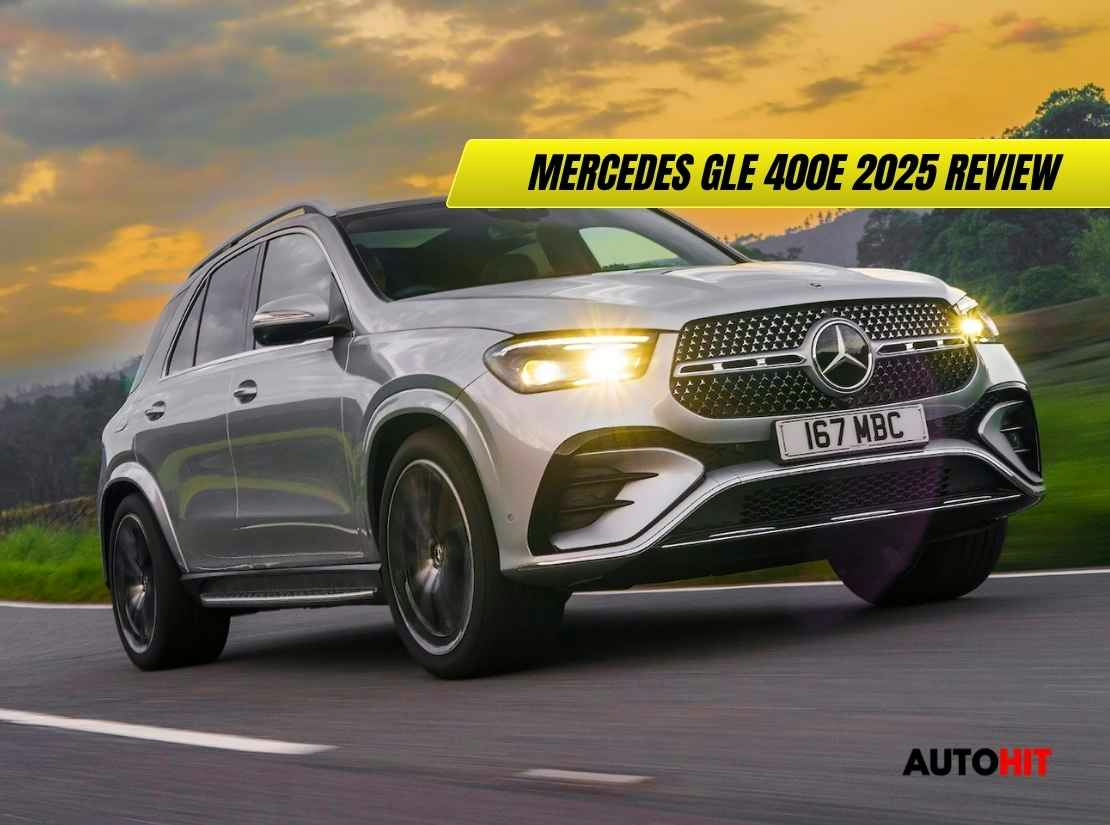
Our comprehensive Mercedes GLE 400e 2025 review reveals why this luxury plug-in hybrid SUV offers compelling BiK benefits alongside 387bhp performance. Is it the perfect company car for UK executives?
The Mercedes GLE 400e represents something of a contradiction in the luxury SUV world. Here’s a vehicle that weighs over 2.6 tonnes, measures nearly five metres long, and produces 387bhp – yet promises to run purely on electricity for most British commutes. According to our analysis at AutoHit, this apparent paradox actually makes perfect sense when you consider the realities of UK company car taxation and the growing appeal of plug-in hybrid technology.
Having driven the outgoing model extensively, we approached the updated 2025 GLE 400e with considerable interest. Mercedes has refined the formula that made this one of the most compelling luxury PHEVs available, addressing previous criticisms whilst enhancing the qualities that made it attractive to UK buyers in the first place. The result promises to be one of the most complete luxury SUVs available for British families who want to combine environmental responsibility with uncompromised comfort.
This comprehensive review examines whether the GLE 400e delivers on its substantial promises, from real-world electric range to long-distance refinement, whilst considering the unique advantages it offers UK buyers navigating increasingly complex environmental regulations and company car taxation.
Key Highlights
- Impressive Power: 387bhp combined output from 2.0-litre turbo petrol engine and electric motor delivers 0-62mph in 6.1 seconds
- Real-World Range: Official 69-mile electric range with actual testing achieving 75 kilometres (47 miles) of zero-emission driving
- Company Car Benefits: 8% BiK rate compared to 37% for non-PHEV GLEs, saving thousands annually for business users
- Rapid Charging: 60kW DC fast charging capability recovers 80% battery in 20 minutes, plus 11kW AC charging for home use
- Premium Pricing: Starting from £97,750 for AMG Line Premium, competing directly with BMW X5 xDrive50e and Range Rover Sport P460e
- Practical Luxury: 630-2,055 litre boot capacity with five-seat configuration, matching conventional GLE models
Design and Dimensions: Commanding Presence
Exterior Updates Enhance Visual Impact
The 2025 GLE 400e benefits from Mercedes’ latest design updates, creating a more assertive and contemporary appearance whilst retaining the model’s inherent elegance. The refreshed front end features a redesigned bumper with a more sporting character, enhanced lower air intakes, and updated LED headlights with revised light signatures that immediately identify this as the latest generation.
Our test vehicle’s AMG Line specification adds the distinctive large chrome grille with diamond pattern and prominent Mercedes star at the centre. This commanding visual presence works particularly well on UK roads, where the GLE’s substantial dimensions – 4.92 metres long, 2.01 metres wide, and 1.80 metres tall – provide excellent road presence without appearing oversized for British conditions.
The side profile remains robust and well-proportioned, with new alloy wheels up to 21 inches available. We particularly appreciate the small step that extends from the body, which serves both aesthetic and practical functions by making entry and exit easier – particularly valuable given the GLE’s elevated driving position.
Interior Space and Practicality
Despite accommodating substantial battery technology, the GLE 400e delivers impressive interior space for five occupants. The three-metre wheelbase ensures generous rear seat accommodation, with excellent head and knee room for the outer passengers. The centre position offers reasonable space, though the floor isn’t completely flat due to the battery packaging.
Boot capacity remains a GLE strength, offering 630-2,055 litres depending on rear seat configuration. The wide opening and relatively flat loading floor make practical loading straightforward, with only a small step that doesn’t significantly impact cargo handling. For British families, this space easily accommodates everything from weekly shopping trips to extended holiday luggage.
The presence of rear climate controls, USB-C charging points, and dedicated air conditioning vents demonstrates Mercedes’ attention to passenger comfort – essential features for family use and executive transport.
Interior Technology and Luxury
MBUX Second Generation Enhancement
The cabin showcases Mercedes’ commitment to technological advancement through the familiar dual 12.3-inch display arrangement for instrumentation and infotainment. The digital instrument cluster provides clear, customisable information presentation, whilst the central touchscreen benefits from the second-generation MBUX system that significantly improves usability.
Key improvements include wireless Apple CarPlay and Android Auto connectivity, the faster-responding ‘Hey Mercedes’ voice assistant, and augmented reality navigation that overlays directional information onto real-world camera feeds. These features prove particularly valuable for UK driving, where navigation assistance can be crucial for navigating unfamiliar areas or avoiding congestion.
The touchscreen interface responds promptly to inputs and provides logical menu structures, though some functions still require multiple steps to access. We’ve tested enough luxury SUVs to know that infotainment usability can significantly impact daily satisfaction, and Mercedes has clearly addressed previous concerns.
Premium Materials and Comfort
Finding ourselves inside a Mercedes, premium quality pervades throughout the cabin environment. The AMG Line Premium specification includes electrically adjustable seats with heating, ventilation, and massage functions – features that prove their worth during longer journeys common to British executive use.
Nappa leather upholstery and choice of wood or carbon fibre trim elements create a genuinely luxurious atmosphere that justifies the substantial purchase price. The 64-colour ambient lighting system allows personalisation whilst contributing to the premium ambience, particularly effective during winter evening commutes.
The steering wheel incorporates touch-sensitive controls on the horizontal spokes, though these require familiarisation to operate confidently whilst driving. Traditional stalks and physical buttons for essential functions provide reassuring backup when needed.
Powertrain and Performance
Hybrid System Integration
The GLE 400e’s powertrain combines a 2.0-litre turbocharged petrol engine producing 252bhp and 400Nm with an electric motor contributing 156bhp, resulting in 387bhp combined output. This configuration enables impressive acceleration performance – 0-62mph in 6.1 seconds – whilst maintaining the smoothness and refinement expected from a luxury SUV.
The 25.3kWh battery pack provides the foundation for the electric driving capability that makes this vehicle so attractive for UK company car users. In practice, the transition between electric and petrol operation proves virtually imperceptible, with the nine-speed automatic transmission seamlessly managing power delivery from both sources.
During our testing, the electric motor handled most urban driving requirements without petrol engine intervention, creating a remarkably serene driving experience. The system automatically manages the blend of electric and petrol power to optimise efficiency and performance based on driving conditions and battery charge levels.
Real-World Electric Performance
Mercedes claims up to 69 miles of electric-only range, though real-world conditions typically deliver somewhat less. Our testing achieved 75 kilometres (approximately 47 miles) of zero-emission driving in mixed conditions, which aligns closely with expectations for this type of vehicle in British conditions.
This range proves sufficient for most daily commutes in the UK, where average journey distances often fall within the electric-only capability. For London-based executives, this means potential zero-emission operation throughout the ULEZ zone and most metropolitan areas, providing both environmental and financial benefits.
The EV mode operates effectively up to 140km/h (87mph), making it practical for A-road and even some motorway driving when battery charge permits. The Individual drive mode allows users to save electric range for specific journey segments – particularly useful for planning zero-emission operation in urban areas.
Driving Experience and Refinement
On-Road Dynamics
Behind the wheel, the GLE 400e delivers the comfort-oriented driving experience that British luxury SUV buyers expect. The air suspension system effectively manages road imperfections, whilst the Airmatic system allows height and damping adjustments based on driving conditions and personal preferences.
The pneumatic suspension proves particularly effective on UK roads, where surface quality varies considerably. Whether navigating London’s potholed streets or cruising on the M40 to Oxford, the GLE maintains composure and passenger comfort with minimal intrusion from road irregularities.
Sound insulation reaches impressive levels, creating a genuinely refined environment for both urban and high-speed driving. Wind and road noise remain well-controlled even at motorway speeds, contributing to the relaxed long-distance capability that luxury SUV buyers prioritise.
Performance Characteristics
The substantial 2.6-tonne kerb weight inevitably influences the driving experience, particularly when tackling more challenging roads. Whilst the 387bhp output ensures adequate performance for overtaking and hill climbing, the GLE 400e feels most at home during relaxed, comfortable driving rather than spirited country road driving.
The Dynamic Select system offers various driving modes to suit different conditions and preferences. Comfort mode provides the ideal setup for daily driving, whilst Sport sharpens throttle response, steering weighting, and encourages greater petrol engine involvement for enhanced performance.
The nine-speed automatic transmission operates smoothly throughout the rev range, proving more responsive and refined than equivalent systems in some German rivals. Gear changes occur seamlessly in automatic mode, whilst manual control via steering wheel paddles provides satisfying driver involvement when desired.
Off-Road Capability
Though most GLE 400e owners will rarely venture off-road, the vehicle includes comprehensive off-road capability through dedicated drive modes, raised air suspension settings, and torque vectoring all-wheel drive. The ‘transparent bonnet’ camera system displays the ground immediately ahead of the front bumper, proving useful for navigating tight spaces or uncertain terrain.
For British families who occasionally venture onto muddy farm tracks or camping sites, these capabilities provide valuable peace of mind without compromising on-road refinement.
Charging and Real-World Economy
Charging Infrastructure Compatibility
The GLE 400e’s charging capability addresses one of the primary concerns about plug-in hybrid ownership in the UK. DC fast charging at up to 60kW allows 10-80% charging in approximately 20 minutes, making longer journeys more practical by enabling rapid top-ups during comfort breaks.
For home charging, the 11kW AC capability means a full charge requires just under four hours using a typical domestic wallbox installation. This overnight charging capability suits most British households with off-street parking, ensuring daily electric-only operation for regular commuting.
The combination of rapid DC charging and reasonable AC charging speeds makes the GLE 400e more practical than many PHEVs, which often limit charging to slower AC-only systems.
Fuel Economy Reality
Mercedes quotes official consumption figures of 2.8-3.8 litres/100km (equivalent to over 100mpg), though these WLTP figures depend entirely on charging frequency and driving patterns. Our real-world testing revealed more realistic expectations for UK conditions.
With a fully charged battery, the GLE achieved approximately 47 miles of electric-only operation in mixed driving conditions. Once the battery depleted, fuel consumption averaged 10.1 litres/100km (approximately 28mpg) over 300 kilometres of mixed driving – respectable for a 2.6-tonne luxury SUV but emphasising the importance of regular charging for optimal efficiency.
For UK buyers, these figures suggest that frequent charging enables exceptional efficiency, whilst occasional longer journeys without charging opportunity result in fuel consumption similar to conventional luxury SUVs.
UK Market Position and Pricing
Company Car Taxation Benefits
The GLE 400e’s primary attraction for UK buyers lies in its Benefit-in-Kind taxation advantages. The 8% BiK rate represents dramatic savings compared to the 37% rate applied to conventional GLE models, potentially saving thousands annually for higher-rate taxpayers.
For company car users, the GLE 400e provides luxury SUV ownership at taxation levels typically associated with much smaller vehicles. This advantage makes the substantial purchase price more palatable when considered as part of total cost of ownership over a typical lease period.
The combination of low BiK rates, potential fuel savings, and zero VED charges for the first year creates compelling financial arguments for business users who can access off-street charging facilities.
Competitive Landscape
Starting from £97,750 for the AMG Line Premium specification, the GLE 400e competes directly with the BMW X5 xDrive50e and Range Rover Sport P460e. Whilst not inexpensive, the pricing aligns with luxury PHEV SUV expectations whilst offering equipment levels that justify the premium.
Compared to rivals, the GLE 400e offers competitive electric range, superior charging speed capabilities, and interior technology that matches or exceeds expectations in this segment. The Mercedes badge and dealer network provide additional reassurance for buyers investing substantial sums.
Mercedes GLE 400e Specifications
| Specification | Detail |
|---|---|
| Engine | 2.0L turbo petrol + electric motor |
| Combined Power | 387bhp |
| Combined Torque | 650Nm |
| 0-62mph | 6.1 seconds |
| Top Speed | 210km/h (130mph) |
| Electric Range | 69 miles (WLTP) |
| Battery Capacity | 25.3kWh |
| DC Charging | 60kW (10-80% in 20 mins) |
| AC Charging | 11kW (0-100% in 4 hours) |
| Boot Capacity | 630-2,055 litres |
| BiK Rate | 8% |
| Starting Price | £97,750 |
Safety and Driver Assistance
Comprehensive ADAS Package
The GLE 400e includes Mercedes’ comprehensive suite of driver assistance systems as standard, addressing the safety requirements expected by luxury SUV buyers. Active Brake Assist with Cross-Traffic Function, Active Emergency Stop Assist, and Active Speed Limit Assist provide active safety intervention when required.
Active Blind Spot Assist proves particularly valuable given the GLE’s substantial dimensions and elevated driving position, providing confidence during lane changes and urban manoeuvring. The system integration feels natural rather than intrusive, maintaining driver engagement whilst providing safety backup.
Adaptive cruise control with semi-autonomous capability reduces fatigue during longer journeys, proving particularly effective on Britain’s motorway network where consistent traffic flows suit the system’s operation.
Frequently Asked Questions
How much will the GLE 400e actually cost me in company car tax?
For the GLE 400e Urban Edition 4MATIC, a 20% taxpayer would pay from £254 per month in BiK tax, whilst the AMG Line Premium Plus reaches £332 per month. Compare this to conventional GLE models where BiK payments start from £499 per month for equivalent specifications. The substantial savings – often £3,000+ annually – make the GLE 400e extremely attractive for company car users. Higher-rate (40%) taxpayers see proportionally greater savings, making the business case even more compelling. These calculations assume the vehicle maintains its official CO2 emissions and BiK classification throughout your ownership period.
Can I really drive 69 miles on electric power alone?
The official WLTP range of 69 miles represents optimal conditions, though our real-world testing achieved approximately 47 miles in mixed UK driving. This proves sufficient for most British commutes and aligns with industry norms for PHEV range claims versus reality. Cold weather, motorway speeds, and aggressive driving reduce electric range significantly. However, for typical suburban commuting, school runs, and urban driving, the electric range often proves adequate for daily zero-emission operation. Planning charging around your regular routes maximises electric-only driving and the associated cost savings.
How does the GLE 400e compare to the BMW X5 xDrive50e?
Both offer similar plug-in hybrid luxury SUV propositions, though with different characteristics. The BMW provides more powerful six-cylinder engines but typically shorter electric range than the GLE’s 69-mile capability. The Mercedes offers faster DC charging (60kW vs BMW’s AC-only charging), making longer journeys more practical. Interior technology favours Mercedes with the latest MBUX system, whilst BMW’s iDrive remains more intuitive for some users. BiK taxation typically favours the GLE slightly, though both sit in the 8% bracket. Test drive both to determine which better suits your priorities for refinement, technology, and driving character.
Is the GLE 400e practical for long-distance family trips?
Yes, though with caveats. The 630-2,055 litre boot easily accommodates family luggage, whilst the refined ride quality and comfortable seating suit extended journeys. However, fuel economy drops to around 28mpg once the battery depletes, making frequent charging stops advisable for economy-conscious families. The 60kW DC charging capability allows 20-minute top-ups during comfort breaks, maintaining some electric assistance throughout longer journeys. For UK families who primarily drive locally but occasionally undertake longer trips, the GLE 400e provides genuine versatility without the range anxiety associated with pure electric vehicles.
What happens if I can’t charge regularly at home or work?
Without regular charging access, the GLE 400e loses much of its appeal and efficiency advantages. Running purely on petrol power results in fuel consumption around 28mpg – respectable for a 2.6-tonne luxury SUV but eliminating the running cost benefits that justify the premium over conventional GLEs. The substantial weight penalty from carrying uncharged battery technology actually reduces efficiency compared to conventional variants. For buyers without reliable charging access, conventional GLE models or full hybrid alternatives provide better value. The financial benefits – particularly company car tax savings – depend entirely on maintaining the vehicle’s PHEV classification through regular charging.
How reliable are Mercedes plug-in hybrid systems?
Mercedes’ PHEV technology has matured significantly since early implementations, with the current GLE 400e benefiting from lessons learned across the brand’s electrified range. The UK warranty includes three years unlimited mileage coverage, plus specific battery warranties addressing degradation concerns. However, the complexity of PHEV systems inevitably creates more potential failure points than conventional powertrains. Service costs may be higher due to specialist knowledge requirements, though many Mercedes dealers now have extensive PHEV experience. Overall reliability appears good based on current data, though the technology remains relatively new compared to conventional engines. Choose Mercedes dealers with strong PHEV service capabilities for optimal ownership experience.
Should I buy now or wait for the next generation?
The current GLE 400e represents mature PHEV technology that addresses most early-adoption concerns about plug-in hybrids. Unless specific requirements aren’t met, waiting rarely proves advantageous in the luxury car market. Mercedes will likely introduce updated versions, but these typically focus on evolutionary improvements rather than revolutionary changes. Current BiK rates remain favourable through 2025/26, providing immediate tax benefits. However, consider your personal timeline – if you typically keep vehicles 3-4 years, buying now provides maximum benefit from current incentives. For longer-term ownership, evaluate whether emerging EV infrastructure might make full electric vehicles more practical for your requirements by 2027-2028.
Pros and Cons Analysis
What We Like
- Exceptional refinement and comfort for daily driving
- Substantial company car tax savings through 8% BiK rate
- Impressive electric range for a luxury SUV of this size
- Fast DC charging capability rare among PHEVs
- Spacious, luxurious interior with latest Mercedes technology
- Smooth, seamless integration of petrol and electric power
Areas for Improvement
- Substantial purchase price limits appeal to private buyers
- Weight affects agility and enthusiasm during spirited driving
- Real-world electric range falls short of official claims
- Fuel economy disappoints when running on petrol power alone
- Complex technology may result in higher service costs
The Verdict: Business Case Excellence
The Mercedes GLE 400e succeeds brilliantly at its primary mission: providing luxury SUV ownership with minimal environmental and financial penalties for UK business users. The combination of 387bhp performance, 47-mile real-world electric range, and 8% BiK taxation creates a compelling proposition that few rivals can match.
This is where things get complicated for private buyers. The substantial £97,750 starting price reflects the premium that PHEV technology commands, making the business case less clear for those paying with their own money. However, for company car users who can access regular charging, the GLE 400e delivers luxury SUV ownership at taxation levels typically associated with much smaller vehicles.
Our analysis suggests the GLE 400e works best for buyers with predictable driving patterns, reliable charging access, and appreciation for Mercedes’ particular blend of luxury and technology. It’s not the most dynamic SUV in its class, nor the most economical when running on petrol alone, but it provides an exceptionally refined ownership experience that justifies the investment for its target audience.
The reality, however, is more nuanced than simple numbers suggest. This is a vehicle that transforms from efficient electric urban transport to capable long-distance cruiser depending on the journey, providing versatility that pure electric vehicles cannot yet match for UK conditions. For the right buyer – typically business users with charging access – the GLE 400e represents one of the most complete luxury SUVs available.





