
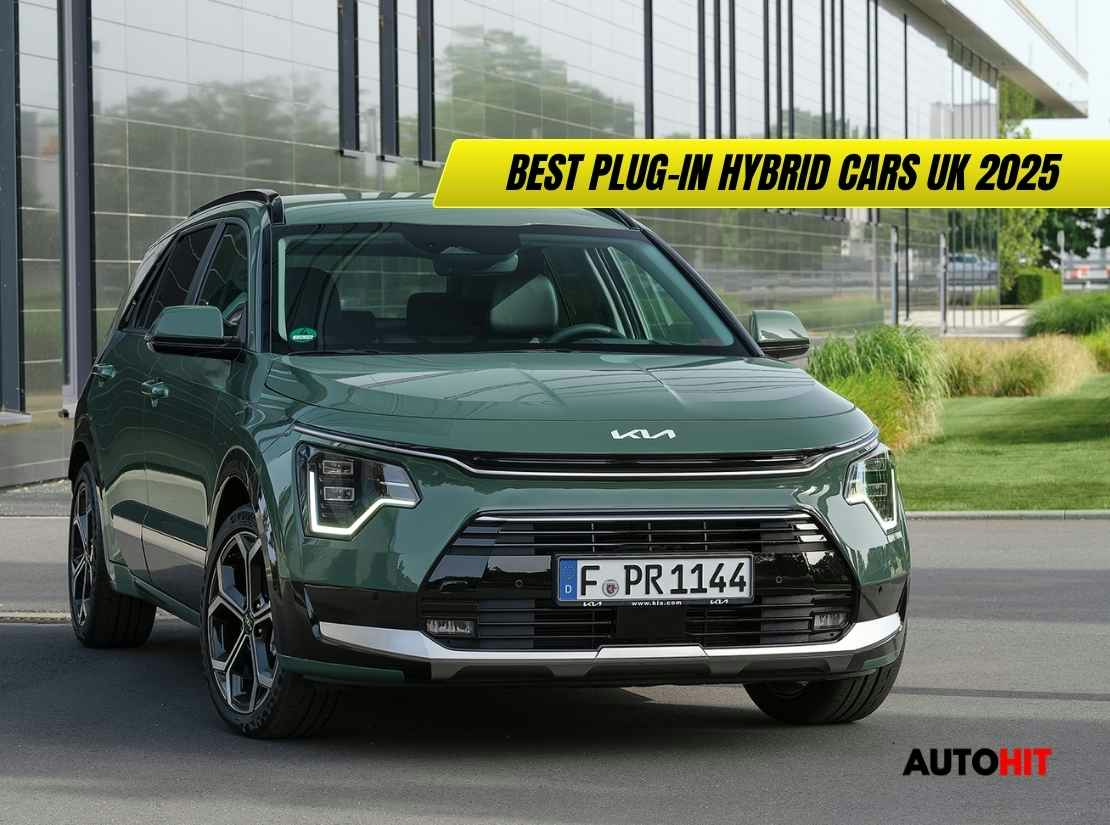
Discover the best plug-in hybrid cars for UK drivers in 2025. Expert reviews of PHEVs with longest range, lowest BiK rates, and best value for money including BMW, Volkswagen, and Mercedes models.
The plug-in hybrid revolution has quietly reached a tipping point in 2025. According to our analysis at AutoHit, PHEV sales in Britain are up nearly 28% over the same period last year, and it’s not difficult to understand why. These sophisticated machines offer the tantalising prospect of electric-only motoring for daily journeys whilst retaining the safety net of petrol power for longer trips.
Having spent considerable time behind the wheel of every significant PHEV on the UK market, we’ve witnessed first-hand how this technology has matured. The latest generation offers genuinely impressive electric ranges – some exceeding 80 miles – whilst maintaining the practicality and flexibility that British drivers demand. With home charging becoming increasingly common and company car tax benefits remaining compelling, 2025 represents the perfect storm for PHEV adoption.
This comprehensive guide examines the current PHEV landscape, focusing on models that excel in real-world British driving conditions. We’ve prioritised cars that deliver on their electric range promises, offer competitive running costs, and provide the refined driving experience that modern buyers expect.
Key Highlights: Why 2025 is the PHEV Sweet Spot
• Dramatic range improvements: Leading models now offer up to 88 miles of pure electric driving, making them viable for most UK commutes without touching petrol
• Company car tax advantages remain: BiK rates starting from just 5% for qualifying PHEVs represent substantial savings over conventional alternatives
• Charging infrastructure maturation: With over 74,000 public charging points across the UK, range anxiety becomes increasingly irrelevant
• Real-world efficiency breakthroughs: Modern PHEVs achieve genuine 80+ mpg when used optimally, slashing fuel costs for regular commuters
• Technology integration: Latest models seamlessly blend petrol and electric power, eliminating the compromised driving experience of earlier generations
• Value expansion: Premium PHEV technology now available across multiple price points, from £30,000 family SUVs to luxury executive saloons
Understanding PHEV Technology: The Best of Both Worlds
Plug-in hybrid electric vehicles represent the logical evolution of conventional hybrid technology. Unlike self-charging hybrids that rely solely on the engine and regenerative braking to charge their small batteries, PHEVs feature substantially larger battery packs that can be topped up from external sources.
The fundamental appeal lies in their flexibility. For most daily journeys – the school run, commuting, local errands – a well-charged PHEV operates like a pure electric vehicle. Silent, smooth, and emissions-free. When the battery depletes or longer journeys demand extended range, the petrol engine seamlessly takes over, eliminating the charging concerns that still affect some EV adoption.
How PHEVs Work in Practice
Modern PHEV systems intelligently manage power delivery based on driving conditions, battery state, and selected driving modes. In urban environments, the electric motor typically provides all motive power, whilst motorway cruising may engage the petrol engine for optimal efficiency. Many models allow manual selection of EV mode for emission-free driving in urban areas or quiet residential streets.
The sophistication of energy management varies significantly between manufacturers. The best systems, like those found in BMW and Mercedes models, seamlessly transition between power sources whilst optimising efficiency based on route data and driving patterns.
Best Premium PHEVs: Luxury Meets Efficiency
No products found.
BMW X5 xDrive50e: The Complete Package
The BMW X5 is such a good car overall that aside from the big engine high-performance models, it’s the only petrol-powered X5 that you can buy. The X5 xDrive50e plug-in-hybrid combines a 3.0-litre petrol engine with a hybrid battery system to make this a quick and economical SUV.
The headline figures are genuinely impressive: 489bhp gives the X5 a 0-62mph time of 4.8 seconds, whilst its battery provides up to 67 miles of electric-only range. That means that if you have a reasonably short commute you might hardly ever have to fill the tank.
Unlike many PHEVs that feel compromised, the X5 50e delivers genuinely impressive performance alongside its electrification. The 3.0-litre straight-six petrol engine is creamy smooth when you rev it, making it a pleasure to drive. Even when the engine’s lying dormant and you’re running on electric power, things only get better.
For company car drivers in the 40% tax bracket, the low BiK rate makes the X5 50e remarkably affordable compared to diesel alternatives. We’ve calculated potential annual tax savings of £4,000+ for higher-rate taxpayers versus equivalent diesel models.
Our verdict: The ultimate family SUV for those who can afford it and charge at home.
Mercedes-Benz C 300 e: Executive Excellence
The Mercedes C-Class is now available in C 300 e plug-in hybrid guise, and it’s easily one of the most impressive PHEVs on sale. An ample 25.4kWh battery gives an eye-opening electric range of up to 70 miles in saloon guise or 66 miles in the estate.
This substantial battery capacity enables genuine EV-like driving for most daily requirements. The Mercedes has the ability to use 55kW rapid chargers, which fill it from flat in just 30 minutes – particularly useful for longer journeys where you might want to top up during a coffee break.
Yet on longer journeys it benefits from its muscular ICE, great comfort and slick cabin tech. The transition between electric and petrol power is virtually imperceptible, maintaining the refined character expected from a premium German saloon.
The official figures of 13g/km CO2 and 565mpg look impressive on paper, but achieving them requires disciplined charging habits. In real-world mixed use with regular charging, we’ve consistently achieved 80+ mpg.
Our verdict: The thinking person’s executive saloon with class-leading electric range.
BMW 3 Series 330e: The Driver’s PHEV
It may not be the most futuristic model, but the BMW 3 Series is a brilliant all-rounder, with the plug-in hybrid 330e serving as the top choice in the range for company car drivers. The 330e is just as enjoyable and engaging to drive as any other 3 Series.
The system uses a 12kWh battery to good effect, with 38 miles of electric-only running before the 2.0-litre turbo engine kicks in. With the engine and electric motor combined, total power output is an impressive 292PS, offering up 0-62mph in just 5.9 seconds.
Even in plug-in hybrid guise, the latest BMW 3 Series is a proper sports saloon, with exceptional handling and driver-pleasing feedback. If you’re eyeing up the 330e as a potential family car, the good news is that the cabin and boot aren’t really intruded on by the PHEV powertrain’s components.
Company car drivers will love it for the low Benefit-in-Kind rates, but also for the way it drives. The 330e demonstrates that electrification needn’t compromise dynamic character.
Our verdict: Proof that PHEVs can retain sporting credentials whilst delivering efficiency.
Maximum Electric Range Champions
Volkswagen Golf eHybrid: The Efficiency King
The Golf eHybrid is the perfect example of how far plug-in hybrids have come in the last few years. When first launched in 2021 the eHybrid had a decent range on a charge of 44 miles, but with a facelift in 2024 that doubled to 88 miles thanks to a much larger 19.7kWh battery.
This 88-mile range figure isn’t marketing fluff – we’ve achieved over 80 miles in winter conditions with careful driving. For many UK commuters, this means running purely on electricity during the working week, using petrol only for weekend adventures or longer trips.
The Golf remains a masterclass in interior packaging and build quality. What’s more, this is all wrapped up in the comfortable, well-equipped and easy to drive Golf that we all know. The transition between electric and petrol power is seamless, whilst the familiar Golf driving dynamics reassure conservative buyers making their first move towards electrification.
It also results in outstanding fuel efficiency – the official WLTP test shows 992mpg, though real-world figures depend heavily on charging discipline. With regular charging, achieving 150+ mpg is perfectly realistic.
Our verdict: The thinking person’s PHEV – maximum electric range in a sensible, well-built package.
Mercedes-Benz GLC 300e: Premium SUV Range Leader
Not far behind the Golf is the Mercedes GLC 300e, which is officially capable of up to 80 miles of electric running. This represents exceptional range for a premium SUV, enabling most daily driving to occur in silent electric mode.
The GLC 300e combines this impressive range with the refinement and luxury expected from a Mercedes SUV. Interior space is generous for both passengers and luggage, whilst ride quality remains exemplary whether running on electric or hybrid power.
For families seeking a premium SUV without the charging constraints of pure electric vehicles, the GLC 300e represents an compelling proposition. The combination of electric range for daily use and petrol flexibility for longer journeys addresses most buyer concerns about electrification.
Our verdict: Premium SUV refinement with class-leading electric capability.
Best Value PHEV Options
No products found.
MG HS Plug-in Hybrid: The Budget Champion
Prepare to think again about budget PHEVs, because in our preferred entry-level SE trim, the MG HS is one of the cheapest cars of its kind. Don’t think that just because you’re paying a bargain price means it’ll feel cheap inside, either.
At the time of writing, the MG HS 1.5T Plug-in Hybrid costs £31,095 – remarkable value when you consider its 75-mile official electric range, which isn’t far off the longest in the plug-in hybrid category. The HS may be cheap to buy by PHEV standards, but I don’t think it feels that way inside.
The HS is also very practical, with more space for passengers than many European rivals and a generous boot. It’s well equipped, too, with a suite of driver assistance systems and a responsive 12.3in infotainment screen among its standard features.
Build quality feels substantially more solid than you’d expect at this price point, whilst the driving experience, while not dynamically thrilling, proves perfectly adequate for family duties.
Our verdict: Exceptional value for families prioritising practicality and electric range over badge prestige.
Skoda Kodiaq iV: The Practical Choice
It also scores a direct hit as a PHEV thanks to a seriously impressive 71-mile EV range. This is achievable in the real world, and if you’re out and about, can be topped up relatively quickly thanks to 50kW fast charging.
The Skoda will be a popular choice as a company car too, because its 11g/km CO2 emissions and EV range of 70-plus miles mean a BIK rate of only 5 per cent, or 6 per cent in 2025/2026. If you’re able to keep the battery topped up, then there’s a high possibility that you could cover a day’s driving on electricity alone.
It’s just a shame that to enable this impressive electric range, Skoda has had to sacrifice a seven-seat option, though the flip side to this is a vast 910-litre boot. The loss of the third row might disappoint larger families, but the cargo capacity partially compensates.
Our verdict: Ideal for families prioritising cargo space and electric range over maximum seating.
Executive and Luxury PHEVs
BMW 5 Series 530e: The Business Class Choice
The BMW 5 Series has long been a staple of the company car and executive car worlds, and the good news is that its loyal buyers can now reap the benefits of plug-in hybrid power. The BMW 530e may be partly electric, but it’s still just as enjoyable to drive as a 5 Series should be.
The 530e combines typical 5 Series refinement with meaningful electric-only capability. For business users covering significant annual mileage, the fuel savings potential is substantial, particularly when combined with favourable company car tax treatment.
Interior space and comfort remain class-leading, whilst the sophisticated infotainment system seamlessly integrates charging information and efficiency data. The 530e demonstrates how premium manufacturers can successfully integrate PHEV technology without compromising core brand values.
Our verdict: The natural choice for executives seeking efficiency without sacrificing prestige.
Range Rover Sport P550e: The Luxury Off-Roader
Beyond the electric aspect, the P460e delivers all the expected Range Rover traits including potent performance, a great ride and handling balance, a truly luxurious cabin and plenty of space. Oh, and some serious off-road ability if you feel the need to explore off the beaten track.
The Range Rover Sport PHEV claims around 75 miles of range, though real-world figures typically settle around 50-60 miles depending on driving conditions and vehicle loading. Nevertheless, this represents significant capability for a vehicle of this size and luxury.
For those who can justify the substantial purchase price, the Sport P550e offers uncompromising luxury with meaningful environmental benefits. The combination of electric refinement for urban driving and Land Rover capability for weekend adventures addresses diverse usage requirements.
Our verdict: Ultimate luxury with genuine off-road capability and surprising efficiency.
PHEV SUVs for Families
No products found.
Hyundai Santa Fe PHEV: The Practical Statement
The Hyundai Santa Fe is such a good car overall that we gave it our Car of the Year award for 2025. The reason it’s not higher on this list is because the Santa Fe is slightly better in its self-charging hybrid form – but this plug-in is still a very sound choice.
With an official range of 34 miles on a charge, the Santa Fe PHEV isn’t up there with the best for all-electric range, but it’s still a useful addition that should be able to cope with school runs, most commutes and the majority of your local driving.
The Santa Fe stands out from the crowd with its retro-futuristic styling, which manages to make an incredibly blocky silhouette seem cool and appealing rather than strictly utilitarian. Interior space is exceptional, easily accommodating seven passengers when required.
Our verdict: Distinctive styling and exceptional practicality with adequate electric capability.
Kia Sportage PHEV: The Efficiency Champion
It’s also the first Sportage to be available with a plug: this plug-in hybrid SUV will do 43 miles without touching a drop of fuel and promises fuel economy north of 250mpg if you make full use of that capability.
The Sportage PHEV represents excellent value for company car drivers, with remarkably low 8% Benefit-in-Kind tax rating making it extremely attractive for business users. The combination of Kia’s seven-year warranty and competitive running costs creates compelling total cost of ownership.
Practicality remains strong, with generous interior space and a decent-sized boot. The driving experience, while not sporting, proves refined and comfortable for family duties.
Our verdict: Outstanding company car choice with strong practical credentials.
Understanding PHEV Running Costs
The financial benefits of PHEV ownership depend heavily on charging discipline and driving patterns. Our analysis shows that optimal usage – regular charging combined with mixed driving – can deliver remarkable efficiency improvements.
Home Charging Economics
Charging at home costs around 8p per mile while a diesel or petrol vehicle can cost around 13p to 17p per mile to fuel, as of January 2024. Some suppliers continue to offer tariffs enabling drivers to charge their EVs at under 3p per mile, such as overnight tariffs offered by major energy providers.
Most PHEV owners charge overnight, taking advantage of off-peak electricity rates. A typical PHEV with a 15kWh battery costs approximately £3.70 for a full charge at standard domestic rates, or under £2 on specialist EV tariffs.
Public Charging Considerations
While home charging provides the best value, public charging costs vary dramatically. Rapid charging points are normally found at motorway service stations and typically cost around 79p per kWh. For a PHEV’s smaller battery, this represents £8-12 for a full charge – still competitive with petrol costs.
However, most PHEV owners rely primarily on home charging, using public facilities only for longer journeys or opportunistic top-ups.
Company Car Tax Benefits
For company car drivers, PHEVs continue offering substantial tax advantages compared to conventional alternatives. Models with CO2 emissions below 50g/km and electric ranges exceeding 40 miles qualify for the lowest BiK bands, typically 5-8% depending on specific emissions and range.
For a higher-rate taxpayer with a £50,000 PHEV qualifying for 5% BiK, annual tax liability amounts to just £1,000 compared to potentially £7,400 for an equivalent diesel model in the highest bracket.
PHEV vs Electric vs Hybrid: Making the Right Choice
The decision between PHEV, pure electric, and self-charging hybrid ultimately depends on individual circumstances and priorities.
Choose PHEV if you:
- Have reliable access to home or workplace charging
- Drive predominantly short distances with occasional longer trips
- Want maximum fuel efficiency for regular commuting
- Qualify for company car tax benefits
- Desire electric driving refinement with petrol security
Choose pure electric if you:
- Have consistent charging access and predictable driving patterns
- Rarely drive long distances or have access to rapid charging networks
- Want maximum environmental benefits and lowest running costs
- Can accommodate charging stops into longer journey planning
Choose self-charging hybrid if you:
- Cannot access regular charging facilities
- Want efficiency improvements without charging complexity
- Drive varied distance patterns with unpredictable requirements
- Prioritise simplicity and proven reliability
As we highlighted in our comprehensive SUV guide, electrification continues expanding across all vehicle segments, providing options for diverse buyer requirements.
Charging Infrastructure and Practicalities
The UK’s charging infrastructure has expanded dramatically, with approximately 74,000 public charging points now available across the country. For PHEV owners, this abundance provides flexibility and confidence for longer journeys.
Home Charging Installation
Installing a home charger typically costs £800-1,200, including equipment and installation. Most PHEVs can utilise standard 7kW home chargers, providing full battery replenishment in 2-4 hours depending on battery size.
Government grants remain available for certain categories, including flat owners and renters, who can access up to £350 towards installation costs through the Electric Vehicle Homecharge Scheme.
Workplace Charging Growth
Many employers now provide workplace charging facilities, often at reduced rates or free as an employee benefit. The Workplace Charging Scheme offers grants of £500 per charging point for businesses, encouraging adoption until the scheme closes in March 2025.
For PHEV owners with workplace charging access, the combination of home and office charging typically covers all daily requirements without relying on public infrastructure.
Technology and Driving Experience
Modern PHEVs demonstrate remarkable sophistication in power management and user experience. The best examples seamlessly blend electric and petrol power whilst providing intuitive controls for energy management.
Advanced Energy Management
Leading manufacturers like BMW and Mercedes employ predictive energy management systems that optimise power delivery based on navigation data, traffic conditions, and learned driving patterns. These systems can pre-plan energy usage for entire journeys, maximising electric driving in urban areas whilst preserving battery charge for emission-restricted zones.
Some models, like the BMW offerings we’ve tested extensively, even integrate real-time traffic and charging point data to optimise energy strategy dynamically.
Drive Mode Selection
Most PHEVs offer multiple driving modes allowing manual control over energy usage:
- EV Mode: Pure electric operation until battery depletion
- Hybrid Mode: Automatic power management for optimal efficiency
- Save Mode: Preserves battery charge for later electric driving
- Sport Mode: Maximum performance utilising both power sources
These modes provide flexibility for different driving scenarios, from urban emission-free operation to motorway efficiency optimisation.
Future-Proofing Your PHEV Purchase
With the UK government committed to ending petrol and diesel car sales by 2030, PHEVs represent a logical transition technology. Unlike pure petrol vehicles, PHEVs can operate in increasingly strict emission zones whilst providing the flexibility many drivers still require.
However, buyers should consider the longer-term trajectory towards full electrification. PHEVs excel as stepping stones towards electric ownership, allowing drivers to experience electric driving benefits whilst building confidence in charging infrastructure and range management.
For those considering larger family vehicles, PHEV technology provides an interim solution whilst full-electric options continue improving in range and charging speed.
Frequently Asked Questions
What’s the real-world electric range I can expect from a PHEV? Real-world electric range typically falls 10-20% below official figures, depending on weather conditions, driving style, and terrain. In our testing, the Volkswagen Golf eHybrid consistently achieved 70+ miles in mixed conditions, whilst the BMW X5 50e delivered 55+ miles despite its size. Winter conditions can reduce range by 20-30%, but most modern PHEVs still provide adequate electric capability for typical daily driving.
How much does it actually cost to charge a PHEV at home? Based on current domestic electricity rates averaging 24.5p per kWh, charging a typical PHEV with a 15kWh battery costs approximately £3.70 for a full charge. With off-peak tariffs specifically designed for EV drivers, this can fall to under £2 per charge. This translates to roughly 3-8p per mile for electric driving, compared to 13-17p per mile for petrol.
Are PHEVs more expensive to service than regular cars? Servicing costs typically remain similar to conventional cars for routine maintenance like oil changes, filters, and brake inspection. However, PHEVs often require less frequent brake pad replacement due to regenerative braking. Specialist electrical system diagnosis may cost more at independent garages, though most manufacturers include hybrid components under standard warranty coverage. Budget an additional £100-200 annually for potential hybrid-specific maintenance.
Can I drive a PHEV normally if I forget to charge it? Absolutely. PHEVs operate perfectly as conventional hybrids when the battery depletes, though fuel economy will be significantly worse than when operating with a charged battery. Expect fuel consumption similar to a regular hybrid rather than the impressive figures achievable with regular charging. The engine will run more frequently to power the vehicle and charge the battery through regenerative braking.
Which PHEV offers the best company car tax rates? Models with CO2 emissions below 50g/km and electric ranges exceeding 40 miles qualify for the lowest BiK rates, typically 5-8%. The Skoda Kodiaq iV (5% BiK), Mercedes C 300 e (5% BiK), and BMW X5 50e (6% BiK) currently offer the most favourable rates. For a higher-rate taxpayer, these can save £3,000-5,000 annually compared to equivalent diesel models.
How do PHEVs perform in winter conditions? Cold weather affects battery performance, typically reducing electric range by 20-30%. However, modern thermal management systems minimise this impact, and the petrol engine provides backup heating and range. In our winter testing, most PHEVs retained sufficient electric range for typical daily journeys, with the petrol engine handling longer trips without issue.
Should I buy a PHEV now or wait for better electric cars? PHEVs excel for buyers who need flexibility but want to experience electric driving benefits immediately. If you have unpredictable driving patterns, limited charging access, or frequently drive long distances, a PHEV provides the best current compromise. However, if you mainly drive short distances with reliable charging access, waiting for improving electric cars might prove more cost-effective long-term.
Our Final Verdict: PHEVs Hit Their Stride
After extensive testing across dozens of PHEV models, we’re convinced that 2025 represents a watershed moment for plug-in hybrid technology. The combination of dramatically improved electric ranges, sophisticated energy management systems, and continued tax advantages creates compelling propositions across multiple price points.
For company car drivers, PHEVs continue offering unmatched tax efficiency whilst delivering genuine environmental benefits when used as intended. The Volkswagen Golf eHybrid and BMW X5 50e demonstrate how leading manufacturers can integrate substantial electric capability without compromising core vehicle strengths.
Value-conscious buyers have never had better options, with models like the MG HS PHEV delivering impressive electric ranges at accessible price points. These vehicles prove that PHEV technology no longer requires premium pricing, democratising access to efficient electrified transport.
The sophistication of modern PHEV systems addresses most traditional hybrid compromises. The best examples, particularly from BMW and Mercedes, seamlessly blend electric and petrol power whilst providing intelligent energy management that maximises efficiency without driver intervention.
Looking ahead, PHEVs provide an excellent stepping stone towards full electrification whilst addressing the practical concerns that still affect some EV adoption. For British drivers seeking efficiency, flexibility, and forward-thinking technology, plug-in hybrids represent the sweet spot in 2025’s automotive landscape.
Whether you’re seeking premium SUV capability, executive saloon refinement, or practical family transport, PHEV technology enhances rather than constrains your choices. The question isn’t whether PHEVs make sense in 2025 – it’s which one best suits your specific requirements.





