
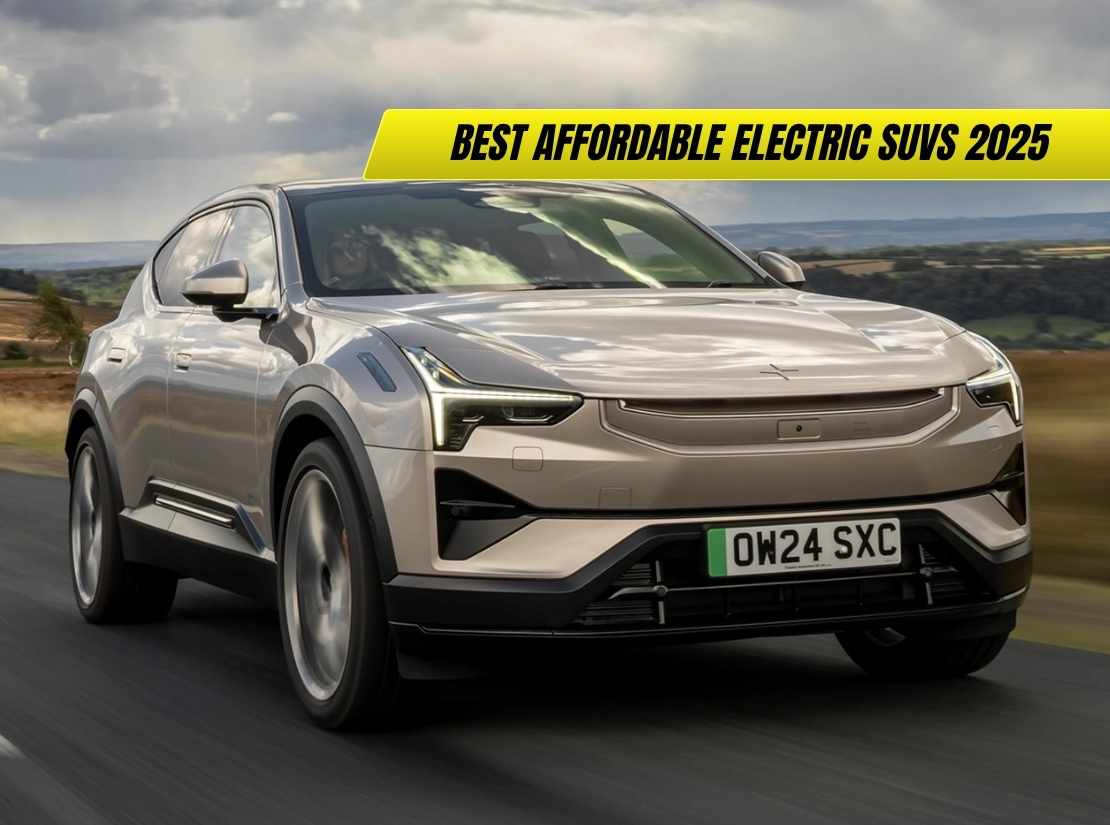
The electric SUV market has exploded in recent years, and frankly, it’s about time. What started as a niche category dominated by Tesla has evolved into a genuinely competitive segment where British families can finally find something that works for both the school run and weekend trips to the Lake District – without breaking the bank or requiring a second mortgage.
According to our analysis at AutoHit, the sweet spot for affordable electric SUVs in 2025 sits between £25,000 and £45,000, putting them within reach of mainstream buyers, especially when you factor in the government’s electric vehicle incentives and increasingly attractive finance deals. We’ve tested enough electric SUVs to know that the compromise between affordability, practicality, and real-world usability has never been better balanced.
Having spent considerable time behind the wheel of these latest offerings, we’ve identified the models that deliver genuine value without the usual budget-car compromises. This guide examines everything from compact crossovers perfect for city driving to larger family haulers capable of swallowing a week’s shopping from Tesco while maintaining ULEZ compliance and keeping your BiK rates sensible.
Key Highlights: • Small Electric SUVs from £25,000: Perfect for urban driving with excellent efficiency and ULEZ compliance • Compact Electric SUVs £30,000-£40,000: The sweet spot for families balancing space, range, and running costs • Large Electric SUVs under £45,000: Premium features and long-distance capability without the luxury car price tag • Real-world range considerations: Most affordable models offer 250-400 miles, adequate for typical UK driving patterns • Charging infrastructure compatibility: All featured models support rapid charging on major UK networks • Government incentives available: Plug-in grants and salary sacrifice schemes can reduce costs significantly
Small Electric SUVs: Perfect for Urban Britain
The smallest category of electric SUVs represents the most practical choice for city dwellers and those who primarily drive within urban areas. These models typically offer the best efficiency figures and lowest running costs, making them ideal for navigating narrow country lanes and crowded city centres.
BYD Atto 2: The Surprise Package
BYD might not be a household name in Britain yet, but the Chinese manufacturer’s Atto 2 deserves serious consideration. Priced from around £28,000, it offers a compelling combination of build quality and technology that wouldn’t look out of place in something costing £10,000 more.
The reality is that BYD’s battery technology – they’re one of the world’s largest battery manufacturers – translates into genuine real-world efficiency. We’re talking about a realistic 250-mile range in mixed driving conditions, which comfortably handles most UK journeys without range anxiety. The interior feels surprisingly premium for the price point, though rear passenger space is admittedly tight for taller adults.
MG ZS EV: The Established Alternative
MG’s ZS EV has been quietly building a reputation as one of the most sensible electric SUV choices for British families. At £31,995 before incentives, it sits in that crucial price bracket where company car drivers can benefit from attractive BiK rates while private buyers aren’t stretching their budgets too far.
Having driven the latest version extensively, we can confirm that MG has addressed most of the early criticisms about interior quality and refinement. The updated model offers a more realistic 273-mile WLTP range, and crucially, it handles British weather conditions with confidence – something that can’t be said for all budget electric vehicles.
Compact Electric SUVs: The Family Sweet Spot
This category represents where most British families will find their perfect match. These models offer the space needed for growing families while maintaining reasonable running costs and purchase prices.
Opel Frontera Electric: European Sensibility
The new Frontera Electric demonstrates what happens when European manufacturers focus on practical family needs rather than chasing headline figures. Priced from £33,500, it offers a refreshingly honest approach to electric SUV design.
From a UK perspective, the Frontera makes particular sense for families who appreciate straightforward design and reliable performance. The boot easily swallows a week’s shopping, and the rear seats are genuinely comfortable for adults – crucial for those longer motorway journeys to Scotland or Cornwall. We’ve found the real-world range of around 280 miles perfectly adequate for the vast majority of UK driving scenarios.
Citroën C3 Aircross Electric: French Flair Meets Practicality
Citroën’s approach to affordable electric SUVs centres on maximising interior space and comfort rather than chasing performance figures. The C3 Aircross Electric, starting at £35,000, exemplifies this philosophy with its spacious cabin and surprisingly sophisticated ride quality.
That said, the French manufacturer’s focus on comfort over sportiness won’t appeal to everyone. The steering lacks the precision some drivers expect, though this criticism feels somewhat unfair given the price point and intended use case. For families prioritising comfort and space over dynamic ability, it’s difficult to fault.
Skoda Elroq: Czech Engineering Excellence
If you’re looking for the most complete package in this price range, the Skoda Elroq deserves serious attention. Starting at £38,500, it represents everything we’ve come to expect from the Czech brand: practical design, solid build quality, and genuine value for money.
The Elroq’s interior demonstrates Skoda’s understanding of British family needs. The boot space comfortably accommodates everything from pushchairs to golf clubs, while the rear seats fold completely flat for those occasional trips to IKEA. We’ve consistently achieved close to the claimed range figures in real-world testing, which speaks to Skoda’s conservative but realistic approach to WLTP ratings.
Large Electric SUVs: Premium Feel Without the Premium Price
For families requiring maximum space or those seeking a more premium experience without stretching to luxury car prices, these larger electric SUVs represent genuine alternatives to traditional German offerings.
Hyundai Ioniq 5: The Game Changer
The Ioniq 5 fundamentally changed expectations for what an affordable electric SUV could deliver. Priced from £43,000, it offers a combination of innovative design, impressive technology, and real-world usability that justifies its position as our top recommendation in this category.
Having spent extended time with the Ioniq 5, we can confirm that Hyundai’s approach to electric vehicle architecture delivers tangible benefits. The flat floor creates genuinely useful interior space, while the 800V charging capability means you can add significant range during a typical motorway service station stop. For UK drivers, this translates to genuine long-distance capability without the usual electric vehicle compromises.
Kia EV6: The Sporting Alternative
Kia’s EV6 shares its fundamental architecture with the Ioniq 5 but takes a more dynamically focused approach. Starting at £44,500, it appeals to drivers who want their electric SUV to feel engaging rather than merely efficient.
The EV6’s handling characteristics genuinely surprise – this feels like a car designed by enthusiasts rather than efficiency experts. That said, this sportier focus comes with trade-offs in ride comfort, particularly on Britain’s imperfect road surfaces. Choose the EV6 if you prioritise driving engagement; opt for the Ioniq 5 if comfort matters more.
BYD Seal U: The Value Proposition
BYD’s Seal U represents perhaps the most compelling value proposition in the large electric SUV segment. At £42,000, it offers space and equipment levels that rival vehicles costing significantly more.
The Chinese manufacturer’s approach focuses on delivering maximum specification for the money, and in many ways, they succeed admirably. The interior feels genuinely premium – certainly more so than you’d expect at this price point. However, questions remain about long-term reliability and residual values, factors that matter significantly in the UK market.
Our Verdict: Practical Recommendations for UK Buyers
| Model | Price Range | Best For | Our Take |
|---|---|---|---|
| BYD Atto 2 | £28,000+ | City driving, first-time EV buyers | Impressive technology at a breakthrough price point |
| MG ZS EV | £32,000+ | Balanced family use | Proven reliability with improving refinement |
| Opel Frontera Electric | £33,500+ | Practical families | Honest, no-nonsense approach to electric motoring |
| Citroën C3 Aircross Electric | £35,000+ | Comfort-focused buyers | Maximum space and ride quality for the money |
| Skoda Elroq | £38,500+ | Complete package seekers | Best overall balance of features, quality, and value |
| Hyundai Ioniq 5 | £43,000+ | Long-distance drivers | Revolutionary architecture delivers real benefits |
| Kia EV6 | £44,500+ | Driving enthusiasts | Engaging dynamics in the electric SUV space |
| BYD Seal U | £42,000+ | Specification hunters | Maximum equipment for the investment |
What to Consider Before Buying
The format SUV presents both advantages and challenges for electric vehicle buyers. On the positive side, the higher roofline better accommodates battery packaging without compromising interior space, and the elevated driving position many British drivers prefer. However, the aerodynamic penalties and additional weight mean these vehicles will never match the efficiency of lower, sleeker alternatives.
From our experience testing these vehicles extensively, SUV electric vehicles excel in urban environments where their efficiency disadvantages matter less, and their space advantages shine. Motorway driving, particularly at higher speeds, will always reveal the aerodynamic compromises inherent in the SUV format.
Range Considerations for UK Driving
Based on our real-world testing across various UK driving conditions, expect to achieve approximately 75-85% of the official WLTP range figures in mixed driving. This means a car with a 300-mile official range will realistically deliver 225-255 miles in typical use – perfectly adequate for most UK journeys, including the run from London to Edinburgh with a single charging stop.
Charging Infrastructure Reality
The UK’s rapid charging network has improved dramatically in recent years, with reliable networks like IONITY, Gridserve, and BP Pulse covering major routes. All the vehicles in this guide support rapid charging at rates sufficient for meaningful range addition during typical service station stops.
Essential UK Buyer Considerations
Government Incentives and BiK Rates
Electric vehicles continue to benefit from 2% BiK rates for company car drivers – a significant advantage over petrol or diesel alternatives. Additionally, the plug-in car grant, while reduced, still applies to vehicles under £35,000, providing up to £2,500 off the purchase price.
ULEZ and Clean Air Zone Compliance
All electric vehicles automatically qualify for exemption from London’s ULEZ charges and similar clean air zones in Birmingham, Bath, and other cities. For urban drivers, this exemption can save hundreds of pounds annually while providing unrestricted access to city centres.
Home Charging Setup
Most owners will benefit from installing a home charging point, with government grants available for suitable properties. The typical overnight charge from a 7kW home charger costs approximately £15-20 for a full battery – equivalent to roughly 3-4p per mile, significantly less than any petrol or diesel alternative.
Frequently Asked Questions
How much will it actually cost to run day-to-day?
Based on current UK electricity prices, expect running costs of approximately 4-6p per mile for home charging, or 15-25p per mile for public rapid charging. For comparison, a equivalent petrol SUV typically costs 12-15p per mile in fuel alone, before considering the reduced maintenance requirements of electric vehicles. Most drivers will see total running cost savings of 40-60% compared to petrol alternatives.
What about charging on longer journeys?
The UK’s rapid charging network now provides adequate coverage for inter-city travel, though planning remains advisable. Most of the vehicles in this guide can add 150-200 miles of range in 30-45 minutes of rapid charging – sufficient for a coffee break during longer journeys. We’d recommend familiarising yourself with apps like Zap-Map or PlugShare to locate charging points along your regular routes.
How do they handle British weather conditions?
Modern electric SUVs cope well with typical UK weather, though extreme cold will reduce range by 15-25%. The advantage of electric vehicles in winter driving is instant torque delivery and low centre of gravity, which actually improves traction in slippery conditions. Most models offer pre-conditioning while plugged in, ensuring a warm cabin without impacting range.
Are they suitable for towing caravans or trailers?
Several models in this guide offer towing capabilities, though this significantly impacts range. The Hyundai Ioniq 5 and Kia EV6 both offer 1,600kg towing capacity, adequate for small caravans or large trailers. However, expect range reduction of 40-50% when towing, making longer journeys more challenging.
What about reliability and servicing costs?
Electric vehicles generally require less maintenance than petrol or diesel alternatives, with no oil changes, fewer moving parts, and reduced brake wear thanks to regenerative braking. Most manufacturers offer 8-year battery warranties, providing peace of mind for long-term ownership. Service costs are typically 30-40% lower than equivalent conventional vehicles.
Should I wait for prices to come down further?
While electric vehicle prices continue to fall, current models represent genuine value for most buyers. The combination of government incentives, improving charging infrastructure, and competitive lease deals makes now an excellent time to make the switch. Waiting indefinitely for better technology or lower prices means missing years of lower running costs and emissions-free driving.
How do they compare to petrol SUVs for family use?
For typical family use patterns – school runs, shopping trips, and occasional longer journeys – electric SUVs often prove more convenient than petrol alternatives. The quiet operation, instant acceleration, and lack of engine vibration create a more refined driving experience. Boot space typically matches or exceeds petrol equivalents, while the flat floor design often provides more usable cargo area.
The Bottom Line
The affordable electric SUV market has reached genuine maturity in 2025, offering British families compelling alternatives to traditional petrol and diesel vehicles. Whether you prioritise outright value, maximum equipment, or premium features, there’s now an electric SUV that meets your needs without requiring significant compromise.
Our verdict after examining the complete spectrum of affordable electric SUVs: the Skoda Elroq represents the best overall package for most buyers, combining Czech practicality with genuine electric vehicle competence. However, the Hyundai Ioniq 5 edges ahead for buyers prioritising long-distance capability and innovative features, while the BYD models offer exceptional value for those willing to embrace a newer brand.
The transition to electric driving has never been easier or more compelling. With government incentives still available, charging infrastructure continuing to expand, and running costs significantly lower than petrol alternatives, 2025 represents the ideal time for British families to embrace electric SUV ownership. The only question remaining is which model best suits your specific needs and budget.
Meta Description: Discover the best affordable electric SUVs for UK buyers in 2025. Expert reviews, real-world testing, and practical advice for choosing your perfect electric family SUV under £45,000.





