
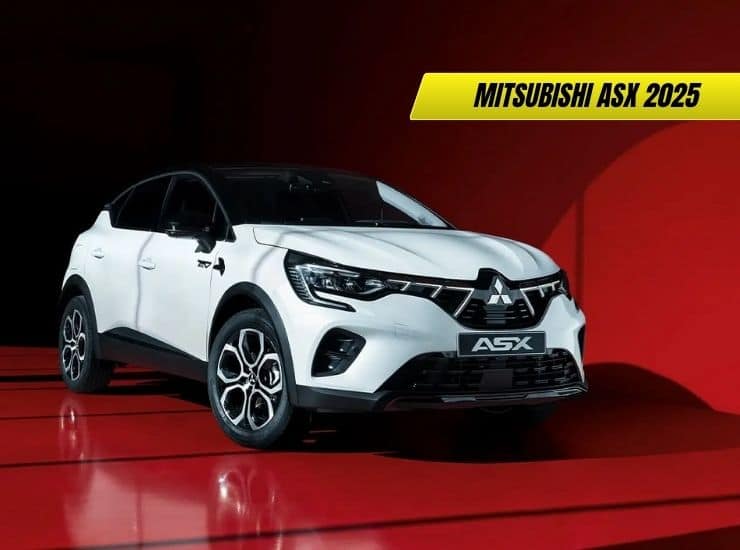
The automotive world is full of unlikely partnerships, but few are as transparent as the relationship between the new Mitsubishi ASX and Renault Captur. What started as badge engineering necessity has evolved into something more intriguing – a genuine alternative that could challenge perceptions about both brands while offering British buyers an unexpected route into hybrid technology.
We’ve been tracking the ASX’s transformation from its original incarnation as a budget-friendly family SUV to this new European-built hybrid. The metamorphosis is complete: gone is the aging platform that served Mitsubishi faithfully for over a decade, replaced by Renault’s sophisticated CMF-B architecture and advanced E-Tech hybrid system.
The timing of this automotive partnership couldn’t be more relevant for UK buyers. With the government’s push toward electrification and rising fuel costs making efficiency paramount, the ASX offers hybrid technology without the premium typically associated with such powertrains. But the critical question remains: how much does this Franco-Japanese collaboration actually cost, and does it represent genuine value in an increasingly crowded compact SUV segment?
Key Highlights
• Platform Partnership: Built on Renault’s CMF-B platform in Valladolid, Spain, sharing underpinnings with the Captur while maintaining distinct Mitsubishi identity • E-Tech Hybrid Power: Available with Renault’s proven 1.6-litre E-Tech hybrid system delivering 143hp and exceptional fuel economy around 55mpg • Expected UK Pricing: Estimated £22,000-£30,000 range, closely mirroring Renault Captur pricing but potentially undercutting premium hybrid alternatives • Comprehensive Powertrain Range: From 90hp 1.0-litre turbo to 157hp plug-in hybrid with 30-mile electric range and CO2 emissions under 50g/km • Launch Timeline: European sales commenced March 2023, with facelifted 2024 model featuring updated styling and enhanced technology • UK Market Uncertainty: Currently not confirmed for British sale, despite strong European reception and obvious market demand
The Badge Engineering Reality: More Than Just a Logo Change
Badge engineering typically conjures images of cynical corporate cost-cutting, but the ASX represents a more nuanced approach to platform sharing. While undeniably based on the Renault Captur, Mitsubishi has invested effort in creating visual distinction beyond simple logo swapping.
The front end showcases Mitsubishi’s Dynamic Shield design language, creating a more angular, purposeful appearance than the Captur’s softer approach. The signature triple-diamond logo sits within a hexagonal grille that immediately identifies this as a Mitsubishi product, despite the shared profile and rear treatment.
Interior changes are more subtle but present. While the dashboard architecture mirrors the Captur’s layout, Mitsubishi has introduced different trim materials and colour schemes. The steering wheel bears the three-diamond logo, and various interface graphics reflect Mitsubishi’s brand identity. It’s not revolutionary differentiation, but it’s more considered than many platform-sharing exercises.
Dimensions and Proportions
At 4,228mm long, 1,797mm wide, and 1,573mm tall, the ASX occupies the sweet spot between small and compact SUV segments. The proportions work well, avoiding the awkward stance that sometimes afflicts badge-engineered vehicles. Ground clearance and wheel arch cladding provide appropriate SUV character without appearing contrived.
The sliding rear seat mechanism – inherited from the Captur – allows cargo space to expand from 332 to 401 litres depending on passenger priority. This flexibility addresses one of the primary concerns with compact SUVs: balancing people and luggage requirements.
Powertrain Range: Electrification Across the Spectrum
The ASX powertrain lineup embraces electrification more comprehensively than many established competitors, offering everything from mild-hybrid assistance to full plug-in capability.
1.0-litre TCe 90 (Entry Level)
The base engine delivers 90hp from a three-cylinder turbocharged unit paired with a six-speed manual transmission. While modest in output, this powerplant provides adequate performance for urban driving while keeping acquisition costs low. Fuel economy should exceed 50mpg in mixed driving, making it attractive for cost-conscious buyers.
1.3-litre TCe Mild-Hybrid (Volume Seller)
Available in 138hp manual or 155hp dual-clutch automatic configurations, the 1.3-litre turbo incorporates 12-volt mild-hybrid technology. The system provides seamless stop-start functionality and can assist during acceleration, improving both efficiency and drivability. This powertrain likely represents the sweet spot for most buyers, balancing performance, economy, and price.
1.6-litre E-Tech Hybrid (Efficiency Champion)
The headline act employs Renault’s sophisticated E-Tech hybrid system, combining a 1.6-litre petrol engine with two electric motors and a multi-mode automatic transmission. Total system output reaches 143hp, but the real attraction lies in fuel economy approaching 55mpg and CO2 emissions around 106g/km.
The E-Tech system operates similarly to Toyota’s hybrid setup, seamlessly switching between electric, petrol, and combined power depending on driving conditions. Low-speed urban driving can be entirely electric, while the petrol engine handles higher speeds and provides charging for the battery.
1.6-litre PHEV (Range Topper)
The plug-in hybrid variant adds a 10.5kWh battery enabling up to 30 miles of electric-only driving. Total system output increases to 157hp, while CO2 emissions drop below 50g/km for significant company car tax advantages. Home charging takes approximately 3 hours using a standard domestic socket.
For company car users, the BiK implications are compelling. With CO2 emissions under 50g/km, the PHEV qualifies for minimal Benefit-in-Kind taxation, making it significantly cheaper than equivalent petrol alternatives for business users.
UK Pricing Expectations: Value in a Premium Package
While official UK pricing remains unconfirmed – largely because the ASX isn’t currently planned for British sale – European pricing provides valuable guidance. In Germany, the range starts around €25,000 (approximately £21,500) for the base 1.0-litre model, rising to approximately €35,000 (£30,000) for the plug-in hybrid.
Translating these figures to UK market conditions, we’d expect pricing to closely mirror the Renault Captur range, currently spanning £23,000-£32,000. This positioning would undercut premium hybrid alternatives like the Toyota Yaris Cross and Honda HR-V while offering more sophisticated powertrains than budget competitors.
Comparison with Key Alternatives
| Model | Price Range | Hybrid Available | CO2 Emissions | Fuel Economy |
|---|---|---|---|---|
| Mitsubishi ASX | £22,000-£30,000* | Yes (E-Tech + PHEV) | 106-45g/km | 55mpg+ |
| Renault Captur | £23,000-£32,000 | Yes (E-Tech + PHEV) | 106-45g/km | 55mpg+ |
| Toyota Yaris Cross | £26,000-£31,000 | Standard (only option) | 116-120g/km | 57mpg |
| Honda HR-V | £30,000-£36,000 | Yes (e:HEV) | 122-131g/km | 52mpg |
| Ford Puma | £25,000-£32,000 | Yes (mild) | 139-160g/km | 47mpg |
| Nissan Juke | £22,000-£29,000 | No | 140-165g/km | 44mpg |
*Estimated UK pricing based on European figures
The comparison reveals the ASX’s potential value proposition. Only the Toyota Yaris Cross offers comparable hybrid efficiency, but at a £4,000-£5,000 premium for similar specification levels. The Honda HR-V provides similar technology but commands an even higher price premium.
For context on the broader compact SUV landscape, our analysis of the best SUVs under £30,000 demonstrates the increasing sophistication available at accessible price points.
Technology and Equipment: Premium Features at Mainstream Prices
The ASX benefits from Renault’s significant investment in infotainment and driver assistance technology. The dashboard centres around a 10.4-inch touchscreen running OpenR Link software with embedded Google services. The system supports wireless Android Auto and Apple CarPlay, while over-the-air updates ensure continued functionality.
Driver assistance features include automatic emergency braking with pedestrian and cyclist detection, adaptive cruise control, lane-keeping assistance, traffic sign recognition, and blind-spot monitoring. Higher trim levels add MI-PILOT semi-autonomous driving capability, combining adaptive cruise control with active lane centring.
Interior Quality and Comfort
Build quality reflects the Renault foundation, with solid construction and appropriate material choices for the price point. Entry-level models feature hard-wearing fabrics, while higher specifications add synthetic leather and soft-touch surfaces. The overall ambience feels more premium than the price suggests, particularly in higher trim levels.
The sliding rear seat mechanism deserves particular praise, allowing owners to prioritise passenger space or cargo volume as circumstances require. Rear passengers benefit from reasonable headroom and legroom, though the sloping roofline reduces space compared to more upright designs.
UK Market Reality: The Elephant in the Showroom
The ASX’s most significant limitation for British buyers is simple: it’s not officially available in the UK market. Despite launching across Europe in March 2023 and receiving positive reception, Mitsubishi has confirmed no plans for British sales.
This decision reflects Mitsubishi’s reduced UK presence following their European market exit and subsequent partial return. The brand currently offers limited model ranges in markets where they maintain operations, focusing resources on regions with stronger dealer networks and brand recognition.
Alternative Routes to ASX Ownership
For determined buyers, European imports remain theoretically possible, though the complexity and cost implications make this impractical for most. Registration, warranty coverage, and servicing arrangements would prove challenging, effectively eliminating any pricing advantages.
The more realistic approach involves considering the mechanically identical Renault Captur, which offers the same platform, powertrains, and technology with established UK dealer support. While badge preference might favour Mitsubishi, the practical realities strongly support the French alternative.
Future Possibilities
Industry observers suggest Mitsubishi might reconsider UK availability if European sales prove sufficiently strong and dealer network expansion becomes viable. However, no official timeline exists, and buyers requiring hybrid compact SUV capability shouldn’t delay purchases waiting for uncertain developments.
Frequently Asked Questions
How much would the ASX cost if it came to the UK?
Based on European pricing and typical UK market positioning, expect £22,000-£30,000 spanning the full range. This would closely mirror Renault Captur pricing while potentially offering slight savings through different specification strategies or dealer incentives.
Is the ASX just a rebadged Renault Captur?
Essentially yes, though Mitsubishi has made efforts to differentiate styling and trim details. The platform, powertrains, and fundamental engineering are shared, but the execution feels sufficiently distinct to justify separate model status.
How reliable is the E-Tech hybrid system?
Renault’s E-Tech technology has proven robust in Captur and Clio applications, with few reported issues since launch. The system shares philosophical similarities with Toyota’s proven hybrid approach, suggesting good long-term reliability prospects.
Could I import an ASX from Europe?
Technically possible but practically problematic. Import duties, VAT, registration costs, and ongoing warranty/servicing complications would eliminate cost advantages while creating significant inconvenience.
Why isn’t the ASX sold in the UK?
Mitsubishi’s reduced European presence and limited UK dealer network make market entry challenging. The brand is focusing resources on markets with stronger established presence rather than rebuilding UK operations.
How does the ASX compare to the Toyota Yaris Cross?
Both offer comprehensive hybrid systems, but the ASX would likely undercut Toyota pricing by £4,000-£5,000 for equivalent specification. The Yaris Cross offers slightly better fuel economy and proven reliability, while the ASX provides more interior space and technology features.
Is the PHEV variant worth the premium?
For company car users, absolutely – the sub-50g/km CO2 emissions create substantial BiK tax savings. Private buyers need regular short journeys and home charging capability to justify the additional cost through fuel savings.
Market Context: The Hybrid Landscape Shifts
The ASX arrives as the compact SUV hybrid landscape becomes increasingly competitive. Toyota’s dominance with the Yaris Cross faces challenges from Honda’s e:HEV system, Ford’s mild-hybrid approach, and now Renault’s E-Tech technology appearing in multiple model lines.
This proliferation of hybrid options benefits consumers through increased choice and competitive pricing. The ASX’s theoretical positioning would add another strong option to the mix, potentially forcing established players to sharpen their value propositions.
Our comprehensive guide to hybrid cars for city driving demonstrates how these powertrains excel in urban environments where the ASX would primarily operate.
Environmental Considerations
The hybrid ASX’s 106g/km CO2 emissions and 55mpg+ fuel economy represent significant environmental improvements over conventional petrol alternatives. The PHEV variant’s electric-only capability enables genuinely zero-emission local driving when charged from renewable sources.
For environmentally conscious buyers, the ASX would offer Toyota-rivalling efficiency at potentially lower acquisition costs, making sustainable motoring more accessible.
AutoHit’s Verdict: Frustrated Potential
The Mitsubishi ASX 2025 represents exactly the kind of value-oriented hybrid compact SUV that British buyers need. The combination of Renault’s proven technology, competitive pricing, and comprehensive electrification options creates a compelling package that addresses real-world requirements without premium pricing.
Our frustration lies not with the product itself, but with its absence from UK shores. At an estimated £22,000-£30,000, the ASX would provide genuine alternative to the Toyota Yaris Cross while undercutting Honda’s HR-V by meaningful amounts. The E-Tech hybrid system offers efficiency rivalling Toyota’s setup, while the PHEV variant provides company car tax advantages that would make it compelling for business users.
The build quality and technology content appear appropriate for the price point, benefiting from Renault’s significant platform investment. While purists might lament the badge engineering approach, the practical reality is that platform sharing enables advanced powertrains at accessible prices.
From a competitive standpoint, the ASX would strengthen the hybrid compact SUV segment while providing Mitsubishi with a credible efficiency story. The three-diamond badge still carries positive associations in the UK, particularly among buyers who remember the brand’s previous success with practical, reliable vehicles.
However, reality intrudes on these optimistic assessments. Without UK availability, the ASX remains an interesting footnote rather than a practical purchase option. British buyers seeking similar capability must look to the mechanically identical Renault Captur, which offers the same fundamental benefits with established dealer support.
The irony is palpable: at a time when the UK market desperately needs affordable hybrid options, one of the most promising solutions remains artificially excluded through corporate strategy rather than product limitations.
For buyers attracted to the ASX concept, the Renault Captur provides the identical mechanical package with proven UK support infrastructure. While badge preference might favour Mitsubishi, the practical advantages of established dealer networks and warranty coverage make the French alternative the logical choice.
Based on European reception and technical merit, the ASX deserves UK availability. Unfortunately, corporate realities suggest British buyers will continue watching this promising hybrid from afar while making do with available alternatives.
The Mitsubishi ASX 2025 is available across Europe but not currently planned for UK sale. British buyers seeking similar hybrid technology should consider the mechanically identical Renault Captur, available from £23,000.
Looking for current hybrid alternatives? Explore our guide to the best affordable SUVs under £25,000 or discover why hybrid technology excels in British driving conditions with our comprehensive buyer’s guide.





