
The controversial comeback nobody saw coming – but is it worth the three-decade wait?
The Lada Azimut has finally broken cover, marking the Russian manufacturer’s first genuinely new SUV in nearly thirty years. After decades of relying on the venerable Niva and a handful of sedans, AvtoVAZ has unveiled what could charitably be described as their most ambitious project since the Soviet era – or less charitably, as a rather familiar-looking crossover that bears more than a passing resemblance to the Dacia Duster.
According to our analysis at AutoHit, the Azimut represents both a fascinating return to form and a sobering reminder of how the global automotive landscape has shifted since 2022. While UK buyers won’t be seeing this particular SUV in showrooms anytime soon – thanks to ongoing sanctions and the current geopolitical climate – the Azimut offers an intriguing glimpse into what happens when a manufacturer finds itself operating in complete isolation from Western automotive partnerships.
The timing couldn’t be more pointed. The Azimut is scheduled to launch in 2026, and this new model is said to be entirely designed, developed, and produced in Russia – a stark departure from the brand’s previous reliance on Renault’s engineering and platform sharing. Whether this independence produces genuine innovation or simply reinvents existing solutions remains to be seen.
Key Highlights
• First new Lada SUV in 28 years – marking the brand’s most significant launch since the fall of the Berlin Wall • Dacia Duster dimensions with 4.42m length and 2.68m wheelbase, positioning it squarely against Europe’s budget SUV champion
• Russia-only availability due to international sanctions, with no plans for European export in the foreseeable future • Premium pricing strategy starting from approximately £25,000, making it Lada’s most expensive model ever • Front-wheel drive only at launch though all-wheel drive variants are reportedly under consideration • Three petrol engines planned ranging from 120hp to 150hp, with no electrification on the horizon
Design: Familiar Territory With A Russian Accent
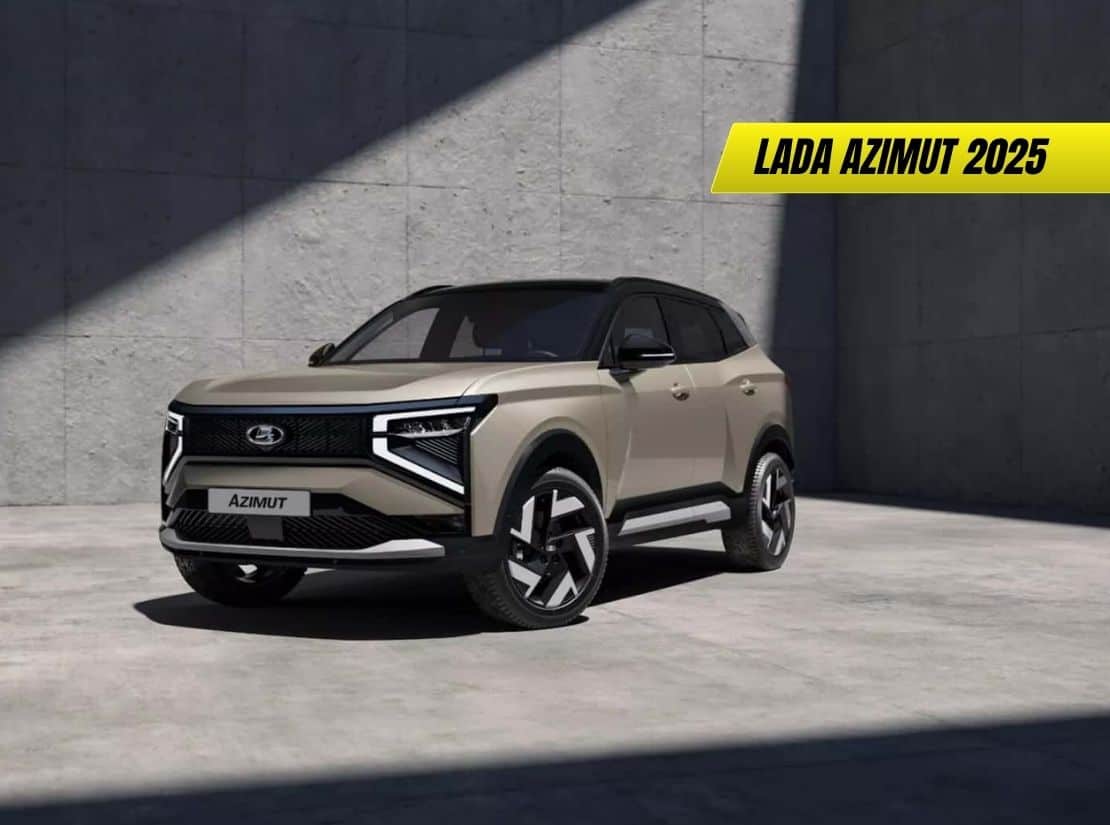
The first thing you notice about the Azimut is how thoroughly modern it looks – and how thoroughly familiar. Its upright nose with a short front overhang features the signature X-design pattern found in other Lada models, while sharp LED headlights are seamlessly integrated with the grille and bumper intakes. The design language is crisp, confident, and – if we’re being honest – bears a striking resemblance to recent Dacia products.
That similarity isn’t entirely coincidental. Until 2022, Renault owned a controlling stake in AvtoVAZ, and the French manufacturer had been working closely with Lada on future product development. How much of the Azimut’s design was completed before that partnership ended remains unclear, but the influence is unmistakable.
The side profile reveals sharp creases on the fenders, 18-inch alloy wheels, and bi-tone paint with understated plastic cladding. It’s a handsome enough proposition, particularly the way those wheel arch extensions flow into the door cladding. The rear end features a full-width LED light bar – because apparently every SUV launched after 2020 is legally required to have one – alongside some rather bold fake exhaust outlets.
Interior: Modern Russia Meets Practical Design
Step inside, and you’re greeted by what appears to be a genuinely modern cabin. The digital cockpit comprises an instrument cluster and a 10-inch infotainment touchscreen featuring built-in navigation and a virtual assistant. The system has been developed in partnership with Russian tech companies Sber and Navio, which suggests AvtoVAZ is serious about creating a genuinely domestic alternative to Western suppliers.
The dashboard layout is refreshingly straightforward, with physical controls for the climate system and a proper rotary dial for terrain mode selection. Lada has also added several storage compartments throughout the cabin, along with electric adjustments for the steering wheel and front seats. Higher trim levels promise wireless charging, dual-zone climate control, and a panoramic sunroof – features that would have been unthinkable in a Lada just a decade ago.
The material quality appears adequate rather than inspiring, but that’s entirely in keeping with the budget SUV segment. More importantly, the cabin looks durable and practical – exactly what you’d want from a vehicle designed to tackle Russian winters and questionable road surfaces.
Performance: Sensible Rather Than Spectacular
The Azimut’s engine lineup won’t trouble any performance SUV manufacturers, but it appears well-suited to real-world driving conditions. At launch, the Azimut will be powered exclusively by gasoline engines, none of which have any electrification. There will be a 1.6-liter naturally aspirated engine with 120 hp, as well as a 1.8-liter unit with 132 hp.
These figures place the Azimut roughly on par with entry-level versions of competitors like the Dacia Duster, though without the benefit of modern hybrid assistance that’s becoming increasingly common in the segment. A more powerful 150hp turbocharged engine is promised for later in the production run, which should provide more acceptable motorway performance.
Transmission options include a six-speed manual or CVT automatic, with these being paired with either a six-speed manual transmission or a CVT. The manual is likely to be the more durable choice, given CVTs’ mixed reputation for longevity in challenging conditions.
Platform And Dynamics
The SUV is built on a modified version of the Vesta platform that’s been around since 2015, with a facelift in 2022. While this might sound unambitious, using a proven platform makes considerable sense for a manufacturer working with limited resources. The Vesta architecture has demonstrated its robustness in Russian conditions, and the ground clearance of the vehicle was announced as 208 mm – more than adequate for dealing with poor road surfaces and light off-road work.
Unfortunately for adventure-seekers, despite its off-road styling cues, the Azimut is likely to be front-wheel-drive only, similar to the Vesta sedan and SW. An all-wheel-drive system may arrive later, but don’t expect the sophisticated torque-vectoring setups found in premium SUVs. When it does arrive, it’s likely to be a fairly basic system designed for winter traction rather than serious off-road capability.
Technology: Russian Innovation Meets Practical Needs
Perhaps the most intriguing aspect of the Azimut is its technological independence. With Western suppliers largely off-limits, AvtoVAZ has partnered with domestic tech companies to develop the infotainment system. The 10-inch touchscreen includes navigation, voice control, and presumably the usual smartphone connectivity features, though details about Android Auto and Apple CarPlay compatibility remain unclear.
Safety equipment includes the basics you’d expect from a 2025 SUV: multiple airbags, ABS, and electronic stability control. Whether more advanced driver assistance systems will be available depends largely on AvtoVAZ’s ability to source appropriate sensors and computing power from non-Western suppliers.
The optional equipment list reads like a checklist from more established manufacturers: panoramic roof, 360-degree cameras, wireless charging, and heated seats. These features suggest that Lada is serious about competing on amenities rather than just undercutting on price.
Market Position: Ambitious Pricing For Ambitious Times
Here’s where things get interesting – and potentially problematic. Russian media estimate that the starting price will be between 2.5 and 3 million rubles (around $31,900 to $38,300), making the Azimut the most expensive vehicle in Lada’s current lineup. In UK terms, that translates to roughly £25,000-£30,000, which places it in direct competition with some seriously capable rivals.
To put this pricing in perspective, the ancient Niva Legend starts at a mere 1,059,000 rubles ($13,500), while the more modern Niva Travel starts at 1,314,000 rubles ($16,700). The Azimut represents a significant step upmarket for Lada – perhaps too significant given the brand’s reputation and the current economic climate in Russia.
How It Compares: Azimut vs The Competition
| Feature | Lada Azimut | Dacia Duster | Comments |
|---|---|---|---|
| Starting Price | ~£25,000 | £19,380 | Azimut significantly more expensive |
| Length | 4,420mm | 4,341mm | Virtually identical proportions |
| Engine Range | 120-150hp petrol only | 100-140hp hybrid available | Duster offers more variety |
| AWD Available | Future option | Yes, from launch | Duster has immediate advantage |
| Ground Clearance | 208mm | 210mm | Negligible difference |
| **Our Take | Ambitious pricing undermines value proposition | Proven formula at sensible money | Duster wins on practicality and price |
The comparison with the Dacia Duster is inevitable and, frankly, not particularly flattering for the Azimut. While the Russian SUV matches the Romanian’s dimensions and general capability, it does so at a considerably higher price point and without the benefit of Dacia’s established dealer network, parts availability, or proven reliability record.
Real-World Considerations For UK Buyers
Obviously, UK buyers won’t be getting their hands on an Azimut anytime soon. International sanctions and the breakdown of diplomatic relations mean that Lada has effectively disappeared from Western markets, and there’s no indication this will change in the foreseeable future.
But the Azimut’s existence raises interesting questions about brand resilience and automotive independence. In a world where hybrid technology is rapidly becoming mandatory and electric powertrains are the future, Lada’s commitment to petrol-only engines feels oddly anachronistic.
For UK buyers seeking affordable SUV transportation, the lesson is clear: stick with proven alternatives like the Dacia Duster, Suzuki Vitara, or entry-level versions of mainstream SUVs that offer better dealer support, parts availability, and resale values.
Production And Availability
Production of the Azimut is set to begin in 2026 at the Togliatti plant, but because of the ongoing war and international sanctions, it’s not likely that we’ll see this SUV outside of Russia anytime soon. This isolation might actually benefit Russian consumers in the short term, as the entire production run will remain in the domestic market.
The bigger question is whether AvtoVAZ can maintain quality standards and parts supply without access to Western suppliers. Modern vehicles require thousands of components from dozens of countries, and replacing established supply chains with domestic or Chinese alternatives represents a massive undertaking.
Alternative Options For UK Buyers
Since the Azimut won’t be reaching UK shores, what should budget-conscious SUV buyers consider instead? The Dacia Duster remains our top recommendation for those seeking maximum space and capability for minimum outlay. Its proven reliability, extensive dealer network, and competitive pricing make it the logical choice for families prioritising value over prestige.
For those willing to stretch budgets slightly, more established alternatives like the Skoda Kamiq, Seat Arona, or even entry-level versions of the Nissan Qashqai offer superior refinement and build quality. These vehicles benefit from extensive dealer networks, readily available parts, and strong resale values that the Azimut simply cannot match.
Frequently Asked Questions
Will the Lada Azimut ever be sold in the UK? Currently, there are no plans to export the Azimut outside Russia due to ongoing international sanctions. Even if diplomatic relations improve, Lada would need to completely rebuild its dealer network and ensure compliance with UK safety and emissions standards, making near-term availability highly unlikely.
How does the Azimut compare to the Dacia Duster in terms of value? While both vehicles offer similar dimensions and capability, the Azimut’s estimated £25,000+ starting price significantly undercuts its value proposition compared to the Duster’s £19,380 entry point. The Dacia also benefits from proven reliability, established dealer support, and readily available parts – advantages the Azimut cannot match.
What engines will be available in the Azimut? The launch lineup includes 1.6-litre (120hp) and 1.8-litre (132hp) naturally aspirated petrol engines, with a 150hp turbocharged unit planned for later introduction. Notably absent is any form of electrification, making the Azimut increasingly anachronistic in today’s automotive landscape.
Does the Azimut offer all-wheel drive? Not at launch – the initial production run will be front-wheel drive only. Lada has suggested that AWD variants may follow, but technical details and timing remain unconfirmed. This represents a significant disadvantage compared to rivals like the Dacia Duster, which offers capable all-wheel drive from day one.
How reliable is Lada as a brand? Historically, Lada vehicles have been robust but basic, prioritising durability over refinement. The Azimut represents a significant departure from this philosophy, incorporating more complex technology and higher-quality materials. Whether this translates to improved reliability without compromising the brand’s traditional ruggedness remains to be seen.
What’s the real-world fuel economy likely to be? With naturally aspirated petrol engines and no hybrid assistance, expect real-world fuel economy around 35-40mpg in mixed driving conditions. This puts the Azimut at a significant disadvantage compared to modern rivals offering mild-hybrid or full-hybrid powertrains that can achieve 50+ mpg.
Is the Azimut’s pricing competitive for the Russian market? At 2.5-3 million rubles (£25,000-£30,000), the Azimut is positioned as a premium offering within Lada’s range. However, this pricing puts it in direct competition with imported Chinese SUVs that often offer superior technology and build quality, potentially limiting its appeal to patriotic buyers or those prioritising local manufacturing.
The Bottom Line: Ambitious But Anachronistic
The Lada Azimut represents both remarkable ambition and sobering limitations. After three decades without a genuinely new SUV, AvtoVAZ has produced something that looks modern, feels reasonably well-equipped, and demonstrates impressive engineering independence under challenging circumstances.
However, the Azimut also highlights the costs of automotive isolationism. Without access to Western hybrid technology, advanced safety systems, or proven suppliers, Lada has essentially created a competent but dated SUV that feels more like 2015 technology wearing 2025 styling. The pricing strategy – positioning it as a premium product within the Lada range – seems particularly optimistic given the brand’s reputation and the alternatives available to Russian consumers.
For UK buyers, the Azimut serves as an interesting footnote in automotive history rather than a realistic purchasing option. The lesson remains clear: if you’re seeking affordable SUV transportation, established alternatives like the Dacia Duster offer superior value, proven reliability, and comprehensive dealer support that no isolated manufacturer can match.
Our verdict: An impressive achievement under difficult circumstances, but not one that troubles the established order in the affordable SUV segment. UK buyers are better served by proven alternatives that offer superior value and long-term viability.
This Lada Azimut article is part of AutoHit’s comprehensive coverage of the evolving SUV market. For more insights into affordable family SUVs available in the UK, explore our guides to the best hybrid cars for city driving and most reliable SUVs under £30,000.





