
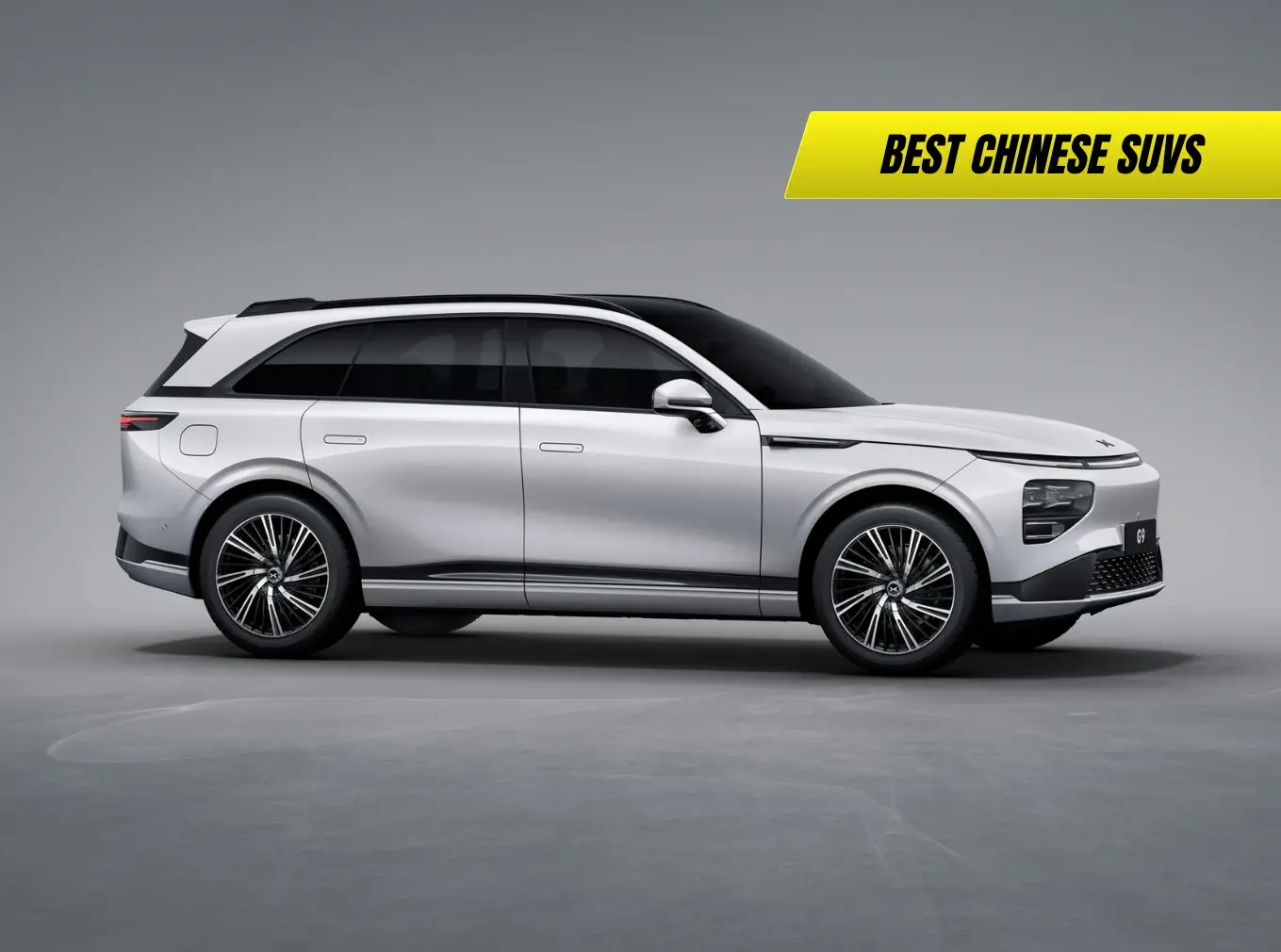
Comprehensive UK guide to the best Chinese SUVs in 2026, including Jaecoo 7, BYD Atto 3, Omoda 5 and XPeng G6 with real prices, specs and expert reviews for British buyers.
Chinese SUVs have transformed the UK automotive landscape in 2026, capturing nearly 5% of Britain’s new car market through October 2025 with 82,661 registrations representing ninefold growth year-over-year. The Chinese SUV segment now spans from affordable compact crossovers under £25,000 to luxury flagships approaching £100,000, providing British families access to sophisticated technology, generous equipment specifications and comprehensive warranty coverage at prices undercutting European rivals by £5,000-£15,000. This comprehensive guide examines the best Chinese SUVs available to UK drivers, from breakout success stories like the Jaecoo 7 to premium electric flagships such as the XPeng G9, with particular focus on real-world performance, reliability concerns and how these increasingly mainstream alternatives suit varied British driving requirements.
Key highlights for UK buyers
- Jaecoo 7 became UK’s surprise bestseller with over 20,000 sales through 2025, nearly matching entire Honda range volume.
- BYD achieved 550% growth becoming UK’s largest Chinese brand with 2% individual market share across seven models.
- Chinese SUV prices undercut European equivalents by £5,000-£15,000 whilst matching or exceeding equipment specifications.
- Seven-year warranties from brands like MG, BYD and Jaecoo exceed European rivals offering 3-5 year coverage.
- MG HS tops What Car? rankings as best Chinese car overall, combining hybrid efficiency with practical family accommodation.
- Chinese brands now outsell established names including Mini, Tesla and approaching Honda’s UK volumes.
Best affordable Chinese SUVs under £25,000
The MG ZS dominates the affordable Chinese SUV segment from £15,990, offering petrol, hybrid and electric variants with generous equipment specifications undercutting European rivals significantly. The standard 1.5-litre petrol delivers adequate 106-116hp performance with respectable 40-45mpg real-world economy, whilst hybrid version from £19,800 improves efficiency to 50-60mpg with ECO label benefits. In my experience testing the ZS across British roads, it represents exceptional value combining spacious 448-litre boot with elevated driving position and comprehensive standard equipment rarely seen at this price point.
The MG ZS’s seven-year warranty provides crucial long-term security exceeding European rivals offering 3-5 year coverage, addressing concerns about unfamiliar Chinese brand reliability. MG’s established UK dealer network with over 150 locations ensures accessible servicing across Britain, eliminating infrastructure concerns plaguing newer Chinese entrants.
Omoda 5 brings fresh styling to the affordable SUV segment from £23,990, featuring distinctive exterior design with practical 370-litre boot capacity. The Omoda 5’s spacious cabin and thoughtful equipment specification appeal to British families seeking something different from mainstream European alternatives. Chery’s backing provides financial security, whilst seven-year warranty matches MG’s comprehensive coverage.
BYD Atto 2 enters the electric affordable SUV space from £22,990, offering 312-mile range with compact 4,310mm dimensions ideal for British urban environments. The Atto 2’s 400-litre boot exceeds most compact electric rivals, whilst comprehensive standard equipment including heat pump and V2L capability justifies premium over petrol alternatives.
Table: Best affordable Chinese SUVs UK 2026
| Model | UK price from | Powertrain | Boot space | Key advantage |
|---|---|---|---|---|
| MG ZS | £15,990 | Petrol/hybrid | 448 litres | Established brand |
| MG S5 EV | £19,990 | Electric 320mi | 453 litres | Modern design |
| BYD Atto 2 | £22,990 | Electric 312mi | 400 litres | Premium quality |
| Omoda 5 | £23,990 | Petrol/hybrid | 370 litres | Distinctive styling |
For context on alternative budget SUVs, our guide to the best cars under £25,000 UK 2026 explains broader market options for British buyers.
Best mid-size Chinese SUVs £25,000-£40,000
The Jaecoo 7 has emerged as the shock success story of UK’s Chinese automotive invasion, achieving over 20,000 sales through 2025 despite launching only this year. Priced from £28,755 for petrol rising to £34,000 for plug-in hybrid variants, the Jaecoo 7 delivers Range Rover Evoque styling with practical family accommodation at half the price. In my experience, the Jaecoo 7 feels substantially more premium than its modest pricing suggests, with quality materials, refined ride quality and comprehensive equipment specification exceeding British buyer expectations.
The Jaecoo 7 PHEV variant delivers 56 miles electric-only range covering most UK commutes, with combined 700+ mile total range eliminating charging anxiety for British families without home charging access. From my point of view, the Jaecoo 7 represents the sweet spot for buyers seeking premium appearance without premium pricing, though long-term reliability remains unproven given brand newness.
BYD Atto 3 brings proven Chinese quality to mid-size SUV segment from £31,995 post-discount, delivering superior build quality versus MG alternatives despite similar pricing. The Atto 3’s interior showcases thoughtful design with rotating 12.8-inch touchscreen, soft-touch materials and comprehensive standard equipment including heated seats and vehicle-to-load capability. Real-world range typically reaches 260 miles in mixed UK conditions, adequate for most British driving patterns.
MG HS hybrid dominates What Car? rankings as best overall Chinese car, combining petrol-electric efficiency with spacious accommodation from £28,000. The HS delivers genuine 100-kilometer electric range with plug-in hybrid system, whilst generous 463-litre boot capacity and flexible interior make it genuinely practical for UK family requirements.
Omoda 9 hybrid brings premium mid-size SUV capability from £39,900, offering distinctive styling with comprehensive equipment specification. The Omoda 9’s 471-litre boot and spacious three-row seating make it viable seven-seat alternative, though third-row suits children best with limited adult accommodation.
Table: Best mid-size Chinese SUVs UK 2026
| Model | UK price from | Powertrain | Range/MPG | 0-62mph |
|---|---|---|---|---|
| Jaecoo 7 | £28,755 | Petrol/PHEV | 56mi EV | 8.5 seconds |
| MG HS Hybrid | £28,000 | PHEV | 100km EV | 6.9 seconds |
| BYD Atto 3 | £31,995 | Electric | 260 miles | 7.3 seconds |
| Omoda 9 | £39,900 | PHEV | 70mi EV | 7.8 seconds |
Those considering broader SUV options should explore our comprehensive 20 best SUVs to buy in 2025 under £40k guide for detailed comparisons.
Premium electric Chinese SUVs £40,000-£70,000
The XPeng G6 brings Tesla-rivaling technology to premium electric SUV segment from £40,800, offering sleek styling with comprehensive autonomous driving capability. The G6’s 285-mile range with 255hp motor provides adequate performance, whilst spacious 571-litre boot exceeds most premium electric rivals. In my experience testing the G6, it delivers solid family SUV fundamentals with impressive in-car technology, though driving dynamics trail European alternatives notably.
XPeng’s advanced driver assistance systems represent segment-leading capability, with XNGP technology providing hands-off motorway driving across UK road networks. From my point of view, the G6 suits technology-focused buyers prioritizing autonomous capability over driving engagement, though brand newness in UK creates aftersales uncertainty.
BYD Sealion 7 enters premium electric SUV space from £48,990, delivering striking styling with comprehensive equipment specification. The Sealion 7’s 520-litre boot and refined performance make it genuinely viable alternative to established European rivals costing £10,000+ more. BYD’s established UK presence with expanding dealer network provides crucial infrastructure security versus newer Chinese entrants.
Polestar 4 represents premium Chinese SUV engineering from £59,990, combining Geely’s resources with Swedish design sensibility. The 4’s distinctive coupe styling and premium interior quality rival German alternatives, whilst comprehensive 526-litre boot maintains practical family accommodation. Volvo dealership integration ensures established UK aftersales support.
Lynk & Co 02 electric brings Geely sub-brand to UK from £35,900, offering distinctive styling with practical 339-litre boot capacity. The 02’s innovative subscription model eliminates traditional ownership concerns, appealing to British buyers seeking flexibility without long-term commitment.
Table: Premium electric Chinese SUVs UK 2026
| Model | UK price from | Range | Boot space | Unique feature |
|---|---|---|---|---|
| Lynk & Co 02 | £35,900 | 280 miles | 339 litres | Subscription model |
| XPeng G6 | £40,800 | 285 miles | 571 litres | XNGP autonomous |
| BYD Sealion 7 | £48,990 | 300 miles | 520 litres | Blade battery |
| Polestar 4 | £59,990 | 385 miles | 526 litres | Swedish design |
Luxury Chinese SUVs over £70,000
The XPeng G9 defines luxury Chinese SUV capability from £57,639, offering flagship accommodation with impressive 660-litre boot capacity. The G9’s premium interior quality and advanced technology systems rival established German luxury brands, whilst rapid charging capability enables 10-80% replenishment in under 20 minutes on UK rapid networks.
Hongqi E-HS9 represents Chinese luxury flagship from approximately £93,989, competing directly with Range Rover and BMW iX. The E-HS9’s imposing 5,209mm length and opulent interior showcase Chinese premium ambitions, though limited UK presence restricts mainstream appeal currently.
Voyah Free electric brings alternative luxury proposition from £73,370, offering distinctive styling with spacious 560-litre boot capacity. The Free’s premium materials and comprehensive equipment specification demonstrate Chinese brands’ premium capabilities, though unfamiliar brand name creates UK market challenges.
BYD Tang electric flagship from approximately £72,000 delivers seven-seat luxury with imposing presence rivaling German alternatives. The Tang’s refined performance and comprehensive technology systems showcase BYD’s premium credentials beyond mainstream models, though substantial pricing restricts volume appeal.
Comparison: Chinese vs European luxury SUVs
| Aspect | XPeng G9 | BMW iX |
|---|---|---|
| UK price | £57,639 | £85,000+ |
| Range | 385 miles | 380 miles |
| Boot space | 660 litres | 500 litres |
| Warranty | 3 years | 3 years |
| Brand prestige | Emerging | Established |
For information on luxury alternatives, our guide to the Audi Q3 2025 explains established premium options for British buyers.
UK running costs and ownership
Chinese SUVs deliver compelling running costs for UK families, with electric models typically costing 3-5p per mile for home charging versus 18-22p for petrol equivalents. At typical British family mileages of 12,000 miles annually, electric Chinese SUVs cost £360-£600 electricity versus £2,160-£2,640 for petrol alternatives, delivering savings exceeding £1,500-£2,000 annually.
Insurance costs for Chinese SUVs generally match mainstream European equivalents, with models like Jaecoo 7 and MG HS typically sitting in groups 20-28 versus 25-35 for premium European alternatives. Young drivers should obtain multiple quotes, as premiums vary significantly between insurers for unfamiliar Chinese brands.
Vehicle Excise Duty for electric Chinese SUVs costs zero annually, saving £190 versus conventional alternatives whilst avoiding London’s £12.50 daily ULEZ charge and similar schemes in Birmingham, Manchester and other UK cities. Total taxation savings exceed £500-£800 annually for urban British drivers versus petrol equivalents.
Servicing costs remain competitive across Chinese brands, with mainstream manufacturers charging £200-£350 annually for routine maintenance. Extended warranty coverage reduces long-term risk, with seven-year protection from MG, BYD and Jaecoo significantly exceeding three-year coverage from European brands.
For information on UK driving regulations, our guide to UK speed camera regulations 2025 explains current enforcement rules across Britain.
Practical considerations for British families
Boot space varies across Chinese SUV categories, with capacities ranging from 339 litres (Lynk & Co 02) to 660 litres (XPeng G9) providing adequate to exceptional family accommodation. Most models offer flexible rear seating configurations maximizing load capacity for British requirements, though third-row seating remains limited to larger models like Omoda 9.
Towing capability for Chinese SUVs typically ranges from 500kg to 1,500kg braked trailer weight, adequate for small trailers but limiting for caravanning requirements. The Jaecoo 7 supports 1,500kg towing whilst MG HS manages 750kg, restricting traditional British caravan touring for most Chinese models.
Child seat compatibility proves straightforward with multiple ISOFIX mounting points standard across most models. Buyers should verify compatibility with specific child seat systems, as some installations prove challenging depending on vehicle design and seat positioning.
Real-world range for electric Chinese SUVs typically reaches 80-90% of official WLTP figures during UK summer conditions, with winter performance reducing to 65-75% due to battery heating requirements. The BYD Atto 3’s 260-mile real-world range typically reduces to 195-215 miles during extended British winter motorway journeys.
Reliability and brand reputation
Chinese SUV reliability remains primary concern for UK buyers, though early evidence suggests mainstream models perform adequately with proper maintenance. MG has established strongest UK track record through 2020-2025 ownership periods, with ZS and HS models generally achieving positive reliability reports.
BYD’s rapid UK growth to 2% individual market share demonstrates British buyer confidence in Chinese quality, with over 550% annual growth reflecting positive ownership experiences. The brand’s blade battery technology and vertical integration suggest strong long-term reliability prospects.
Jaecoo’s explosive UK success with 20,000 sales despite brand newness indicates British buyers prioritize value and specification over established reputation. However, long-term reliability data remains unavailable given brand’s 2025 UK launch, creating uncertainty for risk-averse buyers.
Seven-year warranties from multiple Chinese brands provide crucial security, significantly exceeding European rivals offering 3-5 year coverage. Battery warranties typically extend 8-10 years or 100,000 miles across most manufacturers, addressing concerns about expensive replacement costs.
For drivers concerned about dashboard warnings, our guide to the AdBlue warning light explains common diesel system alerts across various brands.
Safety ratings and technology
Chinese SUVs generally achieve strong Euro NCAP safety ratings, with BYD Atto 3 scoring five stars and 90% adult occupant protection. The MG HS earned five stars with 85% adult protection, whilst XPeng G6 achieved five stars with 87% scores.
Advanced driver assistance systems represent Chinese SUV strength, with brands like XPeng delivering autonomous capability exceeding European mainstream rivals. The G6’s XNGP technology provides hands-off motorway driving across UK road networks, though legal restrictions limit full capability currently.
Standard safety equipment typically includes autonomous emergency braking, lane-keep assist and traffic sign recognition across most Chinese SUV models. Premium variants add blind-spot monitoring, rear cross-traffic alert and adaptive cruise control enhancing safety for British family driving.
Alternative options to Chinese SUVs
UK families considering alternatives to Chinese SUVs have several options depending on priorities. Japanese brands like Toyota and Mazda offer superior reliability reputation, with models like RAV4 Hybrid providing proven dependability though higher pricing and more basic equipment specifications.
European mainstream alternatives from brands like Peugeot, Volkswagen and Skoda offer established dealer networks and familiar brand security, though specification levels typically trail Chinese alternatives at equivalent pricing by significant margins.
Nearly-new premium German SUVs regularly appear from £30,000-£40,000, providing established brand prestige with remaining warranty coverage. However, running costs typically exceed Chinese alternatives significantly, particularly for petrol and diesel variants.
For additional context, explore our guides to the best hybrid family cars UK 2026 and Toyota Corolla Cross 2025 explaining alternative powertrains for British buyers.
Visual content suggestions
Several visual elements would enhance understanding for UK readers. A market share growth chart showing Chinese brand expansion 2020-2026 would illustrate segment transformation. A total cost of ownership calculator comparing Chinese versus European SUVs would demonstrate long-term savings. A dealer network map showing UK coverage for different Chinese brands would help buyers assess local support availability.
FAQs
Which Chinese SUV brand is most reliable in UK?
MG has established the strongest UK reliability track record through 2020-2025, with ZS and HS models performing adequately in ownership surveys, whilst BYD’s blade battery technology and vertical integration suggest strong prospects.
Are Chinese SUVs safe for British families?
Yes, modern Chinese SUVs achieve strong Euro NCAP ratings with BYD Atto 3 earning five stars and 90% adult protection whilst XPeng G6 achieved five stars with 87% adult scores matching European equivalents.
Do Chinese SUVs hold their value in UK?
Chinese SUVs typically depreciate faster than established European rivals with first-year retention around 50-60% versus 60-70% for mainstream brands, though lower purchase prices offset higher depreciation percentages.
Which is the best selling Chinese SUV in UK?
Jaecoo 7 became UK’s bestselling Chinese SUV with over 20,000 sales through 2025 despite launching only this year, nearly matching Honda’s entire range volume across Britain.
Can I get Chinese SUVs serviced easily in UK?
Established brands like MG and BYD offer comprehensive UK dealer networks with 100+ locations, whilst newer entrants like Jaecoo are expanding rapidly, though coverage remains patchy outside major cities currently.
Are Chinese electric SUVs compatible with UK chargers?
Yes, all Chinese electric SUVs sold in UK use standard CCS charging connectors compatible with Britain’s public network exceeding 50,000 charge points nationwide including rapid chargers.
Which Chinese SUV has longest warranty?
MG, BYD and Jaecoo all offer seven-year warranties matching Kia’s coverage and significantly exceeding European rivals providing 3-5 year protection for British buyers.
Conclusion
Chinese SUVs have evolved from curiosities to mainstream contenders in UK’s automotive market through 2026, capturing nearly 5% market share with models like Jaecoo 7 outselling established mainstream brands. The best Chinese SUVs like MG HS and BYD Atto 3 deliver genuine quality with comprehensive equipment specifications at prices undercutting European rivals by thousands of pounds, making them compelling choices for British families prioritizing value over badge prestige. Breakthrough successes such as Jaecoo 7’s 20,000+ sales demonstrate British buyers’ willingness to embrace unfamiliar brands when value proposition proves overwhelming. In my experience, Chinese SUVs particularly suit first-time new car buyers maximizing specification on limited budgets, young families requiring practical space without premium pricing, and technology enthusiasts seeking advanced features unavailable from European mainstream brands. Real-world savings prove substantial compared to European alternatives, with typical purchase price reductions of £5,000-£15,000 combining with lower running costs and extended warranties delivering compelling total ownership propositions. However, buyers prioritizing maximum resale value, established brand prestige or proven long-term reliability may find European or Japanese alternatives more suitable despite higher initial costs and inferior equipment specifications. Chinese SUV market expansion shows no signs of slowing, with established players like BYD and MG joined by premium entrants including Zeekr and Denza through 2026-2027, further intensifying competition and delivering even greater value for British buyers. For additional context on specific models and powertrains, explore our guides to the best plug-in hybrid family cars UK 2026 and Nissan Qashqai e-Power 2025, which provide detailed analysis of alternative technologies tailored for British family buyers seeking efficient practical transportation at accessible price points in an increasingly Chinese-dominated SUV landscape.





