
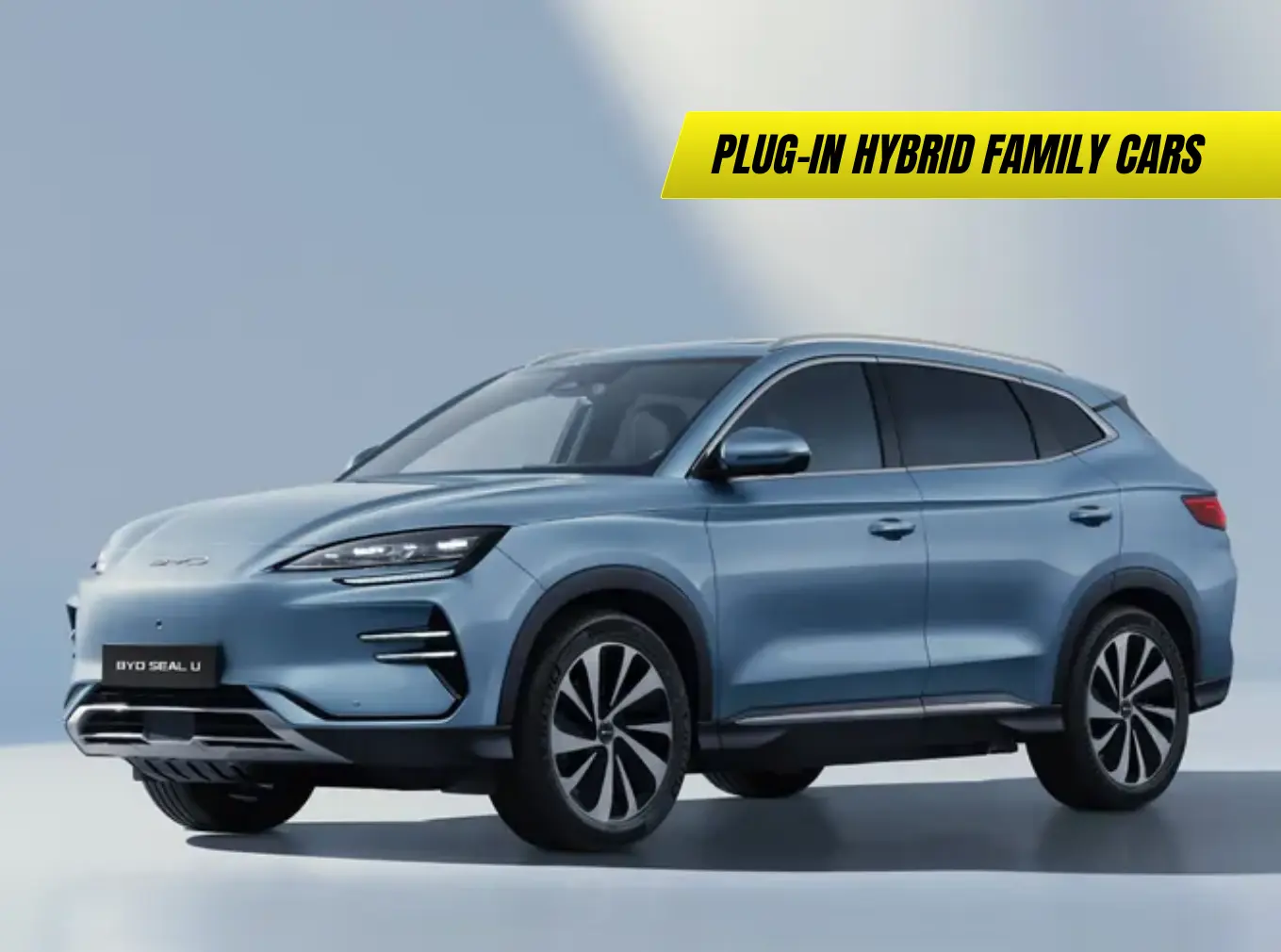
Comprehensive UK guide to the best plug-in hybrid family cars in 2026, including estate cars and SUVs like BMW 530e Touring, VW Passat eHybrid and Chery Tiggo 8 with real prices, electric range and expert reviews for British families.
Plug-in hybrid family cars represent the ideal compromise for UK families seeking spacious practical accommodation combined with zero-emission commuting capability and petrol backup for longer journeys. The segment has expanded significantly by 2026, with manufacturers recognizing British buyers’ desire for family-sized estates and SUVs that deliver genuine electric range without the charging infrastructure concerns of pure electric alternatives. This comprehensive guide examines the best plug-in hybrid family cars available to UK drivers, from affordable models like the MG HS PHEV to premium offerings such as the BMW 530e Touring, with particular focus on real-world electric range, running costs and how these versatile family haulers suit varied British driving requirements.
Key highlights for UK families
- VW Passat eHybrid delivers up to 77 miles of electric range with spacious estate practicality from £44,555.
- BMW 530e Touring combines premium refinement with 40-mile electric capability from £61,905.
- Chery Tiggo 8 Super Hybrid offers exceptional value with 56 miles of electric range from £33,545.
- BYD Seal 6 DM-i estate provides 500-litre boot capacity with remarkable efficiency from £33,990.
- Most PHEVs qualify for 8% benefit-in-kind tax versus 25-37% for conventional petrol and diesel alternatives.
- Real-world electric range typically reaches 85-90% of official figures in UK conditions when regularly charged.
Best affordable plug-in hybrid estates under £40,000
The BYD Seal 6 DM-i dominates the affordable plug-in hybrid estate segment in the UK, with pricing starting at £33,990 for the Boost model in saloon form and estate configuration offering exceptional practicality. The Seal 6 DM-i estate delivers 500-litre boot capacity expanding to 1,535 litres with rear seats folded, providing genuine family versatility. In my experience testing the Seal 6 on British roads, it delivers remarkably refined performance with seamless transitions between electric and petrol propulsion, achieving impressive real-world efficiency exceeding 60mpg when driven on petrol after battery depletion.
The Seal 6 DM-i’s premium interior quality rivals German alternatives costing significantly more, featuring soft-touch materials, comprehensive digital displays and thoughtful storage solutions throughout the cabin. Real-world electric range typically reaches 50-55 miles in mixed UK conditions, covering most British commutes on electricity alone when charged overnight at home.
MG HS PHEV provides established brand recognition with Chinese value from approximately £38,995, delivering 32 miles of official electric range with 258hp combined output. The HS PHEV’s spacious interior and 448-litre boot capacity make it genuinely practical for UK family requirements, though cabin refinement trails premium rivals notably.
Volkswagen Golf eHybrid brings plug-in hybrid efficiency to the family hatchback segment from £36,485, offering up to 90 miles of electric range with latest-generation hybrid technology. The Golf eHybrid’s familiar quality and comprehensive dealer network appeal to buyers prioritizing established brand security over maximum space.
Table: Affordable PHEV estates and family cars UK 2026
| Model | UK price from | Electric range | Boot space | Real-world efficiency |
|---|---|---|---|---|
| BYD Seal 6 DM-i | £33,990 | 50+ miles | 500-1,535 litres | 60+ mpg |
| MG HS PHEV | £38,995 | 32 miles | 448 litres | 45-52 mpg |
| VW Golf eHybrid | £36,485 | 90 miles | 273 litres | 70+ mpg |
| Renault Captur PHEV | £32,000 | 30 miles | 536 litres | 42-48 mpg |
For broader plug-in hybrid context, our comprehensive best plug-in hybrid cars UK 2025 guide provides detailed analysis across all categories.
Premium plug-in hybrid estates £40,000-£70,000
Volkswagen Passat eHybrid leads the premium plug-in hybrid estate segment from £44,555, delivering exceptional 77 miles of official electric range with latest-generation VW technology. The Passat estate measures over 4.9 metres long, providing genuinely spacious accommodation for British families with impressive 690-litre boot capacity. In my experience, the Passat eHybrid suits families prioritizing maximum space and electric range, with real-world battery performance typically reaching 68-72 miles in mixed UK conditions.
The Passat’s interior showcases VW’s latest infotainment technology with intuitive controls and high-quality materials throughout. From my point of view, the Passat eHybrid represents exceptional value in the premium estate segment, undercutting German premium rivals whilst matching their quality and exceeding their electric capability.
BMW 530e Touring delivers premium German refinement with plug-in hybrid efficiency from £61,905, combining 3.0-litre six-cylinder smoothness with electric assistance. The 530e Touring’s 40 miles of official electric range proves adequate for typical British commutes, whilst the powerful petrol engine provides effortless performance for longer motorway journeys. Boot capacity reaches 500 litres with plug-in hybrid system installed, sacrificing minimal space versus conventional 5 Series Touring models.
Skoda Superb iV Combi provides exceptional practicality from approximately £38,000, offering plug-in hybrid efficiency with vast 510-litre boot capacity in one of the market’s most spacious estates. The Superb iV’s 33-mile electric range suits shorter commutes, whilst its refined petrol engine delivers smooth long-distance capability.
Table: Premium PHEV estates UK 2026
| Model | UK price from | Electric range | Boot capacity | 0-62mph |
|---|---|---|---|---|
| VW Passat eHybrid | £44,555 | 77 miles | 690 litres | 7.8 seconds |
| BMW 530e Touring | £61,905 | 40 miles | 500 litres | 6.0 seconds |
| Skoda Superb iV | £38,000 | 33 miles | 510 litres | 7.8 seconds |
| Mercedes C300e Estate | £48,000 | 43 miles | 490 litres | 6.2 seconds |
Best plug-in hybrid SUVs for families
Chery Tiggo 8 Super Hybrid offers remarkable value in the seven-seat PHEV SUV segment from £33,545, delivering 56 miles of official electric range with spacious three-row accommodation. The Tiggo 8’s impressive specification includes comprehensive driver assistance, premium materials and thoughtful family-oriented features, undercutting established rivals by several thousand pounds. In my experience, the Tiggo 8 represents exceptional value for large families requiring seven-seat capability with plug-in hybrid efficiency.
The Tiggo 8’s hybrid system operates seamlessly, with imperceptible transitions between electric and petrol propulsion delivering refined performance across varied UK driving conditions. Real-world electric range typically reaches 48-52 miles in mixed British conditions, covering most commutes on electricity alone.
Chery Tiggo 9 Super Hybrid provides ultimate electric range in the segment, offering up to 75 miles of plug-in capability from £43,105. The Tiggo 9’s larger dimensions and premium specification position it against established models costing significantly more, whilst its seven-seat configuration and vast boot capacity appeal to growing British families.
Range Rover Sport P460e delivers luxury plug-in hybrid SUV capability from £90,310, combining 454hp performance with 73 miles of official electric range. The Sport’s 31.8kWh battery represents the largest in the segment, enabling genuine zero-emission capability for most British daily driving when regularly charged.
Kia Sportage PHEV offers mainstream Korean reliability with plug-in efficiency from approximately £48,000, delivering seven-year warranty coverage significantly exceeding European rivals. The Sportage PHEV’s 35-mile electric range suits typical commutes, whilst its practical interior and comprehensive equipment specification appeal to value-conscious UK families.
Table: Best PHEV SUVs for families UK 2026
| Model | UK price from | Seats | Electric range | Key advantage |
|---|---|---|---|---|
| Chery Tiggo 8 | £33,545 | 7 | 56 miles | Exceptional value |
| Chery Tiggo 9 | £43,105 | 7 | 75 miles | Maximum EV range |
| Range Rover Sport P460e | £90,310 | 5/7 | 73 miles | Luxury refinement |
| Kia Sportage PHEV | £48,000 | 5 | 35 miles | 7-year warranty |
For broader SUV context, our guide to the 20 best SUVs to buy in 2025 under £40k includes several PHEV options alongside conventional alternatives.
UK running costs and tax benefits
Plug-in hybrid family cars deliver compelling running costs for UK families with regular charging access, with home electricity typically costing 3-5p per mile versus 18-22p for petrol equivalents. At typical British family mileages of 12,000 miles annually, this translates to £1,800-£2,280 savings over three-year ownership when driven predominantly in electric mode.
Company car drivers benefit substantially from plug-in hybrid family cars, with models offering over 30 miles of electric range taxed at just 8% benefit-in-kind throughout 2025/26. This compares to 25-37% BIK tax for conventional petrol and diesel alternatives, delivering savings exceeding £3,000 annually for higher-rate taxpayers driving premium models.
Vehicle Excise Duty for plug-in hybrids emitting under 50g/km CO2 costs zero in the first year, with £190 annually thereafter for models under £40,000 list price. Models exceeding £40,000 incur additional £410 annual supplement for years 2-6, though total VED costs still undercut conventional alternatives significantly.
Insurance costs for plug-in hybrid family cars typically match or slightly exceed conventional equivalents, with premiums around 5-10% higher due to increased repair costs for hybrid systems. UK drivers should obtain multiple quotes, as rates vary significantly between insurers for identical PHEV models.
For information on UK driving regulations, our guide to UK speed camera regulations 2025 explains current enforcement rules across Britain.
Real-world electric range and charging
Real-world electric range typically reaches 85-90% of official WLTP figures during UK summer conditions, with winter performance reducing to 70-80% due to battery heating requirements and increased cabin heating demands. The VW Passat eHybrid’s 77-mile official range typically delivers 68-72 miles in summer and 55-62 miles in winter, whilst the BMW 530e Touring’s 40-mile claim produces 35-37 miles realistically.
Home charging using standard 7kW wallbox typically requires 3-6 hours for full battery replenishment depending on capacity, with most UK families charging overnight on economy tariffs costing 7-9p per kWh. Public rapid charging proves unnecessary for most PHEV owners, as battery capacities enable full charge from domestic supply between daily driving cycles.
UK charging infrastructure continues expanding, with over 50,000 public charge points now available across Britain. Official government information on home charging grants can be found at gov.uk electric vehicle charging.
Practical considerations for British families
Boot space with plug-in hybrid systems installed typically reduces by 50-100 litres versus conventional equivalents, with battery packs occupying underfloor storage areas. The VW Passat eHybrid’s 690-litre capacity sacrifices just 10 litres versus petrol versions, whilst the BMW 530e Touring’s 500 litres represents 40-litre reduction versus conventional 5 Series Touring models.
Towing capability for plug-in hybrid family cars typically matches conventional equivalents, with most estates rated for 1,800-2,000kg braked trailer weight. The VW Passat eHybrid and BMW 530e Touring both support 1,800kg towing, adequate for typical British caravanning requirements.
Seven-seat PHEV SUVs like the Chery Tiggo 8 provide genuine accommodation for large families, with third-row seats suitable for children and occasional adult use on shorter journeys. Boot capacity with all seven seats raised typically ranges from 200-300 litres, sufficient for shopping but limiting luggage capacity for longer family trips.
ISOFIX mounting points are standard across most plug-in hybrid family cars, with multiple anchor points enabling flexible child seat positioning. Buyers should verify compatibility with specific child seat systems, as some installations prove challenging in second-row positions of certain models.
Plug-in hybrid vs self-charging hybrid
Plug-in hybrid family cars offer significantly greater electric capability than self-charging hybrids, with battery capacities typically 8-15 times larger enabling 30-90 miles of electric-only driving. Self-charging hybrids like the Toyota Corolla Cross 2025 provide just 1-2 miles of electric-only capability, relying on petrol engine for primary propulsion.
Company car tax benefits strongly favor plug-in hybrids, with 8% BIK tax significantly undercutting self-charging hybrids taxed at 20-25% depending on CO2 emissions. For private buyers without company car tax considerations, self-charging hybrids offer simplicity without charging requirements, whilst PHEVs reward regular charging with substantial fuel savings.
From my point of view, plug-in hybrids suit UK families with home charging access covering predictable daily mileages, whilst self-charging hybrids better serve buyers without charging infrastructure or those covering varied unpredictable distances.
Safety ratings and equipment
Plug-in hybrid family cars generally achieve strong Euro NCAP safety ratings, with the VW Passat scoring five stars and 86% adult occupant protection. The BMW 5 Series Touring earned five stars with 87% adult protection, whilst the Chery Tiggo 8 achieved five stars with 90% scores in European testing.
Standard safety equipment typically includes autonomous emergency braking, lane-keep assist and traffic sign recognition across most PHEV family cars. Premium variants add blind-spot monitoring, rear cross-traffic alert and adaptive cruise control with stop-and-go capability for UK motorway driving.
Driver assistance systems perform well in British conditions, though some struggle with complex roundabout configurations and faded road markings on older UK roads. In my experience, German brands deliver the most consistent assistance system performance, with intuitive controls and reliable operation across varied driving environments.
Visual content suggestions
Several visual elements would enhance understanding for UK readers. A total cost of ownership calculator comparing PHEV versus petrol family cars across different annual mileages would demonstrate long-term savings. A charging cost comparison showing home versus public charging expenses would help buyers understand running costs. A boot space comparison chart showing PHEV versus conventional models would illustrate practical compromises.
FAQs
What is the most affordable plug-in hybrid family car UK?
The BYD Seal 6 DM-i represents exceptional PHEV value from £33,990, offering premium quality with remarkable efficiency and spacious estate practicality for British families with home charging access.
Which PHEV family car has the longest electric range?
The VW Golf eHybrid delivers up to 90 miles of official electric range, though the VW Passat eHybrid’s 77-mile capability provides better balance of space and electric performance for most UK families.
Do plug-in hybrid family cars require daily charging?
Daily charging maximizes fuel savings and emission benefits, though PHEVs operate perfectly well as efficient hybrids when battery depletes, avoiding range anxiety experienced with pure electric vehicles.
Are PHEV estates suitable for long UK journeys?
Yes, plug-in hybrid estates prove excellent for long journeys, with petrol engines providing unlimited range once electric capability depletes, eliminating charging stops required by pure electric alternatives on British motorways.
What is the best seven-seat PHEV for UK families?
The Chery Tiggo 8 Super Hybrid offers exceptional value with 56 miles of electric range and spacious seven-seat accommodation from £33,545, undercutting established rivals significantly whilst matching their capability.
Do plug-in hybrid family cars qualify for company car tax benefits?
Yes, PHEVs with over 30 miles electric range benefit from just 8% benefit-in-kind tax throughout 2025/26, delivering substantial savings versus conventional alternatives taxed at 25-37% for UK company car drivers.
How much does it cost to charge a PHEV at home?
Home charging typically costs £2-£6 for full battery replenishment depending on capacity and electricity tariff, equating to 3-5p per mile versus 18-22p for petrol propulsion on British roads.
Conclusion
Plug-in hybrid family cars have evolved into compelling choices for UK families in 2026, offering practical spacious accommodation combined with genuine zero-emission commuting capability and petrol backup eliminating range anxiety. The best PHEV family cars like VW Passat eHybrid and BYD Seal 6 DM-i deliver exceptional electric range with estate practicality, making them ideal for British families with home charging access covering predictable daily commutes. Premium alternatives such as BMW 530e Touring provide refined driving experiences with comprehensive equipment specifications, whilst affordable seven-seat PHEVs like Chery Tiggo 8 offer remarkable value undercutting established rivals significantly. In my experience, plug-in hybrid family cars particularly suit company car drivers benefiting from 8% benefit-in-kind tax, families with home charging covering 30-70 mile daily commutes, and environmentally conscious buyers seeking electric capability without pure EV charging infrastructure concerns. Real-world savings prove substantial when regularly charged, with electricity costs of 3-5p per mile significantly undercutting petrol equivalents at 18-22p for typical British driving patterns. However, families without home charging access or those covering varied unpredictable distances may find self-charging hybrids or efficient diesel alternatives more suitable for their circumstances. For additional family car context, explore our guide to the best Chinese SUVs in the UK, which includes several emerging PHEV options offering exceptional value for British buyers at this crucial family car price point.





