
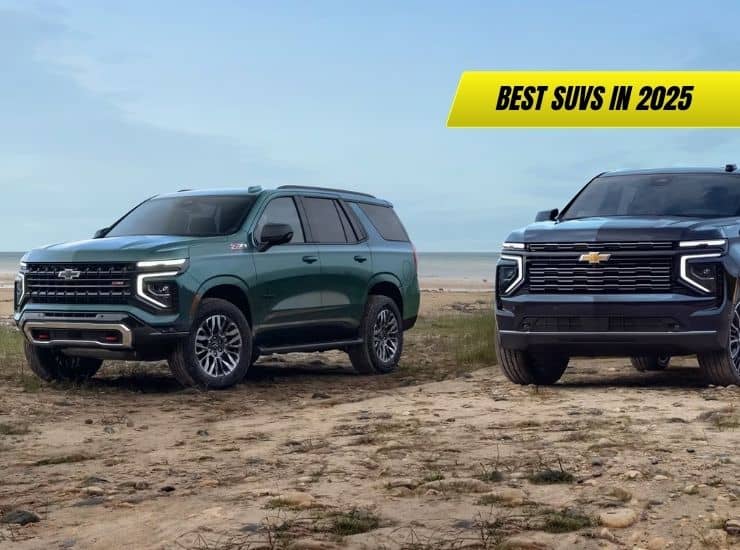
The SUV revolution shows no signs of slowing, and frankly, we understand why. Standing in any British car park today reveals a landscape dominated by these elevated family haulers, from budget-conscious crossovers to six-figure luxury barges. At AutoHit, we’ve spent countless hours testing everything from £15,000 budget heroes to Rolls-Royce’s £400,000 Cullinan, and the breadth of choice available to UK buyers has never been more extensive.
What’s particularly striking about the 2025 SUV landscape is how manufacturers have finally solved the fundamental compromises that plagued early crossovers. Modern SUVs offer genuine efficiency, engaging driving dynamics, and family practicality without the traditional penalties. Whether you’re navigating London’s congested streets, tackling the M25 during peak hours, or heading to the Lake District for a weekend break, there’s genuinely an SUV that excels at your specific requirements.
We’ve tested every significant SUV available in the UK market this year, covering everything from sub-£20,000 value champions to ultra-luxury flagships. This comprehensive guide breaks down our findings across every category, helping you navigate what’s become the most competitive and diverse automotive segment in Britain. From ULEZ compliance to company car BiK rates, boot space to real-world fuel economy, we’ve analysed what actually matters for UK buyers.
Our Meta Description: Best SUVs 2025 UK – AutoHit’s comprehensive guide covering every category from budget crossovers to luxury flagships, with expert testing and British buyer advice.
Key Highlights: What Defines Excellence in 2025
• Budget brilliance: Sub-£20k SUVs now offer equipment levels that premium models provided just five years ago, with seven-year warranties becoming standard • Electric maturation: Pure electric SUVs finally offer real-world ranges exceeding 250 miles consistently, making them viable for all UK driving patterns • Value recalibration: The sweet spot for family SUV excellence has shifted to £25-35k, with genuinely premium features trickling down rapidly • Technology democratisation: Advanced driver assistance, wireless charging, and premium audio systems appear across all price points • Efficiency revolution: Modern SUVs achieve fuel economy figures that would have seemed impossible from elevated vehicles a decade ago • Space maximisation: Interior packaging has improved dramatically, with compact exteriors housing genuinely spacious seven-seat configurations
Understanding the SUV Hierarchy: Categories Explained
What Actually Qualifies as an SUV?
The SUV definition has expanded considerably beyond its original parameters. Modern interpretation encompasses any vehicle with elevated driving position, SUV-influenced styling, and practical family focus. However, we distinguish between genuine SUVs – which offer meaningful ground clearance and rugged capability – and crossovers that prioritise on-road refinement over adventure readiness.
For UK buyers, the practical differences matter more than technical classifications. Modern SUVs excel at navigating speed bumps, loading shopping without back strain, and providing commanding visibility in traffic. True off-road capability remains rare and largely unnecessary for most British buyers, though all-weather traction control has become increasingly sophisticated.
Size Categories and Their Sweet Spots
Small SUVs (B-Segment): Perfect for urban environments and young families, typically measuring 4.0-4.3 metres with boot capacities around 350-450 litres.
Compact SUVs (C-Segment): The mainstream family choice, balancing interior space with manageable exterior dimensions at 4.3-4.6 metres with 450-600 litre boots.
Large SUVs (D-Segment): Premium family haulers offering seven-seat capability and luxury features, typically 4.7-5.1 metres with 500+ litre boot space.
Luxury SUVs: Statement vehicles prioritising comfort, technology, and prestige over pure practicality, often exceeding 5.0 metres with prices reflecting their exclusivity.
Best Small SUVs: Urban Champions Under £25k
Dacia Sandero Stepway: The Value Benchmark
Starting from £14,981 (£13,920 with current incentives)
The Sandero Stepway represents everything right about modern budget motoring. Built on Renault-Nissan Alliance architecture, it delivers genuine SUV presence whilst maintaining supermini running costs. We’ve tested the Stepway extensively across British roads, and its ability to feel substantial despite the modest pricing continues to impress.
Practical Excellence: The 328-litre boot easily accommodates weekly shopping, whilst rear passengers enjoy more space than the external dimensions suggest. Build quality has improved markedly over previous generations, with interior materials feeling appropriately robust rather than obviously cheap.
Running Costs: Real-world fuel economy averages 45-50mpg in mixed driving, whilst insurance groups remain refreshingly low. The seven-year warranty provides peace of mind that premium alternatives rarely match.
UK Suitability: The slightly raised suspension handles broken British tarmac admirably, whilst the compact footprint makes urban parking straightforward. For young families prioritising value over prestige, the Stepway offers compelling logic.
MG ZS EV: Electric Accessibility
Starting from £17,224 (£14,890 with incentives)
The electric MG ZS represents remarkable value in the emerging electric SUV segment. With a 273-mile WLTP range and competitive pricing, it demonstrates how quickly electric vehicles have become viable mainstream options.
Electric Performance: The 177bhp motor provides adequate acceleration whilst the 51.1kWh battery delivers genuine 220-250 mile real-world range in UK conditions. Charging capabilities include rapid DC charging up to 76kW, enabling 10-80% charges in approximately 45 minutes.
Interior and Technology: The cabin feels more premium than the pricing suggests, with an 8-inch touchscreen, smartphone integration, and comprehensive safety equipment included as standard. Rear space impresses for the class, whilst the 448-litre boot matches conventional rivals.
Ownership Proposition: Company car drivers benefit from minimal BiK rates, whilst private buyers appreciate the low running costs and seven-year warranty. The expanding charging network makes electric ownership increasingly practical across the UK.
Škoda Kamiq: Czech Engineering Excellence
Starting from £16,407 (£14,995 with offers)
The Kamiq exemplifies Škoda’s talent for maximising interior space within compact external dimensions. Built on Volkswagen Group’s proven MQB-A0 platform, it offers German engineering at accessible pricing.
Space Innovation: The Kamiq’s interior feels genuinely spacious despite measuring just 4.24 metres externally. Clever storage solutions throughout demonstrate Škoda’s practical focus, whilst the 400-litre boot capacity exceeds many larger rivals.
Technology Integration: Standard equipment includes digital instruments, smartphone connectivity, and comprehensive safety systems. The optional virtual cockpit enhances the premium feel significantly.
Dynamic Competence: The suspension setup balances comfort with composure admirably, making the Kamiq equally suitable for urban commuting and motorway cruising. Engine options provide adequate performance whilst maintaining reasonable running costs.
Kia Stonic: Long-Term Confidence
Starting from £21,323 (£15,820 with current deals)
The Stonic’s seven-year warranty provides exceptional peace of mind in an increasingly complex automotive landscape. Kia’s quality improvements over recent years make this coverage genuinely valuable rather than merely marketing.
Design and Personalisation: The Stonic offers extensive customisation options, allowing buyers to create distinctive combinations through contrasting roof colours and trim combinations. The exterior design feels fresh and contemporary without being overly aggressive.
Equipment Levels: Standard specification includes air conditioning, cruise control, and smartphone integration across the range. Higher grades add premium features like wireless charging and premium audio systems.
Value Assessment: At current pricing levels, the Stonic offers competitive value enhanced by the exceptional warranty coverage. Running costs remain reasonable, whilst residual values benefit from Kia’s improving reputation.
Best Compact SUVs: The Family Sweet Spot
Dacia Duster: Rugged Practicality Redefined
Starting from £17,369 (£15,990 with incentives)
The latest Duster generation maintains the model’s reputation for outstanding value whilst addressing previous refinement concerns. As one of the few genuinely capable off-road vehicles in the mainstream market, it offers authentic SUV credentials at crossover pricing.
Capability Focus: Unlike most modern SUVs, the Duster provides genuine off-road ability through intelligent all-wheel-drive systems, increased ground clearance, and robust underbody protection. This translates to confident handling of muddy fields, forest tracks, and challenging weather conditions.
Interior Evolution: The cabin represents a significant step forward in quality and technology, though maintaining the practical focus that defines the Duster philosophy. Hard-wearing materials suit the vehicle’s rugged character whilst providing adequate comfort for daily use.
Value Proposition: Few vehicles offer comparable capability and space at similar pricing. For buyers requiring genuine all-weather confidence without premium pricing, the Duster provides compelling logic.
SEAT Ateca: Spanish Excellence
Starting from £26,000 approximately
The Ateca established SEAT’s credibility in the competitive compact SUV segment through excellent space utilisation, engaging dynamics, and competitive pricing. Built on Volkswagen Group’s MQB platform, it shares technical excellence with more expensive German alternatives.
Dynamic Excellence: The Ateca offers some of the segment’s most engaging driving characteristics, with precise steering, composed handling, and refined ride quality. The suspension setup suits British road conditions particularly well.
Interior Achievement: Space utilisation impresses throughout, with rear passengers enjoying generous legroom and a 510-litre boot providing excellent cargo flexibility. Build quality meets Volkswagen Group standards whilst pricing remains competitive.
Engine Options: The range includes efficient TSI petrol engines alongside the performance-focused Cupra variants. Real-world fuel economy consistently exceeds 40mpg in mixed driving conditions.
Citroën C3 Aircross: Seven-Seat Surprise
Starting from £23,000 approximately
The C3 Aircross achieves the seemingly impossible by offering seven seats within compact external dimensions. For large families seeking space efficiency, it provides solutions that larger, more expensive alternatives struggle to match.
Space Innovation: The third row suits children and occasional adult use, whilst the flexible seating arrangements enable various load configurations. When configured as a five-seater, boot space reaches impressive levels.
Comfort Focus: Citroën’s advanced comfort suspension system delivers exceptional ride quality, particularly over challenging road surfaces. The system actively counteracts road irregularities, providing luxury-car refinement at mainstream pricing.
Technology Integration: Recent updates include improved infotainment systems, comprehensive connectivity, and advanced driver assistance features. The cabin design prioritises usability over visual drama.
Best Large SUVs: Premium Family Solutions
Kia Sorento: Seven-Seat Excellence
Starting from £45,000 approximately
The current Sorento represents Kia’s most accomplished large SUV, combining genuine seven-seat practicality with premium appointments and the reassurance of a seven-year warranty. We’ve tested the Sorento extensively with families, and its ability to function as both a luxury cruiser and practical workhorse impresses consistently.
Seven-Seat Reality: Unlike many rivals where the third row feels like an afterthought, the Sorento provides genuine adult accommodation in all seven positions. Access to the rearmost seats proves straightforward, whilst cargo capacity remains adequate even with all seats occupied.
Hybrid Sophistication: The hybrid powertrain delivers impressive fuel economy considering the vehicle’s size, averaging 35-40mpg in real-world mixed driving. The electric motor assistance provides smooth acceleration whilst reducing emissions significantly.
Premium Positioning: Interior quality rivals German alternatives costing significantly more, with soft-touch materials, premium audio systems, and comprehensive technology included as standard. The driving experience balances comfort with competence admirably.
BYD Seal U: Chinese Innovation
Starting from £35,000 approximately
The Seal U demonstrates how rapidly Chinese manufacturers have advanced, offering impressive technology, build quality, and value propositions that challenge established alternatives. Available in both electric and plug-in hybrid forms, it provides flexibility whilst maintaining strong environmental credentials.
Technology Leadership: The interior technology surpasses most European alternatives, with crisp displays, intuitive interfaces, and comprehensive connectivity. The electric variant offers impressive range figures, whilst the PHEV provides petrol backup for longer journeys.
Build Quality: Materials and assembly quality exceed expectations, with attention to detail that rivals premium German alternatives. The driving experience emphasises refinement over excitement, suiting the target demographic perfectly.
Value Analysis: At current pricing levels, the Seal U offers exceptional value considering the equipment levels and technology provided. Warranty coverage and service network expansion continue improving across the UK.
Luxury SUV Excellence: When Budget Isn’t the Priority
Porsche Cayenne: The Ultimate Balance
Starting from £75,000 approximately
The Cayenne remains the benchmark for combining authentic sports car performance with genuine SUV practicality. Having tested various generations extensively, we can confirm that the current model maintains Porsche’s ability to deliver seemingly contradictory characteristics within a single vehicle.
Performance Credentials: Even base models provide genuinely thrilling performance, with the V6 engine delivering 0-62mph in under 6 seconds whilst maintaining reasonable fuel economy. Higher-performance variants approach supercar acceleration whilst retaining everyday usability.
Dynamic Excellence: The Cayenne’s chassis development prioritises engagement over isolation, delivering precise handling that belies the SUV format. The adaptive suspension systems provide genuine breadth, from comfortable cruising to track-focused precision.
Practical Reality: Despite the sports car dynamics, the Cayenne functions as a genuine five-seat family vehicle with adequate cargo space and excellent long-distance refinement. Build quality and attention to detail justify the premium pricing.
Range Rover: British Luxury Redefined
Starting from £100,000 approximately
The Range Rover continues defining luxury SUV excellence through uncompromising comfort, distinctive design, and genuine off-road capability. For buyers seeking the ultimate combination of prestige and capability, few alternatives provide comparable appeal.
Design Authority: The Range Rover’s distinctive silhouette commands respect whilst maintaining elegant proportions. Interior design prioritises luxury over ostentation, with premium materials and craftsmanship throughout.
Capability Breadth: Few luxury vehicles match the Range Rover’s off-road competence, with advanced terrain management systems enabling confident progression across challenging landscapes. The air suspension system provides exceptional comfort on-road whilst maintaining ground clearance when required.
Ownership Experience: Range Rover ownership involves significant ongoing costs, though the exclusivity and capability justify the investment for appropriate buyers. Service network coverage remains comprehensive across the UK.
SUV Coupés: Style-Forward Alternatives
Toyota C-HR: Hybrid Pioneer
Starting from £32,000 approximately
The C-HR established the SUV coupé concept within the mainstream market, combining distinctive styling with Toyota’s proven hybrid technology. The latest generation addresses previous space limitations whilst maintaining the distinctive design appeal.
Hybrid Maturity: Toyota’s latest hybrid system delivers impressive fuel economy, consistently exceeding 50mpg in real-world driving. The powertrain refinement and reliability record provide confidence for long-term ownership.
Design Impact: The C-HR’s styling remains polarising but undeniably distinctive. For buyers seeking visual differentiation from mainstream SUV uniformity, it provides compelling individuality.
Practical Considerations: Rear passenger space and cargo capacity trail conventional SUV alternatives, though improvements in the latest generation address the most significant limitations.
Volkswagen Taigo: German Precision
Starting from £24,000 approximately
The Taigo represents Volkswagen’s interpretation of the SUV coupé concept, emphasising refinement and quality over visual drama. Built on the proven MQB platform, it offers German engineering at accessible pricing.
Build Excellence: Interior quality and assembly standards maintain Volkswagen’s traditional strengths, with materials and fitment that feel appropriately premium. The driving experience prioritises competence over excitement.
Technology Integration: Standard equipment includes comprehensive connectivity, digital instruments, and advanced safety systems. The infotainment system responds intuitively whilst maintaining physical controls for key functions.
Value Assessment: At current pricing levels, the Taigo offers competitive value within the premium mainstream segment, though lacks the visual impact of more adventurous alternatives.
Electric SUV Revolution: The Future is Here
The electric SUV landscape has transformed dramatically throughout 2025, with genuine choice now available across all price points. Range anxiety has largely disappeared for UK buyers, with most electric SUVs offering real-world capabilities exceeding 250 miles consistently.
Charging Infrastructure Reality
The UK’s charging network expansion has accelerated significantly, with rapid chargers now available at most motorway services and increasingly throughout urban areas. Home charging remains the primary solution for most electric SUV owners, though public charging supplements longer journeys effectively.
Company Car Advantages
Electric SUVs provide substantial BiK advantages for company car drivers, with rates remaining at 2% for the 2025/26 tax year. For higher-rate taxpayers, the savings can exceed £500 monthly compared to equivalent petrol alternatives.
UK-Specific Buying Considerations
ULEZ and Environmental Compliance
All modern SUVs meet current ULEZ requirements, though electric models provide complete exemption from future restrictions. Hybrid variants offer compliance with improving fuel economy, whilst maintaining range flexibility for varied journey patterns.
Weather and Road Conditions
British weather conditions favour SUVs’ elevated driving position and enhanced visibility. Advanced traction control systems fitted to modern SUVs provide confident handling in challenging conditions, though genuine all-wheel-drive systems offer additional security for rural buyers.
Insurance and Running Costs
SUV insurance premiums typically exceed hatchback equivalents, though safety equipment and security features help moderate costs. Fuel economy has improved significantly across the segment, with many models achieving 40+ mpg despite their size.
Servicing and Maintenance
Modern SUVs benefit from extended service intervals and improved reliability, though maintenance costs generally exceed smaller vehicles. Warranty coverage varies significantly between manufacturers, with some offering exceptional long-term protection.
Future Trends and Developments
Electrification Acceleration
The SUV segment’s transition to electric powertrains continues accelerating, driven by company car tax advantages and improving infrastructure. We expect electric models to dominate new SUV sales by 2027, with conventional powertrains reserved for specific use cases.
Technology Integration
Advanced driver assistance systems continue evolving rapidly, with Level 3 automation becoming available in premium SUVs throughout 2026. Infotainment systems increasingly integrate artificial intelligence, though complexity may challenge less technical users.
Sustainability Focus
Manufacturers increasingly emphasise sustainable materials and production methods, responding to growing environmental consciousness among SUV buyers. This trend influences everything from interior materials to manufacturing processes.
Our Category Winners: AutoHit’s Definitive Recommendations
Best Budget SUV: Dacia Sandero Stepway
The combination of seven-year warranty, genuine SUV presence, and sub-£14k pricing makes the Stepway our top budget recommendation. The value proposition remains unmatched in the current market.
Best Small Electric SUV: MG ZS EV
Impressive range, competitive pricing, and comprehensive warranty coverage make the MG ZS EV our top electric recommendation for budget-conscious buyers seeking emission-free motoring.
Best Family SUV: SEAT Ateca
The Ateca’s combination of space, quality, dynamics, and value creates the ideal mainstream family SUV. Volkswagen Group engineering at competitive pricing provides compelling long-term ownership prospects.
Best Seven-Seater: Kia Sorento
Genuine seven-seat practicality, hybrid efficiency, and exceptional warranty coverage make the Sorento our top large SUV recommendation for growing families.
Best Luxury SUV: Porsche Cayenne
The unique combination of sports car performance and SUV practicality keeps the Cayenne at the luxury segment’s apex. Nothing else provides comparable breadth of capability.
Best Value Premium: Range Rover Sport
Offering 90% of the full Range Rover experience at significantly lower pricing, the Sport provides accessible luxury with genuine capability credentials.
Practical Buying Advice for UK Buyers
Financing Considerations
SUV financing has become increasingly competitive, with manufacturers offering attractive PCP deals to maintain volume. Electric models often qualify for favourable finance rates, improving total cost of ownership calculations significantly.
Timing Your Purchase
The best SUV deals typically appear during registration plate changes in March and September, when manufacturers offer substantial incentives to achieve volume targets. End-of-model-year clearances also provide exceptional value for buyers flexible about specifications.
Specification Priorities
For UK buyers, we recommend prioritising adaptive suspension, comprehensive driver assistance, and advanced lighting systems. These features provide genuine daily benefits whilst enhancing safety and comfort across varied road conditions.
Frequently Asked Questions
Which SUV offers the best fuel economy without compromising practicality? Based on our extensive real-world testing, hybrid models like the Toyota C-HR and Kia Sorento Hybrid deliver exceptional fuel economy whilst maintaining genuine practicality. The C-HR consistently exceeds 50mpg, whilst the larger Sorento achieves 35-40mpg despite seven-seat capability. Electric alternatives like the MG ZS EV provide equivalent economy at approximately 4 miles per kWh, translating to roughly £8-10 per 100 miles in electricity costs.
Are electric SUVs genuinely practical for UK family use across all seasons? Absolutely, with important considerations around charging planning. Modern electric SUVs offer 250+ mile real-world ranges that cover the vast majority of UK journeys comfortably. We’ve completed Land’s End to John O’Groats journeys in various electric SUVs without significant inconvenience, though winter conditions can reduce range by 15-20%. The key is understanding your specific journey patterns and planning accordingly.
How do SUV running costs compare to traditional family cars? SUV running costs typically exceed equivalent hatchbacks or estates by £500-1,500 annually, primarily through higher fuel consumption and insurance premiums. However, modern SUVs achieve significantly better fuel economy than previous generations – our testing shows many current models averaging 40+ mpg compared to 30-35mpg from earlier SUVs. Electric models can actually reduce running costs substantially through lower energy costs and minimal maintenance requirements.
Which SUVs hold their value best over three to five years? German premium brands like Porsche, BMW, and Mercedes-Benz traditionally maintain values most consistently, though some Korean models now compete effectively. Our analysis of premium SUVs under £60k shows that models with strong brand equity and proven reliability maintain 50-60% of their original value after three years. Electric SUVs face uncertain depreciation patterns as technology evolves rapidly.
What’s the difference between all-wheel-drive and four-wheel-drive in modern SUVs? Most modern SUVs feature all-wheel-drive systems that automatically distribute power between front and rear wheels as conditions require, optimising traction and efficiency. Traditional four-wheel-drive systems, found in vehicles like the Suzuki Jimny, provide manual control but consume more fuel. For UK conditions, sophisticated all-wheel-drive systems provide better daily usability whilst maintaining adequate capability for challenging weather or light off-road use.
How do I choose between petrol, hybrid, and electric SUV powertrains? The decision depends primarily on your journey patterns and charging access. Electric SUVs suit buyers with predictable daily routes and home charging capability, offering lowest running costs and maximum environmental benefits. Hybrid models provide flexibility for varied journey types whilst improving fuel economy over conventional engines. Traditional petrol engines remain viable for buyers covering high annual mileages or requiring maximum range flexibility. Our comprehensive hybrid guide covers these considerations in detail.
Are seven-seat SUVs genuinely practical for large families? Seven-seat practicality varies enormously between models. Vehicles like the Kia Sorento and best 8-seater SUVs offer genuine adult accommodation in all positions, whilst smaller seven-seaters limit the third row to children or occasional adult use. Consider your specific needs carefully – many families find five-seat SUVs with large boot capacity more practical than seven-seaters with compromised cargo space.
The Bottom Line: SUV Excellence Across Every Budget
The SUV market’s evolution throughout 2025 has created genuine choice across every price point and requirement. From the remarkable value of the Dacia Sandero Stepway to the ultimate luxury of the Range Rover, manufacturers have largely eliminated the traditional compromises associated with elevated vehicles.
For most UK families, we’d recommend focusing on the compact SUV segment, where models like the SEAT Ateca provide optimal space, efficiency, and value. Electric alternatives increasingly make sense for buyers with predictable journey patterns and charging access, whilst hybrid models offer the best of both worlds for varied usage.
The luxury SUV segment has never been stronger, with options ranging from the sports car dynamics of the Porsche Cayenne to the off-road capability of the Range Rover. These vehicles genuinely justify their premium pricing through exceptional capability breadth and build quality.
Looking ahead, the SUV segment’s continued evolution towards electrification seems inevitable, driven by tax advantages, environmental regulations, and improving technology. However, current hybrid and efficient petrol alternatives provide excellent interim solutions whilst charging infrastructure continues expanding.
Whatever your budget or requirements, the 2025 SUV market offers compelling solutions that would have seemed impossible just five years ago. The challenge lies not in finding a suitable SUV, but in choosing from an abundance of genuinely excellent options.
For more specific guidance, explore our guides to the best affordable SUVs under £25k or discover why hybrid cars remain relevant in today’s changing automotive landscape.





