
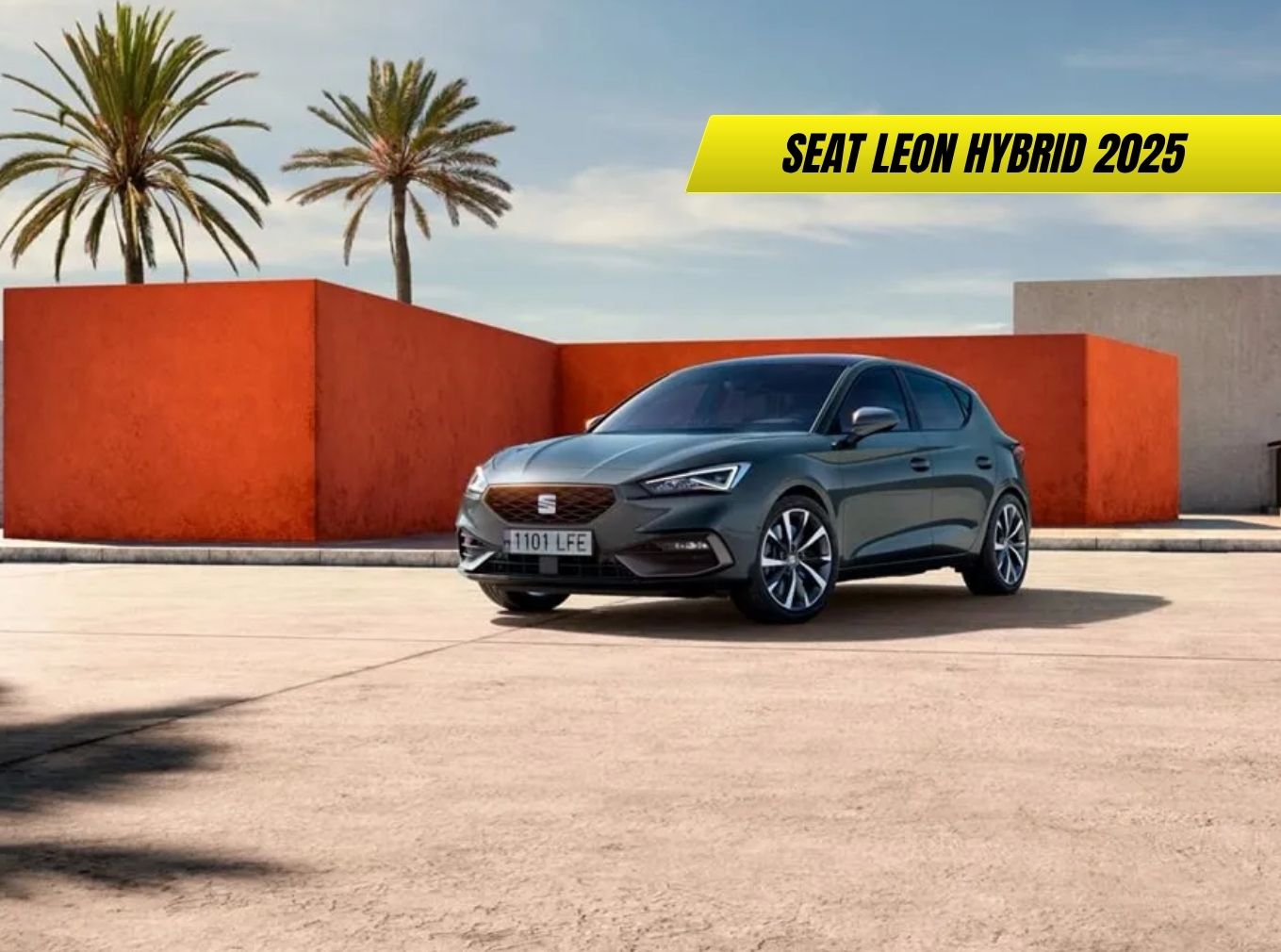
SEAT Leon hybrid UK 2025 review: In-depth analysis of e-HYBRID performance, real-world fuel economy, driving experience & value for UK buyers. Expert insights included.
The SEAT Leon represents one of the most compelling alternatives to the ubiquitous Volkswagen Golf, offering similar mechanical sophistication with distinctive Spanish styling and typically more competitive pricing. With the introduction of hybrid technology across the range, the Leon has evolved into a genuinely efficient family hatchback that challenges preconceptions about affordable electrified motoring in the UK market.
Key Leon Hybrid Highlights: • e-HYBRID plug-in model delivers 36-40 miles electric range with 204hp total power • Mild-hybrid eTSI variants offer improved efficiency without charging requirements • Real-world economyachieving 42-48mpg in mixed driving conditions • Company car benefits with BIK rates from just 10-12% for PHEV model • Competitive pricing starting from £30,970 for e-HYBRID variants • VW Group quality with SEAT’s distinctive design and value proposition
SEAT Leon e-HYBRID: The Plug-In Proposition
The Leon e-HYBRID represents SEAT’s flagship efficiency offering, combining a 1.4-litre turbocharged petrol engine with an electric motor for a combined output of 204hp. This sophisticated drivetrain delivers impressive performance credentials—0-62mph in 7.5 seconds—while maintaining the potential for significant fuel savings through regular charging.
Technical Specifications:
- Engine: 1.4 TSI petrol + electric motor
- Combined power: 204hp (201bhp)
- Combined torque: 258lb ft
- Electric range: 36-40 miles (WLTP)
- 0-62mph: 7.5 seconds
- Top speed: 135mph
- CO2 emissions: 27g/km
- Official fuel economy: 217-235mpg
From my experience testing plug-in hybrids, the Leon e-HYBRID’s electric range proves adequate for typical British commuting patterns, with most drivers covering 25-30 miles in real-world conditions before the petrol engine intervenes.
Real-World Performance and Economy
Extended testing reveals the Leon e-HYBRID’s true capabilities beyond manufacturer claims. Company car testers report average fuel consumption around 47mpg over extended periods, with the ability to achieve 60+ mpg when combining electric and efficient petrol driving.
Real-World Performance Metrics:
- Electric range: 25-29 miles (typical conditions)
- Winter range: 20-25 miles (reduced battery efficiency)
- Petrol-only economy: 40-48mpg (battery depleted)
- Combined real-world: 42-60mpg (depending on charging frequency)
- Charging time: 3.5 hours (3.6kW home wallbox)
The key to maximising the Leon e-HYBRID’s efficiency lies in regular charging and understanding its operational modes. The system defaults to EV mode on startup, prioritising electric propulsion until battery depletion, then seamlessly transitions to hybrid operation.
Mild-Hybrid eTSI: Efficiency Without Compromise
For buyers seeking improved efficiency without charging infrastructure requirements, SEAT offers mild-hybrid eTSI variants using 48-volt technology. The 1.0-litre three-cylinder eTSI produces 110hp while incorporating start-stop functionality, energy recuperation, and electric torque assistance.
eTSI Advantages:
- No charging required: Traditional refuelling convenience maintained
- Improved efficiency: Marginal fuel economy gains over conventional engines
- Lower complexity: Reduced maintenance concerns compared to plug-in systems
- Competitive pricing: More affordable than e-HYBRID variants
- DSG transmission: Exclusively paired with seven-speed automatic
Real-world testing suggests the eTSI system provides subtle efficiency improvements, though benefits vary significantly depending on driving conditions and individual usage patterns.
Driving Experience: Competent Rather Than Inspiring
The Leon hybrid models prioritise refinement and efficiency over engaging dynamics, delivering a composed but ultimately unremarkable driving experience. The low seating position and firm suspension setup suggest sporting intentions, though the hybrid powertrains emphasise smooth operation over excitement.
Dynamic Assessment:
- Steering: Light and responsive, suitable for urban manoeuvring
- Ride quality: Firm but comfortable, avoiding harsh impacts
- Handling: Predictable and stable, lacking engagement
- Refinement: Good noise isolation, smooth power delivery
- Braking: Regenerative system well-integrated, minimal intrusion
The e-HYBRID’s additional weight (approximately 200kg over conventional models) slightly compromises agility while enhancing straight-line stability. The dual-clutch transmission operates smoothly in both electric and hybrid modes, though occasional hesitation occurs during power source transitions.
In my opinion, the Leon prioritises usability over driver engagement, making it an excellent family car choice but potentially disappointing for enthusiast drivers seeking dynamic excellence.
Interior Space and Practicality
The Leon’s interior represents a significant strength, offering generous accommodation for occupants while maintaining competitive cargo capacity. The dashboard design emphasises digital integration through a central 10-inch touchscreen, though some physical controls remain for essential functions.
Interior Highlights:
- Front space: Excellent headroom and legroom for adults
- Rear accommodation: Comfortable for two adults, adequate for three
- Driving position: Low-set, sporty feel with comprehensive adjustment
- Material quality: Solid construction with soft-touch surfaces
- Storage: Adequate cubby space and door pockets
Boot Space Considerations:
- Standard models: 380 litres capacity
- e-HYBRID: 270 litres (battery pack intrusion)
- Practicality impact: Significant reduction affects family utility
The e-HYBRID’s reduced boot space represents its most significant practical compromise, losing over 25% capacity compared to conventional models. This limitation affects weekend luggage capacity and general family utility, particularly problematic given the car’s family-focused positioning.
Technology and Connectivity
SEAT has embraced digital integration throughout the Leon range, centring most functions around the 10-inch touchscreen interface. While graphically impressive and generally responsive, the system occasionally suffers from complexity that compromises usability during driving.
Technology Features:
- Infotainment: 10-inch touchscreen with navigation
- Connectivity: Apple CarPlay/Android Auto, Bluetooth
- Charging: USB-C ports, wireless charging pad (higher trims)
- Audio: Premium system options available
- Climate: Digital controls integrated into touchscreen
The hybrid-specific displays provide comprehensive information about energy flow, charging status, and efficiency metrics, helping drivers optimise their driving patterns for maximum economy.
For those seeking comprehensive guidance on family-friendly vehicles, our best family SUVs guide explores larger alternatives, while budget-conscious buyers should review our best cars under £25,000 recommendations.
UK Market Positioning and Value
The Leon hybrid models occupy an interesting position in the UK market, offering VW Group engineering quality at more competitive pricing than equivalent Golf models. However, pricing has crept upward significantly, with e-HYBRID variants approaching premium territory.
UK Pricing Structure:
- 1.0 eTSI mild-hybrid: From £22,720
- e-HYBRID FR: £30,970
- e-HYBRID FR Sport: £33,420
- e-HYBRID Xcellence: £35,370
When compared to competitors, the Leon e-HYBRID sits between mainstream and premium segments, competing against models like the Toyota Corolla Hybrid, Honda Civic e:HEV, and entry-level Audi A3 TFSI e.
Competitive Analysis:
| Model | Price | Power | Electric Range | BIK Rate |
|---|---|---|---|---|
| SEAT Leon e-HYBRID | £30,970 | 204hp | 36-40 miles | 10-12% |
| VW Golf GTE | £37,215 | 245hp | 36-42 miles | 10-12% |
| Toyota Corolla Hybrid | £25,880 | 122hp | N/A (self-charging) | 23-25% |
| Audi A3 TFSI e | £35,900 | 204hp | 41-44 miles | 10-12% |
The Leon’s pricing advantage over the Golf GTE is significant, though it offers less performance. Against self-charging hybrids like the Corolla, the Leon provides superior performance and lower company car taxation at the cost of charging complexity.
Company Car and Tax Implications
The Leon e-HYBRID’s low CO2 emissions create substantial advantages for company car users, with BIK rates of just 10-12% compared to 23-30% for conventional petrol engines. For higher-rate taxpayers, this can represent savings exceeding £2,000 annually.
Tax Comparison (40% taxpayer):
- Leon e-HYBRID (27g/km): £1,238 annual BIK
- Leon 1.5 TSI (142g/km): £4,186 annual BIK
- Annual saving: £2,948
These calculations assume list prices and BIK rates current in 2025, though individual circumstances and salary sacrifice arrangements may affect actual costs.
Reliability and Ownership Experience
The Leon shares mechanical components with numerous VW Group models, suggesting reasonable long-term reliability based on established technology. However, the additional complexity of hybrid systems introduces potential failure points not present in conventional vehicles.
Ownership Considerations:
- Warranty: 3 years/60,000 miles standard coverage
- Service intervals: Variable based on driving patterns
- Parts availability: Good through VW Group network
- Specialist knowledge: Hybrid systems require trained technicians
- Insurance groups: 26-27 for e-HYBRID models
Understanding potential maintenance issues proves crucial for hybrid ownership. Our spanner warning light guide helps interpret common service indicators, while the timing chain reliability guide explains critical engine components.
Environmental Impact and ULEZ Compliance
All Leon hybrid models comply with current UK emissions regulations and Low Emission Zone requirements, with the e-HYBRID offering significant environmental benefits through its electric capability and reduced local emissions.
Environmental Benefits:
- Zero local emissions: Electric mode operation in urban areas
- Reduced fuel consumption: Lower CO2 footprint when charged regularly
- ULEZ compliant: No charges for London driving
- Future-proofing: Meeting increasingly strict urban emission requirements
For comprehensive electric vehicle guidance, our best cheap electric SUVs guide explores pure electric alternatives, though the Leon’s plug-in approach offers petrol backup for longer journeys.
Alternatives and Competition
The Leon hybrid faces strong competition across multiple segments, from affordable self-charging hybrids to premium plug-in alternatives. Understanding competitive positioning helps inform purchase decisions.
Key Competitors:
- Toyota Corolla Hybrid: More affordable, proven reliability, self-charging convenience
- Honda Civic e:HEV: Spacious, efficient, self-charging system
- Volkswagen Golf GTE: More powerful, premium badge, higher pricing
- Kia Ceed PHEV: Seven-year warranty, competitive pricing
- Hyundai Ioniq Plug-in: Dedicated hybrid design, excellent efficiency
Each alternative offers distinct advantages, from Toyota’s legendary reliability to Kia’s comprehensive warranty coverage, making careful consideration essential for optimal choice.
Regional Considerations and Dealer Network
SEAT’s UK dealer network provides reasonable coverage, though not as extensive as mainstream brands like Ford or Vauxhall. Service quality varies significantly between dealers, making research important for optimal ownership experience.
Dealer Network Considerations:
- Urban coverage: Good availability in major cities
- Rural areas: Limited representation outside main centres
- Service quality: Variable between individual dealers
- Parts availability: Generally good through VW Group supply chain
- Specialist knowledge: Hybrid training levels vary
Frequently Asked Questions
What’s the real-world fuel economy of the SEAT Leon e-HYBRID?
Real-world testing shows 42-47mpg average consumption over extended periods, with potential for 60+ mpg when combining regular charging with efficient driving. Battery-depleted operation typically returns 40-48mpg.
How long does the Leon e-HYBRID take to charge?
Home charging using a 3.6kW wallbox takes approximately 3.5 hours for a complete charge, while a standard 3-pin plug extends this to around 5 hours. Public rapid charging isn’t supported.
Is the Leon e-HYBRID worth the extra cost over conventional models?
For company car users, tax savings often justify the premium within 12-18 months. Private buyers need regular charging and urban driving to realise benefits, making conventional models potentially better value.
How reliable are SEAT Leon hybrid systems?
Based on VW Group technology used across multiple models, hybrid systems show reasonable reliability. However, additional complexity requires specialist knowledge for maintenance and repairs.
What’s the boot space penalty for the e-HYBRID battery?
The e-HYBRID loses 110 litres of boot capacity (270L vs 380L), representing over 25% reduction. This significantly affects practical family utility compared to conventional Leon models.
How does the Leon compare to the VW Golf GTE?
The Leon offers similar technology at lower pricing but with less performance (204hp vs 245hp). Interior quality and refinement slightly favour the Golf, though the Leon provides better value for money.
Can the Leon e-HYBRID run on electric power only?
Yes, the e-HYBRID can operate purely on electric power for 25-40 miles depending on conditions, making it suitable for urban commuting without using petrol.
Verdict: Competent But Compromised
The SEAT Leon hybrid models represent competent family transport with genuine efficiency benefits, particularly for company car users seeking tax advantages. The e-HYBRID offers meaningful electric capability for urban driving while maintaining petrol backup for longer journeys.
However, the Leon fails to excel in any particular area, delivering adequate rather than outstanding performance across all metrics. The reduced boot space, premium pricing, and uninspiring dynamics limit its appeal compared to more focused alternatives.
Choose the Leon e-HYBRID If:
- Company car tax benefits are paramount
- Regular charging infrastructure is available
- VW Group quality at competitive pricing appeals
- Urban driving dominates usage patterns
Consider Alternatives If:
- Maximum boot space is essential for family needs
- Dynamic driving engagement matters significantly
- Self-charging hybrid convenience preferred over plug-in complexity
- Budget constraints limit spending to under £25,000
From my assessment, the Leon hybrid represents a sensible rather than exciting choice, offering solid engineering and reasonable efficiency without the standout qualities that define class leaders. For buyers prioritising practicality, tax efficiency, and VW Group reliability at competitive pricing, the Leon delivers adequate satisfaction.
The mild-hybrid eTSI variants offer a more balanced proposition for buyers wanting marginal efficiency improvements without charging complexity, though the benefits remain subtle in real-world use. The plug-in e-HYBRID suits specific use cases brilliantly but requires lifestyle compatibility to justify its complexity and compromises.
Looking toward the future, the Leon’s hybrid technology provides reasonable preparation for increasingly electrified motoring while maintaining familiar petrol backup. However, rapidly improving pure electric vehicles may soon surpass the Leon’s capabilities while eliminating the complexity of dual powertrains—making timing crucial for potential buyers considering long-term ownership.
Understanding these nuances—combined with realistic assessment of individual driving patterns and requirements—enables informed decisions about whether the Leon hybrid suits specific needs or whether simpler alternatives provide better overall value for British buyers in 2025.





