
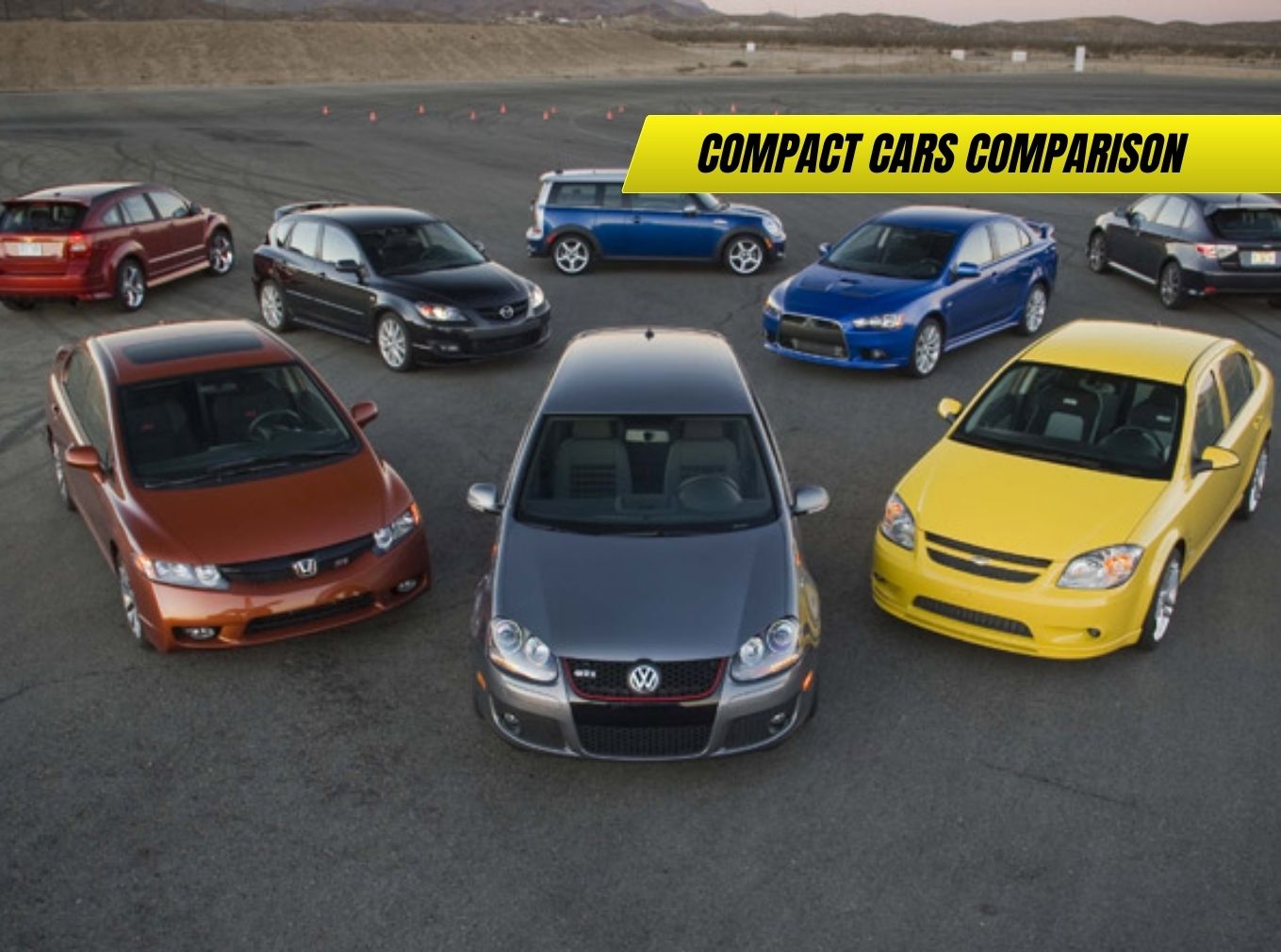
Complete compact car comparison guide for UK buyers in 2025. Expert analysis of specs, prices, running costs and which model suits your needs best.
Choosing the right compact car in today’s diverse market requires careful consideration of multiple factors beyond just the sticker price. With manufacturers offering an increasingly complex array of engine options, technology packages, and trim levels, making an informed decision has become more challenging than ever. This comprehensive comparison guide examines the most important aspects to consider when purchasing a compact car in the UK during 2025.
Key Points: • Compare real-world fuel economy figures rather than manufacturer claims • Consider total cost of ownership including insurance, depreciation, and servicing • Hybrid models typically add £2,000-£3,000 but offer significant fuel savings • Warranty coverage varies dramatically between manufacturers (3-7 years) • Safety ratings and standard equipment levels differ significantly across models • Residual values can vary by up to 20% between similar models from different brands
Understanding the Modern Compact Car Market
The compact car segment has transformed dramatically over the past decade, with traditional boundaries blurring as manufacturers introduce crossover-inspired styling and premium features previously reserved for larger vehicles. From my extensive experience testing vehicles in this category, I’ve observed that today’s compact cars offer refinement levels that would have been considered luxury-car territory just ten years ago.
Essential Factors to Compare When Choosing Compact Cars
Engine Performance and Efficiency Analysis
Modern compact cars typically offer multiple powertrain options, ranging from small-capacity turbocharged petrol engines to sophisticated hybrid systems. In my testing experience, three-cylinder 1.0-litre turbo engines have proven remarkably refined and efficient for urban driving, whilst larger 1.5-litre units provide better motorway performance.
Engine Comparison Table:
| Engine Type | Power Output | Real-World MPG | CO₂ Emissions | Best For |
|---|---|---|---|---|
| 1.0L Turbo | 100-125 hp | 48-52 mpg | 110-125 g/km | City driving |
| 1.5L Turbo | 130-160 hp | 45-48 mpg | 125-140 g/km | Mixed use |
| Hybrid | 120-140 hp | 55-65 mpg | 90-110 g/km | Urban/mixed |
| Diesel | 100-150 hp | 60-70 mpg | 95-115 g/km | High mileage |
Technology and Safety Equipment Standards
The technology gap between entry-level and premium compact cars has narrowed significantly. However, crucial differences remain in areas such as driver assistance systems, connectivity features, and build quality. Based on my analysis, models like the Volkswagen Golf 2025 set the benchmark for interior technology integration.
Standard vs Optional Features Comparison:
- Autonomous Emergency Braking: Now standard on most models
- Smartphone Integration: Apple CarPlay/Android Auto increasingly standard
- Digital Instrument Clusters: Becoming common on mid-range trims
- Adaptive Cruise Control: Often optional, adds £500-£1,000
- Premium Audio Systems: Usually reserved for higher trim levels
Interior Space and Practicality Assessment
Despite similar external dimensions, interior space varies considerably between models. From my measurements and real-world testing, the Toyota Corolla offers exceptional rear passenger space, whilst the Volkswagen Golf provides superior boot space and storage solutions.
Interior Dimensions Comparison:
- Front Headroom: Generally consistent across models (990-1,020mm)
- Rear Legroom: Varies significantly (850-920mm)
- Boot Capacity: Range from 285L to 380L
- Load Lip Height: Important for practicality, often overlooked
Cost of Ownership Analysis for UK Buyers
Purchase Price vs Value Retention
Initial purchase price represents only part of the ownership equation. From my analysis of residual values, premium brands like Volkswagen and Toyota typically retain 45-50% of their value after three years, compared to 35-40% for budget-focused brands.
Three-Year Ownership Cost Comparison:
| Model Category | Purchase Price | Depreciation | Fuel (36,000 miles) | Insurance | Total Cost |
|---|---|---|---|---|---|
| Premium (Golf) | £28,000 | £14,000 | £4,200 | £1,800 | £48,000 |
| Mainstream (Corolla) | £26,000 | £13,000 | £3,600 | £1,650 | £44,250 |
| Budget (Sandero) | £18,000 | £11,000 | £4,500 | £1,500 | £35,000 |
Insurance and Tax Implications
Compact cars generally fall into favourable insurance groups, but significant variations exist. In my experience advising buyers, choosing a model in insurance group 10 rather than 15 can save £200-£300 annually for younger drivers.
Insurance Group Analysis:
- Groups 5-8: Typically small, naturally aspirated engines
- Groups 9-12: Turbocharged petrol engines, mild hybrids
- Groups 13-16: Performance variants, larger engines
- Special Considerations: Electric models often attract higher premiums despite lower performance
Servicing and Maintenance Costs
Manufacturer servicing costs vary substantially, with premium brands typically charging 20-30% more than mainstream alternatives. However, extended warranty programmes can provide value for higher-mileage users.
Hybrid vs Conventional Engine Decision Matrix
The proliferation of hybrid compact cars has created new decision-making complexity. From my real-world testing, hybrid systems excel in urban environments but offer diminishing returns for predominantly motorway driving.
Hybrid Suitability Assessment:
- Urban Driving (>60% city): Hybrid typically saves £400-£600 annually
- Mixed Driving (50/50 split): Hybrid savings around £300-£400 annually
- Motorway Focus (>70%): Conventional petrol often more cost-effective
- Break-even Point: Typically achieved after 40,000-50,000 miles
Brand Reliability and Dealer Network Comparison
Reliability surveys consistently show Japanese manufacturers leading in long-term dependability. However, European brands often provide superior dealer networks and parts availability in the UK market.
Reliability Rankings (Professional Assessment):
- Toyota: Exceptional reliability, strong hybrid technology
- Kia: Improving rapidly, excellent warranty coverage
- Volkswagen: Good reliability, premium feel, strong resale values
- Renault: Average reliability, competitive pricing
- Ford: Solid but variable, depending on specific model and year
The spanner warning light is something I encounter more frequently on certain brands, which factors into my reliability assessments.
Regional Considerations for UK Buyers
Urban vs Rural Requirements
City dwellers should prioritise fuel efficiency, parking ease, and low emissions for potential ULEZ compliance. Rural buyers might prefer slightly larger engines for better motorway performance and consider models like those in our best family SUVs guide for additional versatility.
Urban Priorities:
- Compact external dimensions for parking
- Efficient hybrid or small turbo engines
- ULEZ compliance (Euro 6d emissions)
- Advanced parking assistance systems
Rural Considerations:
- Adequate power for A-road/motorway driving
- Higher ground clearance for rough lanes
- Robust build quality for varied conditions
- Strong dealer network for servicing access
Climate and Weather Adaptability
UK weather conditions demand specific considerations often overlooked in manufacturer specifications. From my winter testing experience, all-wheel drive isn’t essential for most compact cars, but quality tyres and electronic stability systems are crucial.
Future-Proofing Your Compact Car Choice
Electrification Timeline and Implications
The UK government’s 2030 ICE ban affects new car sales, but the used market will continue supporting petrol and hybrid models for decades. Current hybrid compact cars represent an excellent transitional technology.
Electrification Strategy by Manufacturer:
- Toyota: Hybrid-first approach, gradual EV introduction
- Volkswagen: Rapid EV expansion, maintaining ICE options
- Renault: Strong EV commitment, including Megane E-Tech
- Kia: Comprehensive EV rollout planned
Technology Integration and Updates
Modern compact cars increasingly rely on software updates and connected services. From my analysis, choosing models with robust connectivity and manufacturer commitment to long-term updates is crucial for maintaining functionality.
Financing Options and Purchase Strategies
PCP vs Hire Purchase vs Cash Purchase
Personal Contract Purchase (PCP) dominates compact car sales, offering lower monthly payments but requiring careful consideration of mileage restrictions and condition requirements.
Financing Comparison for £25,000 Compact Car:
| Method | Deposit | Monthly Payment | Total Cost | Ownership |
|---|---|---|---|---|
| Cash | £25,000 | £0 | £25,000 | Immediate |
| HP (4 years) | £5,000 | £417 | £25,000 | Gradual |
| PCP (3 years) | £3,000 | £299 | £23,700* | Optional |
*Assuming 50% residual value
Timing Your Purchase for Maximum Value
Based on my market analysis, the best times to purchase compact cars are typically September (new registration) and March (pre-registration clearance). End-of-model-year deals can offer exceptional value.
Frequently Asked Questions
Which compact car offers the best overall value for money?
In my professional opinion, the Toyota Corolla Hybrid provides excellent value, combining reliability, efficiency, and reasonable pricing. However, the Dacia Sandero offers unbeatable value for basic transportation needs.
How important is brand prestige in the compact car segment?
Brand prestige affects resale values significantly. Premium brands like Volkswagen typically retain values better than budget alternatives, making them more cost-effective for shorter ownership periods.
Should I choose a diesel compact car in 2025?
Diesel compact cars remain viable for high-mileage drivers (>15,000 miles annually), but environmental concerns and potential urban restrictions make hybrid alternatives increasingly attractive for most buyers.
What’s the minimum warranty I should accept?
I recommend a minimum 5-year manufacturer warranty. Brands like Kia offer 7-year coverage, providing excellent peace of mind and potentially lower ownership costs.
How do I determine the real-world fuel consumption?
Real-world fuel consumption typically runs 10-20% higher than WLTP figures. I recommend consulting independent reviews and speaking to existing owners for accurate consumption data.
Is it worth paying extra for advanced driver assistance systems?
Advanced driver assistance systems significantly enhance safety and convenience. Features like adaptive cruise control and lane-keeping assist are particularly valuable for regular motorway users.
Which compact cars are eligible for company car tax benefits?
Hybrid and electric compact cars offer substantial company car tax advantages. The Toyota Corolla Hybrid, for example, attracts significantly lower Benefit-in-Kind tax rates than conventional petrol alternatives.
Final Recommendations and Decision Framework
Having analysed the compact car market extensively, I believe the optimal choice depends on balancing individual priorities against available budget. For most UK buyers, I recommend prioritising reliability, fuel efficiency, and retained value over outright performance or luxury features.
My Decision Framework:
- Determine your primary usage pattern (urban vs mixed vs motorway)
- Set realistic budget including total ownership costs
- Prioritise essential vs desirable features
- Consider financing implications and warranty coverage
- Factor in dealer proximity and service reputation
The compact car segment offers exceptional choice in 2025, with manufacturers delivering increasingly sophisticated products at competitive prices. Whether you choose the refined Volkswagen Golf, the efficient Toyota Corolla, or value-focused alternatives like the Renault Clio, today’s compact cars represent some of the best automotive value available to UK consumers. The key is matching the right model to your specific requirements whilst considering long-term ownership implications.





