
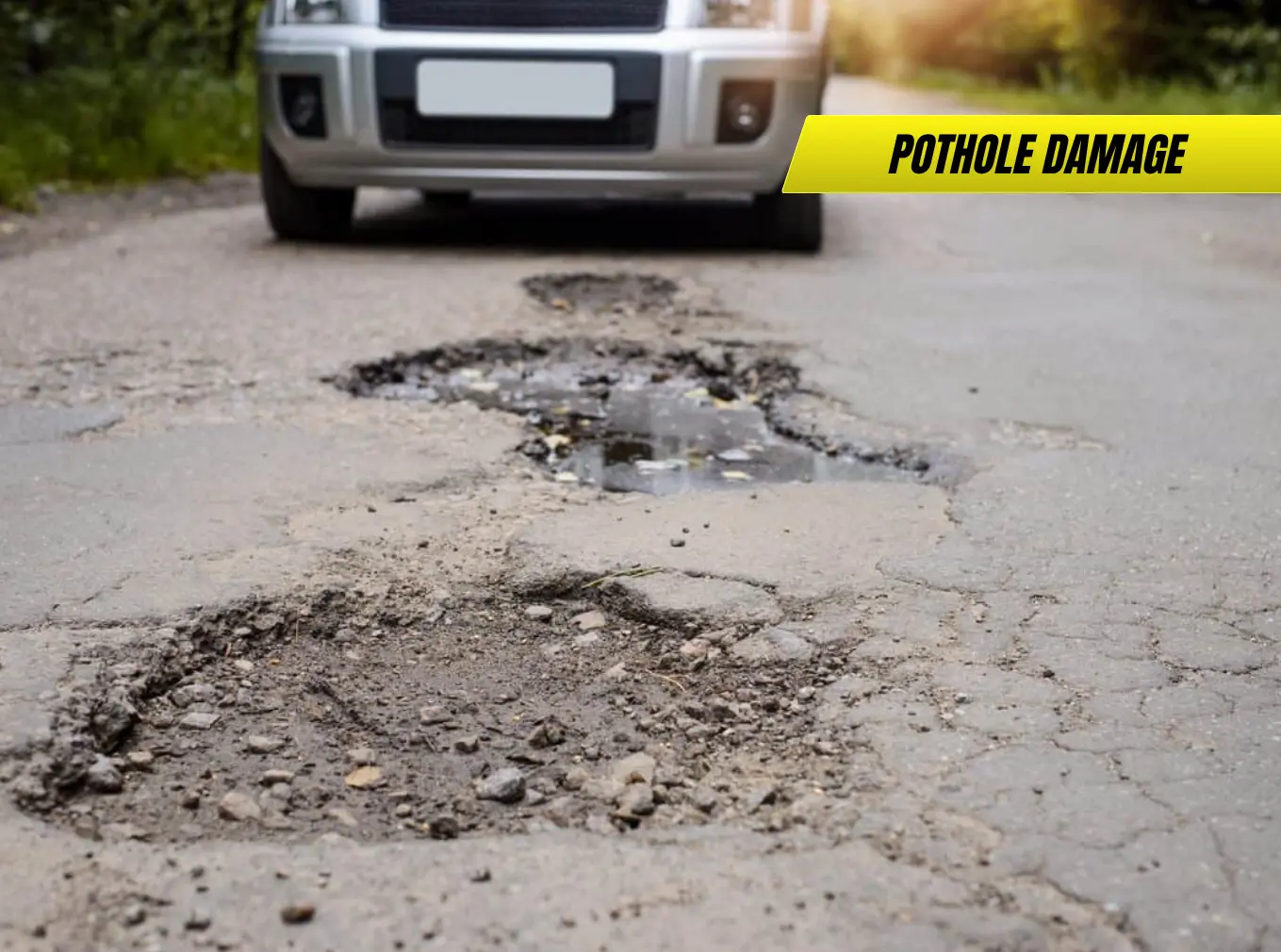
Potholes are one of the biggest threats to British drivers in 2025, with local councils facing record repair claims. Damaged suspension, tyres, and alloys cost UK motorists over £400 million a year, yet few know their legal rights or how to file a successful compensation claim.
This guide explains how to recognise pothole damage, who is responsible, and the correct procedure for reimbursement.
Key Points
- You can claim compensation for pothole damage if the road was poorly maintained.
- Responsibility lies with the local council or National Highways, depending on the road type.
- Evidence—photos, repair invoices, and location details—is crucial.
- Claims are typically processed within 30–60 days.
- The average successful payout is between £200 and £600.
Why Potholes Are Getting Worse
The UK experiences over 1.7 million potholes annually due to freeze-thaw cycles and heavy rainfall.
Although the government pledged £8.3 billion in resurfacing funding by 2030, repair backlogs remain severe in rural regions.
Recent studies by the RAC Foundation show a 22% rise in pothole-related breakdowns between 2023 and 2025.
Electric and hybrid cars, being heavier, are particularly susceptible to suspension wear and wheel damage.
Common Types of Pothole Damage
| Component | Typical Damage | Average Repair Cost |
|---|---|---|
| Tyres | Sidewall bulges, punctures | £80–£150 |
| Alloys/Wheels | Bent or cracked rims | £120–£300 |
| Suspension | Broken springs, tracking misalignment | £250–£700 |
| Steering Components | Vibration, uneven tyre wear | £100–£250 |
| Bodywork | Underbody scrapes | £150–£400 |
If your warning lights appear after impact, refer to Spanner Warning Light – What It Means and What to Do (UK Drivers Guide 2025).
Who Is Responsible for Road Maintenance
Responsibility depends on the road classification:
| Road Type | Responsible Authority | Example |
|---|---|---|
| Motorways / A Roads (trunk) | National Highways | M1, A1(M) |
| Local Roads | Local Council or Borough | Residential, B roads |
| Private Roads / Estates | Landowner | Shared drives, private estates |
You can check who maintains a road via the official GOV.UK highway authority finder.
How to Claim for Pothole Damage
Step 1 – Gather Evidence
- Take clear photos of the pothole (with scale reference).
- Record the exact location (street name, postcode, GPS coordinates).
- Photograph vehicle damage immediately after impact.
- Keep repair invoices or quotes from a VAT-registered garage.
Step 2 – Report the Pothole
Use the local council’s online portal or National Highways report form.
Make sure to obtain a reference number for tracking.
Step 3 – Submit the Claim
Attach:
- Proof of damage and costs
- Photos and maps
- Vehicle registration and incident time
- Confirmation that the pothole was previously unreported (if possible)
Most councils aim to respond within 30 working days, but complex claims may take longer.
Legal Framework: Section 41 & Section 58 Defences
Under Section 41 of the Highways Act 1980, local authorities have a duty to maintain roads in a safe condition.
However, councils often reject claims under Section 58, arguing that:
- The pothole was inspected recently.
- It hadn’t yet been reported or recorded.
- Routine maintenance schedules were followed.
If your claim is rejected, you can:
- Request the inspection and maintenance records (within 20 working days).
- Submit a formal appeal or use the Small Claims Court (for damages under £10,000).
What Increases the Chance of a Successful Claim
- The pothole was large and clearly visible (>40 mm deep).
- You have timestamped photographs before or during repair.
- The defect was already reported but unfixed.
- The repair invoice matches the damage described.
Drivers with dashcams have a higher success rate because video proof strengthens claims.
Insurance vs Council Claim
If your repair costs exceed £500 or your claim is rejected, you can go through your insurer.
However, note:
- It may affect your no-claims bonus.
- Insurers may later recover costs from the responsible authority.
- Keep receipts and incident reference for their subrogation process.
For smaller damages, claiming directly from the council is more efficient.
Preventing Pothole Damage
- Maintain correct tyre pressure (check monthly).
- Slow down on rough or rural roads.
- Avoid puddles that could hide deep holes.
- Install dashcams for evidence protection.
- Check wheel alignment after severe impacts.
In hybrid and EV vehicles, heavier battery weight makes softer suspension checks even more important.
Expert Opinion
From my point of view, most drivers underestimate how organised their pothole claim needs to be. Councils rarely pay without precise proof and documentation.
A structured approach—evidence first, report second—makes the difference between rejection and reimbursement.
Always combine visual evidence, receipts, and a formal tone when submitting your claim.
FAQs
Can I claim for pothole damage in the UK?
Yes. If the authority failed to maintain the road, you can claim repair costs.
How deep must a pothole be for a claim?
Usually more than 40 mm deep or wide enough to pose risk to vehicles.
Do I need to report the pothole before claiming?
No, but claims are stronger if the defect was previously reported.
How long do I have to claim?
Typically up to 6 years in England and Wales, 5 years in Scotland.
Can I claim through my insurance?
Yes, but it may affect your premium—consider council reimbursement first.
In 2025, Britain’s roads remain challenging, but knowing your rights protects your wallet.
In my experience, successful pothole claims depend on evidence quality, persistence, and timing.
With clear photos, accurate reporting, and proof of costs, most legitimate UK drivers can reclaim what they’re owed for preventable road damage.





