
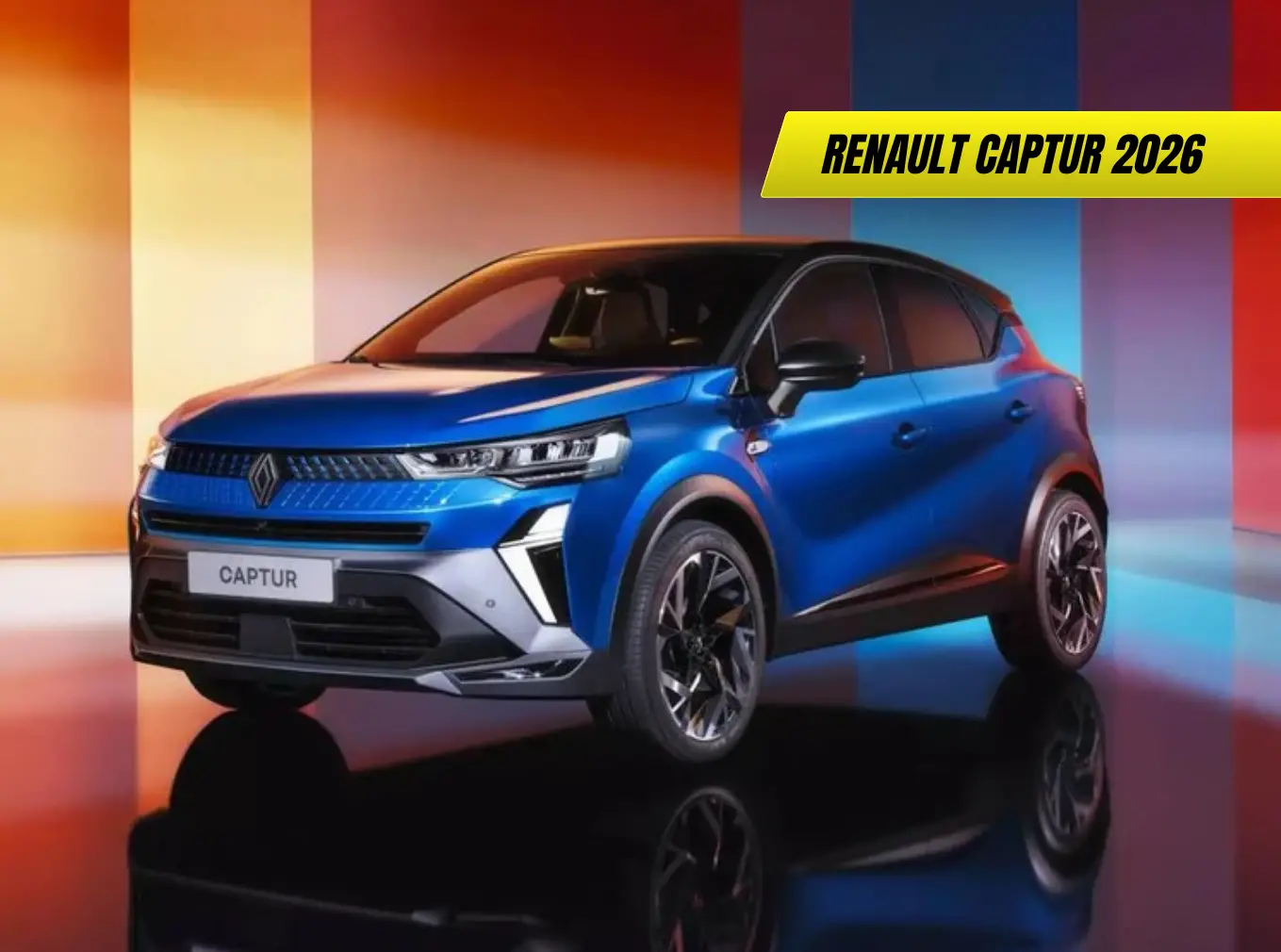
Renault launches upgraded Captur compact SUV February 2026 introducing new Eco-G 120 LPG bi-fuel powertrain delivering 120hp (+20hp versus previous Eco-G 100), enlarged 50-liter GPL tank enabling 1,400km combined range, and enhanced equipment across Evolution and Techno trim levels starting €24,400 matching discontinued gasoline-only pricing.
French manufacturer Renault refreshes best-selling Captur B-segment SUV introducing Eco-G 120 bi-fuel powertrain combining 1.2-liter turbocharged 3-cylinder gasoline engine (HR12 family) with factory-integrated LPG system delivering 120hp/200Nm representing 20hp and 30Nm improvements versus outgoing Eco-G 100 variant while maintaining identical €24,400 starting price creating compelling value proposition for European buyers seeking affordable operating costs without compromising performance or requiring expensive hybrid/electric powertrains. The dual-fuel capability features 48-liter gasoline tank plus enlarged 50-liter LPG tank (+25% capacity increase from previous 40-liter unit) enabling estimated 1,400km total range before refueling – exceptional touring capability exceeding most electric vehicles and many hybrid alternatives while LPG’s 10% lower CO₂ emissions versus gasoline (117 g/km LPG vs 133 g/km gasoline) and significantly cheaper fuel costs (LPG typically 40-50% less expensive per liter than gasoline across Europe) deliver tangible economic and environmental benefits justifying bifuel system’s modest complexity. Available in Evolution (€24,400) and Techno (€27,000) trim levels matching gasoline TCe 115 pricing despite bifuel technology addition, the Eco-G 120 positions competitively within Captur’s comprehensive powertrain lineup including TCe 115 gasoline (115hp, €24,400-27,000), E-Tech full hybrid 160 (160hp combined, €28,550-33,350), creating rational progression from budget gasoline through practical bifuel toward premium hybrid avoiding expensive pure-electric commitment. Enhanced equipment across 2026 model year includes redesigned aerodynamic mirrors reducing drag and wind noise, intelligent driving modes optimizing powertrain responses, and upgraded driver assistance systems improving safety and convenience, with updates simultaneously applied to platform-sharing Symbioz compact MPV creating synergies across Renault’s European mainstream lineup prioritizing affordable electrification alternatives serving conservative buyers hesitant adopting full EVs or expensive plug-in hybrids requiring charging infrastructure investments and range anxiety management.
LPG Technology: Mature Alternative Fuel Solution
Understanding Renault’s Eco-G 120 requires context regarding LPG (Liquefied Petroleum Gas) as proven alternative fuel with distinct advantages and limitations versus gasoline, diesel, hybrid, and electric powertrains.
LPG Fundamentals
| Characteristic | LPG (GPL in Europe) | Comparison to Gasoline |
|---|---|---|
| Chemical composition | Propane (C₃H₈) and butane (C₄H₁₀) mixture | Octane ratings 87-95 (gasoline) |
| Energy density | ~25 MJ/liter | ~34 MJ/liter gasoline (+36% energy density advantage gasoline) |
| Octane rating | 108-110 (very high) | 87-95 typical gasoline (LPG superior knock resistance) |
| Storage | Pressurized liquid (~7-8 bar) | Atmospheric pressure liquid gasoline |
| CO₂ emissions | ~10-15% lower than gasoline per liter | Baseline gasoline emissions |
| Particulate emissions | Negligible (clean combustion) | Higher particulates gasoline (especially direct injection) |
| Cost per liter | €0.70-1.00 typical Europe | €1.60-1.90 gasoline (40-55% LPG savings) |
Why LPG Makes Economic Sense
Operating Cost Comparison (Based on 15,000 km annual driving)
| Fuel Type | Consumption (l/100km) | Fuel Cost (€/liter) | Annual Fuel Cost | Savings vs Gasoline |
|---|---|---|---|---|
| Gasoline | 5.9 | €1.75 | €1,551 | Baseline |
| LPG | 7.2 | €0.85 | €918 | -€633 (-41%) |
| Diesel | 4.8 | €1.65 | €1,188 | -€363 (-23%) |
| Hybrid | 4.4 | €1.75 | €1,155 | -€396 (-26%) |
The LPG’s 7.2 l/100km consumption exceeds gasoline’s 5.9 l/100km due to lower energy density requiring more volume achieving equivalent power, but dramatically lower LPG pricing (€0.85/liter vs €1.75/liter gasoline) delivers €633 annual savings – substantial benefit offsetting higher consumption through price advantage alone.
Environmental Benefits
Emissions Comparison (Captur Eco-G 120)
- CO₂: 117 g/km (LPG) vs 133 g/km (gasoline) = 12% reduction
- NOx: Minimal nitrogen oxide emissions versus diesel’s high NOx output
- Particulates: Near-zero particulate matter versus gasoline direct injection’s PM concerns
- Hydrocarbons: Lower unburned HC emissions through complete combustion
The 10-15% CO₂ reduction positions LPG as interim environmental solution bridging gasoline toward electrification without expensive battery technology or charging infrastructure requirements, appealing pragmatic European buyers seeking modest emissions improvements without lifestyle compromises or technology risks.
Infrastructure Availability
European LPG Station Network (Select Markets)
- Italy: ~4,500 LPG stations (densest network globally, 25% stations offer LPG)
- France: ~1,700 LPG stations (adequate coverage major routes, cities)
- Poland: ~7,000 LPG stations (highest per-capita availability Europe)
- Spain: ~700 LPG stations (limited but growing network)
- Germany: ~500 LPG stations (sparse coverage outside major corridors)
- UK: ~1,400 LPG stations (declining network, limited future investment)
Infrastructure Challenges
LPG infrastructure varies dramatically by market creating uneven adoption:
- Strong markets (Italy, Poland, Turkey): Dense networks supporting widespread adoption
- Moderate markets (France, Netherlands, Belgium): Adequate coverage enabling practical use
- Weak markets (Germany, UK, Scandinavia): Limited stations restricting appeal to niche users
Captur Eco-G’s dual-fuel capability mitigates infrastructure limitations through seamless automatic switching to gasoline when LPG depleted or unavailable, maintaining practicality versus pure alternative fuel vehicles (hydrogen, E85 ethanol in some markets) requiring dedicated infrastructure availability planning every journey.
Eco-G 120 Technical Specifications
The upgraded powertrain represents Renault’s latest bi-fuel engineering delivering improved performance, efficiency, and practicality versus previous generation.
Engine Specifications
Base Engine: 1.2 TCe HR12 Turbocharged 3-Cylinder
- Displacement: 1,199 cc (1.2 liters)
- Configuration: Inline-3, turbocharged, direct injection
- Bore × Stroke: 72.2 mm × 97.2 mm (undersquare for torque)
- Compression ratio: Optimized for dual-fuel operation (~10-11:1 estimated)
- Valvetrain: DOHC 12-valve (4 valves per cylinder)
Power and Performance
| Specification | Eco-G 120 (2026) | Previous Eco-G 100 | Improvement |
|---|---|---|---|
| Power output | 120 hp (90 kW) | 100 hp (74 kW) | +20 hp (+20%) |
| Torque | 200 Nm | 170 Nm | +30 Nm (+18%) |
| 0-100 km/h | 12.0 seconds | 13.0 seconds | -1.0 second |
| Top speed | ~180 km/h (est) | ~170 km/h | ~+10 km/h |
| Transmission | 6-speed manual | 6-speed manual | Unchanged |
| Drive | Front-wheel drive | Front-wheel drive | Unchanged |
Fuel System and Capacity
Dual-Tank Configuration
- Gasoline tank: 48 liters (primary tank, standard location)
- LPG tank: 50 liters (secondary tank, spare wheel well installation)
- Total capacity: 98 liters liquid fuel combined
- Range (LPG): ~695 km @ 7.2 l/100km consumption
- Range (gasoline): ~814 km @ 5.9 l/100km consumption
- Combined range: ~1,400 km typical (dependent on fuel mixture usage)
Tank Placement and Packaging
The 50-liter LPG tank installs in spare wheel well beneath cargo floor requiring:
- No spare tire: Tire repair kit or mobility kit replaces traditional spare
- Minimal cargo intrusion: Tank positioned below floor maintaining trunk capacity
- Reinforced mounting: Pressurized vessel secured crashworthy structure
- Fill point: Separate LPG filler cap alongside gasoline inlet (right rear quarter panel typically)
Fuel System Operation
Automatic Fuel Selection
- Cold start: Always starts on gasoline (LPG liquid pressure requires warming)
- Warm operation: Automatically switches to LPG once engine reaches operating temperature
- Seamless switching: Driver-transparent fuel source changes without performance interruption
- Manual override: Dashboard button forcing gasoline operation (useful emptying gasoline tank preventing stale fuel)
- Reserve strategy: Maintains ~5-10 liters gasoline reserve ensuring restart capability if LPG depleted
Consumption and Emissions
| Operating Mode | Consumption | CO₂ Emissions | Cost per 100km (€) |
|---|---|---|---|
| LPG only | 7.2 l/100km | 117 g/km | €6.12 @ €0.85/L |
| Gasoline only | 5.9 l/100km | 133 g/km | €10.33 @ €1.75/L |
| Mixed usage | ~6.5 l/100km avg | ~125 g/km avg | ~€8.00 blended |
The €4.21 savings per 100km operating LPG versus gasoline accumulates substantially across annual mileage:
- 10,000 km/year: €421 annual savings
- 15,000 km/year: €632 annual savings
- 20,000 km/year: €842 annual savings
These savings offset Eco-G’s purchase price premium (if any) within 2-3 years typical ownership, with continued savings benefiting owners retaining vehicles longer periods.
Trim Levels and Equipment
The 2026 Captur Eco-G 120 launches in two trim levels matching broader Captur lineup creating consistent product hierarchy.
Evolution Trim (€24,400)
Exterior Equipment
- 17-inch alloy wheels
- LED headlights with automatic activation
- Automatic wipers (rain sensing)
- Body-colored door mirrors (manual folding)
- Roof rails (visual styling element)
- Rear parking sensors
Interior Features
- Cloth upholstery
- Manual air conditioning
- 10.4-inch portrait touchscreen infotainment
- 7-inch digital instrument cluster (driver display)
- Wireless Apple CarPlay / Android Auto
- Cruise control with speed limiter
- Keyless entry (proximity key fob)
- 60/40 split-folding rear seats
- Height-adjustable driver seat
Safety and Driver Assistance (Standard All Trims)
- 6 airbags (front, side, curtain)
- Electronic stability control (ESC)
- Lane departure warning
- Traffic sign recognition
- Automatic emergency braking (AEB) with pedestrian detection
- Blind spot warning
- Rear cross-traffic alert
Techno Trim (€27,000, +€2,600)
Additional Equipment Over Evolution
- 18-inch alloy wheels (upgraded design)
- Power-folding heated door mirrors with puddle lights
- Redesigned aerodynamic mirror housings (2026 update, reduced drag/noise)
- Ambient interior lighting (customizable colors)
- Dual-zone automatic climate control
- Google-based infotainment system with:
- Google Maps navigation (integrated, real-time traffic)
- Google Assistant voice control
- Google Play Store (downloadable apps)
- Adaptive cruise control (stop-and-go capability)
- Height-adjustable boot floor (creating flat load surface or underfloor storage)
- Wireless smartphone charging pad
Intelligent Driving Modes (2026 Update, All Trims)
Renault introduces refined driving mode system optimizing powertrain responses:
- Eco Mode: Prioritizes LPG usage, gentle throttle mapping, climate control limitation for maximum efficiency
- Normal Mode: Balanced performance and efficiency for daily driving
- Sport Mode: Sharper throttle response, maintains gasoline operation longer (better throttle response versus LPG’s slight lag)
Optional Equipment (Select Items)
- Metallic/Pearl paint: €600-700
- Two-tone roof: €400-500 (select colors)
- Rear parking camera: €300 (Evolution only, standard Techno)
- Electric panoramic sunroof: €1,200-1,500
- Leather upholstery: €800-1,000 (Techno only)
- Premium sound system: €400-500 (Focal audio)
Competitive Positioning and Market Context
The Captur Eco-G 120 competes within fiercely-contested European compact SUV segment where powertrain diversity and competitive pricing determine success.
Direct Bi-Fuel Competitors (European Market)
| Model | Powertrain | Power | Price | LPG Tank | Key Difference |
|---|---|---|---|---|---|
| Renault Captur Eco-G 120 | 1.2T bi-fuel | 120 hp | €24,400 | 50L | OEM integration, newest |
| Dacia Duster Eco-G 100 | 1.0T bi-fuel | 100 hp | €18,900 | 40L | Budget positioning, less power |
| Fiat Tipo Cross Eco | 1.0T bi-fuel | 100 hp | €21,500 | 40L | Italian value alternative |
| Citroën C3 Aircross LPG | 1.2T bi-fuel | 110 hp | €23,000 | 45L | French competitor, smaller |
Mainstream Compact SUV Competitors
| Model | Powertrain | Power | Price | Key Advantage |
|---|---|---|---|---|
| Renault Captur Eco-G 120 | Bi-fuel LPG | 120 hp | €24,400 | Lowest running costs |
| Peugeot 2008 | 1.2T gasoline | 130 hp | €24,900 | Premium French positioning |
| Volkswagen T-Cross | 1.0T gasoline | 115 hp | €25,500 | German quality perception |
| Nissan Juke | 1.0T gasoline | 114 hp | €24,000 | Distinctive styling |
| Mazda CX-30 | 2.0 gasoline | 122 hp | €26,900 | Premium driving dynamics |
| Toyota Yaris Cross Hybrid | 1.5 hybrid | 116 hp | €27,500 | Toyota reliability, hybrid efficiency |
| Hyundai Kona | 1.0T gasoline | 120 hp | €24,900 | Comprehensive warranty |
Captur’s Value Proposition
Advantages
- Operating costs: LPG saves €630+ annually versus gasoline competitors
- Range capability: 1,400 km exceptional for segment enabling long-distance touring
- Environmental credentials: 10-15% lower CO₂ than gasoline without expensive hybrid technology
- Price parity: €24,400 matches gasoline TCe 115 despite dual-fuel technology addition
- Practicality: Dual-fuel eliminates range anxiety and infrastructure dependency concerns
Disadvantages
- LPG availability: Limited infrastructure some European markets (Germany, UK, Scandinavia)
- Performance: 120 hp adequate but trails 130-150 hp turbocharged gasoline competitors
- No spare tire: LPG tank eliminates spare wheel requiring repair kit reliance
- Resale uncertainty: LPG vehicles potentially lower resale values versus conventional gasoline
- Hybrid alternative: E-Tech 160 full hybrid (€28,550) offers superior efficiency without refueling constraints
Market Positioning Strategy
Renault positions Eco-G 120 as rational middle-ground between:
- Budget gasoline (TCe 115, €24,400): Adequate performance, conventional technology, higher running costs
- Premium hybrid (E-Tech 160, €28,550): Best efficiency, complex technology, €4,150 premium
The Eco-G targets value-conscious buyers prioritizing:
- Low operating costs without expensive hybrid investment
- Long-range capability for touring/vacation driving
- Mature proven technology over complex hybrid systems
- Environmental responsibility without full EV commitment
Geographic Appeal
Strong Markets (LPG infrastructure dense)
- Italy: 25% refueling stations offer LPG, strong adoption culture, government incentives
- Poland: Highest LPG usage Europe, ultra-dense network, price advantages pronounced
- France: Moderate infrastructure, growing environmental consciousness, Renault brand strength
Weak Markets (Limited LPG infrastructure)
- Germany: Sparse LPG stations, consumer preference diesel/hybrid, limited appeal
- UK: Declining LPG network, uncertain future investment, niche positioning
- Scandinavia: Minimal infrastructure, environmental focus favors electrification over LPG
UK Market Considerations
While Captur succeeds in UK (consistently top-10 compact SUV sales), the Eco-G 120’s LPG variant faces unique challenges within British market.
UK LPG Infrastructure Reality
| Metric | Current Status | Trend |
|---|---|---|
| LPG stations | ~1,400 locations | Declining (-200 stations 2020-2025) |
| Coverage | 60% within 10 miles average UK location | Adequate but shrinking |
| Major cities | Good coverage London, Birmingham, Manchester | Rural areas increasingly challenging |
| Supermarkets | Limited (Tesco, Morrisons select locations) | Reduced investment, closures |
| Motorways | Moderate coverage major corridors | Variable service station participation |
UK Pricing Context (If Launched)
Estimated UK Captur Eco-G 120 pricing:
- Evolution Eco-G 120: £23,500-24,500 estimated
- Techno Eco-G 120: £26,000-27,000 estimated
UK Competitive Landscape
Unlike continental Europe’s diverse bi-fuel offerings, UK market offers minimal LPG vehicle choice:
- Dacia models: Sandero, Duster Eco-G variants (limited availability)
- Aftermarket conversions: Third-party LPG installations available but expensive (£1,500-2,500)
- Mainstream manufacturers: Most abandoned factory LPG offerings due to infrastructure concerns
UK Market Challenges
- Declining infrastructure: Shrinking station network creates range anxiety despite dual-fuel capability
- Diesel preference: UK historically favored diesel for efficiency versus LPG adoption
- Hybrid maturity: Toyota/Lexus hybrid dominance establishing self-charging hybrids as efficiency default
- EV momentum: Government EV incentives and 2030 ICE ban focus attention pure-electric versus interim LPG
- Resale concerns: Uncertain future LPG availability depresses used values
UK Launch Uncertain
Renault UK likely not offering Eco-G 120 given infrastructure limitations and limited customer demand projecting minimal volume insufficient justifying right-hand-drive engineering and homologation costs. UK buyers seeking fuel economy prioritize:
- E-Tech full hybrid: (£26,000-30,000) offering superior efficiency without infrastructure dependency
- Mild hybrid: Potential future 48V variants bridging gasoline toward electrification
- Used market: Purchasing older diesels before values collapse completely
Frequently Asked Questions
When is the Renault Captur Eco-G 120 available?
Available now across European markets with LPG infrastructure (Italy, France, Poland, Spain, Netherlands primarily). Orders opened January 2026 with dealer deliveries commencing February-March 2026. UK availability uncertain given limited LPG infrastructure – contact Renault UK dealers for confirmation regarding right-hand-drive launch plans and pricing.
How much does the Captur Eco-G 120 cost?
European pricing: Evolution trim €24,400, Techno trim €27,000. This matches equivalent gasoline TCe 115 variants despite dual-fuel technology addition. UK pricing estimated £23,500-27,000 if launched, though availability uncertain. Optional equipment (metallic paint, sunroof, leather) adds €400-1,500 depending on selections.
How much money does LPG save versus gasoline?
Substantial savings: LPG costs ~€0.85/liter versus ~€1.75/liter gasoline in most European markets (40-55% cheaper). Despite higher LPG consumption (7.2 l/100km vs 5.9 l/100km gasoline), annual savings reach €630-850 for typical 15,000-20,000 km driving. Payback period versus gasoline-only models: 2-3 years if Eco-G carries premium, immediate if price-matched with gasoline variants.
What’s the total driving range on LPG and gasoline?
Combined range approximately 1,400 km before refueling both tanks. LPG-only range ~695 km (50-liter tank @ 7.2 l/100km), gasoline-only range ~814 km (48-liter tank @ 5.9 l/100km). This exceptional touring capability exceeds most electric vehicles and many hybrid alternatives enabling long-distance travel without frequent refueling stops.
Can I find LPG stations easily in Europe?
Depends on country. Excellent availability: Italy (~4,500 stations), Poland (~7,000 stations), adequate France (~1,700 stations). Limited: Germany (~500 stations), UK (~1,400 declining), Scandinavia (sparse). Mobile apps (myLPG.eu, GPL.it) locate nearby stations. Dual-fuel capability eliminates range anxiety – automatically switches to gasoline if LPG unavailable maintaining practicality.
Is LPG safe in accidents?
Yes, extensive safety testing confirms LPG systems meet rigorous European standards. LPG tanks manufactured steel or composite materials stronger than gasoline tanks withstanding higher pressures. Automatic shut-off valves prevent fuel release during collisions. LPG evaporates rapidly if released (unlike liquid gasoline pooling), reducing fire risk. Renault’s factory-integrated system undergoes same crash testing as conventional powertrains ensuring comprehensive safety compliance.
Does Eco-G 120 lose cargo space versus regular Captur?
Minimal impact. LPG tank installs spare wheel well beneath cargo floor maintaining full trunk capacity (536 liters seats up, 1,275 liters folded). Trade-off: no spare tire (tire repair kit or mobility system included). Most owners accept compromise given substantial fuel cost savings and extended range benefits outweighing occasional inconvenience flat tire requiring roadside assistance versus on-the-spot spare wheel installation.
Should I buy Eco-G 120 or E-Tech full hybrid?
Depends on priorities and usage patterns. Choose Eco-G 120 if: high-mileage driver (15,000+ km annually) maximizing fuel savings, frequent long-distance touring requiring 1,400 km range, preference for proven simple technology, budget-conscious (€4,150 cheaper than hybrid). Choose E-Tech 160 hybrid if: primarily urban/suburban driving benefiting from electric low-speed operation, infrastructure concerns (limited LPG availability your area), desire cutting-edge technology, willing paying premium for maximum efficiency (4.4 l/100km vs 5.9-7.2 l/100km).
Conclusion
The Renault Captur Eco-G 120’s February 2026 launch demonstrates French manufacturer’s pragmatic approach bridging affordable mobility toward electrification through mature LPG bi-fuel technology delivering tangible economic benefits (€630+ annual fuel savings) and environmental improvements (10-15% CO₂ reduction versus gasoline) without expensive hybrid systems, charging infrastructure requirements, or range limitations constraining pure-electric adoption among conservative mainstream European buyers prioritizing value, practicality, and simplicity over cutting-edge technology commitments. The upgraded 120hp/200Nm powertrain (+20hp/+30Nm versus previous Eco-G 100) addresses performance concerns while enlarged 50-liter LPG tank enabling 1,400km combined range positions Captur as exceptional touring vehicle within compact SUV segment typically offering 600-800km maximum range, with price-matching strategy (€24,400 matching gasoline TCe 115 despite dual-fuel technology addition) eliminating premium purchase barriers enabling immediate operating cost savings from ownership day one rather than requiring multi-year payback periods justifying technology investments.
For European buyers in markets with adequate LPG infrastructure (Italy, Poland, France particularly), the Eco-G 120 represents compelling rational choice balancing performance, economy, environmental responsibility, and practicality within accessible €24,400-27,000 pricing competitive with conventional gasoline alternatives while dramatically undercutting €28,550+ full hybrid variants through simpler proven technology delivering 70-80% of hybrid’s efficiency benefits at significantly lower purchase costs and complexity. However, geographic limitations restrict appeal in markets with sparse or declining LPG networks (Germany, UK, Scandinavia) where infrastructure uncertainty creates range anxiety despite dual-fuel capability, with mainstream buyers in these regions better served prioritizing E-Tech full hybrid variants offering infrastructure-independent efficiency or waiting inevitable transition toward plug-in hybrid and battery-electric Captur successors scheduled late-decade as Renault progresses comprehensive electrification strategy positioning LPG as pragmatic interim solution serving specific markets and customer segments rather than universal answer bridging internal combustion toward zero-emission future.





