
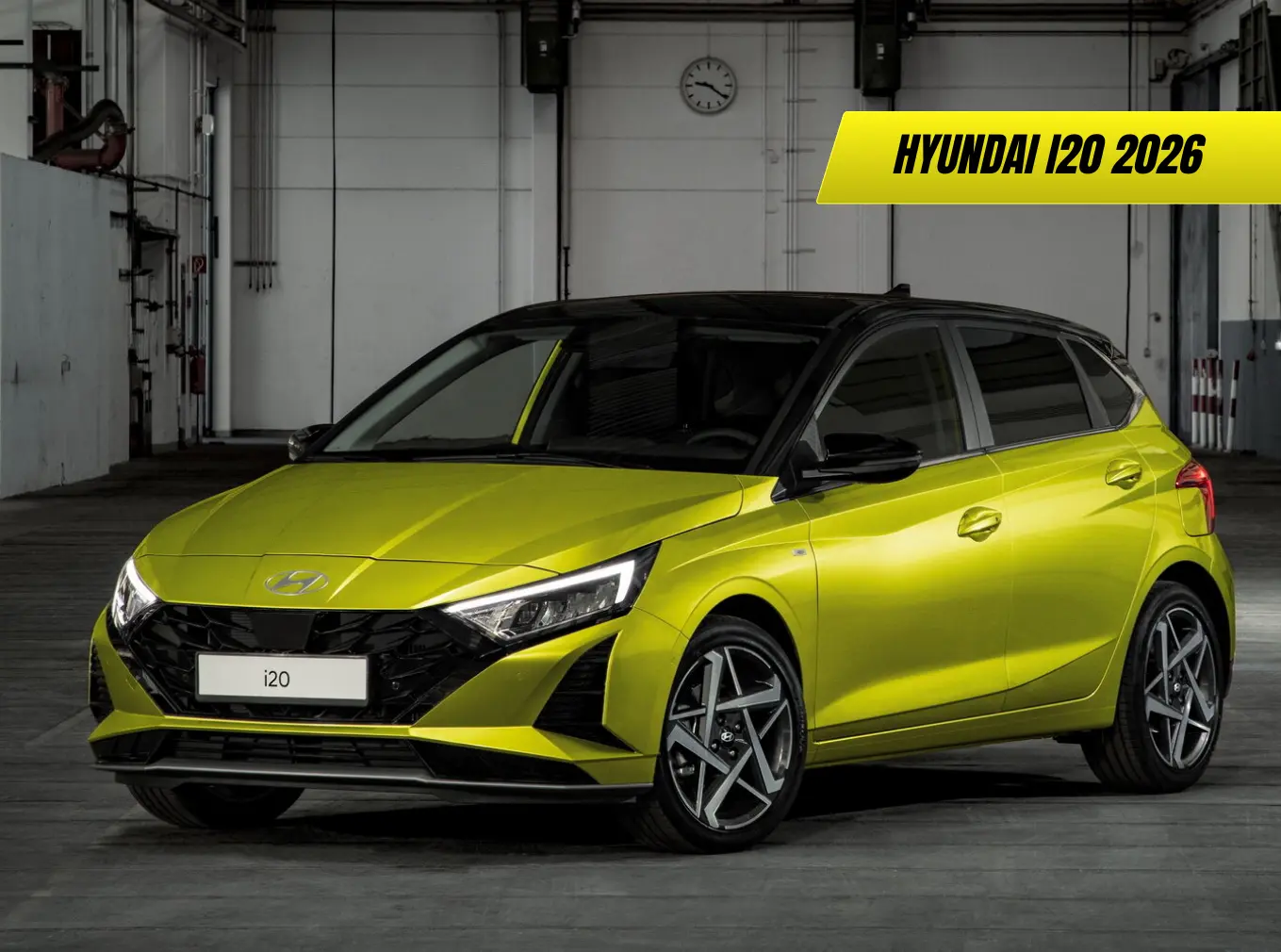
Hyundai launches five major European models throughout 2026 including redesigned Kona compact SUV (€25,000-45,000), updated Bayon subcompact crossover, refreshed Tucson mid-size SUV with N Line performance variant, next-generation i20 supermini, and affordable IONIQ 3 electric hatchback targeting €25,000-30,000 price point expanding Korean brand’s comprehensive electrified lineup across mainstream segments.
South Korean manufacturer Hyundai Motor Company orchestrates ambitious European product offensive throughout 2026 introducing five completely new or significantly updated models strengthening market position amid intensifying competition from Chinese EV makers (BYD, NIO, MG) and established European brands accelerating electrification strategies. The centerpiece redesigned Kona (second-generation launched 2023 now receiving 2026 updates) offers comprehensive powertrain portfolio spanning 1.0T 120hp mild hybrid (€25,000), 1.6T 195hp full hybrid (€31,000-35,000), and battery-electric 218hp version (€39,000-45,000) creating rational progression from budget-conscious buyers through mainstream family customers toward early EV adopters within single model range. The long-awaited IONIQ 3 electric hatchback arrives mid-2026 positioned below IONIQ 5 crossover as brand’s most affordable pure-electric offering targeting Volkswagen ID.3, Cupra Born, and MG4 with estimated €25,000-30,000 starting price, 450km+ WLTP range from 58kWh battery, and distinctive parametric pixel design languageestablishing visual differentiation versus conventional ICE competitors while Korean E-GMP platform’s 800V architecture enables 18-minute 10-80% DC fast charging matching premium alternatives costing €10,000-15,000 more. Complementing electric push, refreshed Tucson introduces N Line performance variant featuring turbocharged powertrain upgrades, sport suspension tuning, and aggressive styling elements appealing enthusiast buyers seeking dynamic character alongside family SUV practicality, while next-generation i20 supermini receives comprehensive redesign maintaining B-segment presence against declining European supermini demand as customers migrate toward crossovers and SUVs. The updated Bayon subcompact crossover bridges i20 supermini and Kona compact SUV creating entry-level affordable alternative enabling younger buyers accessing Hyundai brand at €20,000-24,000 pricing competitive with Dacia Duster, Nissan Juke, and Renault Captur while comprehensive 5-year unlimited-mileage warranty and 8-year EV battery coverage reinforce value proposition versus premium European alternatives offering limited 2-3 year manufacturer warranties.
Hyundai Kona 2026: Pricing and Equipment Updates
The Kona represents Hyundai’s best-selling European model with 2026 model year receiving refined pricing, enhanced equipment levels, and expanded trim hierarchy.
Kona Powertrain Lineup (European Market)
| Variant | Engine | Power | Transmission | Drive | Price Range (€) |
|---|---|---|---|---|---|
| 1.0T MHEV | 1.0L turbo 3-cyl + 48V mild hybrid | 120 hp / 172 Nm | 6MT / 7DCT | FWD | €25,000-28,000 |
| 1.6 HEV | 1.6L + electric motor full hybrid | 141 hp combined | 6DCT | FWD | €31,000-35,000 |
| 1.6T | 1.6L turbo 4-cyl gasoline | 195 hp / 265 Nm | 7DCT | AWD | €33,000-37,000 |
| Electric 65kWh | Single motor BEV | 218 hp / 255 Nm | Single-speed | FWD/AWD | €39,000-45,000 |
Trim Level Structure (France Example)
Entry (Intuitive) Trim – €25,000 base
- 17-inch alloy wheels
- LED headlights and taillights
- 8-inch touchscreen with wireless Apple CarPlay/Android Auto
- Rear parking sensors with camera
- Lane keeping assist and forward collision warning
- Automatic climate control
- Cloth upholstery
Mid (Créative) Trim – €28,000-31,000
- 18-inch alloy wheels
- Dual 12.3-inch curved display (digital cluster + infotainment)
- Blind spot monitoring with rear cross-traffic alert
- Wireless smartphone charging
- Heated front seats and steering wheel
- Smart key with push-button start
- Privacy glass
Top (Executive) Trim – €32,000-36,000
- 19-inch alloy wheels
- Premium Bose audio system
- 360-degree camera system
- Head-up display
- Ventilated front seats
- Synthetic leather upholstery
- Adaptive cruise control with stop-and-go
N Line Trim – €34,000-38,000
- Sport-tuned suspension and steering
- N Line styling (unique grille, bumpers, side skirts)
- 19-inch N Line alloy wheels
- Sport seats with N Line embroidery
- Metal pedals and sport steering wheel
- Exclusive N Line colors
N Line S (Top) Trim – €36,000-40,000
- All Executive equipment plus N Line enhancements
- Digital key (smartphone as key)
- Surround View Monitor
- Highway Driving Assist 2
- Remote Smart Parking Assist
IONIQ 3: Affordable Electric Hatchback
The IONIQ 3 fills critical gap in Hyundai’s European electric lineup providing accessible entry point below €30,000 IONIQ 5 crossover pricing.
Expected IONIQ 3 Specifications (Based on Industry Reports)
Platform and Architecture
- Platform: E-GMP (Electric-Global Modular Platform) shared with IONIQ 5/6, Kia EV6, Genesis GV60
- Voltage: 800V architecture enabling ultra-fast charging
- Wheelbase: ~2,750mm (shorter than IONIQ 5’s 3,000mm)
- Length: ~4,300-4,400mm (Golf-sized compact hatchback)
- Target weight: ~1,650-1,700kg
Battery and Range
- Standard battery: 58kWh usable (~63kWh gross)
- WLTP range: 450-480km (280-300 miles)
- Consumption: 15.5-16.5 kWh/100km
- Long-range option: Possible 77kWh variant offering 550-600km range
Charging Capabilities
- DC fast charging: 175-200kW maximum (800V advantage)
- 10-80% charging time: ~18 minutes at 350kW charger
- AC charging: 11kW onboard charger standard
- V2L (Vehicle-to-Load): 3.6kW external power output
Powertrain Options
- Base RWD: Single rear motor, ~170-190 hp, €25,000-27,000 estimated
- Performance RWD: Single rear motor, ~218 hp, €28,000-30,000 estimated
- AWD: Dual motor, ~300+ hp, €33,000-35,000 estimated (possible N variant)
Design Language
- Parametric pixel LED lights: Signature IONIQ family design
- Clean aerodynamic surfacing: Minimalist EV aesthetic
- Floating roof: Two-tone color option with contrasting roof
- Active aero elements: Auto-deploying spoiler, active grille shutters
Target Competitors
- Volkswagen ID.3 (€39,000-48,000) – IONIQ 3 undercuts significantly
- Cupra Born (€36,000-45,000) – Sportier VW Group alternative
- MG4 (€29,000-38,000) – Chinese value competitor
- Renault Mégane E-Tech (€35,000-45,000) – French mainstream rival
Refreshed Tucson and N Line Performance Variant
Hyundai’s best-selling mid-size SUV receives mid-cycle refresh introducing performance-focused N Line specification.
Tucson 2026 Updates
Exterior Revisions
- Redesigned front grille with larger parametric pattern
- Updated LED headlight signature
- New rear bumper design with integrated exhaust finishers
- Fresh wheel designs across trim levels (18-19 inch options)
- Expanded color palette including new N Line exclusive shades
Interior Enhancements
- Upgraded 12.3-inch dual curved display (standard on higher trims)
- Improved materials quality with more soft-touch surfaces
- New ambient lighting with customizable colors
- Enhanced sound insulation reducing road and wind noise
- Redesigned center console with wireless charging pad
Technology Additions
- Highway Driving Assist 2 with lane-change assist
- Remote Smart Parking Assist (autonomous parking via key fob)
- Digital Key 2 (smartphone and smartwatch compatibility)
- Over-the-air software updates capability
- Improved voice recognition and navigation
Tucson N Line Specification (New for 2026)
Performance Enhancements
- Engine: 1.6T-GDI turbocharged 4-cylinder
- Power: 195-210 hp (tuned upgrade from standard 180 hp)
- Torque: 280 Nm
- Transmission: 8-speed dual-clutch automatic
- Drive: HTRAC all-wheel drive with torque vectoring
- Suspension: Sport-tuned dampers and springs (-10mm ride height)
- Brakes: Larger ventilated discs with red N Line calipers
N Line Styling
- Unique front grille with mesh pattern and red accents
- Aggressive front and rear bumpers with larger air intakes
- Side skirts and rear diffuser
- Dual exhaust outlets (functional)
- 19-inch N Line specific alloy wheels
- N Line badging throughout interior and exterior
Expected Pricing
- Tucson standard range: €32,000-45,000
- Tucson N Line: €42,000-48,000 (premium over equivalent trim)
Next-Generation i20 Supermini
The fourth-generation i20 receives comprehensive redesign maintaining Hyundai’s B-segment presence despite declining European supermini sales.
i20 2026 Platform and Design
Architecture
- Updated K2 platform with improved rigidity and refinement
- Possible hybrid-specific platform modifications
- Lightweight materials reducing curb weight 20-30kg versus current generation
- Enhanced crash structure meeting latest Euro NCAP standards
Dimensions (Estimated)
- Length: ~4,070-4,100mm (+20-30mm versus current)
- Wheelbase: ~2,580mm (unchanged for interior space)
- Width: ~1,775mm
- Height: ~1,450mm
Powertrain Options (Expected)
| Engine | Type | Power | Target Price |
|---|---|---|---|
| 1.0T MHEV | 1.0L turbo 3-cyl + 48V mild hybrid | 100 hp | €19,000-22,000 |
| 1.0T MHEV | 1.0L turbo 3-cyl + 48V mild hybrid | 120 hp | €21,000-24,000 |
| 1.6 HEV | 1.6L full hybrid | 141 hp combined | €24,000-27,000 |
| i20 N | 1.6T turbocharged gasoline | 200+ hp | €28,000-31,000 |
Design Evolution
- Parametric grille design aligning with larger Hyundai models
- Sleeker LED headlight units with integrated DRLs
- Coupe-like roofline with floating roof effect
- Distinctive character lines and sculpted surfaces
- Two-tone color options with contrasting roof
Interior Modernization
- 10.25-inch digital instrument cluster
- 10.25-inch central touchscreen (dual-screen layout)
- Improved materials quality targeting premium feel
- Wireless Apple CarPlay/Android Auto standard
- Ambient lighting across dashboard and door panels
i20 N Performance Variant Updates
- Possible power increase to 210-220 hp (from current 204 hp)
- Enhanced suspension and steering calibration
- Limited-slip differential (electronic or mechanical)
- Launch control and N mode driving settings
- Performance brake package with larger rotors
Updated Bayon Subcompact Crossover
Hyundai’s entry-level crossover receives 2026 refresh maintaining affordability while adding features.
Bayon 2026 Enhancements
Powertrain Updates
- 1.0T 100hp mild hybrid: €20,000-22,000
- 1.0T 120hp mild hybrid: €22,000-24,000
- Improved fuel economy: 5.2-5.6 l/100km combined
Equipment Additions (Versus 2024-2025 Models)
- 8-inch touchscreen standard (upgraded from 7-inch on base trim)
- Wireless smartphone charging on mid-tier trims
- Additional USB-C ports for rear passengers
- Improved safety suite with junction assist
- LED headlights now standard across range (previously halogen on base)
Trim Level Revisions
- Active: €20,000 – Entry trim with essential equipment
- Comfort: €22,000 – Mid-level with enhanced convenience features
- Style: €23,500 – Premium trim with larger wheels and upscale materials
Positioning Strategy
- Undercuts Kona by €4,000-5,000 creating clear price hierarchy
- Targets younger buyers and urban customers prioritizing maneuverability
- Competes directly with Nissan Juke (€22,000-28,000) and Renault Captur (€24,000-30,000)
European Market Strategy and Competition
Hyundai’s 2026 lineup expansion addresses multiple strategic objectives within evolving European automotive landscape.
Market Challenges
- Chinese EV invasion: BYD, MG, NIO offering compelling EVs 20-30% cheaper than European equivalents
- Economic uncertainty: Post-pandemic inflation and energy costs reducing consumer purchasing power
- Regulatory pressure: Tightening CO₂ fleet emissions requiring rapid electrification
- Dealer network: Expanding physical presence competing against established brands’ century-old infrastructure
Hyundai Advantages
- Comprehensive warranty: 5-year unlimited-mileage coverage versus 2-3 year European standards
- EV battery guarantee: 8-year/160,000km reassuring early adopters
- Platform flexibility: E-GMP architecture enabling multiple EV derivatives rapidly
- Price competitiveness: Korean manufacturing costs enabling aggressive pricing
- Technology leadership: 800V charging, ADAS features matching premium brands
2026 European Sales Targets (Estimated)
- Total sales: 650,000-700,000 units (+8-10% versus 2025)
- EV sales mix: 25-30% (up from ~18% 2025)
- Kona: 120,000 units (maintaining best-seller status)
- IONIQ range: 80,000-100,000 units (5/6/3 combined)
- Tucson: 110,000 units
- i20/Bayon: 90,000 units combined
Key European Markets
- Germany: 130,000 units target (largest market, strong EV demand)
- UK: 95,000 units (right-hand-drive advantage, company car tax benefits)
- France: 65,000 units (price-sensitive, fleet sales focus)
- Italy: 50,000 units (compact car preference, growing EV interest)
- Spain: 45,000 units (value segment strength)
UK Market Implications
Hyundai’s 2026 European offensive holds particular significance for British market where Korean brand steadily gained market share through competitive pricing and comprehensive warranty coverage.
UK Pricing Estimates
| Model | Powertrain | Expected UK Price Range |
|---|---|---|
| Bayon | 1.0T mild hybrid | £19,000-23,000 |
| i20 | 1.0T mild hybrid / 1.6 full hybrid | £20,000-26,000 |
| i20 N | 1.6T performance | £27,000-30,000 |
| Kona | 1.0T / 1.6 HEV / Electric | £24,000-42,000 |
| Tucson | 1.6T / 1.6 HEV / 1.6 PHEV | £32,000-48,000 |
| Tucson N Line | 1.6T AWD sport | £42,000-46,000 |
| IONIQ 3 | Battery electric | £26,000-32,000 (estimated) |
UK-Specific Considerations
Right-Hand-Drive Development
All models require engineering adaptation for UK/Ireland/Australia/Japan markets adding development costs and typically delaying launches 3-6 months versus left-hand-drive European markets. However, Hyundai’s established right-hand-drive manufacturing capabilities in South Korea minimize delays versus competitors outsourcing RHD production.
Company Car Tax Benefits
UK’s Benefit-in-Kind taxation strongly favors EVs and plug-in hybrids creating substantial demand for Kona Electric, IONIQ 3, and Tucson PHEV among fleet buyers and company car drivers. Current 2% BIK rate for pure EVs versus 20-37% for conventional gasoline/diesel creates powerful incentive driving electrification adoption.
Charging Infrastructure
UK’s relatively mature public charging network (50,000+ public chargers including 10,000+ rapid chargers) supports EV ownership though regional disparities between London/Southeast and rural areas persist. Hyundai’s 800V architecture in IONIQ models enables rapid charging at UK’s expanding 150-350kW ultra-rapid network reducing range anxiety concerns.
Frequently Asked Questions
When does the Hyundai IONIQ 3 launch?
Expected mid-2026 (June-August) with European deliveries commencing Q3-Q4 2026. Official reveal likely at Paris Motor Show October 2026 or Geneva Motor Show March 2026 if earlier. Initial production focuses Germany, UK, France, Italy before expanding to smaller European markets Q1 2027. Estimated starting price €25,000-27,000 undercutting Volkswagen ID.3 significantly.
How much does the 2026 Hyundai Kona cost?
European pricing: 1.0T mild hybrid from €25,000, 1.6 full hybrid from €31,000, 1.6T AWD from €33,000, Electric from €39,000. UK pricing: £24,000-£42,000 depending on powertrain and trim. France-specific pricing includes government EV incentives potentially reducing electric Kona net cost to ~€35,000 after €4,000 ecological bonus for qualifying buyers.
What’s the difference between Bayon and Kona?
Bayon: Smaller (4,180mm vs 4,355mm), cheaper (€20,000-24,000 vs €25,000-45,000), gasoline mild hybrid only, more basic equipment, targets urban buyers. Kona: Larger dimensions, comprehensive powertrain range including electric, higher-spec equipment, better safety ratings, targets mainstream family buyers. Bayon positioned as affordable entry model while Kona serves as volume mainstream SUV.
Will the Hyundai i20 N continue?
Yes, fourth-generation i20 N performance variant confirmed for 2026-2027 launch. Expected power increase to 210-220 hp from current 204 hp 1.6T engine. Enhanced chassis dynamics, possible limited-slip differential, and refined styling distinguishing from standard i20. Pricing estimated €28,000-31,000 competing against Ford Fiesta ST (discontinued), Toyota GR Yaris (€35,000+), and VW Polo GTI alternatives.
Does Hyundai offer plug-in hybrid in Europe?
Yes, Tucson PHEV and Santa Fe PHEV available with 1.6T engine + 13.8kWh battery delivering ~60km electric range. However, Kona does not offer PHEV – full hybrid only. Future IONIQ models pure electric exclusively. Hyundai’s European PHEV strategy focuses larger SUVs where battery weight less impacts efficiency while smaller models utilize mild hybrid or full hybrid for cost optimization.
How does Hyundai warranty compare to competitors?
Hyundai: 5 years unlimited mileage (manufacturer warranty) + 8 years/160,000km battery (EV models). Competitors: Volkswagen 2-3 years/60,000km, Renault 2 years unlimited mileage, Toyota 3 years/60,000 miles (UK) + 5 years hybrid battery. Kia (sister brand) offers identical 7-year coverage. Warranty advantage creates significant value proposition for cost-conscious European buyers prioritizing long-term ownership security.
Can I reserve IONIQ 3 now?
Not yet. Official reservations expected to open following formal reveal mid-2026. However, some dealers accepting informal waitlist registrations. Recommend contacting local Hyundai dealer expressing interest to receive notification when order books open. Initial allocation likely prioritized Norway, Germany, Netherlands (highest EV adoption rates) before expanding broader European availability.
What happens to discontinued European models?
i10 city car: Discontinued 2025 due to declining A-segment sales, replaced by Bayon as entry model. i30 hatchback/wagon: Under review, possible discontinuation 2027 as European C-segment shifts toward SUVs. IONIQ Electric sedan: Discontinued 2022, replaced by IONIQ 5 crossover and upcoming IONIQ 6 sedan. Focus shifting entirely toward SUVs and crossovers matching European customer preferences abandoning traditional hatchbacks and sedans.
Conclusion
Hyundai’s aggressive 2026 European product offensive demonstrates Korean manufacturer’s commitment capturing market share amid intensifying electrification transition through comprehensive five-model launch strategy spanning redesigned Kona compact SUV (€25,000-45,000 covering gasoline mild hybrid through battery electric), affordable IONIQ 3 electric hatchback targeting sub-€30,000 pricing undercutting Volkswagen ID.3, refreshed Tucson introducing N Line performance variant, next-generation i20 supermini maintaining B-segment presence, and updated Bayon entry crossover creating accessible €20,000 gateway into Hyundai brand ecosystem. The strategic emphasis balancing traditional internal combustion powertrains (mild hybrid, full hybrid) against pure electric platforms acknowledges European market diversity where affluent Northern markets (Norway, Netherlands, Germany) rapidly adopting EVs while price-sensitive Southern and Eastern regions (Spain, Italy, Poland) require affordable conventional alternatives during extended transition period before regulatory ICE bans force universal electrification 2030-2035 timeframe.
For European buyers, Hyundai’s 2026 lineup delivers compelling value proposition combining competitive pricing, comprehensive warranty coverage (5-year unlimited mileage manufacturer + 8-year EV battery guarantees), advanced technology features (800V charging, Highway Driving Assist 2, digital connectivity), and expanding dealer network creating genuine alternative to established European brands commanding premium pricing despite offering inferior warranty terms and similar specifications. The IONIQ 3’s anticipated €25,000-30,000 pricing particularly disruptive undercutting Volkswagen ID.3 by €9,000-13,000 while delivering equivalent range, superior charging speeds, and comprehensive equipment potentially accelerating mainstream EV adoption among budget-conscious buyers previously excluded from electric mobility through prohibitive €35,000+ entry costs characterizing European EV market historically dominated by premium manufacturers serving affluent early adopters rather than mass-market accessibility Hyundai’s Korean manufacturing cost advantages enable delivering without sacrificing profitability margins.





