
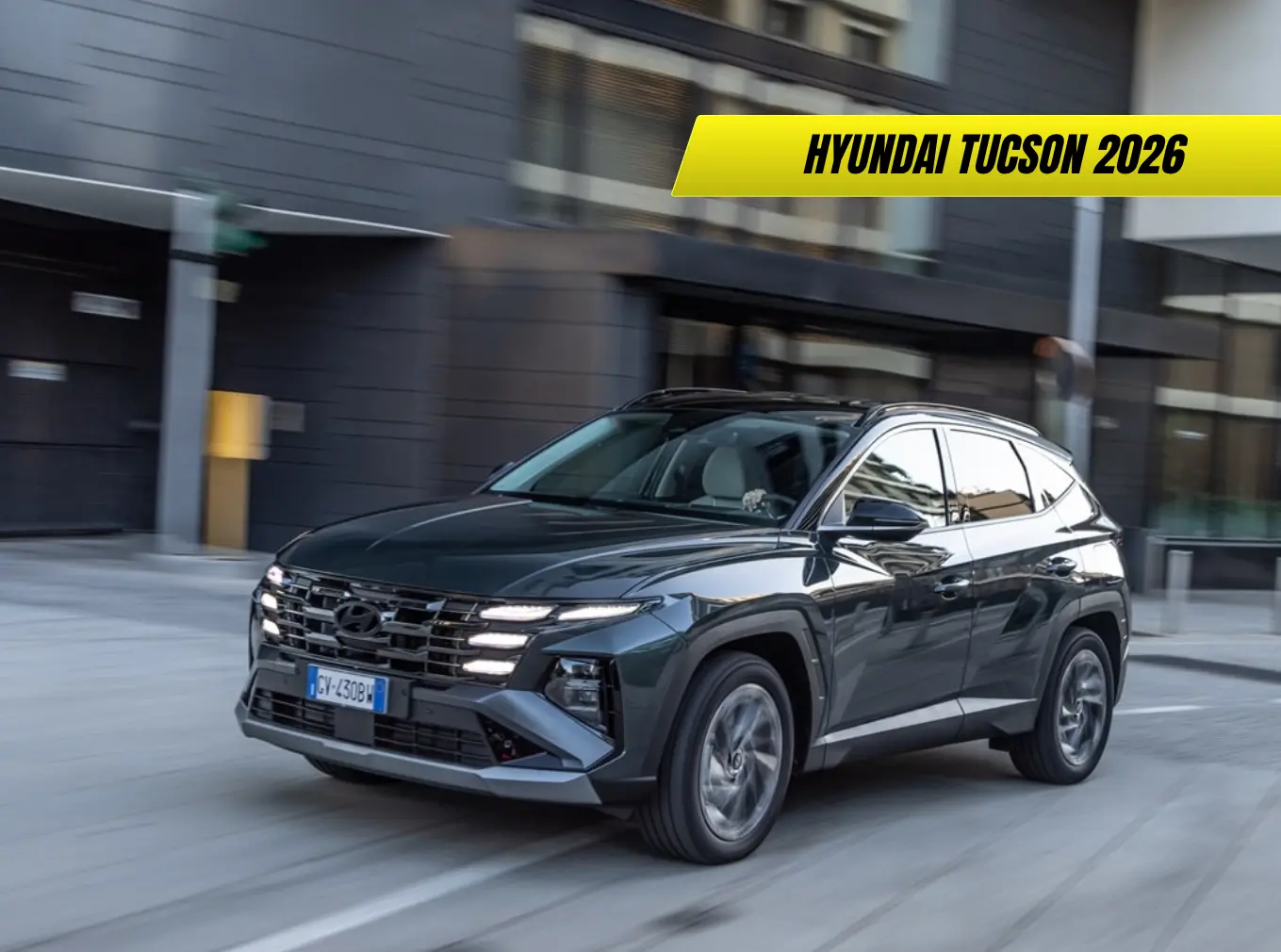
2027 Hyundai Tucson debuts boxy new design inspired by Santa Fe, ditching curves for angular styling. Hybrid, PHEV, and N variants confirmed. UK launch late 2026 from £32,000 estimated.
Hyundai prepares a complete fifth-generation redesign for the Tucson (codenamed NX5) arriving late 2026 as a 2027 model year vehicle, abandoning the current generation’s controversial parametric jewel lighting and flowing organic surfaces for boxy angular styling inspired by latest Santa Fe and NEXO hydrogen SUV. Recent spy photographs captured lightly-camouflaged prototypes revealing vertical rear taillights replacing distinctive claw-shaped units, simplified front grille with horizontal LED light bar, and upright proportions increasing interior volume particularly rear headroom and cargo capacity. Powertrain lineup expands with improved hybrid delivering 235 hp (up from 226 hp), enhanced plug-in hybrid offering 50+ mile electric range (versus current 31 miles), and confirmed Tucson N performance variant potentially producing 300+ hp targeting Honda CR-V Sport Hybrid and Mazda CX-60. UK launch expected November-December 2026 with pricing estimated £32,000-48,000.
Hyundai Tucson 2027: Complete Redesign Strategy
South Korean manufacturer Hyundai develops the fifth-generation Tucson (internal chassis code NX5) representing comprehensive platform, powertrain, and styling evolution rather than mild facelift, with current fourth-generation model (NX4, launched 2020) reaching end of typical product lifecycle necessitating successor maintaining competitive positioning within critical compact SUV segment accounting for approximately 25% of total UK new car sales annually. The Tucson consistently ranks among Britain’s ten best-selling vehicles alongside Toyota Corolla Cross, Honda CR-V, and perennial segment leader Nissan Qashqai, creating commercial imperative ensuring fifth-generation evolution addresses current weaknesses whilst maintaining strengths justifying market position.
Recent spy photographs captured near-production prototypes testing European roads wearing minimal camouflage revealing radical styling departure from current generation’s divisive parametric jewel lighting signature and flowing organic surfaces creating love-it-or-hate-it reaction among customers and automotive media. The fifth-generation adopts boxy angular design philosophy mirroring latest Santa Fe and previewed through earlier Crater concept, prioritizing interior space maximization, aerodynamic efficiency, and mainstream appeal over polarizing distinctiveness characterizing outgoing model whose aggressive styling aged poorly attracting criticism as trendy elements became dated within 12-18 months following launch.
Hyundai’s “Art of Steel” design language emphasizes geometric precision, horizontal emphasis widening visual stance, and clean surfacing eliminating busy character lines creating timeless aesthetic maintaining relevance throughout typical seven-year product lifecycle. This conservative evolution acknowledges market reality where mainstream family buyers purchasing compact SUVs prioritize practicality, reliability, and uncontroversial appearance over design statements alienating significant customer segments unwilling accepting distinctive styling polarizing opinion among neighbours and colleagues influencing purchase decisions through social pressure British buyers particularly sensitive toward.
Design Evolution: From Parametric to Geometric
Front Fascia Transformation
Spy photographs reveal completely new front-end design featuring:
- Simplified grille eliminating current parametric jewel pattern favouring horizontal bars creating width emphasis
- Horizontal LED light bar spanning upper grille width connecting headlight clusters (similar to Santa Fe)
- Separate headlight units positioned lower bumper flanking wide central intake
- Vertical LED daytime running lights at outer edges creating distinctive L-shape signature
- Cleaner bumper integration with functional lower intake and protective skid plate element
The front design abandons current generation’s controversial integrated lighting where DRLs, headlights, and parametric grille elements blend creating cohesive but polarizing appearance critics describe as “busy” or “overstyled” whilst proponents praise as distinctive and modern. Fifth-generation adopts conventional layout separating lighting elements from grille creating familiar face mainstream buyers find reassuring rather than confrontational.
Side Profile Changes
Body sides receive substantial modifications affecting proportions and character:
- More upright roofline reducing fastback slope improving rear headroom and cargo volume
- Extended wheelbase (approximately 50-75mm increase) creating additional rear legroom
- Higher beltline with reduced glass area improving structural rigidity and occupant protection
- Simplified surfacing eliminating current generation’s complex character lines and sculpting
- Boxier wheel arches with protective cladding emphasizing rugged capability
- Flush door handles potentially introduced upper trims improving aerodynamics
Rear Design Revolution
Most dramatic changes occur rear addressing widespread criticism of current claw-shaped taillights:
- Vertical taillights positioned at outer corners replacing horizontal wraparound units
- Full-width LED strip connecting vertical lights creating subtle brand signature
- Licence plate relocation moved from tailgate to rear bumper (regional variation possible)
- Cleaner bumper design with integrated diffuser element and protective lower section
- Increased tailgate opening improving cargo loading convenience
Similar rear design philosophy mirrors Renault Clio 6 and other mainstream models adopting vertical light signatures creating sophisticated timeless appearance.
Dimensions and Proportions (Estimated Based on Spy Photos)
| Measurement | Current NX4 | 2027 NX5 (Estimated) | Change |
|---|---|---|---|
| Length | 4,500 mm | 4,550-4,580 mm | +50-80 mm |
| Wheelbase | 2,680 mm | 2,730-2,755 mm | +50-75 mm |
| Width | 1,865 mm | 1,880-1,895 mm | +15-30 mm |
| Height | 1,650 mm | 1,665-1,680 mm | +15-30 mm |
| Ground Clearance | 172 mm | 175-180 mm | Modest increase |
Increased dimensions create additional interior volume addressing current generation’s criticism regarding marginal rear legroom compared to class leaders including Honda CR-V and Mazda CX-5 offering superior spaciousness despite similar exterior footprints.
Powertrain Lineup: Expanded Electrification
2.5-Litre Smartstream Petrol (Base UK Specification)
New Naturally-Aspirated Engine
Hyundai replaces current 1.6-litre turbo petrol with larger 2.5-litre naturally-aspirated four-cylinder (Smartstream designation) prioritizing refinement, reliability, and adequate performance over outright acceleration:
Specifications (US-Market Confirmed, UK Adaptation Expected)
- Displacement: 2.5 litres (2,497 cc)
- Configuration: Inline-four, naturally-aspirated
- Power output: 200 hp (149 kW) @ 6,000 rpm estimated
- Torque: 180 lb-ft (244 Nm) @ 4,000 rpm estimated
- Transmission: Eight-speed torque-converter automatic
- Drive: Front-wheel drive standard, all-wheel drive optional
- 0-62 mph: 8.5-9.0 seconds estimated
- Top speed: 124 mph (200 km/h) limited
- Fuel economy: 35-38 mpg combined estimated
- CO₂ emissions: 165-175 g/km
The naturally-aspirated approach prioritizes long-term reliability avoiding turbocharger complexity and potential failures characterizing smaller-displacement forced-induction engines requiring premium fuel and experiencing higher maintenance costs over ownership lifecycle. However, modest power output (200 hp) risks criticism from enthusiast buyers accustomed to turbocharged alternatives delivering superior torque and acceleration despite similar headline horsepower figures.
1.6-Litre Turbo Hybrid (Volume UK Seller)
Enhanced Hybrid System
Fourth-generation hybrid technology improves upon current system through:
Powertrain Specifications (2027 Updated)
- Petrol engine: 1.6-litre turbocharged four-cylinder (177 hp)
- Electric motor: 65 kW (87 hp) – increased from 60 kW current
- Combined output: 235 hp (175 kW) – up from 226 hp
- Combined torque: 280 lb-ft (380 Nm) – improved from 270 lb-ft
- Transmission: Six-speed automatic with integrated electric motor
- Battery: 1.65 kWh lithium-ion polymer (increased capacity)
- Drive: Front-wheel drive standard, HTRAC AWD optional
- 0-62 mph: 7.8-8.2 seconds estimated
- Fuel economy: 48-52 mpg combined (improvement from current 44 mpg)
- CO₂ emissions: 120-130 g/km
Vehicle-to-Load (V2L) Capability
New feature enables Tucson Hybrid powering external devices through 3.6 kW output:
- Camping equipment (portable fridges, lighting, cooking appliances)
- Power tools for tradespeople utilizing vehicle as mobile workstation
- Emergency home backup during power outages (limited capacity)
- Tailgating and outdoor events (entertainment systems, portable heaters)
Similar V2L functionality appears across competitors including Toyota Yaris and Kia Sportage addressing practical use cases beyond transportation.
1.6-Litre Turbo PHEV (Company Car Choice)
Significantly Enhanced Plug-In Hybrid
Current-generation PHEV’s modest 31-mile electric range struggles competing against rivals offering 40-50+ miles pure electric operation. Fifth-generation addresses weakness through enlarged battery:
Enhanced PHEV Specifications (Estimated)
- Petrol engine: 1.6-litre turbocharged four-cylinder (177 hp)
- Electric motor: 75 kW (100 hp) – increased from 66 kW
- Combined output: 270-285 hp estimated
- Battery capacity: 19-21 kWh (versus current 13.8 kWh)
- EV-only range: 50-55 miles (80-88 km) WLTP – major improvement
- Real-world EV range: 40-45 miles typical conditions
- Charging time: 2.5-3.0 hours (7.4 kW home charger)
- 0-62 mph: 7.5-7.8 seconds estimated
- Fuel economy: 100+ mpg equivalent (when charged regularly)
- CO₂ emissions: 25-30 g/km
Company Car Tax Advantages
Enhanced PHEV maintains ultra-low BIK taxation despite increased performance:
- 2026/27 BIK rate: 8% (vehicles emitting 25-30 g/km with 50+ mile EV range)
- Example: £45,000 P11D value × 8% = £3,600 annual BIK
- 40% taxpayer: £1,440 annual tax (£120 monthly)
- Versus combustion Tucson (170 g/km, 34% BIK): £6,120 annual BIK, £2,448 tax (40% taxpayer)
- Annual savings: £1,008 for company car drivers
Similar company car benefits apply to other plug-in hybrid cars creating compelling financial incentives for business users.
Tucson N Performance Variant (Confirmed Development)
First-Ever Tucson N
Hyundai confirms developing Tucson N joining Kona N and expanding N performance SUV portfolio:
Predicted Specifications (Based on Industry Intelligence)
- Powertrain: 2.5-litre turbocharged four-cylinder (detuned Stinger/Genesis engine)
- Power output: 300-320 hp estimated
- Torque: 310-330 lb-ft estimated
- Transmission: Eight-speed dual-clutch or torque-converter automatic
- Drive: HTRAC all-wheel drive with torque vectoring
- 0-62 mph: 5.5-6.0 seconds target
- Top speed: 155 mph electronically limited
- N-specific suspension, steering, brakes, exhaust
- Performance tyre fitment (Michelin Pilot Sport 4S or similar)
- Aggressive styling with N badging, larger wheels (19-20 inch), unique bumpers
Market Positioning
Tucson N targets performance-oriented family buyers considering:
- Volkswagen Tiguan R (320 hp, £46,000+)
- BMW X1 M35i xDrive (300 hp, £48,000+)
- Cupra Formentor VZ5 (390 hp, £50,000+)
- Audi SQ5 (367 hp, £58,000+)
Expected UK pricing £42,000-47,000 positions Tucson N as value alternative to German premium competitors whilst offering genuine performance credibility through proven N division engineering.
Interior Technology and Space Improvements
PLEOS Connect Infotainment System
Hyundai introduces next-generation infotainment addressing criticism of current system’s laggy response and confusing menu structure:
Display Configuration
- Curved panoramic display integrating 12.3-inch digital cluster + 12.3-inch central touchscreen
- Seamless single-piece glass creating premium visual impression
- Improved processor delivering instant response eliminating current lag
- Wireless Apple CarPlay and Android Auto (full-screen integration)
- Over-the-air software updates enabling feature additions post-purchase
Physical Controls Return
Responding to customer feedback criticizing touchscreen-only climate controls:
- Physical rotary knobs for temperature adjustment
- Hard buttons for fan speed, mode selection, defrost
- Steering wheel-mounted shortcut buttons for frequently-accessed functions
- Haptic feedback touchscreen buttons supplementing physical controls
Similar ergonomic improvements appear across manufacturers including Mercedes Electric GLC acknowledging customer preference for tactile interfaces during driving.
Interior Space and Practicality
Passenger Accommodation (Estimated Improvements)
| Measurement | Current NX4 | 2027 NX5 (Est.) | Improvement |
|---|---|---|---|
| Front Headroom | 1,011 mm | 1,020-1,030 mm | +10-20 mm |
| Rear Headroom | 972 mm | 990-1,005 mm | +18-33 mm |
| Rear Legroom | 1,026 mm | 1,060-1,080 mm | +34-54 mm |
| Cargo (Seats Up) | 620 litres | 650-680 litres | +30-60 litres |
| Cargo (Folded) | 1,799 litres | 1,850-1,900 litres | +50-100 litres |
Extended wheelbase and upright roofline create genuinely competitive rear-seat accommodation rivaling class leaders Honda CR-V and Mazda CX-5 rather than trailing marginally as current generation experiences.
Premium Materials and Build Quality
Fifth-generation targets enhanced perceived quality through:
- Soft-touch dashboard materials with stitched upholstery (upper trims)
- Ambient LED lighting with customizable colours (16-colour palette)
- Improved sound insulation reducing road and wind noise
- Higher-quality switchgear with damped mechanisms
- Optional Nappa leather upholstery (Ultimate/N trims)
- Panoramic fixed glass roof with power sunshade
UK Pricing Predictions and Market Launch
Expected Price Structure
| Trim Level | Powertrain | Estimated UK Price | Key Equipment |
|---|---|---|---|
| SE | 2.5 petrol FWD | £32,000-34,000 | 17″ alloys, LED lights, 8″ display, cloth seats, safety suite |
| SE Connect | 2.5 petrol FWD | £35,000-37,000 | 18″ alloys, dual 12.3″ displays, wireless connectivity, upgraded audio |
| Premium | 2.5 petrol AWD | £38,000-40,000 | Heated seats, synthetic leather, panoramic roof, parking sensors |
| Ultimate | Hybrid AWD | £43,000-46,000 | Nappa leather, ventilated seats, Bose audio, full safety tech |
| N Line | Hybrid AWD | £42,000-45,000 | Sport styling, 19″ wheels, N-specific bumpers, sport seats |
| Tucson N | 2.5T AWD | £45,000-48,000 | Performance powertrain, sport suspension, upgraded brakes, 20″ wheels |
PHEV Pricing
Plug-in hybrid variants command £6,000-8,000 premium over equivalent hybrid models:
- SE Connect PHEV: £41,000-43,000
- Premium PHEV: £46,000-49,000
- Ultimate PHEV: £50,000-53,000
Launch Timeline
Production and Delivery Schedule
- Global debut: September-October 2026 (anticipated major motor show reveal)
- UK order books open: October-November 2026
- First customer deliveries: December 2026 / January 2027 (initial allocation limited)
- Full range availability: Q1 2027
- Tucson N performance variant: Q2 2027 (3-6 months after mainstream launch)
Pre-Order Strategy
Early reservation holders likely receive incentives:
- Priority production allocation
- Launch edition exclusive colours/trim combinations
- Discounted servicing packages
- Extended warranty coverage
- Home charging installation subsidies (PHEV variants)
Competitive Analysis: Compact SUV Segment
Direct UK Market Rivals
| Model | Starting Price | Power | Fuel Economy | Notable Features |
|---|---|---|---|---|
| Hyundai Tucson 2027 | £32,000 | 200-320 hp | 35-52 mpg | 5-year warranty, V2L, N variant |
| Honda CR-V | £38,000 | 204 hp (hybrid) | 42 mpg | Spacious, reliable, proven hybrid |
| Mazda CX-5 | £32,000 | 194 hp | 35 mpg | Premium feel, engaging dynamics |
| Nissan Qashqai | £30,000 | 158 hp (e-Power) | 53 mpg | Segment leader, innovative hybrid |
| Toyota RAV4 | £37,000 | 218 hp (hybrid) | 49 mpg | Legendary reliability, strong residuals |
| Volkswagen Tiguan | £35,000 | 204 hp | 40 mpg | German quality, advanced tech |
Hyundai Competitive Advantages
- Industry-leading five-year unlimited mileage warranty
- Comprehensive standard equipment reducing option costs
- Aggressive pricing undercutting Japanese rivals £3,000-5,000
- Performance N variant unavailable from mainstream competitors
- Modern technology and connectivity features
Challenges
- Brand perception trails Honda, Toyota, Mazda for reliability/quality
- Moderate residual values versus premium alternatives
- Previous-generation reliability issues damaged long-term reputation
- Conservative design alienates buyers seeking distinctive styling
Frequently Asked Questions
When will the 2027 Hyundai Tucson be available in the UK?
Global debut expected September-October 2026 with UK order books opening October-November 2026. First customer deliveries anticipated December 2026 or January 2027 depending on production allocation. Full model range including all trim levels and powertrains available Q1 2027, whilst Tucson N performance variant launches Q2 2027 approximately 3-6 months after mainstream models.
How much will the new Hyundai Tucson cost?
Estimated UK pricing starts £32,000-34,000 for entry-level SE with 2.5-litre petrol engine, rising to £50,000-53,000 for top-specification Ultimate PHEV. Tucson N performance variant expected £45,000-48,000. Final pricing announced closer to launch though competitive positioning suggests modest increases versus current generation maintaining value proposition against Japanese rivals.
What engines will the 2027 Tucson have?
UK lineup includes 2.5-litre naturally-aspirated petrol (200 hp), 1.6-litre turbo hybrid (235 hp), 1.6-litre turbo plug-in hybrid (270-285 hp, 50+ mile EV range), and 2.5-litre turbo Tucson N (300-320 hp). Diesel options unlikely UK market due to declining demand and tightening emissions regulations, though European markets may retain diesel availability initial launch period.
How does the new Tucson compare to current model?
Fifth-generation NX5 features boxy angular styling replacing controversial parametric design, extended wheelbase creating superior rear legroom (34-54mm additional), improved hybrid efficiency (48-52 mpg versus 44 mpg), enhanced PHEV range (50+ miles versus 31 miles), and first-ever Tucson N performance variant. Interior technology upgraded with PLEOS Connect infotainment, panoramic curved display, and physical climate controls addressing previous touchscreen-only criticism.
Will the new Tucson be more reliable than the previous one?
Hyundai addresses previous-generation concerns through improved build quality, proven powertrains (avoiding troublesome dual-clutch transmission plaguing Santa Fe), and comprehensive five-year unlimited mileage warranty providing protection against potential issues. However, long-term reliability remains unknown pending real-world ownership data. Industry perception suggests gradual Hyundai reliability improvement though Japanese rivals (Honda, Toyota, Mazda) maintain historical advantages.
Should I buy current Tucson or wait for new model?
Current 2023-2025 Tucson likely receives substantial discounts (£4,000-6,000) during summer-autumn 2026 as dealers clear inventory, creating value for buyers accepting previous styling and willing sacrificing latest technology. However, fifth-generation addresses major weaknesses (rear space, PHEV range, transmission refinement) whilst offering fresh styling maintaining visual relevance longer. Company car drivers prioritising enhanced PHEV electric range (50+ miles enabling higher electric operation percentage) should wait despite delay.
Is Tucson N faster than Volkswagen Tiguan R?
Expected performance suggests comparable acceleration (Tucson N 5.5-6.0s versus Tiguan R 4.9s 0-62 mph) though German rival maintains advantage through superior dual-clutch transmission, proven all-wheel-drive system, and established performance credibility. Tucson N counters through lower pricing (£45,000-48,000 versus Tiguan R £46,000+), comprehensive warranty, and N division’s improving reputation following successful Kona N and i30 N models. Choose Tucson N for value and warranty coverage, Tiguan R for outright performance and badge prestige.
Will the 2027 Tucson come to North America?
Yes, US launch confirmed alongside UK/European debut late 2026 with similar powertrain lineup though specification differences likely (American preference for larger engines, different hybrid calibration, XRT off-road-focused trim). North American production occurs Alabama plant ensuring domestic content qualifying federal tax credits for hybrid variants (PHEV eligibility uncertain pending final assembly and component sourcing verification).
Verdict: Mainstream Appeal Over Design Risks
The 2027 Hyundai Tucson represents calculated evolution prioritizing mainstream appeal, interior space maximization, and powertrain enhancement over design-led differentiation characterizing controversial fourth-generation model. The boxy angular styling abandons parametric jewel lighting and flowing surfaces for conservative geometric aesthetic broadening customer appeal though sacrificing distinctiveness previously setting Tucson apart from conservative Japanese rivals dominating segment through inoffensive styling and proven reliability.
Extended wheelbase creating genuinely competitive rear-seat accommodation addresses critical weakness limiting previous-generation family appeal, whilst enhanced PHEV offering 50+ mile electric range finally delivers credible company car alternative to German premium rivals charging £10,000-15,000 premiums for equivalent capability. The confirmed Tucson N performance variant expands appeal beyond mainstream family buyers toward enthusiasts seeking practical performance without German pricing, though success depends execution matching established N division credibility from successful Kona N and i30 N models.
For UK families requiring practical compact SUV within £35,000-48,000 budget, the fifth-generation Tucson delivers compelling proposition balancing space, technology, warranty coverage, and competitive pricing. However, moderate residual values and brand perception trailing Japanese quality leaders (Honda, Toyota, Mazda) create risk for private buyers prioritizing long-term ownership costs over initial purchase price savings, whilst conservative styling evolution may disappoint buyers appreciating previous-generation’s bold distinctiveness despite polarizing market reception ultimately limiting commercial success justifying comprehensive redesign addressing customer feedback prioritising practicality over design statements.
Aggiungi a seguito
Controlla fonti





