
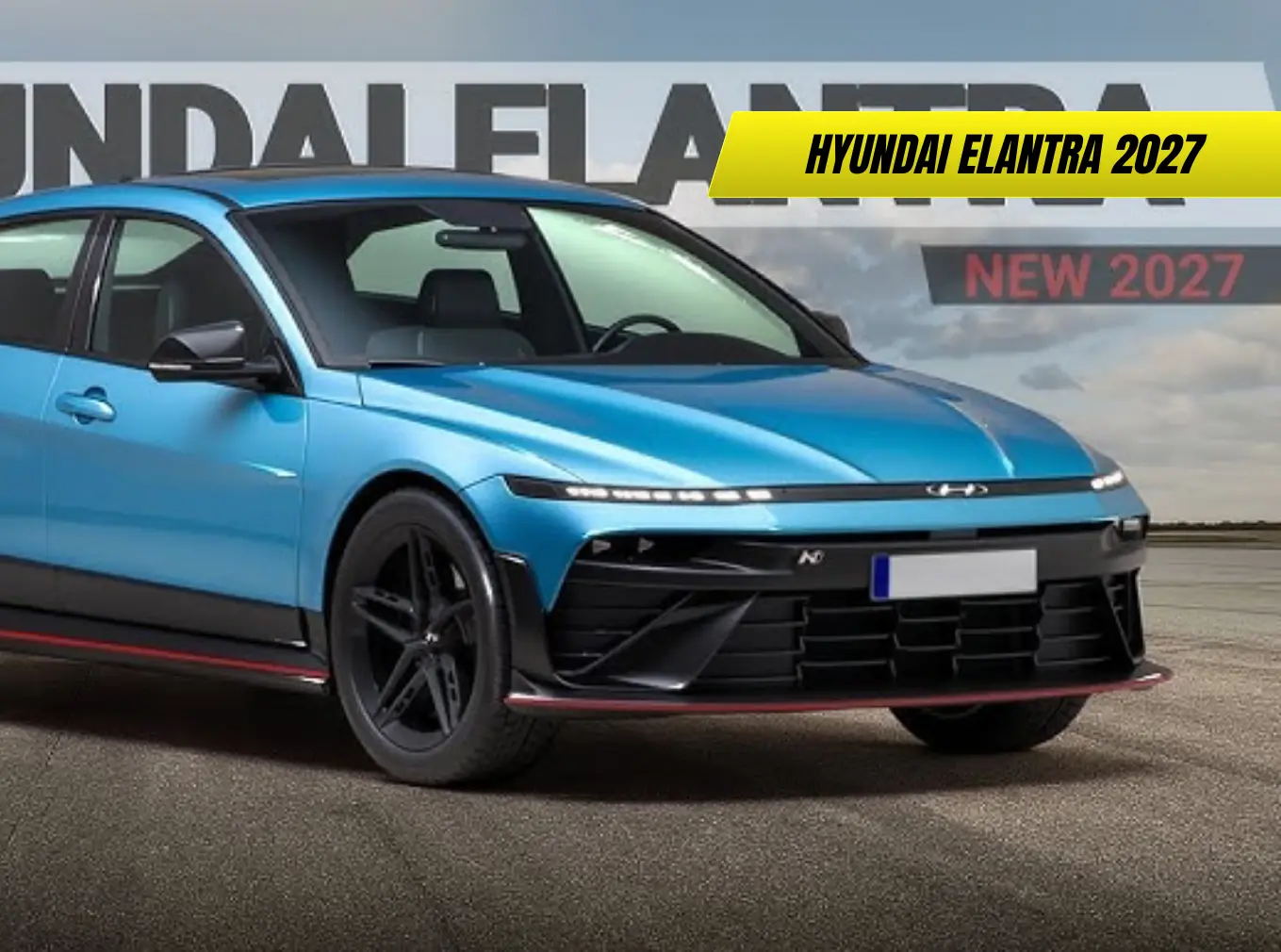
2027 Hyundai Elantra spied with retro-inspired boxy design, N Vision 74 influence, and hybrid powertrains. Complete redesign details, specs, and uncertain UK launch prospects explored.
Hyundai develops an all-new eighth-generation Elantra (codenamed CN8) launching 2026 as a 2027 model year vehicle, abandoning the current generation’s wedge-shaped aggressive styling for retro-inspired boxy proportions influenced by the N Vision 74 concept and classic 1970s Pony Coupe featuring split C-pillar design, upright squared-off front end, and horizontal LED lighting signatures creating sophisticated four-door coupe silhouette. Recent spy photographs captured lightly-camouflaged prototypes testing in Arctic conditions and California revealing distinctive T-shaped LED daytime running lights, separate upper and lower lighting elements, and muscular rear haunches emphasizing width over height. Powertrain lineup transitions toward full electrification with improved 1.6-litre turbo hybrid becoming base offering (estimated 180-190 hp), enhanced plug-in hybrid variant, and next-generation Elantra N adopting hybrid assistance potentially exceeding 300 hp combined output, though UK market availability remains uncertain as Hyundai Britain discontinued sedan body styles focusing exclusively on SUV portfolio.
Hyundai Elantra 2027: Retro Design Philosophy
South Korean manufacturer Hyundai prepares the eighth-generation Elantra (CN8 internal designation) representing comprehensive platform, styling, and powertrain evolution following typical six-year product cycle since seventh-generation CN7 model launched 2020 globally and 2021 in North America achieving strong sales success particularly American market where Elantra ranks among top-ten best-selling sedans despite industry-wide SUV migration threatening traditional four-door body style viability. The complete redesign responds to evolving customer preferences favouring sophisticated elegance over aggressive sporting character whilst addressing practical concerns including rear visibility, interior space optimization, and aerodynamic efficiency improvements contributing to enhanced hybrid powertrain effectiveness delivering superior fuel economy justifying premium pricing versus budget competitors including Nissan Sentra, Toyota Corolla, and Honda Civic.
The radical styling departure draws inspiration from Hyundai’s N Vision 74 concept (modern reinterpretation of 1974 Pony Coupe showcasing retro-futuristic design language) featuring angular geometric surfacing, horizontal lighting emphasis, and boxy proportions contrasting dramatically with current generation’s flowing organic shapes and wedge-shaped profile prioritizing aerodynamic efficiency over visual presence. Industry analysts suggest Hyundai deliberately differentiates Elantra from corporate sibling Sonata (sharing similar size positioning) through distinctive retro aesthetic creating clear visual separation justifying dual sedan lineup continuation despite overlapping dimensions and target demographics threatening redundancy as manufacturers rationalize product portfolios eliminating slow-selling variants unable achieving profitability thresholds justifying continued investment amidst tightening margins and electrification development costs consuming resources.
The boxy proportion revival reflects broader industry trend toward simplified geometric forms replacing complex organic surfacing characterizing 2010s automotive design, with manufacturers including Renault, Honda, and Mazda adopting similar philosophy prioritizing timeless elegance over trend-driven styling risking rapid obsolescence as design fashions evolve requiring expensive mid-cycle facelifts maintaining visual relevance throughout seven-year product lifecycles contemporary platforms require amortizing development costs across adequate production volumes justifying business case approval.
Design Details: N Vision 74 Influence
Front Fascia Transformation
Spy photographs reveal dramatically different front-end design featuring:
- Taller squared-off nose replacing current generation’s wedge-shaped profile
- Split lighting configuration with upper LED strip and separate lower headlight units
- T-shaped LED daytime running lights creating distinctive vertical-horizontal signature
- Horizontal grille emphasis spanning full width creating visual width enhancement
- Simplified lower bumper with functional air intakes flanking central section
- Muscular sculpted bonnet with pronounced power dome and character lines
The vertical T-shaped DRL signature represents bold departure from conventional horizontal lighting arrangements dominating contemporary sedans, creating instant visual recognition whilst paying homage to classic American muscle car design language featuring prominent vertical elements defining brand character.
Side Profile Revolution
Body sides showcase most dramatic styling evolution:
- Split C-pillar design creating distinctive kick-up at rear quarter window
- Coupe-like roofline with pronounced fastback slope improving aerodynamics
- Muscular rear haunches flaring outward emphasizing rear track width
- High beltline with reduced glass area improving structural rigidity and crash protection
- Prominent horizontal character line running full length creating visual tension
- Flush door handles potentially introduced (regional specification variation likely)
The split C-pillar treatment represents most controversial design element, with traditionalists appreciating classical four-door proportions whilst critics argue awkward execution creates disjointed appearance disrupting visual flow from roofline to bootlid. Similar C-pillar treatments appear on retro-inspired designs including Honda Civic Type R and Toyota GR86 evoking 1980s-1990s Japanese sports car aesthetics modern interpretations reference whilst avoiding direct copying.
Rear Design Sophistication
Rear styling emphasizes width through horizontal elements:
- Full-width LED light bar connecting separate taillight clusters
- Vertical light elements within horizontal housings creating geometric complexity
- Integrated bootlid spoiler enhancing aerodynamic efficiency and visual aggression
- Clean bumper design with horizontal reflector strips and subtle diffuser element
- Hidden exhaust outlets (hybrid/PHEV variants) maintaining clean surfacing
- Dual exposed exhausts (turbocharged variants including N) signalling performance positioning
Dimensions (Estimated Based on Spy Photography and Industry Sources)
| Measurement | Current CN7 | 2027 CN8 (Estimated) | Change |
|---|---|---|---|
| Length | 4,655 mm (183.3″) | 4,680-4,710 mm | +25-55 mm |
| Wheelbase | 2,720 mm (107.1″) | 2,750-2,770 mm | +30-50 mm |
| Width | 1,825 mm (71.9″) | 1,850-1,870 mm | +25-45 mm |
| Height | 1,415 mm (55.7″) | 1,430-1,450 mm | +15-35 mm |
| Ground Clearance | 139 mm | 140-150 mm | Minimal change |
Increased dimensions create additional interior volume addressing current generation’s criticism regarding marginal rear legroom compared to class leaders Honda Civic and Mazda3 offering superior accommodation despite similar exterior footprints through superior packaging efficiency.
Powertrain Evolution: Hybrid-First Strategy
1.6-Litre Turbo Hybrid (Expected Base Powertrain)
Hyundai transitions Elantra toward electrification prioritizing hybrid efficiency over conventional combustion-only variants:
Hybrid System Specifications (Estimated)
- Petrol engine: 1.6-litre turbocharged four-cylinder (GDI direct injection)
- Engine output: 140-150 hp estimated
- Electric motor: 48 kW (64 hp)
- Combined output: 180-190 hp total system power
- Combined torque: 210-220 lb-ft (285-300 Nm)
- Transmission: Six-speed dual-clutch automatic with integrated motor
- Battery: 1.32 kWh lithium-ion polymer
- Drive: Front-wheel drive standard
- 0-62 mph: 8.5-9.0 seconds estimated
- Top speed: 124 mph (200 km/h) limited
- Fuel economy: 55-60 mpg combined (UK cycle)
- CO₂ emissions: 105-115 g/km
This mild hybrid approach prioritizes cost efficiency over maximum electric capability, utilizing smaller battery enabling limited electric-only operation (brief low-speed maneuvering) whilst providing electric assist during acceleration and energy recovery through regenerative braking reducing overall consumption approximately 15-20% versus conventional combustion equivalent.
1.6-Litre Turbo PHEV (Premium Electrified Option)
Enhanced plug-in hybrid variant targets company car drivers prioritizing ultra-low BIK taxation:
PHEV Specifications (Predicted Based on Platform Sharing)
- Petrol engine: 1.6-litre turbocharged four-cylinder (140-150 hp)
- Electric motor: 66-75 kW (88-100 hp)
- Combined output: 220-235 hp
- Battery capacity: 15-18 kWh estimated
- EV-only range: 45-50 miles (72-80 km) WLTP
- Real-world EV range: 35-40 miles typical
- Charging time: 2.5-3.0 hours (7.4 kW home charger)
- 0-62 mph: 7.5-8.0 seconds estimated
- Fuel economy: 150+ mpg equivalent (when charged regularly)
- CO₂ emissions: 25-30 g/km
Company Car Tax Advantages
Ultra-low emissions create compelling financial benefits for business users:
- 2026/27 BIK rate: 8% (vehicles 25-30 g/km with 40+ mile EV range)
- Example: £32,000 P11D value × 8% = £2,560 annual BIK
- 40% taxpayer: £1,024 annual tax (£85.33 monthly)
- Versus conventional Elantra (120 g/km, 26% BIK): £3,328 annual BIK, £1,331 tax
- Annual savings: £307 for company car drivers
Similar company car benefits apply to other plug-in hybrid cars creating significant financial incentives for business fleet adoption.
Elantra N: Hybrid Performance Evolution
Hyundai confirms next-generation Elantra N adopts hybrid assistance marking brand’s first electrified N performance model transitioning traditional combustion purity toward sustainable performance:
Predicted N Specifications (Based on Industry Intelligence)
- Petrol engine: 2.0-litre turbocharged four-cylinder (current N engine)
- Engine output: 280-290 hp (detuned from current 286 hp for integration)
- Electric motor: 75-90 kW (100-120 hp) integrated transmission/rear axle
- Combined output: 340-360 hp potential maximum
- Combined torque: 350-370 lb-ft instant electric delivery
- Transmission: Eight-speed dual-clutch automatic (DCT) with motor integration
- Drive: Front-wheel drive standard, potential AWD through rear motor
- 0-62 mph: 4.8-5.2 seconds target (improvement from current 5.3s)
- Top speed: 155-165 mph electronically limited
- Fuel economy: 35-38 mpg combined (significant improvement from current 28 mpg)
- CO₂ emissions: 165-180 g/km (reduction from current 220+ g/km)
Hybrid N Philosophy
Electric assistance delivers performance and efficiency benefits:
- Instant torque fill eliminating turbo lag
- Electric boost during gear changes maintaining acceleration consistency
- Regenerative braking harvesting energy whilst improving brake cooling
- Torque vectoring potential through independent rear motor (if AWD implemented)
- Reduced emissions qualifying for urban driving privileges increasingly restricted combustion vehicles
The hybrid N strategy bridges transition toward full-electric IONIQ 6 N and IONIQ 5 N models whilst maintaining internal combustion character enthusiasts demand, acknowledging gradual customer acceptance electrification rather than forcing immediate pure-EV adoption alienating core performance buyer demographic prioritizing engagement over environmental credentials.
Interior Technology and Space Enhancements
Panoramic Curved Display Configuration
Spy photographs reveal interior featuring:
- Dual 12.3-inch displays (digital instrument cluster + central touchscreen)
- Curved panoramic integration creating seamless single-piece visual impression
- Physical climate controls preserved (rotary temperature knobs and hard buttons)
- Improved center console layout with wireless charging and cup holders
- Premium materials including soft-touch dashboard surfaces and stitched upholstery
Technology Features (Expected Standard/Optional)
- Wireless Apple CarPlay and Android Auto (full-screen integration)
- PLEOS Connected Car Services (remote start, vehicle status monitoring, OTA updates)
- Digital key functionality (smartphone-based vehicle access and operation)
- Head-up display (optional upper trims)
- Bose premium audio system (N Line and N variants)
- 360-degree camera with parking sensors
Interior Space Improvements
Extended wheelbase creates enhanced accommodation:
Passenger Space (Estimated Versus Current Generation)
| Measurement | Current CN7 | 2027 CN8 (Est.) | Improvement |
|---|---|---|---|
| Front Headroom | 1,003 mm | 1,010-1,020 mm | +7-17 mm |
| Front Legroom | 1,065 mm | 1,070-1,080 mm | +5-15 mm |
| Rear Headroom | 952 mm | 965-980 mm | +13-28 mm |
| Rear Legroom | 999 mm | 1,025-1,045 mm | +26-46 mm |
| Boot Capacity | 402 litres | 420-440 litres | +18-38 litres |
Improved rear accommodation addresses primary weakness versus Japanese rivals particularly Honda Civic offering class-leading rear legroom creating decisive advantage family buyers prioritizing passenger comfort over driving dynamics or exterior styling considerations.
UK Market Uncertainty: Sedan Extinction
Hyundai UK’s SUV-Only Strategy
Hyundai Britain discontinued sedan body styles including i30 Fastback and discontinued previous-generation Elantra (marketed as i30 Sedan certain European markets) focusing exclusively on SUV portfolio comprising Bayon, Kona, Tucson, Santa Fe, and IONIQ 5 electric crossover, acknowledging British market reality where sedan sales represent under 10% total passenger car volumes creating insufficient business case justifying right-hand-drive conversion costs, homologation expenses, and dealer training investments yielding inadequate return competing against SUV variants achieving 4-5× higher sales volumes from equivalent marketing and distribution investments.
UK Sedan Market Collapse
Traditional four-door saloon segment decimated by SUV migration:
- 2015: Sedans represented 22% UK new car sales
- 2020: Market share declined 14%
- 2025: Further erosion to approximately 8-9% (crossovers dominating)
- Remaining sedan buyers concentrated premium segments (BMW 3 Series, Mercedes C-Class, Audi A4)
Elantra’s UK Absence
Current seventh-generation Elantra (CN7) never officially imported UK market despite strong European presence (marketed as i30 Sedan continental markets), with Hyundai Britain citing:
- Insufficient demand volumes justifying £2-3 million right-hand-drive conversion investment
- Cannibalization concerns threatening i30 hatchback sales
- Focus on SUV portfolio maximizing profitability through superior margins and volumes
- Resource allocation toward electrification development over niche segment support
Gray Market Imports
Enthusiasts seeking Elantra UK must pursue:
- Personal imports from European left-hand-drive markets (complex registration process)
- Specialist import companies offering right-hand-drive conversions (expensive, warranty complications)
- Used imports from Australia/Japan where Elantra sold as Hyundai Elantra/Avante
Potential UK Launch Scenarios
Scenario 1: Continued Absence (75% Probability)
Hyundai Britain maintains SUV-exclusive focus acknowledging sedan segment terminal decline and insufficient profitability justifying investment. Enthusiast buyers seeking compact sedan forced considering:
- Toyota Corolla saloon (limited UK availability, hybrid-only)
- Honda Civic (predominantly hatchback, sedan discontinued UK)
- Mazda3 saloon (available but modest volumes)
- Premium alternatives (BMW 3 Series, Mercedes C-Class, Audi A4)
Scenario 2: Limited Special Edition (20% Probability)
Hyundai UK imports small allocation (500-1,000 units annually) positioning Elantra as halo model showcasing brand’s technical capability and design evolution, accepting modest losses justified through brand-building and marketing benefits:
- Hybrid/PHEV variants only (aligning with UK electrification preferences)
- Premium trim levels exclusively (Ultimate/N Line positioning)
- Direct-to-consumer sales model avoiding dealer network complications
- Estimated pricing £32,000-38,000 (significant premium versus European pricing)
Scenario 3: Full Market Return (5% Probability)
Unexpected sedan segment resurgence driven by:
- Electric vehicle mandate backlash creating renewed combustion sedan demand
- Company car tax advantages favouring sedan aerodynamics over SUV inefficiency
- Fuel price increases making efficient sedans attractive versus thirsty SUVs
- Successful revival examples (Honda Civic Type R, BMW M3) proving niche viability
This optimistic scenario remains unlikely given structural market shifts favouring SUV body styles driven by perception advantages (commanding driving position, versatility, modern image) trumping sedan objective benefits (efficiency, handling dynamics, lower cost).
North American Market Focus
US Launch Confirmation
Hyundai America confirms 2027 Elantra launch targeting critical compact sedan segment where model achieves strong sales despite industry SUV migration:
2024 US Sales Performance
- Elantra: 178,000+ units sold
- Segment ranking: #4 behind Honda Civic, Toyota Corolla, Nissan Sentra
- Market share: 11% compact sedan segment
Expected US Pricing (2027 Model Year)
- SE (base hybrid): $25,000-27,000
- SEL (mid-range hybrid): $28,000-30,000
- Limited (premium hybrid): $31,000-33,000
- N Line (sport hybrid): $33,000-35,000
- Elantra N (performance hybrid): $37,000-40,000
Federal tax credit eligibility uncertain pending final assembly location (Alabama plant likely qualifying domestic content requirements) and battery sourcing verification determining full $7,500 credit access for hybrid variants.
Frequently Asked Questions
When will the 2027 Hyundai Elantra be available?
Global debut expected late 2026 (October-November timeframe) with North American launch December 2026 or January 2027. European markets receive 2027 model year vehicles Q1 2027, though UK availability uncertain as Hyundai Britain discontinued sedan body styles focusing exclusively on SUV portfolio. American production occurs Alabama manufacturing facility ensuring domestic market priority.
Will the Hyundai Elantra come to the UK?
Currently uncertain. Hyundai UK discontinued sedan variants including previous-generation Elantra (marketed as i30 Sedan) focusing exclusively on SUV lineup (Bayon, Kona, Tucson, Santa Fe, IONIQ 5). UK sedan market represents under 10% total sales creating insufficient business case justifying right-hand-drive conversion and homologation expenses. Probability UK launch under 25% unless unexpected market conditions revive sedan demand.
What engines will the 2027 Elantra have?
Expected powertrain lineup includes 1.6-litre turbo hybrid (180-190 hp, base offering), 1.6-litre turbo PHEV (220-235 hp, 45-50 mile EV range), and hybrid-assisted Elantra N (340-360 hp combined). Conventional combustion-only variants unlikely as Hyundai transitions toward full electrification meeting global emissions regulations. Manual transmission option potentially discontinued N variant as dual-clutch automatic integration with hybrid system creates packaging challenges conventional manual gearboxes cannot overcome.
How much will the Elantra cost?
US pricing estimated $25,000-40,000 depending on specification ranging from base SE hybrid through performance Elantra N hybrid. Hypothetical UK pricing (if launched) would require £28,000-42,000 accounting for right-hand-drive conversion, VAT, import duties, and market positioning versus competitors. Premium over European left-hand-drive pricing inevitable given conversion costs and low volume expectations requiring higher per-unit margins justifying business case.
Is the Elantra N getting a hybrid system?
Yes confirmed. Next-generation Elantra N adopts hybrid assistance potentially combining current 2.0-litre turbocharged engine (280-290 hp) with electric motor (100-120 hp) delivering 340-360 hp combined output. Benefits include eliminating turbo lag through instant electric torque, improved fuel economy (35-38 mpg versus current 28 mpg), reduced emissions qualifying urban driving access, and potential all-wheel-drive through rear-mounted electric motor creating performance advantage versus current front-wheel-drive layout.
How does Elantra compare to Honda Civic?
Both represent mainstream compact sedan benchmarks though approaching segment differently. Civic prioritizes driving engagement, refined powertrains, and legendary reliability commanding premium pricing and strong residual values. Elantra counters through distinctive styling, comprehensive standard equipment, generous warranty (5 years unlimited mileage versus Honda’s 3 years), and competitive pricing. Choose Civic for long-term ownership confidence and superior resale, Elantra for value and warranty protection.
Will the 2027 Elantra be reliable?
Unknown pending real-world ownership data though Hyundai reliability improved significantly recent generations achieving above-average J.D. Power rankings. Hybrid powertrain technology shares components with proven Tucson/Sonata systems operating reliably hundreds of thousands of units globally. However, first-year production vehicles typically experience higher defect rates versus mature models benefiting from manufacturing refinement and software updates addressing launch issues, suggesting waiting 6-12 months after initial release reduces risk early-adopter problems.
Can I import an Elantra to the UK?
Theoretically yes through:
- Personal import from European left-hand-drive market (complex DVLA registration, IVA testing, insurance complications)
- Specialist conversion companies offering right-hand-drive modifications (expensive £8,000-15,000, warranty implications)
- Used imports from Australia/Japan right-hand-drive markets (once vehicles become available used market)
However, gray market imports create ownership complications including difficult servicing (limited dealer support), insurance challenges (higher premiums, coverage restrictions), and resale difficulties (limited buyer pool accepting left-hand-drive or converted vehicles). Most enthusiasts advised considering official UK alternatives rather than pursuing import complexity unless specific requirements justify complications.
Verdict: Bold Design Evolution Faces UK Market Reality
The 2027 Hyundai Elantra represents bold styling evolution embracing retro-inspired boxy proportions and N Vision 74 concept influence creating distinctive character differentiating from conservative Japanese rivals dominating compact sedan segment through proven reliability and mainstream appeal. The hybrid-first powertrain strategy acknowledges industry electrification inevitability whilst maintaining sedan body style commitment bucking SUV migration trend threatening traditional four-door segment extinction within decade as manufacturers rationalize portfolios eliminating unprofitable niche variants unable achieving volume thresholds justifying continued investment.
However, UK market prospects remain minimal as Hyundai Britain’s SUV-exclusive focus reflects structural market reality where sedan sales collapsed below 10% total passenger car volumes creating insufficient business case justifying right-hand-drive conversion and marketing investments yielding inadequate returns versus SUV alternatives achieving 4-5× higher sales from equivalent resources. British enthusiasts seeking compact sedan forced considering limited alternatives including Toyota Yaris saloon, Mazda3, or premium German alternatives commanding significant pricing premiums justified through established brand prestige and comprehensive dealer networks Hyundai cannot match despite competitive product quality.
For North American buyers, the eighth-generation Elantra delivers compelling proposition balancing distinctive styling, enhanced interior space, efficient hybrid powertrains, and competitive pricing within $25,000-40,000 range creating credible alternatives to Honda Civic, Toyota Corolla, and Mazda3 whilst offering performance Elantra N variant unmatched mainstream competitors lacking dedicated sporting variants. Whether bold retro-inspired styling attracts sufficient customer interest overcoming conservative Japanese rival preferences determines commercial success as sedan segment contracts toward premium-focused niche potentially eliminating mainstream entries within five-seven years absent unexpected market reversal reviving four-door body style appeal currently dominated SUV practicality perception advantages.





