
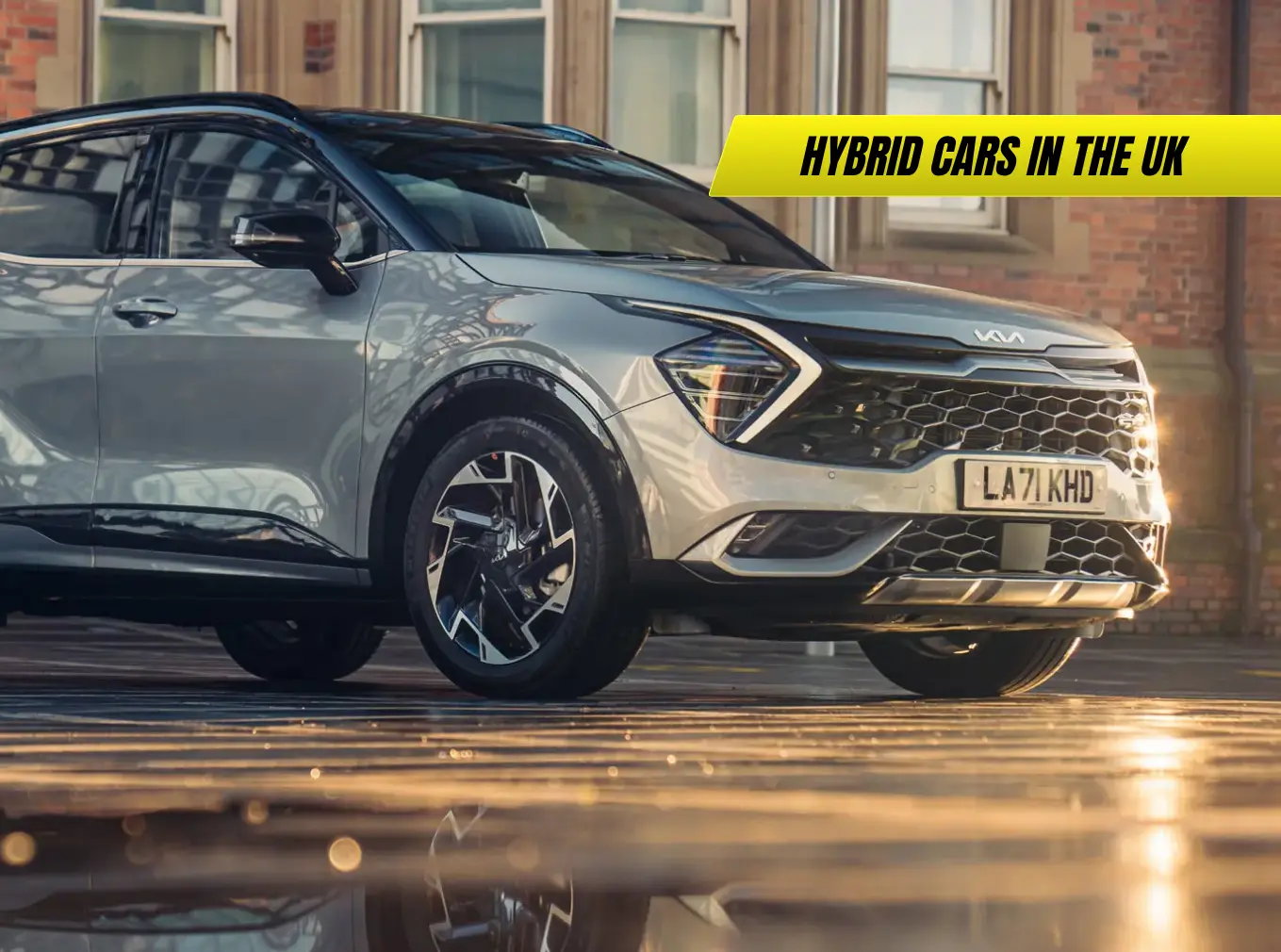
Hybrid cars now account for a substantial share of UK new car sales — and the choice across self-charging, mild-hybrid, and plug-in configurations has never been broader. Whether you want to reduce fuel costs, access clean air zones, or simply enjoy a more refined driving experience, this guide identifies the strongest hybrid options across every segment and budget.
Key Points
- The Toyota Yaris Hybrid remains the benchmark compact self-charging hybrid from £24,175 — up to 68mpg combined
- The Renault Clio E-Tech is the strongest hybrid recommendation under £25,000 for urban-focused drivers
- The Nissan Qashqai e-Power leads the hybrid SUV segment for high-mileage families — up to 52mpg real-world
- The Volkswagen Golf eHybrid (PHEV) is the standout plug-in hybrid hatchback from £38,215
- The BMW 330e remains the benchmark executive PHEV with 40 miles electric range and full petrol capability
- The Chery Tiggo 8 Super Hybrid has emerged as the outstanding-value seven-seat PHEV from £33,545
Self-Charging Hybrids: The No-Compromise Choice
Self-charging hybrids — often called full hybrids or HEVs — recharge their battery through regenerative braking and the combustion engine. They require no plug, no home charger, and no change in routine. For drivers who cannot or do not want to manage charging, they deliver genuine efficiency improvements over standard petrol with zero additional infrastructure.
Best Compact Hybrid — Toyota Yaris Hybrid
The Yaris Hybrid is the most efficient and reliable compact hybrid on the UK market, and has been for several generations. The 2026 model with the 1.5-litre hybrid system delivers up to 68.9mpg combined — genuine real-world figures of 55–62mpg are consistently achieved in mixed driving, which significantly exceeds any equivalent petrol hatchback. Toyota’s hybrid system is the most proven in the mainstream market, with reliability data spanning over two decades.
Prices from: £24,175 | Economy: up to 68.9mpg | CO₂: from 93g/km
For a comprehensive preview of the upcoming Yaris update, our 2026 Toyota Yaris UK guidecovers all confirmed specification changes.
Best Supermini Hybrid — Renault Clio E-Tech
The Renault Clio E-Tech uses a unique multi-mode hybrid system — derived from Renault’s Formula E programme — that delivers up to 68.9mpg combined at a price from £24,395. The Clio’s hybrid system is particularly effective in urban use, where it operates in full-electric mode frequently enough to make a meaningful difference to fuel economy in city traffic.
The E-Tech’s smooth, gear-change-free operation in low-speed driving is a genuine driving experience advantage over conventional petrol alternatives. For urban and suburban drivers who cover mixed use, it is the compelling alternative to the Yaris at a comparable price point.
Prices from: £24,395 | Economy: up to 68.9mpg | Best for: Urban and mixed-use drivers
Best Hybrid for High Mileage — Toyota Corolla Hybrid
The Toyota Corolla in hatchback or Touring Sports estate body brings Toyota’s 2.0-litre hybrid system to the family car segment. With up to 56.5mpg combined — consistently achievable in real-world mixed driving — and Toyota’s outstanding reliability record across three decades of hybrid production, the Corolla is the rational choice for family drivers who cover high annual mileage and want the lowest possible fuel and maintenance costs.
The Touring Sports estate in particular — with 596 litres of boot space — combines the economy of a hybrid with practical family load capacity. Our Toyota Corolla Cross 2025 guidecovers the SUV variant for those who prefer that body style.
Prices from: £32,615 (hatchback) | Economy: up to 56.5mpg | Best for: High-mileage family drivers
Plug-In Hybrids: The Case for Charging
PHEVs carry a larger battery — typically 12–25kWh — that can be charged from the mains. When charged regularly, they operate primarily on electric power for urban commutes (typically 30–75 miles electric range) and switch to petrol for longer journeys. For drivers with home charging who commute up to 40 miles daily, a PHEV can achieve genuine real-world economy of 100mpg-equivalent or better.
The new 1.5p per mile PHEV road tax levy introduced in 2026 adds approximately £150–£225 per year to PHEV running costs for average mileage drivers — this should be factored into ownership calculations.
Best PHEV Hatchback — Volkswagen Golf eHybrid
The Golf eHybrid delivers 87 miles of WLTP electric range — the longest in the mainstream PHEV hatchback segment — from a 19.7kWh battery. For drivers who commute up to 50 miles daily and charge overnight, the Golf eHybrid operates as a pure-electric car on virtually every weekday journey, with the 1.5-litre petrol engine reserved for longer weekend trips.
At £38,215 in Life trim, it is not inexpensive. But the combination of the Golf’s benchmark driving dynamics, the class-leading electric range, and the genuine fuel cost advantage for home-charging drivers makes it the strongest PHEV hatchback recommendation in 2026.
Prices from: £38,215 | Electric range: 87 miles WLTP | CO₂: from 19g/km
Best PHEV Executive — BMW 330e
The BMW 330e combines a 2.0-litre petrol engine with a 12kWh battery delivering 40 miles of electric range — sufficient for most urban daily commutes. In petrol mode it is a fully capable and engaging executive saloon; in electric mode it is a near-silent, efficient town car. The combination is unusually seamless compared to less well-engineered PHEV alternatives.
The 330e’s low Benefit-in-Kind rate — 8% BiK on a zero-emission car equivalent; PHEVs with electric range over 30 miles attract favourable BiK — makes it a particularly strong company car choice.
Prices from: £42,845 | Electric range: 40 miles WLTP | BiK rate: Favourable for company car drivers
Best Value 7-Seat PHEV — Chery Tiggo 8 Super Hybrid
The Chery Tiggo 8 Super Hybrid has been one of 2026’s most significant UK market arrivals. At £33,545 it offers a seven-seat plug-in hybrid SUV with up to 75 miles of WLTP electric rangeand a genuinely premium interior specification — at a price that undercuts every equivalent seven-seat PHEV from European and Japanese brands by a substantial margin.
Carwow awarded it both Hybrid Hero and Car of the Year 2026 — recognition of how significantly it disrupts the segment’s value equation. The caveat for UK buyers is the relative newness of the Chery dealer and service network compared to established brands; warranty terms (5 years/60,000 miles) partially mitigate this concern.
Prices from: £33,545 | Electric range: 75 miles WLTP (approx. 60 miles real-world) | Seats: 7
Best Hybrid Cars at a Glance
| Model | Type | Price From | Economy/Range | Best For |
|---|---|---|---|---|
| Toyota Yaris Hybrid | Self-charging HEV | £24,175 | 68.9mpg | Reliability and economy |
| Renault Clio E-Tech | Self-charging HEV | £24,395 | 68.9mpg | Urban drivers |
| Toyota Corolla Touring Sports | Self-charging HEV | £34,175 | 56.5mpg | High-mileage families |
| Nissan Qashqai e-Power | Series hybrid | £34,860 | 50mpg+ real-world | SUV high mileage |
| VW Golf eHybrid | PHEV | £38,215 | 87 miles electric | Daily EV commuters |
| BMW 330e | PHEV | £42,845 | 40 miles electric | Company car drivers |
| Chery Tiggo 8 Super Hybrid | PHEV | £33,545 | 75 miles electric | 7-seat value |
FAQ
What is the difference between a mild hybrid, full hybrid, and PHEV?
A mild hybrid (MHEV) uses a small 48V battery to assist the engine briefly but cannot drive on electricity alone. A full hybrid (HEV) can drive short distances on electricity only and recharges itself through regenerative braking. A PHEV has a much larger battery that can be charged from the mains, offering 20–90 miles of pure electric range.
Which hybrid car has the best real-world fuel economy in the UK?
The Toyota Yaris Hybrid and Renault Clio E-Tech both achieve the highest official figure at 68.9mpg. In real-world UK mixed driving, consistent 55–62mpg is achievable — significantly above any comparable petrol.
Do I need to plug in a self-charging hybrid?
No — self-charging hybrids recharge through regenerative braking and the engine. They never need a plug or external charging. The trade-off is a smaller battery and less electric-only range than a PHEV.
Is a PHEV worth it if I cannot charge at home?
No — if you cannot charge at home, a PHEV is simply a heavier, more expensive petrol car. The economy benefit of a PHEV depends entirely on regular charging; without it, the larger battery adds weight and cost with no benefit. A self-charging full hybrid is the better choice for drivers without home charging.
Which hybrid has the best seven-year warranty?
Kia offers the class-leading seven-year, 100,000-mile warranty on all models including hybrids — the Kia Niro HEV and Kia Sportage Hybrid are the primary beneficiaries in the hybrid segment. Hyundai offers five years; Toyota and Lexus offer five years with hybrid battery covered for eight years.





