
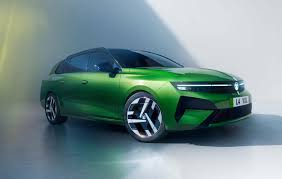
All‑new or heavily updated compact hatchbacks are fighting for the same British buyer: someone who needs a car that works for the school run, the commute, the big shop and the odd motorway run to visit family. The 2026 Vauxhall Astra steps into this space with a much bolder design, a tech‑heavy cabin and a full mix of petrol, diesel, hybrid and electric options. It is no longer just a budget alternative to the Volkswagen Golf – it is a serious contender in its own right.
2026 Vauxhall Astra: key points
- Available with petrol, diesel, mild‑hybrid, plug‑in hybrid and full‑electric powertrains.
- Electric Astra offers a usable real‑world range suitable for typical UK weekly driving.
- Interior features a dual‑screen digital cockpit with strong connectivity and driver‑assist tech.
- Boot space and practicality are competitive with other leading family hatchbacks.
- Pricing typically undercuts the most premium rivals at similar equipment levels, boosting value.
Astra 2026 overview for the UK market
In the UK, the car is sold as the Vauxhall Astra, tailored specifically for British buyers with right‑hand drive, UK‑specific trims and finance offers. The latest version brings a sharper exterior design with a bold front “visor” look, slimmer lights and a generally more planted stance on the road.
From a UK buyer’s perspective, the Astra now feels like a modern, well‑equipped hatch rather than a fleet‑only compromise. It sits squarely in the same space as the Volkswagen Golf, Toyota Corolla, Mazda 3, Hyundai i30 and Peugeot 308 – and finally has the technology and powertrain range to match them.
Engines, performance and efficiency
The 2026 Astra range is unusually broad for this class, giving UK drivers several distinct choices. Typical line‑up structure:
- Petrol and mild‑hybrid petrol
- Small‑capacity turbo engines around 1.2 litres with power outputs roughly in the 120–140 hp region.
- Manual and automatic transmissions.
- Good blend of real‑world economy and performance for mixed city–motorway use.
- Diesel
- Around 1.5 litres and roughly 130 hp.
- Best suited to very high annual mileage, especially long motorway runs.
- Strong fuel economy and reasonable torque for cruising.
- Plug‑in hybrid (PHEV)
- Petrol engine paired with an electric motor and a medium‑size battery.
- Combined power approaching 200 hp, with brisk acceleration.
- Electric‑only range suitable for typical daily commutes if you charge at home or work.
- Astra Electric
- Single electric motor around the mid‑100 hp range.
- Battery capacity in the high‑50 kWh area.
- Official range in the region of the high‑200s miles, which is more than enough for most daily UK needs.
In my experience, the plug‑in hybrid and full‑electric versions are the most future‑proof for UK drivers, particularly if you regularly drive into low‑emission zones or want to keep running costs predictable. The diesel still makes sense for heavy motorway users, but for many private owners a good mild‑hybrid petrol will be simpler and more than efficient enough.
A good visual accompaniment would be a comparison chart showing estimated annual running costs for Astra petrol, diesel, PHEV and EV at different annual mileages, using typical UK fuel and electricity prices.
Dimensions, space and practicality
The Astra sits right in the heart of the family hatchback class in terms of size:
- Overall length a little over 4.3 metres.
- Width just under 1.9 metres including mirrors.
- Wheelbase around 2.7 metres.
Boot space is roughly in the low‑400‑litre range with the rear seats up, depending on version, and expands well beyond 1,200 litres with seats folded. That puts it in line with or slightly ahead of several rivals and makes it perfectly capable of handling:
- Weekly supermarket trips.
- Family holidays with luggage.
- Everyday life with pushchairs, bags and sports gear.
Rear‑seat space is adequate for adults and children, with enough room for two adults in comfort and a third at a pinch. For most UK families with one or two children, the Astra will feel entirely usable as a primary car.
Interior, tech and comfort
Inside, the 2026 Astra focuses on a modern, digital experience:
- A large central touchscreen for infotainment, navigation and smartphone mirroring.
- A digital instrument cluster for speed, driver info and navigation prompts.
- Physical controls retained in key areas so you are not forced to dig through menus for every function.
Material quality has improved significantly compared with older Astras, with soft‑touch areas in the main contact points and a generally cleaner layout. It may still fall slightly short of the very best in class for outright perceived quality, but it now feels competitive rather than “cheap”.
From my point of view, the Astra’s cabin represents one of its biggest step‑forwards: the layout is easy to understand, the driving position is good, and the tech is approachable even for less tech‑savvy drivers.
This is also where you can naturally insert internal links to guides on warning lights (such as spanner, handbrake and AdBlue warning lights) and basic maintenance – exactly the kind of knowledge new Astra owners will want when various symbols start appearing on the digital cluster.
Driving experience: ride, handling and refinement
On the road, the Astra aims for a middle ground:
- Ride comfort: well suited to typical UK surfaces, soaking up most bumps without feeling overly soft.
- Handling: stable and predictable, with safe understeer at the limit rather than sharp oversteer.
- Noise levels: road and wind noise are generally well suppressed, especially on higher trims and with smaller wheels.
It is not the most playful hatchback in the segment – that title often goes to cars like the Mazda 3 or Ford Focus – but it feels secure and calm, which is arguably more important for a family car. The electric and plug‑in hybrid versions benefit from smooth, instant torque delivery and quieter running, especially in town.
A radar‑style comparison graphic would work well here, plotting Astra against a couple of rivals (for example, Golf and Corolla) on comfort, handling, tech, space and value.
Ownership, tax and UK‑specific factors
British drivers have to think beyond list price, and the Astra’s powertrain mix helps here:
- Road tax / VED: lower‑emission versions, especially plug‑in hybrid and electric, will typically sit in more favourable tax bands than older, higher‑CO₂ petrol or diesel models.
- ULEZ and clean‑air zones: plug‑in and electric Astra variants are better positioned for driving in and around cities with stricter emission standards, helping reduce or avoid potential daily charges.
- Insurance: mid‑range hatchbacks like Astra usually sit in moderate insurance groups; electrified versions may vary depending on power and repair costs.
This section is ideal for internal links to content on UK toll roads and charges, best plug‑in hybrid cars for British drivers, and UK driving licence points and speed camera rules, as buyers of compact hatchbacks are often regular commuters or motorway users.
How the Astra fits against its rivals
Against the backdrop of the wider segment, the Astra plays a clear role:
- It offers a wider electrified choice than some rivals that still rely heavily on pure petrol or simple hybrids.
- It is generally more affordable than the most premium entries at a similar specification level.
- It is more modern and better equipped than many older designs still hanging around in the sector.
A simple comparison table helps place it:
| Car | Key strengths | Potential weaknesses |
|---|---|---|
| Astra | Wide powertrain range, good value, tech | Not quite class‑leading for interior polish |
| Golf | Refinement, image, resale value | Higher price, conservative character |
| Corolla | Hybrid efficiency, reliability | Less choice in powertrains, conservative feel |
| Mazda 3 | Driving fun, cabin quality | Smaller boot, fewer electrified options |
For UK buyers cross‑shopping across these models, Astra is particularly appealing if you want strong equipment levels, modern tech and the option to go plug‑in or fully electric without moving to an SUV.
FAQs
Is the 2026 Vauxhall Astra a good choice for UK families?
Yes. It offers a practical boot, decent rear space, modern safety tech and a composed ride, making it well suited to family use in towns and on the motorway.
Which Astra engine should I choose?
If you mostly drive short distances and can charge at home, the plug‑in hybrid or Astra Electric make a lot of sense. For mixed driving without home charging, a mild‑hybrid petrol is a strong all‑rounder, while the diesel still works well for very high annual motorway mileage.
How does Astra’s interior compare to older models?
The latest Astra’s cabin is a big improvement, with a contemporary dual‑screen layout, cleaner design and better materials than before. It feels like a modern car rather than a fleet leftover.
Is the Astra comfortable on UK roads?
Yes. Suspension tuning aims squarely at comfort and stability, coping well with rough surfaces and offering a relaxed feel on longer journeys.
Is Astra a good alternative to a Golf?
For many buyers, yes. The Golf still has an edge in perceived quality and brand image, but the Astra fights back with stronger value, a wider range of electrified powertrains and very competitive practicality.
Se vuoi, il prossimo pezzo può essere dedicato a un confronto completo Astra vs Golf, oppure passare a un modello diverso (Mazda 3, Corolla, i30, 308, Megane, Golf vs Focus) mantenendo esattamente questo stile.





