
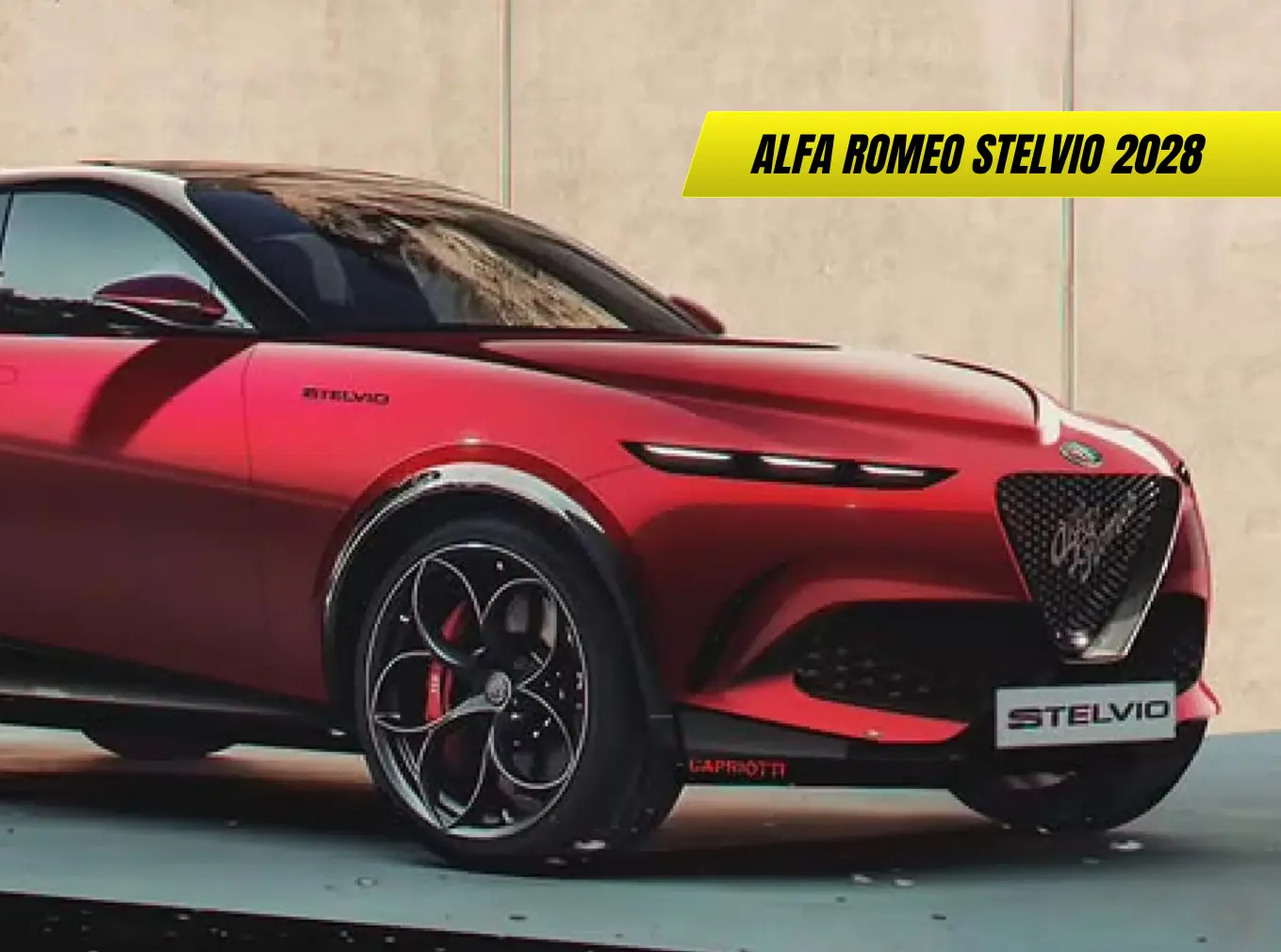
Alfa Romeo’s second-generation Stelvio faces a critical strategic decision that will define its character when UK deliveries begin in 2028: whether to utilise the refined Giorgio Evo platform with combustion engines or shift to Stellantis’ STLA Large electric architecture. Recent Italian media reports suggest Alfa Romeo may prioritise the Giorgio Evo route with petrol and diesel powertrains to maintain the brand’s sporting DNA and driver engagement, potentially relegating full electrification to a later mid-cycle update or separate model variant entirely.
Alfa Romeo Stelvio 2028 caught between Giorgio Evo platform with combustion engines or STLA Large electric architecture. UK launch timeline and specifications preview.
Key Points:
- 2028 UK launch confirmed following multiple delays pushing the second-generation model back from original 2026-2027 timeline to allow platform decision finalisation
- Giorgio Evo platform favoured by Alfa Romeo engineers prioritising rear-wheel-drive dynamics, lightweight construction, and proven combustion engine compatibility
- STLA Large alternative remains viable offering pure electric capability with 500+ mile range, 800V architecture, and multi-energy flexibility including hybrid options
- Combustion engines likely retained with turbocharged 2.0-litre petrol (280hp) and potentially 2.2-litre diesel maintaining Alfa Romeo’s traditional powertrain philosophy
- Plug-in hybrid technology possible combining combustion engines with electric motors for 350-400hp total output and sub-50g/km CO2 emissions
- Giulia sedan shares platform uncertainty with both models now delayed to 2028 whilst Stellantis evaluates market demand and production capacity allocation
The Platform Dilemma: Giorgio Evo vs STLA Large
The decision facing Alfa Romeo represents more than mere technical specification – it defines the brand’s philosophical direction for the next decade. Giorgio Evo represents the evolutionary refinement of the acclaimed Giorgio platform that underpins the current Stelvio and Giulia, praised globally for delivering engaging rear-wheel-drive dynamics that rival German premium competitors. This platform excels with combustion engines where Alfa Romeo’s engineering expertise lies, maintaining the brand’s sporting character through balanced weight distribution, sophisticated suspension geometry, and precise steering calibration.
STLA Large, by contrast, represents Stellantis’ ambitious bet on electrification across its premium brands including Alfa Romeo, Maserati, and potentially Lancia. This dedicated electric architecture promises over 500 miles of range from batteries exceeding 100kWh capacity, 800-volt electrical systems enabling ultra-fast charging, and the instant torque delivery that electric powertrains provide. However, critics worry that STLA Large’s heavier battery packs and fundamental electric-first engineering compromise the lightweight agility that defines Alfa Romeo’s character.
From my point of view, this dilemma reflects broader industry uncertainty about electrification timelines and consumer acceptance. Alfa Romeo witnessed disappointing sales results for the Tonale plug-in hybrid SUV, which struggled to meet ambitious targets despite competitive pricing and attractive design. This commercial reality suggests UK buyers may not embrace full electrification as quickly as regulators and environmental campaigners anticipate, making combustion-focused Giorgio Evo the safer strategic choice for maintaining profitability.
Giorgio Evo: Proven Platform with Combustion Excellence
Giorgio Evo represents the refined evolution of the Giorgio architecture introduced in 2016 with the Giulia sedan. The platform’s lightweight aluminium-intensive construction delivers exceptional rigidity whilst minimising mass – critical for the dynamic responsiveness that enthusiast drivers prioritise. The longitudinal engine mounting supports rear-wheel drive or all-wheel-drive configurations, with power distributed through sophisticated torque-vectoring systems that maximise traction and cornering stability.
Recent reports from Italian automotive media suggest Alfa Romeo engineers strongly favour Giorgio Evo for the next-generation Stelvio, arguing it better preserves the brand’s sporting character whilst accommodating proven turbocharged petrol and diesel engines already developed and validated. The platform can also integrate plug-in hybrid technology, combining combustion engines with rear-mounted electric motors to deliver 350-400hp total output whilst achieving sub-50g/km CO2 emissions that qualify for reduced UK VED road tax and company car taxation.
The Giorgio Evo route also offers significant cost advantages. Development expenses remain substantially lower than creating all-new STLA Large variants, manufacturing complexity decreases through shared components with existing models, and the supply chain leverages established relationships rather than requiring new battery and electric motor suppliers. For Stellantis executives under pressure to improve profitability, these financial considerations carry significant weight in platform selection decisions.
STLA Large: Electric Future with Multi-Energy Flexibility
STLA Large represents Stellantis’ most advanced electric vehicle architecture, designed specifically for premium and performance applications requiring maximum range and capability. The platform supports battery capacities from 101kWh to over 118kWh, delivering WLTP ranges exceeding 500 miles in optimal conditions – substantially more than current electric SUV competitors including the BMW iX3, Mercedes EQC, and Tesla Model X.
The 800-volt electrical architecture enables DC fast charging up to 350kW, allowing 10-80% charging in under 20 minutes at suitable rapid chargers. Three electric motor configurations provide flexibility: single rear motor for efficiency-focused variants, dual motors for all-wheel-drive capability, and tri-motor setups delivering hypercar-level performance exceeding 600hp. Advanced battery chemistry utilises nickel-cobalt-manganese cells optimised for energy density, longevity, and thermal stability even during sustained high-performance driving.
Crucially, STLA Large maintains multi-energy flexibility despite its electric-first design philosophy. The platform can accommodate range-extender combustion engines, plug-in hybrid configurations combining traditional engines with large battery packs, and even hydrogen fuel cell technology if that alternative gains commercial viability. This flexibility provides insurance against market uncertainty – if UK buyers prove reluctant to embrace full electrification, Alfa Romeo can offer hybrid alternatives without requiring entirely separate architectures.
Current Stelvio UK Performance and Market Position
The outgoing first-generation Stelvio has carved a distinctive niche in the UK’s premium SUV market since its 2017 launch, praised for delivering driver engagement that German rivals sacrifice in pursuit of comfort and refinement. Current UK pricing starts at approximately £42,000 for the base 2.0-litre turbocharged petrol producing 280hp, rising to £48,000-£52,000 for the 2.2-litre diesel with 210hp and impressive fuel economy exceeding 45mpg combined.
The range-topping Stelvio Quadrifoglio represents Alfa Romeo’s performance flagship, featuring a Ferrari-derived 2.9-litre twin-turbo V6 producing 510hp and 443 lb-ft of torque. With 0-60mph achieved in just 3.6 seconds and a top speed of 176mph, the Quadrifoglio delivers genuine supercar performance wrapped in practical SUV packaging. UK pricing exceeds £75,000, positioning it against the BMW X3 M Competition, Mercedes-AMG GLC 63, and Porsche Macan Turbo.
However, sales volumes remain modest compared to German rivals. The Stelvio’s distinctive Italian character attracts enthusiasts who prioritise driving engagement over mainstream appeal, but this narrow focus limits commercial success. Stellantis executives hope the second-generation model will broaden appeal whilst maintaining sporting credentials – a delicate balance that the platform decision directly influences. Those comparing current options should explore alternatives including best SUVs under £40k and best Chinese SUVs for broader market context.
Expected Powertrains: Combustion, Hybrid, and Electric Options
If Alfa Romeo selects Giorgio Evo platform, expect powertrain lineups closely mirroring the current Stelvio with evolutionary refinements. The base model will likely feature a turbocharged 2.0-litre four-cylinder petrol producing 280-300hp, paired with an eight-speed automatic transmission driving either rear wheels or all four through an advanced torque-vectoring system. Fuel economy should improve to 35-38mpg combined through mild-hybrid technology, reducing CO2 emissions below 180g/km for more favourable UK VED taxation.
A 2.2-litre turbocharged diesel remains possible for European markets including the UK where diesel retains strong acceptance for high-mileage drivers. Output around 210-230hp with 350+ lb-ft of torque would deliver effortless motorway cruising with combined fuel economy exceeding 45mpg – substantially superior to petrol alternatives for drivers covering 15,000+ annual miles. However, increasingly stringent emissions regulations and the UK government’s stated ambition to phase out new combustion vehicle sales by 2035 may ultimately force diesel’s deletion from the lineup.
Plug-In Hybrid: Bridging Combustion and Electric
A plug-in hybrid Stelvio combining the 2.0-litre petrol engine with a rear-mounted electric motor and battery pack exceeding 15kWh capacity would deliver compelling benefits for UK company car drivers. Total system output around 350-400hp would provide strong performance with 0-60mph times under 5.5 seconds, whilst electric-only range exceeding 40 miles allows zero-emission commuting for most daily journeys.
CO2 emissions below 50g/km would qualify for just 8-12% Benefit-in-Kind company car taxation – dramatically lower than the 30-37% applicable to pure combustion variants. For higher-rate taxpayers, this difference saves approximately £4,000-£6,000 annually, making the plug-in hybrid’s £8,000-£10,000 price premium economically justifiable within 18-24 months. Those exploring hybrid options should also consult our comprehensive guide to best plug-in hybrid cars UK for broader market comparison.
Electric Stelvio: STLA Large Performance Potential
If Alfa Romeo ultimately embraces STLA Large architecture, the electric Stelvio would deliver transformational performance and capability. A dual-motor all-wheel-drive configuration producing 400-450hp would accelerate from 0-60mph in under 4.5 seconds whilst maintaining over 350 miles of real-world range – competitive against the BMW iX3 and Mercedes EQC whilst undercutting the Tesla Model X on pricing.
The range-topping Quadrifoglio electric variant could exploit tri-motor configurations producing 600+ horsepower, rivalling the upcoming electric Porsche Macan Turbo and delivering hypercar-level acceleration below 3.5 seconds. However, battery weight exceeding 600kg would fundamentally alter the driving dynamics that define current Stelvio character, potentially alienating traditional Alfa Romeo enthusiasts who prioritise lightweight agility over straight-line acceleration.
From my experience, electric powertrains suit SUVs particularly well – the instant torque delivery improves drivability, the low centre of gravity from floor-mounted batteries enhances stability, and the refinement eliminates the transmission noise that plagues some combustion competitors. However, the 1,900-2,100kg kerb weights that electric SUVs typically carry compromise the nimble handling and responsive steering that Alfa Romeo loyalists cherish.
UK Launch Timeline: 2028 Confirmed After Multiple Delays
The second-generation Stelvio’s development timeline has suffered multiple delays over the past 24 months as Stellantis executives debated platform strategy, evaluated market demand projections, and allocated limited engineering resources across competing priorities. Original plans targeted 2026 launch dates, subsequently pushed to 2027, and now confirmed for 2028 alongside the replacement Giulia sedan that shares the same platform uncertainty.
These delays reflect broader challenges facing Stellantis as the automotive conglomerate integrates brands acquired through the PSA-FCA merger. Limited engineering resources must serve over a dozen brands spanning volume manufacturers (Peugeot, Citroën, Vauxhall, Fiat) through premium marques (Alfa Romeo, Maserati, Lancia) to American truck specialists (Ram, Jeep). Alfa Romeo competes for attention and investment against these established priorities, often losing out to higher-volume brands delivering stronger financial returns.
UK market launch will likely occur in late 2028, potentially coinciding with the crucial September registration plate change that traditionally drives strong new car sales in Britain. Order books should open in early-to-mid 2028, allowing customers to specify their preferred variant, colour, and equipment options ahead of delivery. I would recommend prospective buyers maintain contact with local Alfa Romeo dealers to receive updates as specifications and pricing are gradually confirmed through 2027.
Styling Evolution: Maintaining Alfa Romeo DNA
Regardless of platform selection, the second-generation Stelvio will maintain Alfa Romeo’s distinctive design language featuring the iconic Scudetto grille, aggressive proportions, and sculpted surfaces that differentiate it from German competitors’ more conservative aesthetics. The current model’s beautiful proportions – long bonnet, cab-rearward greenhouse, and muscular haunches – will carry forward with evolutionary refinements rather than revolutionary transformation.
Expect slimmer LED headlights incorporating advanced matrix technology for improved night-time visibility without dazzling oncoming traffic, digital lighting signatures that create distinctive visual identity both day and night, and aerodynamic refinements including active grille shutters and optimised underbody panels reducing drag coefficients to improve efficiency and high-speed stability. The rear will feature full-width LED taillights connected across the tailgate, following broader industry trends whilst maintaining Alfa Romeo’s distinctive character.
Interior quality represents a critical improvement opportunity. The current Stelvio’s cabin features attractive design but material quality and electronic interface usability lag behind German rivals, particularly at premium price points where UK buyers expect impeccable fit-and-finish. The next generation must deliver soft-touch surfaces throughout, high-quality switchgear with satisfying tactile feedback, and intuitive infotainment systems that don’t require owner’s manual consultation for basic functions.
UK Pricing Predictions and Market Positioning
Expected UK pricing for the 2028 Stelvio will likely start around £45,000-£48,000 for base petrol variants – representing modest inflation-adjusted increases over the outgoing model. Mid-range all-wheel-drive specifications should fall in the £50,000-£55,000 bracket, whilst range-topping Quadrifoglio variants (whether combustion V6 or electric tri-motor) will exceed £80,000 positioned against the BMW X3 M Competition and Porsche Macan Turbo.
If Alfa Romeo introduces plug-in hybrid variants, expect pricing around £55,000-£60,000 reflecting the additional powertrain complexity and battery costs. However, the dramatically lower company car taxation (8-12% vs 30-37% for combustion) makes the hybrid financially attractive for business users despite higher purchase prices. Pure electric versions on STLA Large platform would likely start around £58,000-£62,000, competitive against the BMW iX3 and Mercedes EQC whilst undercutting the Tesla Model X by meaningful margins.
| Expected Variant | Platform | Powertrain | Power | UK Price (Est.) |
|---|---|---|---|---|
| Stelvio 2.0T RWD | Giorgio Evo | 2.0 petrol | 280-300 hp | £45,000-£48,000 |
| Stelvio 2.0T Q4 AWD | Giorgio Evo | 2.0 petrol | 280-300 hp | £50,000-£53,000 |
| Stelvio 2.2D Q4 AWD | Giorgio Evo | 2.2 diesel | 210-230 hp | £52,000-£55,000 |
| Stelvio PHEV Q4 | Giorgio Evo | 2.0 + electric | 350-400 hp | £55,000-£60,000 |
| Stelvio Electric AWD | STLA Large | Dual motor | 400-450 hp | £58,000-£62,000 |
| Quadrifoglio V6/Electric | Either | V6 or tri-motor | 510-600 hp | £80,000-£90,000 |
These pricing predictions position the Stelvio competitively within the premium SUV segment whilst maintaining modest premiums over mainstream alternatives. Understanding UK regulations including UK toll roads and charges and speed camera regulations remains essential for all motorists regardless of vehicle choice.
Giulia Sedan: Sharing Platform Uncertainty
The replacement Giulia sedan faces identical platform uncertainty as the Stelvio, with both models now confirmed for simultaneous 2028 launch. The current Giulia has earned widespread critical acclaim for its exceptional driving dynamics that genuinely rival the BMW 3 Series and Mercedes C-Class, yet commercial success remains elusive with UK sales volumes substantially below German competitors.
The next-generation Giulia must balance broader mainstream appeal against preserving the driver engagement that defines Alfa Romeo character. If Giorgio Evo platform is selected, expect powertrain lineups closely mirroring the Stelvio with turbocharged 2.0-litre petrol, potential 2.2-litre diesel, plug-in hybrid, and range-topping Quadrifoglio variants. The sedan’s lower weight and superior aerodynamics should deliver improved fuel economy and performance compared to the taller, heavier Stelvio SUV.
STLA Large architecture would position the electric Giulia as a direct BMW i4 and Mercedes EQE competitor, offering over 400 miles of range with sophisticated handling dynamics that leverage the platform’s low centre of gravity. However, the fundamental question remains whether traditional Alfa Romeo buyers will embrace full electrification or prefer combustion powertrains that maintain emotional connections through engine sound, throttle response, and the visceral engagement that defines the current model’s appeal.
UK Road Tax and Running Cost Implications
Road tax calculations vary dramatically depending on which platform and powertrains Alfa Romeo ultimately selects. Combustion-powered Stelvio variants with CO2 emissions exceeding 160g/km will incur annual VED rates around £265-£295, plus the £410 premium supplement for vehicles exceeding £40,000 list price during the first five years. This means total annual road tax of £675-£705 for years 1-5, dropping to £265-£295 thereafter – substantial ongoing costs that favour electric or plug-in hybrid alternatives.
Plug-in hybrid variants achieving sub-50g/km CO2 emissions qualify for reduced VED rates around £170 annually, plus the same £410 premium supplement totalling £580 for years 1-5. However, the company car tax advantages prove far more significant – just 8-12% BIK taxation versus 30-37% for combustion variants saves higher-rate taxpayers approximately £4,000-£6,000 annually, making the plug-in hybrid’s higher purchase price economically justifiable within two years for business users.
Pure electric Stelvio variants on STLA Large platform would pay just £10 annual VED plus the £410 premium supplement totalling £420 for years 1-5, dropping to £10 thereafter. Company car drivers enjoy just 2% BIK taxation – the absolute minimum available – saving approximately £7,000-£9,000 annually compared to combustion equivalents. These dramatic tax advantages make electric variants overwhelmingly attractive for business users despite higher purchase prices and range anxiety concerns.
What This Means for UK Alfa Romeo Enthusiasts
The platform decision facing Alfa Romeo represents an existential choice that will define the brand’s character and commercial viability for the next decade. Giorgio Evo platform preserves the sporting DNA and driver engagement that traditional enthusiasts cherish, maintaining combustion powertrains that deliver emotional connections impossible with electric alternatives. However, this conservative approach risks positioning Alfa Romeo as a nostalgic brand for ageing enthusiasts rather than attracting younger buyers who prioritise environmental credentials and cutting-edge technology.
STLA Large platform embraces electrification and positions Alfa Romeo as a progressive premium brand competing on equal technological footing against German rivals and emerging Chinese competitors. The platform’s exceptional range capability, ultra-fast charging, and tri-motor performance potential could deliver genuinely compelling products that broaden Alfa Romeo’s appeal beyond its traditional niche. However, battery weight and electric powertrains fundamentally alter the lightweight, nimble character that defines current models’ appeal.
From my point of view, Alfa Romeo should pursue a dual-track strategy: launch the 2028 Stelvio and Giulia on Giorgio Evo platform with combustion and plug-in hybrid powertrains serving traditional customers and high-mileage drivers, whilst simultaneously developing pure electric variants on STLA Large platform arriving 12-18 months later for buyers prioritising zero-emission capability. This approach maximises flexibility, serves diverse customer needs, and provides insurance against market uncertainty that makes single-platform strategies increasingly risky.
UK buyers passionate about Alfa Romeo’s distinctive Italian character should remain engaged with the brand through this transitional period. The 2028 Stelvio – regardless of platform selection – will deliver the beautiful design, sophisticated handling, and emotional appeal that differentiate Alfa Romeo from German mainstream competitors. Those considering current purchases should explore alternatives including the Nissan Qashqai e-Power for hybrid efficiency, or premium options covered in our guides to diesel SUVs for high-mileage requirements.
Frequently Asked Questions
When will the new Alfa Romeo Stelvio launch in the UK?
The second-generation Alfa Romeo Stelvio is confirmed for 2028 UK launch, following multiple delays from original 2026-2027 targets. Order books should open in early-to-mid 2028 with customer deliveries commencing late 2028, potentially around the September registration plate change.
Which platform will the 2028 Stelvio use?
Recent Italian media reports suggest Alfa Romeo favours the refined Giorgio Evo platform with combustion engines over Stellantis’ STLA Large electric architecture, prioritising the brand’s traditional rear-wheel-drive dynamics and driver engagement over full electrification.
Will the next Stelvio be electric only?
No, current indications suggest the 2028 Stelvio will offer turbocharged petrol engines, potentially diesel, and likely plug-in hybrid options if Giorgio Evo platform is selected. Pure electric variants on STLA Large platform may arrive as separate models or mid-cycle additions later in the product lifecycle.
How much will the 2028 Alfa Romeo Stelvio cost in the UK?
Expected UK pricing should start around £45,000-£48,000 for base petrol variants, rising to £50,000-£55,000 for all-wheel-drive specifications and exceeding £80,000 for range-topping Quadrifoglio performance versions whether combustion V6 or electric tri-motor.
What engines will be available in the new Stelvio?
If Giorgio Evo platform is selected, expect turbocharged 2.0-litre petrol (280-300hp), potentially 2.2-litre diesel (210-230hp), plug-in hybrid combining 2.0 petrol with electric motor (350-400hp), and Quadrifoglio performance variant with V6 or electric motors producing 510-600hp.
Why has the Stelvio been delayed to 2028?
Multiple factors contributed including platform strategy debates between Giorgio Evo and STLA Large, limited Stellantis engineering resources serving over a dozen brands, market demand uncertainty around electrification timelines, and production capacity allocation challenges across the global manufacturing network.
How does Giorgio Evo differ from STLA Large platform?
Giorgio Evo represents the refined evolution of Alfa Romeo’s existing rear-wheel-drive platform optimised for combustion engines and plug-in hybrids, whilst STLA Large is Stellantis’ dedicated electric architecture offering 500+ mile range, 800V charging, and tri-motor performance but heavier battery packs that may compromise Alfa Romeo’s lightweight sporting character.
The second-generation Alfa Romeo Stelvio’s platform dilemma encapsulates the broader challenges facing traditional sporting brands during the automotive industry’s electric transition. The tension between preserving character and embracing progress forces uncomfortable compromises that satisfy neither traditional enthusiasts nor progressive environmentalists completely.
Giorgio Evo platform represents the safer commercial choice – proven technology, lower development costs, and combustion powertrains that serve Alfa Romeo’s core enthusiast audience and high-mileage drivers for whom electric vehicles remain impractical. The platform’s plug-in hybrid capability provides a credible bridge toward electrification without sacrificing the lightweight agility and balanced dynamics that define Alfa Romeo’s sporting character.
However, this conservative approach risks relegating Alfa Romeo to niche status as German rivals and Chinese newcomers dominate the electric premium SUV segment with technologically advanced products delivering exceptional range, performance, and charging capability. STLA Large platform would position Alfa Romeo competitively in this emerging landscape, though battery weight and electric powertrains fundamentally alter the driving experience that traditional customers cherish.
UK buyers seeking distinctive Italian style combined with engaging driving dynamics should monitor Alfa Romeo’s platform decision closely through 2026-2027 as final specifications emerge. The 2028 Stelvio will deliver beautiful design and sophisticated handling regardless of architecture, but the powertrain selection will determine whether it appeals primarily to traditional enthusiasts or attracts new customers prioritising environmental credentials and cutting-edge technology. For those requiring SUVs sooner, alternatives covered in our best SUVs under £40k guide provide immediate solutions whilst Alfa Romeo navigates this critical transitional period.





