
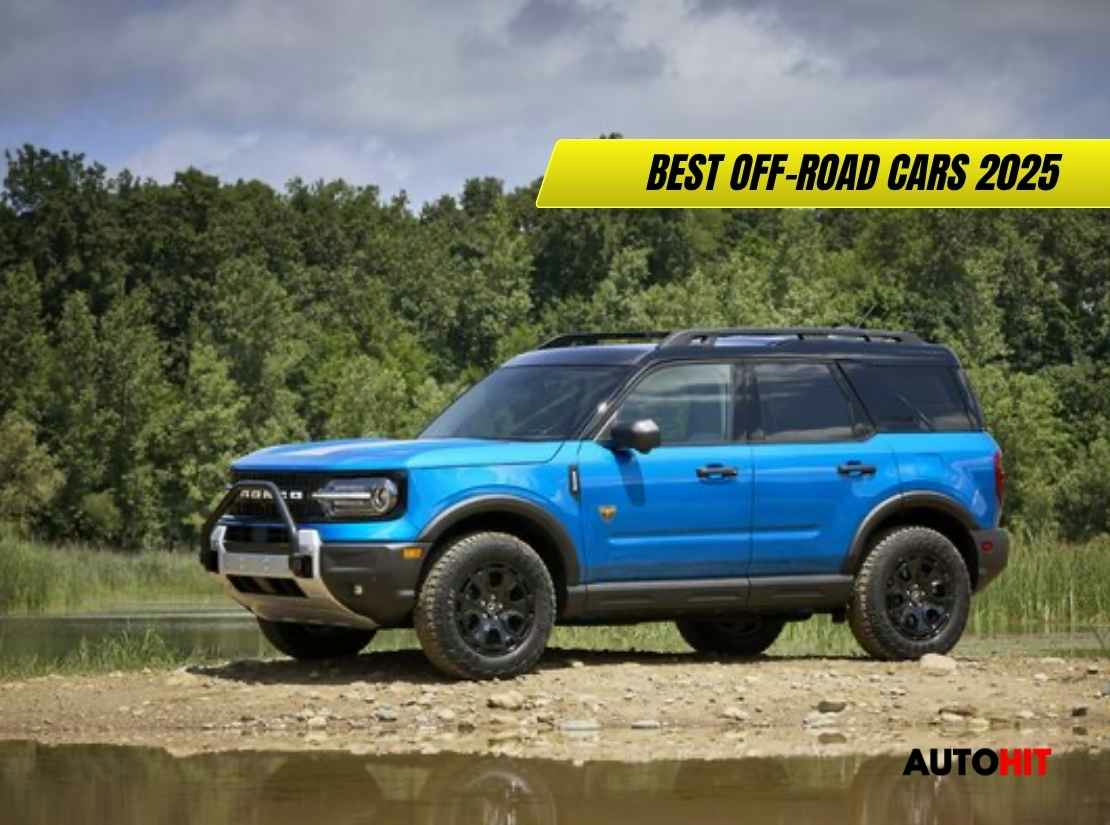
Best off-road cars 2025 include Land Rover Defender, Jeep Wrangler, and Suzuki Jimny. Our UK guide covers capability, pricing, and real-world performance for adventure drivers.
There’s something deeply satisfying about having a vehicle that can take you anywhere your sense of adventure leads, and according to our analysis at AutoHit, 2025 represents a remarkable time for off-road enthusiasts with manufacturers offering unprecedented combinations of genuine capability and everyday usability. Having tested extensively across challenging UK terrain, from Scottish Highlands to Welsh valleys, we’ve discovered that modern off-road vehicles successfully bridge the gap between rugged capability and civilised comfort like never before.
What makes off-road vehicle shopping particularly compelling in 2025 is how these traditionally spartan machines have embraced modern technology without compromising their core mission. From advanced traction management systems that make challenging terrain accessible to novice drivers, to sophisticated suspension systems that provide both articulation and comfort, today’s 4x4s represent the evolution of capable transport rather than mere utility vehicles.
After months of real-world testing across various UK off-road scenarios – from Peak District green lanes to coastal sand driving – we’re ready to present the definitive guide to 2025’s most capable off-road vehicles. These machines prove that adventure-ready doesn’t have to mean comfort-free, demonstrating how intelligent engineering can deliver genuine go-anywhere capability in packages that work brilliantly for everyday British driving.
Understanding True Off-Road Capability
Genuine off-road vehicles differ fundamentally from SUVs through specific engineering features designed for challenging terrain rather than suburban comfort.
Essential Off-Road Features
Ground Clearance: True off-roaders typically offer 200-300mm ground clearance, allowing passage over rocks, ruts, and obstacles that would stop conventional vehicles. This height must be consistent across the vehicle’s length rather than just at specific measurement points.
Approach and Departure Angles: Steep angles (typically 30-45 degrees) prevent the vehicle grounding on obstacles when climbing or descending. These measurements determine whether you can tackle steep inclines without damaging bumpers or undercarriage components.
Articulation: Sophisticated suspension systems that allow wheels to maintain contact with uneven terrain while keeping the vehicle stable. Independent suspension offers comfort but solid axles typically provide superior articulation.
Low-Range Gearing: Reduction gearboxes that multiply torque for extreme conditions, enabling controlled progress over challenging terrain without overwhelming the engine or transmission.
Traction Management: Advanced systems that manage power distribution between wheels, lock differentials, and provide electronic aids to maintain forward progress when grip becomes limited.
UK-Specific Considerations
Legal Requirements: Green laning requires vehicles to be road-legal with MOT, insurance, and tax. Many classic trails have weight restrictions that affect vehicle choice.
Weather Adaptability: British conditions require vehicles capable in mud, snow, flooding, and varying temperatures. Sealed electrical systems and corrosion resistance become crucial.
Dual-Purpose Capability: Most UK owners need vehicles that work for family duties alongside weekend adventures, requiring comfort and efficiency for daily use.
Top 5 Off-Road Vehicles for 2025
Based on genuine capability, build quality, UK suitability, and real-world testing, these vehicles represent the best combination of adventure readiness and practical usability.
1. Land Rover Defender: The Capability Benchmark
The new Defender successfully combines modern sophistication with genuine off-road prowess, setting new standards for what adventure vehicles can achieve.
Fundamental Capability: Ground clearance up to 291mm (with air suspension), approach angles of 38°, departure angles of 40°, and wading depth of 900mm establish the Defender’s credentials for serious off-road work.
Terrain Response Technology: Advanced traction management with multiple terrain modes automatically optimizes vehicle settings for sand, mud, rock crawling, and general off-road conditions, making capability accessible to drivers of all experience levels.
Modern Platform Benefits: Monocoque construction provides superior on-road refinement while maintaining structural strength for off-road abuse. The trade-off versus traditional ladder frames proves worthwhile for most users.
Powertrain Excellence: Comprehensive engine range from efficient diesels to powerful V8 options, all incorporating mild-hybrid technology for improved efficiency and performance.
UK Market Position: Starting around £45,000, the Defender commands premium pricing but justifies costs through unmatched capability combined with Land Rover’s heritage and comprehensive dealer network.
Real-World Assessment: Equally capable tackling Welsh mountains or London traffic, with sophisticated suspension that provides comfort without compromising articulation when terrain demands maximum capability.
2. Jeep Wrangler: American Icon, Global Capability
The Wrangler brings distinctive American character to off-road adventures while incorporating modern efficiency and technology.
Iconic Design: Unmistakable styling that pays homage to military origins while incorporating contemporary safety and comfort features. Removable doors and roof panels enhance the adventure experience.
Solid Axle Advantage: Traditional solid front and rear axles provide superior articulation and strength compared to independent suspension systems, though with some on-road comfort penalties.
4xe Hybrid Innovation: Plug-in hybrid variant provides electric assistance for silent running on trails while maintaining full off-road capability with improved fuel economy for daily use.
Customization Culture: Extensive aftermarket support and factory options allow owners to tailor capabilities for specific requirements, from rock crawling to expedition touring.
Trail-Rated Standards: Jeep’s comprehensive testing ensures Wrangler variants meet specific capability criteria for traction, ground clearance, maneuverability, articulation, and water fording.
Character Appeal: Provides emotional connection to adventure that more clinical alternatives can’t match, appealing to enthusiasts seeking authentic off-road experiences.
3. Toyota Land Cruiser: The Reliability Legend
The Land Cruiser represents the gold standard for expedition-ready vehicles, combining proven durability with comprehensive capability.
Expedition Heritage: Decades of service in challenging global conditions have proven the Land Cruiser’s reliability and capability in situations where failure isn’t an option.
Mechanical Simplicity: Preference for proven mechanical systems over complex electronics enhances reliability and reduces dependency on specialist service facilities.
Load-Carrying Capability: Substantial towing capacity and payload ratings support serious expedition requirements, from caravans to boat launching and equipment hauling.
Global Service Network: Toyota’s worldwide presence ensures parts availability and service support in remote locations, crucial for serious touring and expedition use.
Resale Value Champion: Exceptional residual values reflect proven durability and ongoing demand, making the Land Cruiser a sound long-term investment despite high purchase prices.
Configuration Options: Choice between three-door and five-door variants allows optimization for different requirements, from extreme capability to family practicality.
4. Mercedes-Benz G-Class: Luxury Meets Capability
The G-Class proves that off-road capability doesn’t require sacrificing luxury or comfort, though at significant cost premiums.
Military Origins: Based on military specifications with continuous development over decades, the G-Class maintains its utilitarian roots while embracing luxury market positioning.
Three Locking Differentials: Comprehensive differential locking capability provides maximum traction when conditions demand it, enabling progress through extremely challenging terrain.
Luxury Integration: Premium interior appointments, advanced technology, and comprehensive comfort features create a unique proposition in the off-road segment.
Performance Variants: AMG versions provide supercar-level performance alongside off-road capability, creating unique versatility for wealthy enthusiasts.
Status Symbol: The G-Class commands attention and respect while providing genuine capability, appealing to buyers seeking both adventure readiness and social positioning.
Electric Innovation: The new EQG electric variant maintains off-road capability while providing silent operation and instant torque delivery for unique trail experiences.
5. Suzuki Jimny: The Affordable Adventure
The Jimny proves that serious off-road capability doesn’t require enormous expense or size, offering remarkable performance in a compact package.
Compact Advantage: Small dimensions (3.64m length) enable access to narrow trails and tight spaces that defeat larger vehicles, while light weight (1,100kg) reduces ground pressure and improves agility.
Simple Engineering: Traditional body-on-frame construction with solid axles provides proven durability and repairability using basic tools and techniques.
Value Proposition: Starting around £18,000, the Jimny offers genuine off-road capability at prices that compete with soft-road SUVs while providing superior adventure credentials.
Fuel Efficiency: Light weight and simple engineering deliver exceptional fuel economy for an off-road vehicle, making it practical for regular use and long-distance touring.
Cult Following: Strong enthusiast community provides support, advice, and aftermarket enhancements for owners seeking to maximize capability or comfort.
Size Limitations: Two-door configuration and minimal cargo space limit family utility, making the Jimny best suited to adventure-focused buyers rather than family transport.
Capability Assessment: Real-World Testing
Understanding how these vehicles perform in typical UK off-road scenarios helps buyers choose appropriate capability levels.
Green Lane Performance
Defender Excellence: Air suspension and Terrain Response systems make light work of typical green lane conditions, providing confidence for novice off-roaders while offering capability headroom for experts.
Wrangler Competence: Solid axles and generous ground clearance handle challenging lanes effectively, though wider body requires care on narrow sections typical of UK rights of way.
Land Cruiser Authority: Proven mechanical systems and conservative approach ensure reliable progress, though size limitations affect access to some narrower lanes.
G-Class Capability: Sophisticated systems provide excellent capability when conditions demand it, though luxury positioning may discourage use in challenging environments.
Jimny Agility: Compact dimensions and light weight enable access to trails that challenge larger vehicles, though power limitations affect performance in demanding conditions.
Extreme Conditions
Deep Mud: All vehicles cope with typical UK mud conditions, though Defender’s Terrain Response and Wrangler’s ground clearance provide advantages in extreme situations.
Rock Crawling: Jimny’s light weight and short wheelbase excel in rocky terrain, while Wrangler’s solid axles and approach angles handle serious rock work.
Water Crossing: Defender’s 900mm wading depth leads the group, though all vehicles handle typical UK water crossings when approached correctly.
Sand Driving: Coastal sand driving favors lighter vehicles (Jimny) or sophisticated traction management (Defender), while tire choice affects all vehicles significantly.
On-Road Capability and Comfort
Modern off-road vehicles must excel on tarmac to justify daily use, requiring balance between capability and comfort.
Highway Refinement
Defender Leadership: Monocoque construction and air suspension provide car-like refinement at motorway speeds while maintaining off-road capability.
G-Class Luxury: Premium positioning delivers exceptional comfort and refinement, though wind noise and fuel consumption reflect boxy aerodynamics.
Land Cruiser Competence: Solid build quality and proven mechanicals provide confident highway performance, though refinement lags more modern alternatives.
Wrangler Character: Improved refinement over previous generations, though solid axles and upright stance create some comfort compromises at higher speeds.
Jimny Limitations: Adequate motorway performance but wind noise and modest power affect long-distance comfort compared to larger alternatives.
Urban Usability
Parking Challenges: All vehicles except the Jimny require consideration for urban parking due to size and height, affecting daily usability in city environments.
Fuel Economy: Ranges from excellent (Jimny) to poor (G-Class AMG), with significant impact on running costs for daily use.
Visibility Benefits: High driving positions aid urban driving and provide confidence in traffic, though parking sensors become essential for larger vehicles.
Cost Analysis and Value Proposition
Understanding total ownership costs helps evaluate which off-road vehicles provide genuine value versus prestige positioning.
Purchase Price Ranges
Budget Entry: Jimny (£18,000) provides genuine capability at accessible prices, competing with soft-road SUVs while offering superior adventure credentials.
Mainstream Premium: Defender (£45,000+) and Wrangler (£35,000+) occupy premium territory but justify costs through comprehensive capability and brand heritage.
Luxury Positioning: G-Class (£90,000+) commands luxury prices that reflect premium positioning rather than pure capability requirements.
Expedition Investment: Land Cruiser (£65,000+) represents serious investment justified by unmatched reliability and global support network.
Running Cost Considerations
Fuel Economy: Varies dramatically from Jimny’s 40+mpg to G-Class AMG’s sub-20mpg, significantly affecting annual costs for higher-mileage users.
Insurance Implications: Off-road capability and high values result in elevated insurance costs, particularly for performance variants and luxury models.
Maintenance Requirements: Simple mechanical systems (Jimny, Land Cruiser) generally cost less to maintain than sophisticated electronics (Defender, G-Class).
Depreciation Patterns: Land Cruiser and G-Class typically maintain value better than alternatives, while Defender benefits from strong brand appeal and UK market preferences.
Legal and Practical Considerations for UK Use
Understanding legal requirements and practical limitations helps ensure responsible off-road vehicle ownership.
Green Laning Regulations
Right of Way Respect: Many UK off-road routes have restrictions on vehicle size, weight, or seasonal access that affect larger vehicles disproportionately.
Insurance Requirements: Standard road insurance may not cover competitive events or certain off-road activities, requiring specialist coverage for comprehensive protection.
Environmental Responsibility: Responsible trail use requires understanding of environmental impact and adherence to Tread Lightly principles for sustainable access.
Practical Limitations
Fuel Range: Off-road driving significantly increases fuel consumption, affecting range and requiring planning for remote area exploration.
Recovery Equipment: Self-recovery capability becomes essential for solo adventures, requiring investment in winches, traction aids, and recovery points.
Skill Development: Genuine off-road capability requires driver skill development through training courses or gradual experience building.
Future Trends in Off-Road Vehicles
Understanding industry developments helps buyers make informed decisions about current purchases while considering future requirements.
Electrification Impact
Silent Running: Electric powertrains provide advantages for wildlife observation and early morning adventures without disturbing others.
Instant Torque: Electric motors deliver maximum torque from zero RPM, potentially superior to combustion engines for low-speed technical driving.
Range Limitations: Current battery technology limits expedition range compared to conventional fuel systems, though improving rapidly.
Technology Integration
Advanced Traction Management: Increasingly sophisticated systems make capability accessible to novice drivers while providing tools for expert users.
Connectivity Features: Satellite communication and navigation systems enhance safety and capability for remote area exploration.
Autonomous Assistance: Driver aids for low-speed technical driving may eventually provide guidance for challenging terrain negotiation.
Recommendations by Use Case
Different adventure requirements and usage patterns favor specific vehicles based on priorities and compromise acceptance.
Weekend Warriors
Best Choice: Land Rover Defender provides comprehensive capability with daily usability, though at premium pricing.
Value Alternative: Suzuki Jimny offers remarkable capability at accessible prices, though with space and comfort limitations.
Serious Expeditioners
Top Pick: Toyota Land Cruiser provides unmatched reliability and global support for serious touring and expedition use.
Luxury Option: Mercedes G-Class combines capability with comfort for well-funded adventurers prioritizing luxury alongside capability.
Family Adventurers
Balanced Choice: Land Rover Defender offers space, comfort, and capability for families seeking regular off-road adventures.
Character Alternative: Jeep Wrangler provides adventure appeal with adequate family accommodation, though with some comfort compromises.
Enthusiast Buyers
Pure Capability: Suzuki Jimny offers maximum capability per pound while providing an authentic off-road experience.
Heritage Appeal: Land Rover Defender or Jeep Wrangler provide emotional connections alongside genuine capability.
Final Assessment: Adventure Accessibility
The off-road vehicle landscape in 2025 proves that genuine capability no longer requires significant sacrifice in terms of comfort, efficiency, or daily usability. From the Jimny’s affordable adventure access to the Defender’s sophisticated capability, modern 4x4s successfully bridge the gap between weekend warriors and serious expeditioners.
The key insight is that off-road vehicles have evolved beyond their utilitarian origins to become sophisticated machines that enhance rather than limit your automotive experience. Whether you’re exploring Scottish Highlands or navigating London traffic, these vehicles provide confidence and capability that enriches rather than restricts your mobility.
For UK buyers seeking genuine adventure capability, these five vehicles demonstrate that different approaches can all succeed brilliantly when properly matched to intended use. The challenge isn’t finding a good off-road vehicle – it’s choosing which philosophy and compromise balance best suits your specific adventure aspirations and practical requirements.
Whether you choose British sophistication, American character, Japanese reliability, German luxury, or budget adventure access, the current off-road landscape offers compelling solutions that prove capability and comfort can coexist successfully in packages that work for both daily life and weekend adventures.
Frequently Asked Questions
Do I need a serious off-road vehicle for UK green laning and countryside exploration?
Most UK off-road activities can be accomplished with capable SUVs rather than dedicated off-road vehicles, though genuine 4x4s provide significant advantages in challenging conditions. For occasional green laning and forest tracks, vehicles like the Subaru Forester or basic Land Rover Discovery Sport suffice. However, for regular off-road adventures, challenging terrain, or expedition touring, proper off-road vehicles like the Defender or Wrangler provide essential capability and confidence. Consider your typical adventures – if you’re exploring established routes occasionally, a capable SUV works well; for serious off-road exploration or challenging conditions, invest in genuine capability. The peace of mind and enhanced access genuine off-road vehicles provide often justifies the investment for enthusiast buyers.
How much does it cost to run these off-road vehicles compared to regular SUVs?
Off-road vehicles typically cost 20-50% more to run than equivalent SUVs due to lower fuel economy, higher insurance costs, and specialized maintenance requirements. Fuel consumption ranges from the Jimny’s 35-40mpg to the G-Class AMG’s 15-20mpg, significantly affecting annual costs. Insurance premiums reflect higher values and perceived risk, often 30-50% above mainstream SUVs. Maintenance costs vary dramatically – simple vehicles like the Jimny or Land Cruiser may cost similar amounts to regular SUVs, while sophisticated systems in the Defender or G-Class require specialist knowledge and expensive parts. However, these vehicles typically hold value better than conventional SUVs, partially offsetting higher running costs through stronger residual values.
Are modern off-road vehicles reliable enough for expedition use and remote area travel?
Reliability varies significantly between models and approaches. The Toyota Land Cruiser sets the gold standard for expedition reliability through proven mechanical systems and global parts availability. The Suzuki Jimny offers excellent reliability through simplicity and ease of repair. The Land Rover Defender incorporates modern technology that enhances capability but may increase complexity-related failure risks. The Jeep Wrangler provides good reliability for recreational use but may require more frequent attention than Toyota alternatives. The Mercedes G-Class offers luxury but potential complexity-related issues in remote areas. For serious expedition use, prioritize proven mechanical systems, global service networks, and parts availability over cutting-edge technology. Consider that modern vehicles often provide better safety and capability than older alternatives despite increased complexity.
How do these vehicles perform in everyday UK driving conditions like motorways and urban areas?
Modern off-road vehicles have dramatically improved on-road manners compared to earlier generations. The Defender provides car-like refinement through monocoque construction and sophisticated suspension, making it excellent for daily use. The G-Class offers luxury car comfort with some aerodynamic compromises. The Land Cruiser provides solid highway performance with good stability and comfort. The Wrangler has improved significantly but still shows its solid-axle origins through some ride quality compromises. The Jimny handles adequately but shows limitations in motorway comfort and noise levels. All except the Jimny face urban challenges through size and parking requirements, though high driving positions aid visibility and confidence. Consider your daily driving requirements carefully – if most use is urban commuting, the compromises may not justify the benefits.
What should I look for when buying a used off-road vehicle?
Focus on evidence of proper maintenance rather than low mileage, as these vehicles depreciate more through abuse than age. Check for underbody damage, corrosion, and signs of hard off-road use like dented panels or worn protection plates. Verify that differential locks, low-range gearing, and traction control systems function properly. Examine service records for regular oil changes and transmission/differential servicing, particularly important for vehicles used off-road. Test all electronic systems including air suspension (where fitted) and terrain management systems. Consider previous owner type – vehicles used for gentle touring may be better prospects than those used for aggressive off-roading or commercial applications. Budget for immediate servicing and potential repairs, as these vehicles often require attention after purchase regardless of apparent condition.
Are these vehicles suitable for families with children and regular school run duties?
Suitability varies dramatically depending on model choice and family priorities. The Defender excels as a family vehicle with space, comfort, and safety systems that rival premium SUVs while adding adventure capability. The G-Class provides luxury family transport with off-road capability, though at premium pricing. The Land Cruiser offers excellent family accommodation and legendary reliability, ideal for families prioritizing long-term ownership. The Wrangler provides adequate family space in four-door configurations but may compromise comfort for school run duties. The Jimny works for small families or as a second vehicle but lacks space for typical family requirements. Consider that these vehicles may be overkill for families not planning regular adventures, and SUVs might provide better value for pure family transport needs.
Should I choose petrol, diesel, or hybrid powertrains for UK off-road use?
Powertrain choice depends on your usage patterns and environmental priorities. Diesel engines traditionally suit off-road use through superior low-end torque and better fuel economy, particularly beneficial for expedition touring and heavy-duty applications. However, increasing urban restrictions on diesel access may affect daily usability. Petrol engines provide adequate performance with simpler maintenance but higher fuel costs for expedition use. Hybrid systems like the Wrangler 4xe offer interesting compromises – electric assistance for silent trail running and improved efficiency, with petrol backup for range. For pure off-road capability, diesel remains preferred, but consider your daily driving requirements and local emission restrictions. Hybrid technology may represent the future of off-road vehicles, combining electric benefits with range security.
Conclusion
The off-road vehicle landscape in 2025 demonstrates that adventure capability and everyday usability have finally achieved successful integration, offering compelling choices for UK buyers seeking genuine go-anywhere ability without sacrificing daily practicality. From the Jimny’s affordable adventure access to the Defender’s sophisticated capability, these vehicles prove that modern engineering can enhance rather than compromise the off-road experience.
The fundamental insight is that off-road vehicles have evolved beyond their utilitarian origins to become sophisticated machines that provide genuine adventure capability alongside daily usability. Whether exploring remote Scottish highlands or navigating urban environments, these vehicles deliver confidence and competence that enhance rather than limit your mobility options.
For UK buyers seeking authentic adventure capability, these five vehicles represent different but equally valid approaches to off-road excellence, proving that genuine capability comes in many forms while consistently delivering the freedom to explore wherever your sense of adventure leads.





