Litres are only the starting point
A boot’s advertised capacity is useful for a broad comparison, but it measures volume rather than the shape of the space. It does not tell you how wide the opening is, how much room exists between the wheel arches or whether a bulky item can be manoeuvred inside. That means a car with the larger headline figure may not be the easier one to load for a family’s everyday needs. What Car? and Motability both highlight the importance of looking beyond litres.
What a VDA boot figure means
European manufacturers commonly use the VDA method to estimate boot capacity. The space is filled with standard one-litre blocks, creating a repeatable volume measurement that can help when comparing cars on a like-for-like basis. Carvago and Fits In My Car explain how the method works.
The limitation is obvious once you picture the blocks: they do not behave like a folded pushchair, suitcase or cardboard box. A VDA figure is therefore a useful baseline, not a guarantee that a particular object will fit through the tailgate or sit neatly between the wheel arches.
Check whether the figures are comparable
Boot capacities can be quoted using different conditions. Before comparing two cars, check whether the measurement is taken:
- to the parcel shelf or up to the roof;
- with the rear seats upright or folded;
- with a sliding rear bench in a particular position; and
- with an underfloor or spare-wheel compartment included.
These details can materially change the published total, so a maximum figure with the seats folded should not be treated as the same thing as the usable space available with a family sitting in the car. Carvago and BytePreview outline why the measurement conditions matter.
Measure the space your family actually uses
For day-to-day practicality, look for the dimensions that affect loading rather than concentrating on the biggest number in a specification table. Useful checks include:
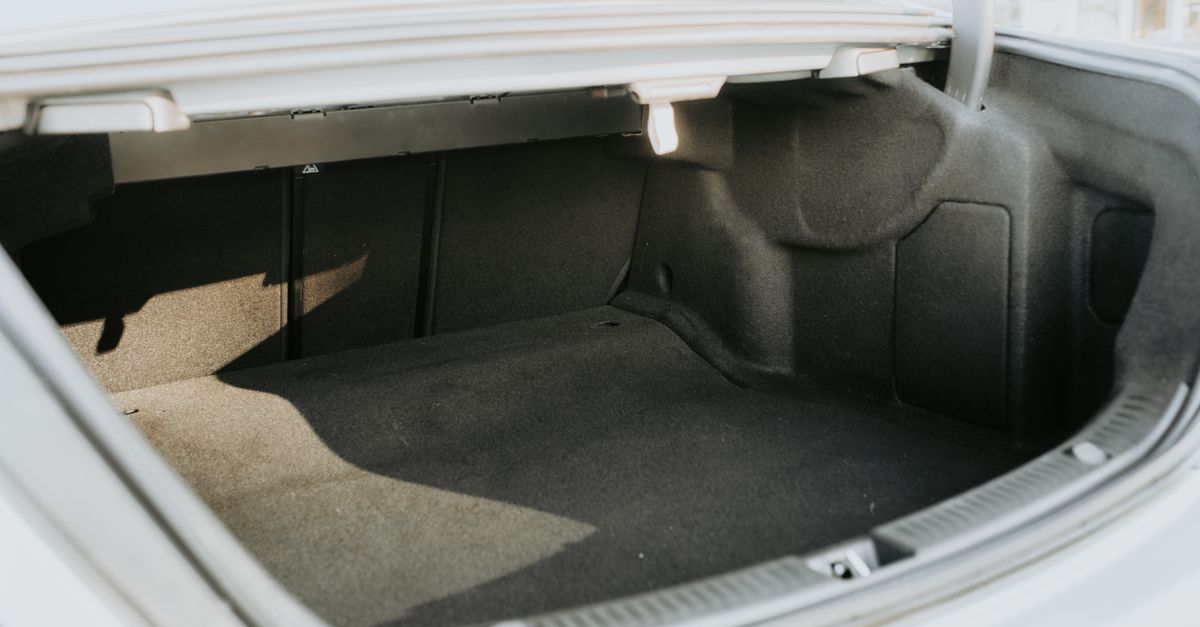
- the narrowest width between the wheel arches;
- the floor length behind the rear seats, and with them folded;
- the height available beneath the parcel shelf;
- the width and height of the tailgate opening;
- the height and depth of the loading lip; and
- the rear-seat folding arrangement and any sliding-seat adjustment.
The height of the opening can be just as important as the overall volume, particularly if a heavy or bulky item has to be lifted into the car. Guidance from Motability and the Research Institute for Disabled Consumers recommends considering these practical measurements when choosing a family car.
Use luggage tests as a sense check
Independent loading tests can make abstract litre figures easier to understand. Carwow’s boot-space comparison uses carry-on-sized suitcases across numerous models, while What Car? also records how many standard suitcases fit into the vehicles it tests. Carwow What Car?
Those tests are useful for spotting differences that a capacity table can hide, but they are not a substitute for checking your own equipment. A suitcase test cannot confirm that your particular pushchair, dog crate or musical instrument will fit in the same way.
The dealer test that settles it
Start by listing the items that regularly travel in your car. For many families, a folded pushchair is more important than a small difference in the advertised boot total. Measure the item when folded, including its widest and tallest points, then compare those dimensions with the boot floor and tailgate opening. Motability recommends checking the items you actually carry rather than relying solely on a quoted capacity.
If possible, take the pushchair or another regularly carried item to a dealer and test-load it. Try the car with the rear seats in the position you would normally use, check whether the item can pass through the opening without awkward lifting and see whether the underfloor storage is genuinely accessible. Carvago also identifies a physical test load as the most reliable way to confirm suitability.
The practical verdict
Use the litre figure to create a shortlist, then compare the shape, opening and measurements of the boot. For UK family-car buyers, the most useful boot is not necessarily the one with the highest advertised capacity; it is the one that accepts the items you carry every week without forcing you to sacrifice passenger space or struggle with the tailgate.
Source 1 · Source 2 · Source 3 · Source 4 · Source 5 · Source 6 · Source 7 · Source 8