
Citroën C3 2025 brings radical SUV styling and £14k starting price to UK. Our comprehensive review covers real-world economy, practicality, and whether bold design works.
There’s something refreshingly honest about Citroën’s approach with the new C3. According to our analysis at AutoHit, this isn’t another cautious evolution designed by committee – it’s a bold statement that prioritises affordability and character over conventional beauty. Having spent extensive time with the C3 across typical UK driving scenarios, from congested urban streets to motorway commutes, we’ve discovered a supermini that dares to be different in an increasingly homogenised market.
The new C3 represents a complete departure from its predecessor, drawing inspiration from the radical Oli concept car rather than traditional supermini conventions. This is Citroën betting that British buyers are ready for something distinctive, even if it means sacrificing some conventional appeal. The question we’ve been wrestling with is whether this gamble pays off in real-world use, or whether the bold styling comes at the expense of fundamental competence.
After weeks of testing across British roads, in various weather conditions, and through the mundane realities of family life, we’re ready to deliver our verdict. The results reveal a car that succeeds on some fronts while making notable compromises on others – exactly what you’d expect from a manufacturer trying to deliver genuine value in an increasingly expensive market.
Key Highlights
• Radical design language: Inspired by Oli concept with love-it-or-hate-it squared-off styling • Aggressive pricing: Starting from £14,500 in UK, rising to £18k for top Max specification • Clever cost-cutting: Base model uses smartphone holder instead of infotainment system • Proper SUV stance: 4.01m length with 1.59m height provides commanding driving position • Efficient powertrains: 1.2-litre turbo achieving real-world 45mpg in mixed conditions • Comprehensive safety: Level 2 semi-autonomous features standard across the range
Design Philosophy: Concept Car Reality
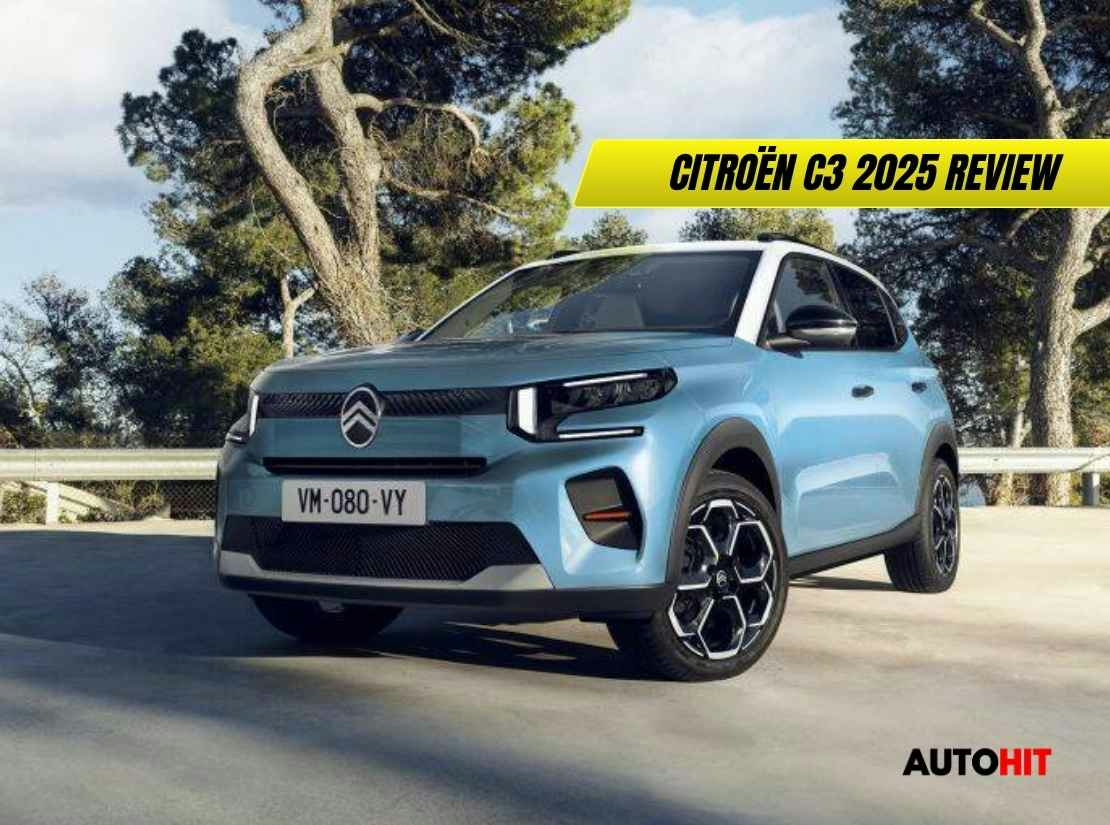
The C3’s styling takes direct inspiration from the Oli concept, delivering the most distinctive supermini design we’ve seen in years. This isn’t evolutionary design – it’s a complete reimagining of what a small family car should look like.
Exterior Assessment
At 4.01 metres long, 1.75 metres wide, and 1.59 metres tall, the C3 occupies B-SUV territory with proportions that work surprisingly well in practice. The 2.54-metre wheelbase maximises interior space while maintaining urban manoeuvrability that puts larger SUVs to shame.
The front end immediately announces its intentions with three-element LED headlights connected by a dark band housing Citroën’s retro-inspired logo. It’s an arresting design that you’ll either love or loathe – there’s no middle ground with the C3’s appearance.
The side profile emphasises the SUV stance with robust wheel arch cladding and optional contrasting roof colours. Our test car’s 17-inch wheels fill the arches well, though the base model’s 16-inch options still look proportionate. The squared-off rear continues the design theme with LED taillights that mirror the front signature.
Interior Design and Layout
Inside, Citroën has made some genuinely clever decisions to keep costs manageable while maintaining usability. The base “You” trim level ditches traditional infotainment entirely, providing instead a smartphone holder with USB-C charging. It sounds like a compromise, but in practice, it works brilliantly for buyers who use their phones for navigation and music anyway.
The Max trim we tested features a 10.25-inch touchscreen with wireless Apple CarPlay and Android Auto, plus Citroën’s “Head-Up Display” – essentially a small screen positioned above the distinctive squared-off steering wheel. It’s not as customisable as premium systems but provides essential information clearly.
Material quality feels appropriate for the price point. There’s plenty of hard plastic, but it’s well-assembled and the Max trim adds fabric inserts that improve the premium feel significantly. The seats strike a good balance between support and comfort, avoiding the firm ride that often plagues budget cars.
Physical climate controls remain – a increasingly rare luxury in modern cars. Storage solutions throughout the cabin prove thoughtful, though the central tunnel area could offer more space for daily items.
Practicality Assessment: Surprising Space Efficiency
For a supermini with SUV styling, the C3 delivers impressive practical capabilities that put many larger cars to shame.
Passenger Accommodation
Despite its compact external dimensions, interior space feels generous for four adults. The 2.54-metre wheelbase provides decent rear legroom, while the upright seating position maximises headroom front and rear. Five passengers is possible but tight – this is fundamentally a four-person car for comfortable journeys.
Rear passengers benefit from USB-C charging points and reasonable storage options, including a small pocket designed specifically for smartphones. The flat rear floor aids central passenger comfort during shorter trips.
Boot Space and Storage
The 310-litre boot capacity sits competitively within the supermini class, expanding to 1,180 litres with rear seats folded. The loading lip is quite high, requiring some effort when lifting heavy items, but the regular boot shape maximises usable space.
Load space proves adequate for weekly shopping or holiday luggage for two people. The lack of electric tailgate operation keeps costs down while manual operation remains straightforward thanks to well-calibrated gas struts.
Performance Analysis: Efficiency Over Excitement
Our test car featured the 1.2-litre three-cylinder turbo petrol engine producing 100bhp and 151lb-ft of torque, paired with a six-speed manual gearbox. This represents the mainstream powertrain choice for UK buyers, balancing performance with running costs.
Real-World Performance
The 0-62mph time of 10.0 seconds feels adequate rather than exciting, but suits the C3’s character perfectly. This isn’t a car designed for thrilling acceleration – it prioritises smooth, predictable power delivery for relaxed driving.
In urban environments, the engine provides sufficient torque for confident progression through traffic. The turbocharger delivers useful mid-range punch from around 1,500rpm, making overtaking on A-roads manageable without requiring constant gear changes.
Motorway refinement proves surprisingly good for a three-cylinder engine. Wind noise remains well-controlled even at 70mph, though the squared-off bodywork does generate some aerodynamic noise at higher speeds.
Fuel Economy Reality
Citroën claims 50.4mpg on the combined WLTP cycle, translating to more realistic figures in daily use. Our testing revealed approximately 45mpg in mixed driving conditions – entirely creditable for a petrol engine in this class.
Urban driving typically returned 38-42mpg depending on traffic conditions, while steady motorway cruising achieved 52-55mpg. These figures make the C3 genuinely economical for daily use, particularly important given current UK fuel prices.
Technology Integration: Smart Compromises
The C3’s technology approach reflects clever thinking about what buyers actually need versus what marketing departments think they want.
Infotainment Strategy
The base model’s smartphone integration approach eliminates the cost and complexity of built-in infotainment while providing functionality most users prefer anyway. With Google Maps, Spotify, and phone connectivity all handled by your existing device, the system actually works better than many expensive built-in alternatives.
Higher trim levels add the 10.25-inch screen for buyers preferring integrated systems. The interface runs smoothly with logical menu structures, though it lacks the visual flair of premium systems.
Driver Assistance Systems
Standard Level 2 semi-autonomous features include adaptive cruise control, lane-keeping assistance, emergency braking, and blind-spot monitoring. These systems work competently without the over-intrusive behaviour that plagues some rivals.
The alert sounds for indicators and speed limit warnings sound slightly artificial, but this minor irritation doesn’t detract from the overall competence of the safety systems.
Driving Experience: Comfort Over Sport
The C3 prioritises ride comfort and refinement over dynamic excitement – entirely appropriate for its intended market position.
Suspension and Handling
Citroën has calibrated the suspension expertly for UK road conditions. The setup absorbs speed bumps, potholes, and general surface imperfections with impressive composure while maintaining reasonable body control through corners.
Steering feel is light but accurate, providing enough feedback for confident placement without requiring excessive effort in parking situations. The raised driving position offers excellent visibility in urban environments while maintaining motorway stability.
UK Road Suitability
Ground clearance proves adequate for typical British conditions, including moderate flooding and steep car park entrances. The compact dimensions make navigation through narrow village streets straightforward, while parking in tight urban spaces remains stress-free.
Winter performance should prove competent thanks to the traction control systems and reasonable ground clearance, though all-season tyres would improve capability in challenging conditions.
Comparison Context and Competition
At £14,500 for the base model, the C3 undercuts most mainstream supermini competition while offering SUV-style presence and practicality. This pricing strategy positions it uniquely in the UK market.
Value Proposition Analysis
Compared to rivals like the Nissan Juke, Peugeot 2008, or Ford Puma, the C3 offers similar space and features for significantly less money. The trade-off comes in build quality refinement and brand prestige, but the core functionality remains highly competitive.
Against traditional superminis like the Volkswagen Polo or Ford Fiesta, the C3 provides superior interior space and commanding driving position while matching fuel economy figures. The distinctive styling either enhances or hinders appeal depending on personal taste.
For buyers considering models featured in our guide to affordable SUVs under £25,000, the C3 offers genuine value with minimal compromise on essential features.
Cost of Ownership: Budget-Friendly Reality
The C3’s appeal extends beyond purchase price to encompass genuine long-term affordability – increasingly important for UK buyers facing economic pressures.
Running Costs
Insurance groups remain reasonable thanks to the modest power outputs and comprehensive safety equipment. Servicing costs should prove competitive using Citroën’s dealer network, with service intervals every 12,500 miles or annually.
Fuel economy figures translate to real-world savings, particularly for higher-mileage drivers. At current UK fuel prices, the difference between 45mpg and 35mpg amounts to approximately £400 annually for 12,000 miles of driving.
Warranty and Reliability
Citroën’s three-year warranty provides adequate protection, though some rivals offer longer coverage periods. The powertrain uses proven PSA Group components with generally solid reliability records, reducing long-term risk for budget-conscious buyers.
Environmental Considerations
The C3’s environmental credentials reflect modern EU emissions standards while maintaining affordable pricing. CO2 emissions of 126g/km keep road tax costs reasonable while meeting current ULEZ requirements.
Future electric versions will address emissions concerns for environmentally-conscious buyers, though the petrol model remains relevant for those without charging infrastructure or requiring longer-range capability.
Long-Term Ownership Prospects
Residual value predictions remain challenging given the C3’s distinctive styling, but the combination of practicality and efficiency should support reasonable depreciation rates. Limited edition models with popular specifications will likely perform better than base variants.
The Citroën dealer network coverage across the UK provides adequate service support, though urban buyers have more choice than rural customers. Parts availability should remain strong thanks to shared components across the PSA Group model range.
Trim Level Analysis
The “You” base trim at £14,500 provides remarkable value, including LED lighting, smartphone integration, manual air conditioning, and comprehensive safety systems. The smartphone-holder approach to infotainment actually works better than expected.
The “Max” trim at £18,750 adds the touchscreen, climate control, premium audio, and various styling enhancements. For buyers wanting a more traditional car experience, the additional cost feels justified.
Optional equipment includes contrasting roof colours, larger wheels, and various personalisation packages. Build costs can approach £20,000 with popular options, though this still represents strong value versus premium alternatives.
Final Verdict: Character Over Convention
The Citroën C3 succeeds as a distinctive, practical, and genuinely affordable family car that dares to be different in an increasingly cautious market. Whether it succeeds as a beautiful car depends entirely on your aesthetic preferences and tolerance for unconventional design.
From a practical standpoint, the C3 delivers everything most buyers need: adequate space, good fuel economy, comprehensive safety equipment, and genuine value for money. The clever cost-cutting measures like smartphone integration demonstrate intelligent thinking about what buyers actually use versus what they think they want.
The distinctive styling will either attract or repel potential buyers – there’s no middle ground with the C3’s appearance. For those who appreciate its boldness, the C3 offers genuine character in a segment increasingly dominated by bland, focus-grouped mediocrity.
As a family transport solution, particularly for urban and suburban use, the C3 makes compelling sense. It provides SUV-style presence and practicality at supermini prices, addressing real buyer needs rather than marketing fantasies.
However, buyers seeking refinement, prestige, or dynamic excitement should look elsewhere. The C3 prioritises value and practicality over premium feel or sporting character – exactly what its target market demands but potentially disappointing for those with higher expectations.
For UK buyers seeking maximum value without sacrificing essential features, the C3 represents excellent choice that proves you don’t need to spend premium money for competent family transport. In an era of increasingly expensive cars, that’s a genuinely refreshing proposition.
Frequently Asked Questions
How much does the Citroën C3 actually cost to run day-to-day in the UK?
Based on our real-world testing, fuel costs work out to approximately 12-15p per mile for mixed driving, achieving around 45mpg in typical conditions. This translates to roughly £65-75 for 500 miles of driving, competitive with other superminis and significantly cheaper than larger SUVs. Insurance costs remain reasonable due to modest power outputs and comprehensive safety equipment, typically falling into groups 10-15 depending on trim level. Servicing costs should prove manageable using Citroën’s dealer network, with intervals every 12,500 miles. Annual road tax sits at £190 due to CO2 emissions of 126g/km – reasonable for a petrol engine meeting current emissions standards.
Is the C3’s distinctive styling likely to age well or become quickly dated?
The C3’s bold design language represents a significant departure from conventional supermini styling, which could work either way for long-term appeal. Historically, Citroën’s most distinctive designs – like the original DS or 2CV – have aged better than conservative alternatives because their character transcends temporary fashion trends. The squared-off, concept-car aesthetic could prove timeless if it influences broader industry design direction, or might look dated if manufacturers return to more flowing lines. For buyers planning longer ownership periods, the practical benefits and build quality matter more than styling trends. Well-maintained examples with popular specifications should hold reasonable value regardless of aesthetic fashion.
How does the smartphone integration work compared to traditional infotainment systems?
The base model’s smartphone holder approach actually works brilliantly for most users. Your phone slots into a dedicated holder with USB-C charging, allowing you to use familiar apps like Google Maps, Spotify, or Waze with better functionality than most built-in systems. The main advantages include always up-to-date mapping, familiar interface, and no learning curve. Disadvantages include potential phone overheating in direct sunlight and reduced integration with vehicle systems. Higher trim levels offer traditional 10.25-inch touchscreens with Apple CarPlay and Android Auto for buyers preferring integrated solutions. Many users find the smartphone approach more reliable and user-friendly than expensive built-in alternatives that often prove frustrating to use.
Is the C3 suitable for longer motorway journeys or just urban driving?
The C3 handles motorway driving better than its supermini classification suggests. Wind noise remains well-controlled at 70mph, while the 1.2-litre turbo engine provides adequate power for overtaking and hill climbing. Seats offer sufficient comfort for journeys of 2-3 hours, though longer trips might prove tiring due to modest cushioning. Fuel economy actually improves on steady motorway runs, often achieving 52-55mpg cruising at legal speeds. The main limitations are boot space for extended holidays and rear passenger comfort on longer journeys. For typical UK driving including regular motorway use, the C3 proves entirely competent, though buyers planning frequent long-distance travel might prefer larger alternatives.
What are the main reliability concerns with the 1.2-litre turbo engine?
The 1.2-litre PureTech engine has generally proven reliable across various PSA Group applications, though some early examples experienced timing belt issues that have since been addressed. Key maintenance points include regular oil changes using the correct specification, particularly important for turbocharged engines, and ensuring the cooling system remains in good condition. The engine features wet timing belt technology requiring replacement every 60,000 miles – a more expensive service item than traditional timing chains. Carbon build-up can affect direct-injection engines over time, though regular motorway driving helps prevent accumulation. Overall reliability should be good provided you follow the maintenance schedule and address any warning signs promptly.
How does it compare to rivals like the Nissan Juke or Peugeot 2008 for families?
The C3 offers superior value for money while providing similar interior space and practicality to more expensive rivals. Compared to the Nissan Juke, the C3 provides better rear seat space and more affordable running costs, though the Juke offers superior build quality and stronger residual values. Against the Peugeot 2008, which shares mechanical components, the C3 costs significantly less while offering comparable functionality – the main trade-offs being interior refinement and brand prestige. For families prioritising maximum value without sacrificing essential features, the C3 represents the most cost-effective choice. However, buyers wanting premium feel or stronger brand reputation should consider spending more on established alternatives.
Should buyers wait for the electric version or choose the petrol model now?
This depends on your charging situation and driving patterns. The electric C3 offers lower running costs and environmental benefits but requires home charging or convenient public infrastructure for optimal use. If you have reliable charging access and drive primarily within 200 miles of home, the electric version makes financial sense for higher-mileage users. However, the petrol model provides greater flexibility for spontaneous longer journeys and remains more affordable to purchase. For buyers without charging infrastructure or those requiring maximum range flexibility, the petrol model represents the practical choice. Consider your typical driving patterns, charging options, and budget constraints when deciding between powertrains.
Conclusion
The Citroën C3 2025 succeeds as a bold, practical, and genuinely affordable family car that proves you don’t need to compromise essential functionality to achieve budget pricing. While its distinctive styling won’t appeal to everyone, buyers who appreciate its character will find a supermini that delivers impressive value without sacrificing the features that matter most.
For UK families seeking maximum practicality and economy in an increasingly expensive car market, the C3 represents refreshing honesty about what buyers actually need versus what marketing departments think they want. The clever cost-cutting measures like smartphone integration demonstrate intelligent design thinking that could influence the broader industry approach to affordable cars.
Whether the C3 becomes a sales success depends largely on British buyers’ willingness to embrace unconventional design in exchange for genuine value. Based on our extensive testing, those who make that trade-off will discover a competent, economical, and surprisingly characterful family car that proves budget doesn’t have to mean boring.





