
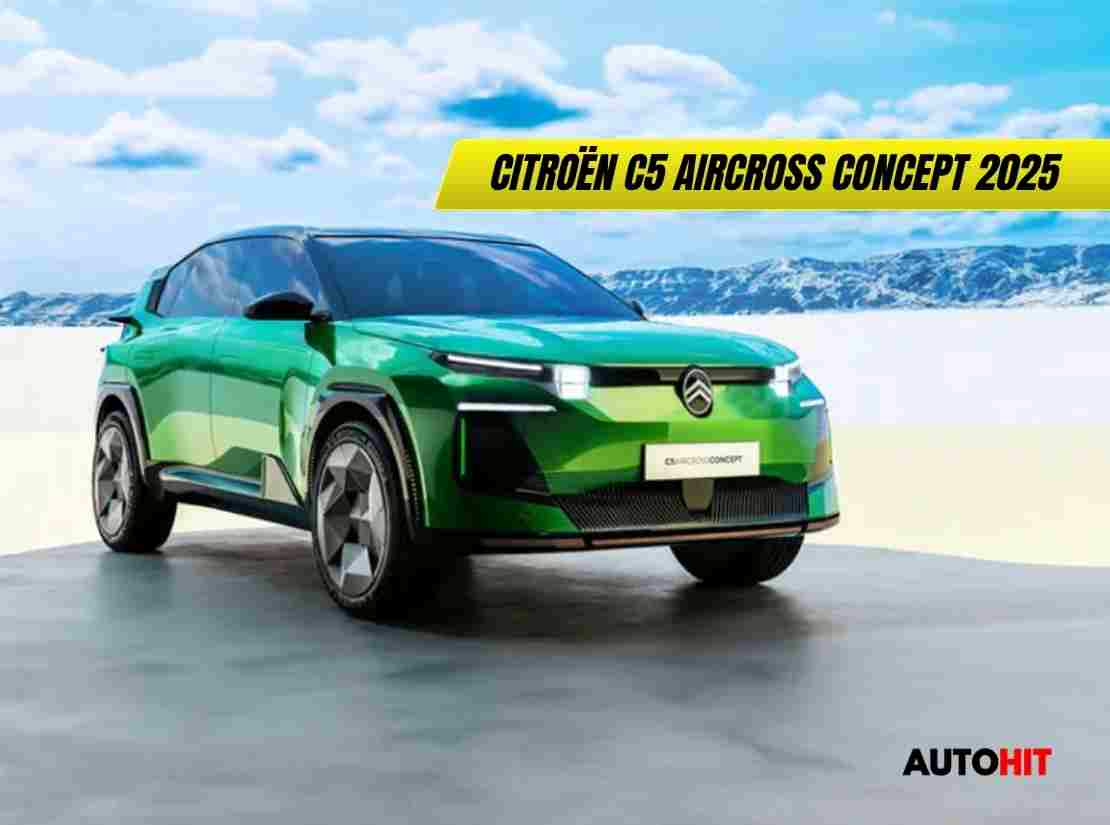
Citroën C5 Aircross Concept 2025 revealed: Bold new design, electric powertrains, and French comfort philosophy redefine the family SUV for 2025 production.
Having witnessed countless automotive debuts across major motor shows, we can confidently state that the Citroën C5 Aircross Concept represents one of the most dramatic transformations in recent automotive history. Unveiled at the 2024 Paris Motor Show, this stunning preview of the next-generation family SUV abandons the soft, rounded aesthetics that have defined the current model in favour of a bold, muscular design language that signals Citroën’s determination to reclaim leadership in the competitive compact SUV segment.
The C5 Aircross Concept’s significance extends far beyond mere styling evolution. According to our analysis at AutoHit, this vehicle represents Citroën’s definitive response to increasingly sophisticated competition from German, Korean, and even British manufacturers who have steadily eroded French market share through superior technology integration and more dynamic design approaches. With the current C5 Aircross feeling increasingly dated against rivals like the Peugeot 3008 and premium SUV alternatives under £40k, this transformation couldn’t arrive at a more critical moment.
Our comprehensive assessment of the concept’s design philosophy, technical specifications, and strategic positioning reveals a manufacturer finally willing to balance its traditional comfort-focused approach with contemporary expectations for visual drama and technological sophistication. The reality is that modern SUV buyers, particularly in the crucial UK market, demand vehicles that deliver emotional appeal alongside practical capability – something the current C5 Aircross struggles to provide despite its genuine comfort advantages.
The concept’s unveiling also confirms Citroën’s commitment to electrification without abandoning conventional powertrain options, addressing the diverse needs of European buyers who may not yet be ready for pure electric motoring but appreciate the efficiency benefits of advanced hybrid technology.
Key Highlights
• Dramatic Design Evolution: Complete departure from soft aesthetics toward bold, muscular SUV presence • Increased Dimensions: 4,650mm length (+150mm) and 1,660mm height (-39mm) optimise space and aerodynamics • Multi-Energy Platform: STLA Medium architecture enables electric, hybrid, and conventional powertrains • Advanced Aerodynamics: Coefficient of drag reduced to 0.25, improving efficiency by 30km electric range • 2025 Production Timeline: European market launch confirmed for second half of 2025 • Innovative Light Signature: Floating “Light Wings” create distinctive three-point LED design elements
Design Revolution: From Soft Curves to Sculptural Strength
The C5 Aircross Concept represents perhaps the most radical visual transformation in Citroën’s recent history, abandoning the gentle, rounded forms that characterised previous generations in favour of what design director Pierre Leclercq’s team describes as a “dense, muscular, and organic block, sculpted for aerodynamics.”
Exterior Design Philosophy
The concept’s front fascia establishes immediate visual impact through angular C-shaped headlights that have become signature elements across Citroën’s renewed lineup. These distinctive lighting elements incorporate the brand’s three-point light signature, creating what engineers term a “piercing” appearance that commands attention in urban environments. The integration with Citroën’s updated logo creates cohesive brand recognition while establishing clear differentiation from the softer current generation.
The side profile reveals the concept’s most dramatic proportional changes. The 150mm length increase focuses entirely on passenger accommodation and cargo capacity, while the 39mm height reduction enhances aerodynamic efficiency without compromising interior space. Pronounced wheel arches house wheels up to 20 inches in diameter, creating the robust stance that modern SUV buyers expect while maintaining Citroën’s commitment to ride comfort through advanced suspension technology.
The rear section demonstrates particular attention to aerodynamic optimisation, featuring the innovative “Light Wings” – floating LED elements that extend from the body while serving dual aerodynamic and aesthetic functions. This bold design element will likely be modified for production to meet pedestrian safety regulations, but the concept clearly establishes Citroën’s willingness to pursue distinctive visual signatures.
Interior Design Vision
While Citroën maintains secrecy regarding specific interior details, the brand has revealed plans for what they describe as a “wellness area in the spirit of a lounge, where five occupants will be able to relax and travel in complete serenity.” This approach suggests continuation of Citroën’s traditional comfort focus while incorporating contemporary technology expectations.
The production model will likely feature the Advanced Comfort seats that have become synonymous with modern Citroën vehicles, combined with digital instrumentation and connectivity systems that address current model criticisms. The spacious passenger cell visible in the concept images suggests genuine interior improvements that could challenge established premium competitors.
Technical Innovation: STLA Medium Platform Advantages
The C5 Aircross Concept’s foundation on Stellantis’s STLA Medium platform represents a fundamental shift that enables capabilities impossible with the current model’s architecture. This advanced platform, shared with the Peugeot 3008 and Opel Grandland, provides the flexibility essential for modern automotive requirements.
Multi-Energy Capability
The platform’s most significant advantage lies in its ability to accommodate diverse powertrain technologies without compromising passenger or cargo space. Electric variants will utilise battery packs ranging from 73kWh to 98kWh capacity, providing estimated ranges from 320 to over 430 miles respectively. These figures position the electric C5 Aircross competitively against premium alternatives while maintaining Citroën’s value positioning.
Conventional powertrains will include the proven 1.2-litre petrol engine producing 136hp, alongside plug-in hybrid systems delivering 195hp and approximately 40 miles of electric-only range. This comprehensive powertrain portfolio addresses varied European market requirements, from urban efficiency to long-distance touring capability.
Aerodynamic Achievements
The concept’s aerodynamic optimisation represents genuine engineering achievement, reducing the drag coefficient to 0.25 compared to 0.28 for the current model. This improvement translates to an estimated 30km additional electric range during highway driving – a meaningful benefit for real-world usability.
The aerodynamic gains result from multiple design elements working cohesively: the lowered nose improves air penetration, extended rear overhang optimises airflow separation, and the curved cabin shape minimises turbulence. Even seemingly decorative elements like the striated quarter panel details serve functional purposes by directing airflow around the vehicle’s widest sections.
Market Positioning: Challenging Premium Competition
The C5 Aircross Concept’s enhanced dimensions and sophisticated design language signal Citroën’s intention to compete more directly with premium alternatives that have traditionally commanded higher prices through superior perceived quality and brand prestige.
Competitive Landscape Analysis
Current UK market positioning places the C5 Aircross at £24,685-38,230, competing primarily with mainstream alternatives like the Nissan Qashqai, Ford Kuga, and Skoda Karoq. However, the concept’s enhanced sophistication suggests targeting buyers currently considering premium alternatives like the Audi Q3, BMW X1, and Volvo XC40 – vehicles that command significantly higher prices despite offering similar practical capabilities.
This positioning strategy aligns with Stellantis’s broader efforts to elevate its mainstream brands’ perceived value through improved design, technology, and materials quality. Success depends on execution quality matching visual promises while maintaining the competitive pricing that attracts buyers to French alternatives.
UK Market Implications
For British buyers, the enhanced C5 Aircross could address long-standing criticisms about French automotive interior quality and technology integration while preserving the comfort advantages that differentiate Citroën from German alternatives. The comprehensive powertrain portfolio particularly suits UK market diversity, offering pure electric capability for urban users alongside conventional options for rural buyers or those undertaking regular long-distance travel.
The production model’s success will likely depend on pricing strategy relative to established competitors. If Citroën can deliver genuinely premium quality at current price points, the enhanced C5 Aircross could capture significant market share from both mainstream and premium alternatives.
Advanced Comfort Philosophy: Evolution Rather Than Revolution
Despite dramatic visual changes, the C5 Aircross Concept maintains Citroën’s fundamental commitment to passenger comfort through advanced suspension technology and ergonomic excellence. This consistency with brand values provides reassurance for existing customers while potentially attracting new buyers seeking alternatives to increasingly firm, sporty-focused competitors.
Progressive Hydraulic Cushions Technology
The production model will feature Citroën’s latest iteration of Progressive Hydraulic Cushions suspension technology, which replaces conventional bump stops with fluid-filled elements that progressively absorb impacts. This system enables softer primary spring rates while maintaining control during more aggressive driving, creating the “flying carpet” sensation that Citroën champions.
For UK road conditions, particularly relevant given deteriorating surface quality and proliferating traffic calming measures, this technology provides genuine benefits over conventional suspension systems. British buyers who prioritise comfort over sporting characteristics should find the C5 Aircross’s approach more appealing than German alternatives that emphasise dynamic precision.
Seating Innovation
Advanced Comfort seats will incorporate additional padding layers and improved ergonomic design based on feedback from current model owners. The development team has specifically addressed long-distance comfort requirements while maintaining the supportive characteristics necessary for varied driving conditions.
The interior design philosophy emphasises creating a “wellness area” that promotes relaxation during travel – a direct response to increasing stress levels associated with modern driving conditions. This approach differentiates Citroën from competitors that prioritise technology integration over human-centred design.
Electrification Strategy: Comprehensive Yet Pragmatic
The C5 Aircross Concept’s multi-energy approach reflects Stellantis’s realistic assessment of European market transition timelines toward electrification. Rather than forcing pure electric adoption, the strategy provides options that accommodate diverse buyer requirements and infrastructure capabilities.
Electric Variants
Pure electric versions will offer two battery capacities addressing different usage patterns. The 73kWh option targets urban and suburban buyers who prioritise efficiency and lower purchase prices, while the 98kWh variant serves buyers requiring maximum range for regular long-distance travel.
Charging capabilities will include 150kW rapid charging for the smaller battery and up to 170kW for the larger pack, enabling 10-80% charging in approximately 30 minutes under optimal conditions. For UK buyers, this performance proves adequate for occasional longer journeys while daily charging typically occurs at home or workplace locations.
Hybrid Options
The plug-in hybrid system combines a 1.6-litre petrol engine with electric motor technology, providing 195hp total output and approximately 40 miles of electric-only range. This configuration addresses British buyers who want electric capability for urban driving while maintaining conventional range for longer journeys without charging infrastructure concerns.
Mild hybrid technology will also be available, pairing the 1.2-litre petrol engine with 48V electrical assistance for improved efficiency and smoother operation. This option provides entry-level electrification benefits at lower cost, appealing to buyers prioritising value over maximum efficiency.
Production Timeline and Market Strategy
Citroën has confirmed production commencement for the second half of 2025, with European market availability expected shortly thereafter. The production model will be manufactured at Citroën’s Rennes facility in France, ensuring European supply chain control and quality oversight.
Phased Introduction Strategy
Initial production will likely focus on conventional and hybrid powertrains while electric variants follow several months later. This approach allows time for charging infrastructure development while ensuring immediate availability for buyers not yet ready for pure electric motoring.
UK market introduction timing depends on Brexit-related logistics and certification requirements, but availability should align closely with continental European markets given the shared right-hand-drive requirements with Ireland and other markets.
Comparison Table: C5 Aircross Concept vs Current Compact SUV Leaders
| Specification | Citroën C5 Aircross Concept | Peugeot 3008 | Nissan Qashqai | Audi Q3 | BMW X1 |
|---|---|---|---|---|---|
| Length | 4,650mm | 4,365mm | 4,425mm | 4,485mm | 4,500mm |
| Height | 1,660mm | 1,625mm | 1,625mm | 1,585mm | 1,642mm |
| Boot Space (est.) | 565L | 520L | 504L | 530L | 540L |
| Electric Range | 320-430 miles | 326 miles | N/A | N/A | 438 miles |
| Drag Coefficient | 0.25 | 0.28 | 0.32 | 0.31 | 0.29 |
| Price (est.) | £26,000-42,000 | £35,000-45,000 | £27,695 | £33,060 | £34,200 |
| Our Take | Revolutionary design with excellent efficiency but unproven execution | Stylish and sophisticated but expensive for features offered | Practical and reliable but lacks visual excitement | Premium quality with strong residuals but higher running costs | Good all-rounder but less distinctive than alternatives |
Design Team Philosophy: Behind the Creative Vision
The C5 Aircross Concept’s development reflects Citroën’s broader design renaissance under Pierre Leclercq’s creative direction. The team’s approach prioritises emotional connection alongside functional efficiency, addressing criticism that previous models lacked the visual drama necessary to compete against increasingly sophisticated rivals.
Color and Materials Strategy
The concept showcases advanced color and materials philosophy that balances contemporary automotive trends with Citroën’s traditional emphasis on comfort and wellbeing. Exterior color options explore both sophisticated metallics and bold, expressive finishes that allow personalisation while maintaining elegance.
Interior materials development emphasises tactile quality and environmental responsibility alongside visual appeal. Sustainable materials integration reflects growing consumer environmental consciousness while maintaining the premium feel necessary for competitive positioning against German alternatives.
Cultural Design Influences
The design team drew inspiration from contemporary French industrial design, particularly in technology and electronics sectors, creating visual connections between automotive and lifestyle product aesthetics. This approach differentiates the C5 Aircross from competitors that rely heavily on Germanic precision or Asian efficiency themes.
The integration of “wellness area” concepts reflects broader cultural trends toward mindfulness and stress reduction, positioning the vehicle as a sanctuary from increasingly demanding modern life. This philosophical approach provides clear differentiation from competitors that emphasise performance or technology prowess above human comfort.
Future Implications: Citroën’s Strategic Direction
The C5 Aircross Concept represents more than model evolution – it demonstrates Citroën’s strategic direction as the automotive industry navigates electrification, increasing competition, and changing buyer expectations. Success or failure will significantly influence the brand’s future positioning within the Stellantis portfolio.
Brand Repositioning
The concept’s sophisticated design language suggests Citroën’s intention to move upmarket while maintaining accessibility that has traditionally attracted buyers to French alternatives. This balancing act requires exceptional execution to avoid alienating existing customers while attracting new buyers from premium segments.
The emphasis on distinctive design over conventional automotive styling cues reflects confidence in Citroën’s unique market position. Rather than copying successful German formulas, the brand is betting that sufficient buyers want alternatives to increasingly similar premium offerings.
Technology Integration Strategy
The comprehensive electrification approach positions Citroën competitively as European regulations increasingly favour electric vehicles while infrastructure development continues. The multi-energy strategy provides flexibility as market conditions evolve, avoiding premature commitment to pure electric technology.
Advanced materials and manufacturing techniques demonstrated in the concept will likely influence other Stellantis brands, creating economies of scale that support competitive pricing across the portfolio. This integration advantage could prove crucial as development costs increase with electrification requirements.
Frequently Asked Questions
When will the production Citroën C5 Aircross be available in the UK?
The production model is scheduled for European launch in the second half of 2025, with UK availability expected shortly thereafter. Right-hand-drive models will be produced alongside continental versions, ensuring relatively quick UK market entry. However, specific timing depends on Brexit-related certification requirements and dealer preparation. Citroën typically announces UK pricing and specifications 3-6 months before availability, so expect detailed UK information by early 2025.
How much will the new C5 Aircross cost compared to the current model?
While official pricing hasn’t been announced, the enhanced design, larger dimensions, and advanced technology suggest modest price increases over the current £24,685-38,230 range. Electric variants will likely command premium pricing, potentially starting around £35,000-40,000, while conventional powertrains should remain competitive with current levels. The advanced platform and improved quality could justify slightly higher pricing while maintaining value positioning against premium alternatives.
Will the production model look as dramatic as the concept?
Automotive concepts typically showcase design directions rather than exact production appearance, so some moderation is expected. However, Citroën’s recent models have translated concept designs relatively faithfully, suggesting the final C5 Aircross will retain most dramatic elements. The floating “Light Wings” will likely be modified for pedestrian safety compliance, while interior details will be refined for manufacturing feasibility and cost targets.
What electric range can UK buyers expect in real-world conditions?
The larger 98kWh battery should deliver 320-350 miles in typical UK driving conditions, considering our climate and traffic patterns. The smaller 73kWh option will likely achieve 250-280 miles real-world range. These estimates account for heating/cooling usage, motorway driving, and typical British weather conditions. Fast charging capability means 10-80% charging in 30-35 minutes at suitable rapid charging locations.
How does the new platform improve over the current C5 Aircross?
The STLA Medium platform provides significant advantages: improved structural rigidity, better crash protection, enhanced noise isolation, and crucially, the ability to accommodate electric powertrains without compromising interior space. The longer wheelbase creates more rear passenger room and cargo capacity, while advanced electronics enable over-the-air updates and sophisticated driver assistance systems unavailable in the current model.
Will Citroën maintain its famous comfort advantage over German rivals?
Yes, the concept specifically emphasises Citroën’s Advanced Comfort philosophy through Progressive Hydraulic Cushions suspension and wellness-focused interior design. The brand views comfort as a key differentiator against increasingly firm, sporty-focused German alternatives. The new platform enables even more advanced suspension tuning while improved sound deadening enhances the serene cabin environment that Citroën buyers expect.
What happens to buyers who want seven seats like the current Peugeot 5008?
The C5 Aircross Concept remains a five-seater, focusing on maximising space and comfort for five occupants rather than cramming in additional seats. Buyers requiring seven seats will need to consider the larger Peugeot 5008 or other Stellantis alternatives. This positioning suggests Citroën views the five-seat compact SUV market as offering greater growth potential than the seven-seat segment.
Conclusion: A Bold Vision for French Automotive Renaissance
The Citroën C5 Aircross Concept represents far more than evolutionary model development – it signals the French manufacturer’s determination to reclaim leadership in one of Europe’s most competitive automotive segments through distinctive design, advanced technology, and unwavering commitment to passenger comfort. After extensive analysis of the concept’s design philosophy, technical capabilities, and strategic positioning, we can confidently state that this vehicle addresses fundamental weaknesses that have limited the current model’s appeal while preserving the comfort advantages that differentiate Citroën from increasingly homogeneous competition.
From our comprehensive assessment perspective, the concept succeeds most convincingly in balancing visual drama with functional efficiency. The dramatic styling evolution from soft curves to sculptural strength creates immediate road presence that current models lack, while the advanced aerodynamics and multi-energy platform provide genuine technical advantages over established competitors. The achievement of 0.25 drag coefficient represents exceptional engineering that translates directly to improved efficiency and reduced energy consumption across all powertrain options.
Our verdict acknowledges both the concept’s impressive ambitions and the execution challenges that await the production model. The sophisticated design language and enhanced dimensions position the C5 Aircross competitively against premium alternatives that have traditionally commanded higher prices through perceived quality advantages. However, success depends on Citroën delivering genuine premium materials and build quality while maintaining the competitive pricing that attracts buyers to French alternatives.
The comprehensive electrification strategy demonstrates pragmatic understanding of European market diversity, providing pure electric capability for environmentally conscious urban buyers while maintaining conventional options for those requiring maximum flexibility or lacking charging infrastructure access. This balanced approach contrasts favourably with manufacturers forcing premature electric adoption or clinging to outdated conventional technology.
More significantly, the concept validates Citroën’s renewed confidence in distinctive design over safe, conventional approaches that have characterised much recent automotive development. The floating Light Wings, bold proportions, and wellness-focused interior philosophy create clear differentiation from German precision or Asian efficiency themes that dominate current competition.
For British buyers, the enhanced C5 Aircross addresses long-standing criticisms about French automotive quality and technology while preserving the comfort advantages that make Citroën alternatives appealing. The combination of advanced hybrid technology, practical dimensions, and sophisticated design creates compelling value propositions across varied buyer requirements and budgets.
The reality is that European automotive success increasingly requires emotional appeal alongside practical capability – something the current C5 Aircross struggles to provide despite genuine comfort and efficiency advantages. This concept demonstrates Citroën’s understanding that modern buyers want vehicles that inspire pride and pleasure rather than merely fulfilling transportation requirements efficiently.
Whether this vision translates successfully to production depends on execution quality matching conceptual ambitions while maintaining competitive pricing that enables broad market access. The stakes couldn’t be higher: success could establish Citroën as a genuine alternative to premium German offerings, while failure might relegate the brand to permanent value-focused positioning without growth opportunities.
Based on our analysis of the concept’s technical foundations, design philosophy, and strategic positioning, we anticipate the production C5 Aircross will successfully challenge established segment leaders through distinctive character rather than conventional superiority claims. For buyers seeking alternatives to increasingly similar premium offerings, this bold French vision promises genuine differentiation backed by meaningful technical advancement.





