
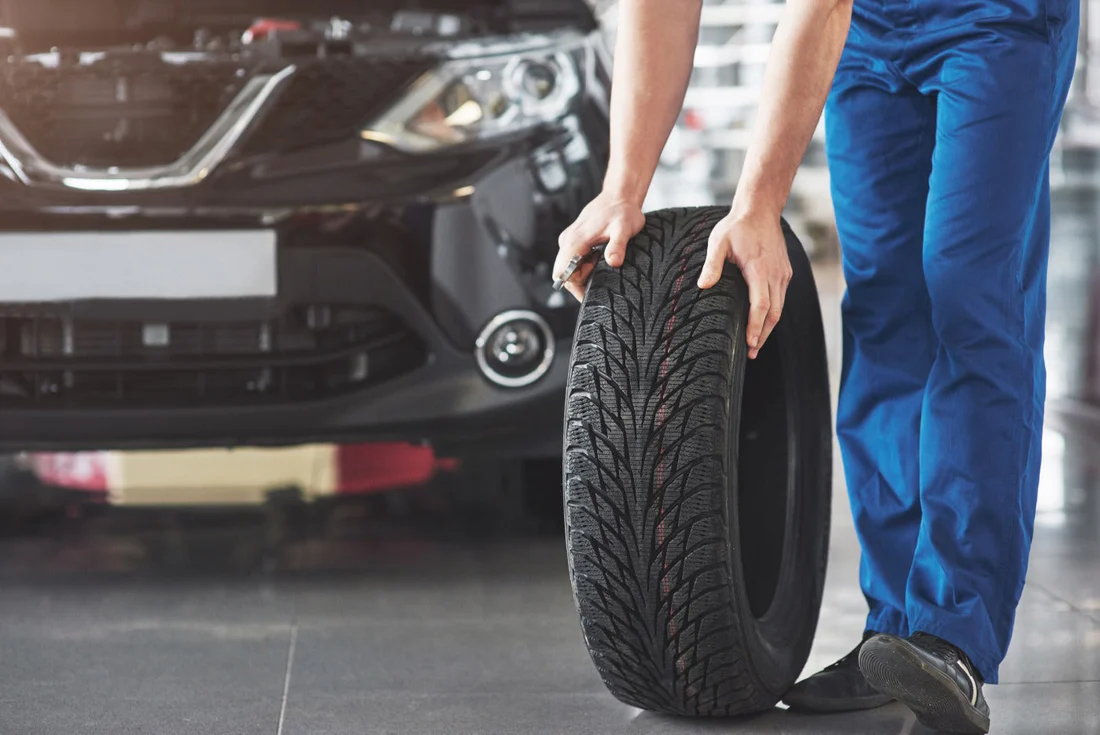
The most frequent tyre pressure errors made by British motorists — their causes, their consequences for safety and tyre life, and the correct habits to replace them with.
Tyre pressure is the single most important routine vehicle check a driver can carry out — yet it remains one of the most neglected. The consequences range from accelerated wear and increased fuel consumption to compromised emergency braking and increased blowout risk. None of these outcomes is acceptable when the fix takes under three minutes.
Tyre Pressure Mistakes: Key Points
- Nearly one in three UK cars is driven with at least one tyre significantly under-inflated, according to TyreSafe’s annual survey data
- Under-inflation is the most common error — and the most dangerous, increasing blowout risk, extending stopping distances, and wearing tyre shoulders prematurely
- Checking pressure on a hot tyre produces a falsely high reading — always check when the tyre has been stationary for at least two hours
- Many drivers use the tyre sidewall maximum pressure as their target — this is incorrect and typically results in dangerous over-inflation
- Neglecting the spare tyre pressure check is the second most common omission — a flat spare is useless in an emergency
- TPMS (Tyre Pressure Monitoring System) warning lights only activate when pressure drops 25% below recommended — by which point significant damage may already be occurring
Mistake 1: Checking Pressure on a Warm Tyre
This is the most widespread error and the one most likely to produce a dangerously inaccurate reading. As a tyre heats up during use, the air inside expands — typically by 0.2–0.4 bar above the cold reading. A driver who checks pressure after driving, finds it reads correctly, and drives away satisfied may actually be running on a tyre that is significantly under-inflated when cold.
The correct approach: Always check tyre pressure when the vehicle has been stationary for a minimum of two hours and has not been moved more than a couple of miles at low speed. This is the condition tyre manufacturers define as “cold” for pressure specification purposes. Morning checks before the first journey of the day are ideal.
If you must check after driving — at a fuel station mid-journey, for example — add 0.3 bar to the recommended cold pressure to approximate the correct running pressure, then verify with a cold check at the earliest opportunity.
Mistake 2: Using the Tyre Sidewall Pressure as the Target
The number embossed on the tyre sidewall — typically something like MAX. PRESS. 51 PSI or 3.5 BAR — is the maximum pressure the tyre’s structure can contain safely. It is not the recommended operating pressure for your vehicle. Using it as the target produces a significantly over-inflated tyre that:
- Wears the central tread strip prematurely, reducing tyre life
- Reduces the tyre’s contact patch with the road, degrading both grip and braking performance
- Creates a harsh, uncomfortable ride
- Increases susceptibility to damage from impacts — potholes and kerbs
The correct recommended pressure for your specific vehicle, load condition, and tyre size is printed on a sticker on the inside of the driver’s door jamb or, in many vehicles, inside the fuel filler flap. Most vehicles specify different pressures for front and rear tyres, and a higher pressure for fully loaded conditions — always check both values.
Mistake 3: Ignoring Pressure When the TPMS Light Is Off
The Tyre Pressure Monitoring System — mandatory on all new cars sold in the UK since 2014 — provides a warning when tyre pressure drops to a dangerous level. The threshold at which the TPMS light activates is typically a 25% drop below the recommended pressure. On a tyre with a recommended pressure of 2.4 bar, the TPMS may not illuminate until pressure falls to approximately 1.8 bar — a level at which handling, braking, and wear consequences are already significant.
Relying on the TPMS as a substitute for regular pressure checks is like waiting for the oil warning light before checking engine oil — by the time the light appears, damage may already be occurring. The TPMS is an emergency indicator, not a maintenance tool.
Check pressure manually at least once a month and before any long journey, regardless of whether the TPMS warning is active.
Mistake 4: Neglecting the Spare Tyre
A survey by TyreSafe found that a significant proportion of UK drivers who carry a spare tyre have never checked its pressure — and a substantial number find, at the moment they need it, that the spare is flat or so under-inflated as to be unusable.
A spare tyre — whether a full-size spare or a compact temporary spare — loses pressure slowly over time simply from natural permeation through the rubber. A spare stored in the boot for two years without a pressure check may have lost 0.5–1.0 bar and may be below safe operating pressure.
Check the spare tyre pressure every time you check the other four tyres. The correct pressure for a compact spare (space-saver) is typically printed on the spare itself and is usually 60 PSI (4.2 bar) — significantly higher than standard tyre pressures.
Mistake 5: Not Adjusting for Load
Most drivers check tyre pressure in the vehicle’s standard, lightly loaded state and never revisit it when the load changes significantly. Tyre manufacturers and vehicle makers specify higher pressures for loaded conditions — typically 0.2–0.4 bar above the standard cold pressure — for good reason: a heavier load causes greater tyre deflection, generating more heat and stress in the tyre’s structure.
A family car fully loaded with five passengers and a boot full of luggage for a holiday trip — a common UK scenario — should have its tyre pressures checked and adjusted to the full-load specification before departure. This information is on the same door jamb sticker as the standard pressure; it is typically labelled as the pressure for “full load” or shown as a separate column in the vehicle handbook.
Mistake 6: Using a Forecourt Air Machine Without Calibrating
Forecourt tyre inflators at petrol stations vary significantly in accuracy — some are well-maintained and precise; others read incorrectly by 2–5 PSI or more. Using a forecourt inflator without cross-referencing against a reliable hand gauge introduces a measurement error that defeats the purpose of checking pressure.
A quality digital tyre pressure gauge — available from Halfords, Amazon, or any motor factor for £10–£20 — provides a reference reading that can be compared against the forecourt machine. If they differ by more than 2 PSI, trust the calibrated hand gauge rather than the forecourt machine.
The Correct Pressure Check Routine
Follow this sequence every time:
- Check when tyres are cold — stationary for at least two hours
- Identify the correct pressure from the door jamb sticker, not the tyre sidewall
- Note whether you need standard or full-load pressure based on the day’s expected load
- Check all five tyres — four wheels plus spare
- Inflate or deflate to the exact recommended pressure — do not round up or down
- Replace the valve cap after checking — caps prevent road debris from contaminating the valve core and causing slow leaks
- Record the date of your check — either in the vehicle handbook or a notes app; makes it easy to confirm your monthly interval
For a broader guide to all the routine checks that prevent the most common UK breakdowns, our car maintenance checklist guide covers everything from oil level to brake fluid in a single systematic reference.
What is the correct tyre pressure for my car?
The correct pressure is on a sticker inside the driver’s door jamb or inside the fuel filler flap — not on the tyre sidewall. Most saloons and hatchbacks run 28–35 PSI (1.9–2.4 bar) on front tyres and slightly different pressures on rears. SUVs and larger vehicles typically require 35–44 PSI (2.4–3.0 bar). Always use your vehicle’s specific figures.
How often should I check tyre pressure?
Once a month minimum, plus before any journey over 100 miles. The AA and RAC both recommend monthly checks as the minimum interval for safe tyre management.
Does tyre pressure affect fuel consumption?
Yes significantly — a tyre under-inflated by 0.5 bar increases rolling resistance and fuel consumption by approximately 1–3%. Across a year’s driving, maintaining correct tyre pressures on all four tyres is estimated to save the average UK driver £40–£80 in fuel costs.
Can over-inflation cause a blowout?
Over-inflation alone rarely causes blowouts under normal driving conditions — but it significantly increases the risk of sudden failure when the tyre impacts a pothole or kerb, because the over-pressurised tyre has no capacity to absorb the impact through sidewall deflection. Under-inflation is the more common blowout cause, as it generates excessive heat in the tyre’s structure during sustained motorway driving.
Why does tyre pressure drop in cold weather?
Air contracts as temperature decreases — for every 10°C drop in ambient temperature, tyre pressure falls by approximately 0.1–0.15 bar. This means a tyre correctly inflated in September may read noticeably low by January without any leak. It is entirely normal and the solution is simply to top up to the correct cold pressure at the start of the colder months.





