
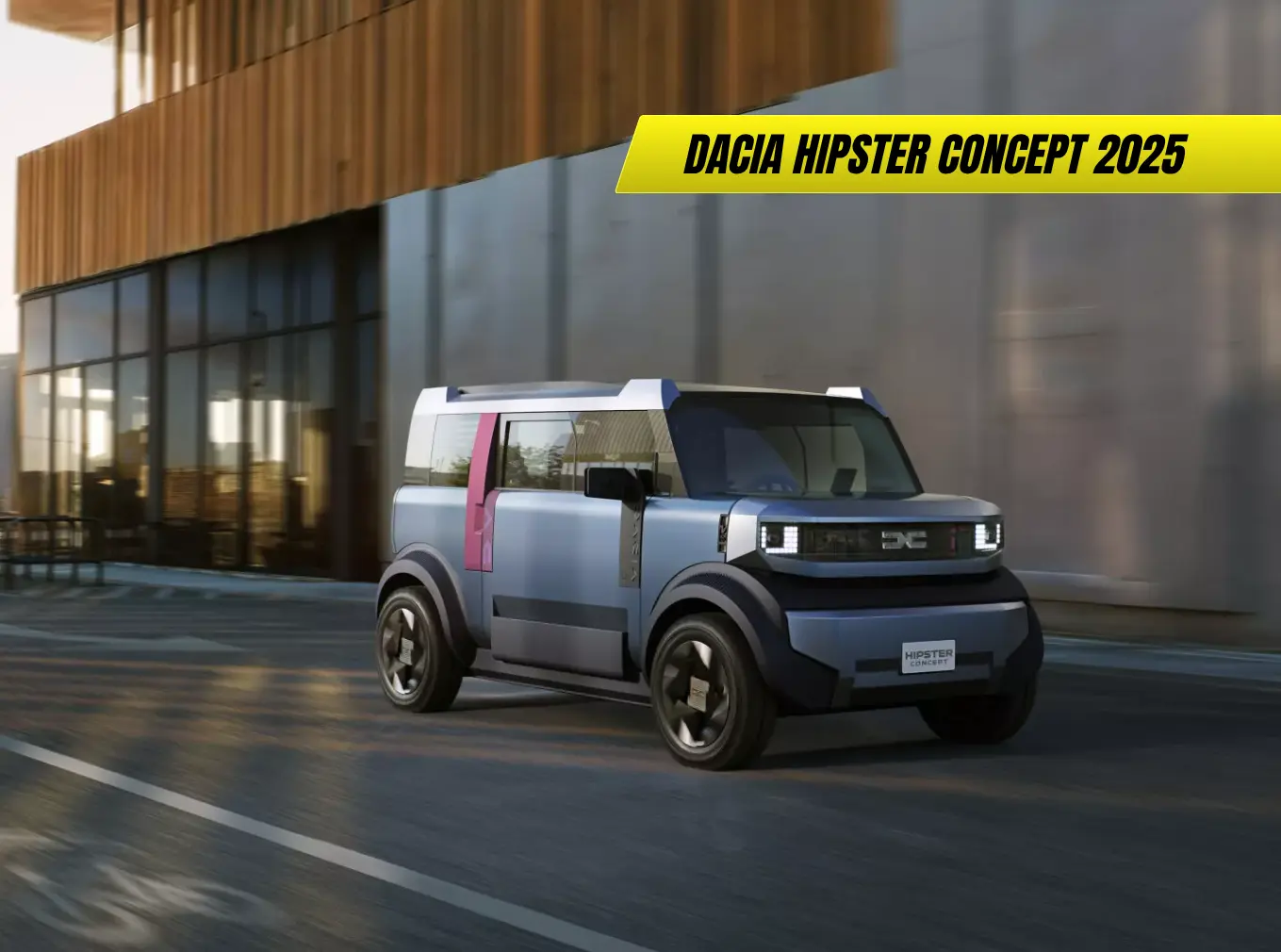
The Dacia Hipster Concept 2025 reimagines the people’s car with a rugged yet retro-futuristic design, advanced hybrid tech, and affordability at its core.
The Dacia Hipster Concept 2025 marks a bold and surprising chapter in the Romanian brand’s evolution. Unveiled as part of Dacia’s future vision for accessible mobility, the Hipster merges heritage-inspired styling with modern efficiency and electrification. It aims to redefine what a “people’s car” can be in the UK by offering simplicity, sustainability, and affordability—three pillars that have always defined Dacia’s DNA.
From my perspective, this concept isn’t just a design exercise; it’s a statement of intent. Dacia wants to prove that innovation and environmental responsibility don’t need to come with luxury-brand prices.
Key Highlights
- Retro-inspired design blending cues from classic Dacias and minimalist modern aesthetics.
- Hybrid or electric powertrains developed for efficiency and low running costs.
- Durable, recycled materials used across body panels and cabin.
- Modular interior designed for outdoor and urban lifestyles.
- Potential UK launch as a production version in 2026 or 2027.
Design Philosophy: Retro Spirit, Modern Soul
At first glance, the Hipster Concept captures attention with its boxy silhouette, flared wheel arches, and clean LED lighting signature reminiscent of the original 2CV and Dacia 1300. Yet it introduces a futuristic twist through aerodynamic surfacing and simplified lines that signal a new era for Dacia’s design identity.
“We wanted to reconnect with the essence of what made simple cars great—durability, affordability, and freedom,” said a Dacia designer during the reveal.
The concept rides on the CMF-B platform, shared with the Sandero and Jogger, ensuring realistic production feasibility. From my point of view, this move underscores Dacia’s pragmatic engineering approach: smart reuse of proven architecture to keep costs low.
Powertrain and Performance
Although official specs haven’t been finalised, insiders suggest that the Hipster will offer both hybrid and fully electric versions. The hybrid setup could utilise the 1.6-litre E-Tech system already in the Dacia Jogger Hybrid 2025, producing around 140 hp.
For the all-electric model, Dacia may partner with Renault’s Ampere EV division, meaning potential range figures around 250–300 miles (WLTP)—perfect for British urban and rural commuting alike.
| Version | Powertrain | Estimated Power | Range (WLTP) | Transmission |
|---|---|---|---|---|
| Hybrid | 1.6 E-Tech petrol-electric | 140 hp | 60 mpg eq. | Automatic |
| Electric | Single-motor EV | 120 hp | 250–300 miles | Single-speed |
Both variants would be ULEZ compliant, aligning with UK emissions standards. You can check compliance details through gov.uk’s Clean Air Zone guidance.
Cabin and Technology
Inside, the Dacia Hipster Concept embraces a back-to-basics design with a digital yet rugged character. Surfaces are made of recycled fabrics and cork inserts, and seats can be removed or folded flat to maximise space.
From my experience, this focus on modular practicality makes the Hipster ideal for drivers with active lifestyles—think camping trips or urban weekend escapes.
A central 10-inch screen handles navigation and media, while a smartphone-based interface replaces traditional buttons for climate and entertainment. Despite its minimalism, the Hipster offers full wireless connectivity and over-the-air updates, similar to the upcoming Renault Clio 6 2025.
Sustainability: More Than a Buzzword
Dacia claims that over 20% of the Hipster’s materials are recycled, including exterior plastic panels and seat fabrics. Even the paint process is eco-optimised, reducing waste and energy consumption.
The brand’s sustainability commitment follows the same path as SMMT’s UK automotive roadmap (smmt.co.uk), focusing on lower emissions and recyclable materials.
Expected UK Pricing and Availability
While this is still a concept, industry analysts expect the production-ready version to launch in 2026 or 2027, priced between £17,000 and £22,000, depending on the powertrain.
| Trim Level | Estimated Price (UK) | Powertrain | Highlights |
|---|---|---|---|
| Essential | £17,000 | Hybrid | Simplicity, efficiency |
| Comfort | £19,000 | Hybrid / EV | Added tech and safety |
| Extreme | £22,000 | EV | Off-road styling and equipment |
If these figures hold, the Hipster would undercut rivals such as the Fiat Panda Hybrid (2026) and the Citroën ë-C3while offering superior practicality.
Comparisons and Market Position
The Hipster Concept targets the space between urban hatchbacks and compact SUVs. Compared with mainstream EVs, it stands out for its durability and affordability.
| Model | Starting Price | Powertrain | Key Strength |
|---|---|---|---|
| Dacia Hipster (est.) | £17,000 | Hybrid / EV | Value and design |
| Fiat Panda Hybrid | £17,000 | Mild Hybrid | Compact dimensions |
| Toyota Aygo X Hybrid | £18,500 | Hybrid | Urban efficiency |
| MG4 EV | £22,000 | Electric | Range and tech |
Driving and Ownership Experience
Dacia has not yet released test data, but based on the Jogger’s platform dynamics, the Hipster should deliver a balanced, comfortable ride. Light steering, good visibility, and efficient regenerative braking will make it easy to drive in British cities and on rural roads alike.
In my opinion, this model could become a future cult car—combining nostalgic charm with modern efficiency.
FAQs
1. Is the Dacia Hipster Concept confirmed for UK production?
Not officially yet, but its CMF-B platform compatibility suggests a strong likelihood of production for 2026.
2. Will there be an electric version?
Yes, Dacia intends to offer both hybrid and all-electric options to meet evolving emissions standards.
3. How much will it cost in the UK?
Estimates suggest between £17,000 and £22,000 depending on specification and powertrain.
4. What are its main competitors?
Key rivals include the Fiat Panda Hybrid, Citroën ë-C3, and Toyota Aygo X Hybrid.
5. Will it qualify for ULEZ and tax benefits?
Yes, both the hybrid and electric versions will comply with UK low-emission standards and benefit from reduced road tax (see DVLA guidance).
Conclusion
The Dacia Hipster Concept 2025 represents a fresh and daring reinterpretation of the people’s car. From my point of view, it encapsulates everything that made Dacia successful: simplicity, durability, and affordability, now reimagined for the electric age.
I would recommend keeping a close eye on this project. If the production model retains its concept’s charm and practicality, it could easily become one of the most interesting budget EVs on the UK market.
Ultimately, the Hipster proves that a car can be sustainable, stylish, and accessible—a true revolution in how we perceive mobility in 2025 and beyond.





