
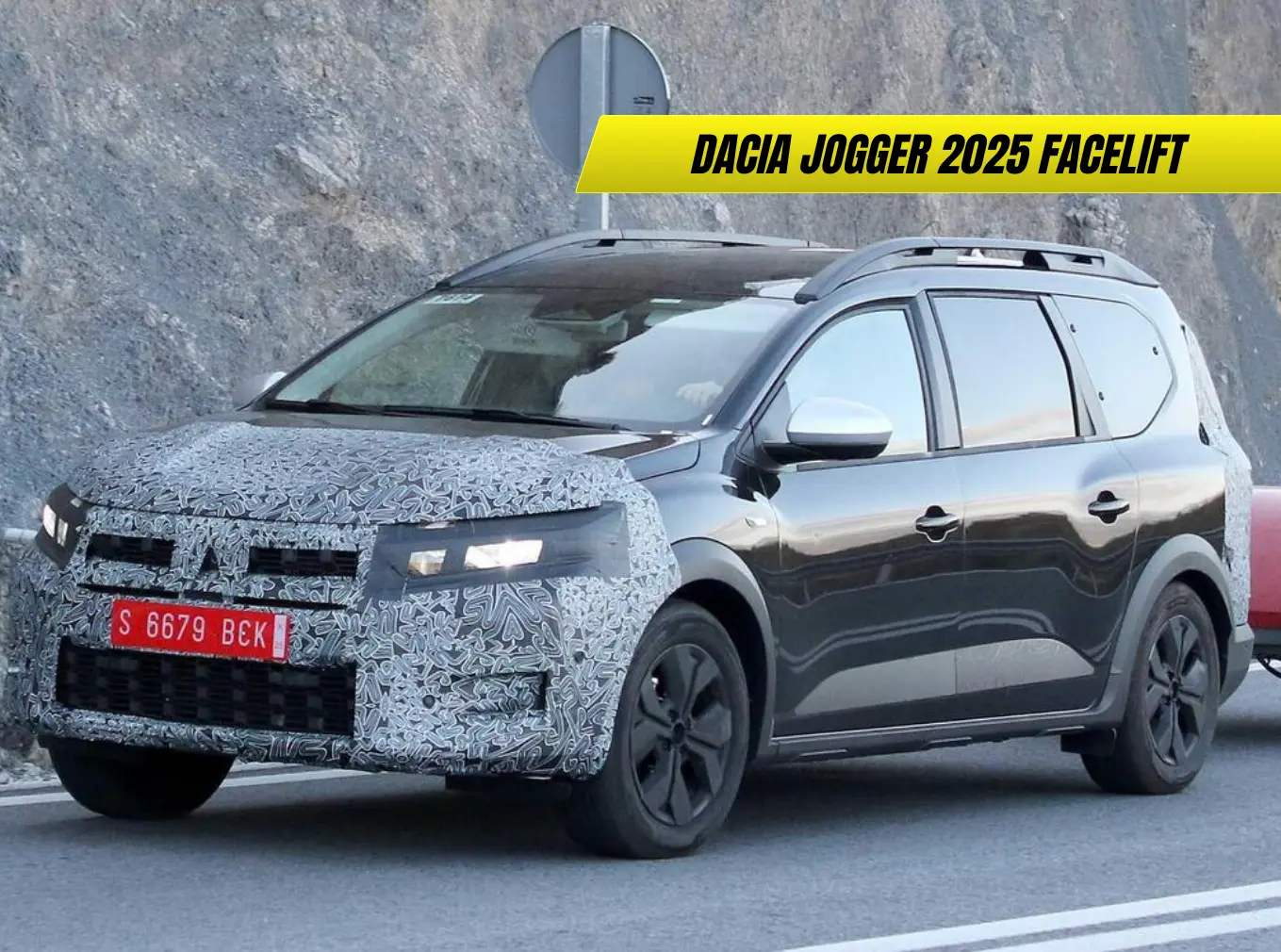
Dacia Jogger 2025 facelift UK guide covering new design, 155hp full hybrid engine, 10-inch touchscreen, updated interior and competitive pricing for British families.
The Dacia Jogger continues its mission to provide exceptional value and practicality for UK families with a comprehensive 2025 facelift that introduces significant design updates, advanced hybrid technology, and enhanced interior refinement. As one of the most affordable seven-seat vehicles available in Britain, the updated Jogger strengthens its position against more expensive European rivals while maintaining the no-nonsense approach that has made Dacia increasingly popular among cost-conscious buyers. This latest evolution demonstrates how budget-friendly vehicles can embrace modern technology and improved aesthetics without abandoning their core value proposition.
Key Points Summary
• Refreshed design: New front grille with squared pattern, updated LED lighting signatures and revised bumpers • Enhanced interior: 10-inch touchscreen infotainment system with improved materials and digital instrumentation • Full hybrid powerplant: New 155hp hybrid system joining existing mild hybrid and LPG options • Seven-seat practicality: Continued focus on maximum space and versatility for large families • Value positioning: Expected UK pricing from £18,000-24,000 maintaining affordability advantage • Technology upgrade: Digital dashboard, smartphone integration and modern connectivity features
Exterior Design Updates and Styling Evolution
Front fascia transformation represents the most significant visual change for the 2025 Jogger, abandoning the previous white dash grille pattern in favour of a sophisticated squared mesh design that aligns with Dacia’s evolving family aesthetics across the entire model range.
LED lighting signatures receive comprehensive updates while maintaining familiar headlight shapes, creating more dramatic visual impact through enhanced light patterns that improve both aesthetics and visibility during UK’s challenging weather conditions.
Bumper redesign incorporates new air intake configurations and fog light housings that echo design elements from the Duster and Bigster models, creating stronger visual connections within the Dacia family while improving aerodynamic efficiency.
Rear styling updates include revised taillight designs that provide more contemporary appearance while maintaining the functional clarity and practicality that characterises Dacia’s approach to automotive design.
Body cladding and protective elements maintain the rugged aesthetic that appeals to families seeking practical transport capable of handling diverse driving conditions from urban environments to country lanes typical of UK usage.
Colour palette expansion should include new paint options reflecting contemporary preferences while maintaining popular choices that appeal to diverse customer demographics across different age groups and lifestyle requirements.
From my experience with Dacia’s design evolution, these updates represent genuine improvement in visual appeal while preserving the functional priorities that make the Jogger appealing to practical-minded UK buyers.
Aerodynamic refinements integrated into the new design should contribute to improved fuel efficiency across all powertrains, particularly important for hybrid variants where every efficiency gain enhances overall performance and appeal.
The design updates position the Jogger more competitively against established European MPVs while maintaining distinctive character that differentiates it from conventional family vehicles in an increasingly homogeneous market.
For context on family vehicle options, our best family SUVs guide explores current alternatives in the practical family transport segment.
Interior Technology and Comfort Enhancements
Cabin transformation represents perhaps the most significant improvement area for the 2025 Jogger, addressing previous criticism about interior quality and technology integration while maintaining the practical focus that defines the model’s appeal.
10-inch touchscreen system takes centre stage in the updated dashboard, providing comprehensive infotainment functionality including navigation, smartphone integration, and vehicle settings management through intuitive operation designed for family use.
Digital instrumentation with 7-inch display enhances driver information presentation while maintaining clear, easily readable formats that support safe operation during diverse driving conditions typical of UK family usage patterns.
Material quality improvements throughout the cabin should address previous concerns about tactile appeal and perceived quality, bringing the Jogger closer to mainstream European standards while maintaining cost-effective production approaches.
Storage solutions continue emphasising practical requirements for family transport, including multiple cupholders, door pockets, and organisational features that accommodate the diverse needs of households with children and varying cargo requirements.
Climate control systems receive updates improving efficiency and user interface design, important for comfort during longer journeys and varying weather conditions that UK families frequently encounter.
Seating comfort enhancements across all three rows should improve long-distance usability while maintaining the flexibility and easy operation that make seven-seat configuration practical for daily use rather than emergency-only accommodation.
| Interior Feature | Previous Generation | 2025 Facelift |
|---|---|---|
| Infotainment Screen | 8 inches | 10 inches |
| Digital Dashboard | Basic | 7-inch TFT display |
| Material Quality | Basic plastics | Improved soft-touch |
| Connectivity | Limited | Full smartphone integration |
Smartphone integration includes wireless Apple CarPlay and Android Auto connectivity, addressing modern connectivity expectations while ensuring ease of use for diverse age groups within typical family ownership scenarios.
In my view, these interior improvements address the primary weakness of previous Jogger generations while maintaining the practical advantages that make it appealing for large families on modest budgets.
Full Hybrid Powertrain and Engine Options
155hp full hybrid system represents the headline powertrain addition for the 2025 Jogger, sharing technology with the larger Bigster while adapting the system for family MPV requirements including efficiency optimisation and smooth operation.
Hybrid technology combines petrol engine with electric motor assistance to provide enhanced efficiency, reduced emissions, and improved performance characteristics compared to conventional engines, particularly beneficial for urban driving typical of UK family usage.
Existing powertrain options continue including mild hybrid variants and LPG alternatives that have proven popular among cost-conscious UK buyers seeking alternative fuel options with infrastructure advantages over pure electric vehicles.
Efficiency improvements across all engine options should deliver better fuel economy and reduced emissions, important for UK buyers managing running costs while meeting increasingly strict urban emission regulations affecting city centre access.
Performance characteristics from the full hybrid system should provide adequate acceleration for family transport while maintaining the smooth, refined operation important for passenger comfort during longer journeys typical of family holidays.
LPG appeal continues for UK buyers in areas with good infrastructure coverage, offering significant fuel cost savings compared to petrol while maintaining longer range capabilities compared to electric alternatives currently available.
Transmission options should include both manual and automatic variants across the powertrain range, providing choice for different preferences and budgets while ensuring accessibility for drivers preferring automatic operation.
Real-world economy expectations suggest the full hybrid system could achieve 50-60mpg in mixed UK driving conditions, representing substantial improvement over conventional engines while maintaining practical range for diverse usage requirements.
Emission compliance ensures the updated powertrains meet current and forthcoming UK regulations while potentially providing exemptions from urban charging zones that affect conventional vehicles in major cities.
For broader powertrain context, our analysis of why diesel hybrid cars are still relevant in 2025 explores alternative fuel options.
Seven-Seat Practicality and Family Focus
Seating configuration maintains the 5+2 arrangement that provides genuine seven-seat capability for families while acknowledging that rear seats suit younger passengers better than adults for extended journeys across the UK’s varied driving conditions.
Third-row accessibility continues through sliding second-row seats and relatively easy entry, making the additional seating practical for regular use rather than emergency-only accommodation that characterises some competitors’ offerings.
Cargo flexibility encompasses multiple seating configurations from maximum passenger capacity to large cargo area when rear seats are folded, addressing diverse family requirements from school runs to holiday luggage accommodation.
Interior dimensions maintain generous space allocation throughout the cabin, ensuring comfortable accommodation for occupants of varying sizes while preserving cargo capacity that makes family transport practical and convenient.
Child seat compatibility across all seating positions should accommodate multiple ISOFIX installations, important for families with several young children requiring appropriate safety restraint systems during daily and holiday travel.
Door apertures and step-in heights remain optimised for easy access by passengers of all ages, particularly important for elderly relatives and young children who frequently travel in family vehicles during typical UK usage patterns.
Interior versatility includes fold-flat seating capabilities, removable elements where applicable, and practical loading arrangements that facilitate diverse cargo requirements from weekly shopping to DIY materials transportation.
Passenger comfort improvements should enhance long-distance travel capability while maintaining the practical focus that makes the Jogger suitable for daily family transport rather than occasional use only.
Climate provision for third-row passengers should include adequate ventilation and heating to ensure comfort during longer journeys, important for family harmony during holiday travel and extended trips.
Our guide to best cars under £25,000 includes family vehicle alternatives for budget-conscious buyers seeking maximum practicality.
UK Market Positioning and Value Proposition
Pricing strategy for the updated Jogger should maintain Dacia’s traditional value advantage while reflecting enhanced technology and improved quality, likely targeting £18,000-24,000 to preserve accessibility for cost-conscious families.
Competitive positioning against more expensive European MPVs requires emphasising practical advantages, comprehensive equipment, and total ownership costs rather than competing purely on initial purchase price or premium brand appeal.
Target demographic includes young families requiring maximum space on modest budgets, larger households needing seven-seat capability, and cost-conscious buyers seeking practical transport without premium segment pricing.
Value equation balances initial affordability with running costs, reliability expectations, and total ownership experience that makes the Jogger attractive compared to used alternatives or more expensive new vehicles.
Equipment standardisation across trim levels should include essential technology like the touchscreen system and safety features, ensuring advanced capabilities reach maximum customer numbers rather than limiting to expensive variants.
Warranty provision continues Dacia’s comprehensive coverage that provides confidence for buyers concerned about long-term reliability and support availability, addressing perceptions about budget brand ownership experience.
Fleet market opportunities include rental companies valuing space and economy, driving schools requiring affordable multi-passenger vehicles, and commercial users needing practical transport for equipment and personnel.
| Competitor | Starting Price | Seating | Key Advantage |
|---|---|---|---|
| Dacia Jogger 2025 | £18,000-24,000 | 7 seats | Maximum value/space |
| Citroen Berlingo | £22,000-28,000 | 7 seats | Established brand |
| VW Touran | £28,000-35,000 | 7 seats | Premium appeal |
| Ford Galaxy | £32,000-40,000 | 7 seats | Size and refinement |
Residual value expectations should improve with enhanced technology and quality while remaining realistic about budget brand depreciation patterns that affect long-term ownership costs and leasing attractiveness.
In my experience, Dacia’s UK success depends on maintaining clear value advantages while demonstrating genuine improvement in areas where previous generations received criticism from British buyers.
Technology Integration and Modern Features
Infotainment capability through the 10-inch touchscreen should encompass navigation, audio streaming, phone integration, and vehicle settings management with operation designed for intuitive family use rather than complex menu systems.
Smartphone connectivity includes wireless Apple CarPlay and Android Auto ensuring seamless integration with devices used by different family members, supporting diverse preferences and usage patterns typical of multi-generational households.
Digital dashboard customisation should provide drivers with relevant information presentation while maintaining clear, easily readable displays that support safe operation during varying light conditions and driving scenarios.
USB connectivity throughout the cabin accommodates multiple device charging requirements typical of families travelling with smartphones, tablets, and portable gaming devices that require power during longer journeys.
Audio system quality should provide clear sound reproduction for music and hands-free calling while potentially offering upgrade options for families seeking enhanced entertainment capabilities during travel.
Voice control integration may enable hands-free operation of key functions, supporting safe driving practices while accessing navigation, communication, and audio features during family transport duties.
Over-the-air updates capability, where available, should allow continuous feature enhancement and system optimisation without requiring dealer visits, ensuring technology remains current throughout ownership periods.
Security features include remote locking, alarm systems, and potentially tracking capability that provide peace of mind for families parking in various locations throughout diverse UK urban and rural environments.
Driver assistance technology should encompass essential safety features without overwhelming users with complex systems, maintaining Dacia’s straightforward approach while meeting modern safety expectations.
Understanding modern vehicle systems like recognising spanner warning lights becomes relevant for optimal ownership experience.
Expected UK Availability and Launch Timeline
Market introduction timing suggests the 2025 Jogger facelift will arrive in UK showrooms during late 2024 or early 2025, following European launch events and production ramp-up at Dacia’s manufacturing facilities.
Specification finalisation for the UK market should include right-hand drive optimisation, local equipment preferences, and regulatory compliance ensuring the updated model meets British requirements for safety and emissions standards.
Dealer preparation encompasses training for new technology features, hybrid system operation, and customer support procedures that ensure confident sales and service experience throughout the ownership lifecycle.
Launch marketing should emphasise practical improvements and enhanced value proposition while maintaining Dacia’s straightforward communication approach that appeals to no-nonsense buyers seeking transparent vehicle information.
Production planning must accommodate UK demand projections while managing global allocation requirements, ensuring adequate inventory for dealer networks without excessive waiting periods that might discourage potential buyers.
Customer education programmes will be important for explaining hybrid system operation, new technology features, and optimal usage techniques that maximise benefits for families transitioning from conventional vehicles.
Service network readiness includes technician training for hybrid systems and updated technology, ensuring maintenance capability meets customer expectations for modern features while maintaining Dacia’s cost-effective service approach.
Initial availability may prioritise popular trim levels and powertrain combinations before expanding to complete range coverage, allowing production optimisation while meeting early customer demand efficiently.
Delivery timescales should reflect normal industry patterns though supply chain considerations may affect availability, requiring flexible customer communication about realistic delivery expectations.
For current market context, our best SUVs under £30,000 guide explores family vehicle alternatives across different price points.
Running Costs and Ownership Economics
Fuel efficiency improvements from hybrid technology should deliver significant reductions in running costs compared to conventional engines, particularly important for families covering high annual mileages during school runs and holiday travel.
Insurance costs typically remain competitive for Dacia models due to modest performance figures, comprehensive safety equipment, and repair cost considerations that favour practical family vehicles over performance-oriented alternatives.
Servicing expenses should continue Dacia’s affordable maintenance approach while accommodating hybrid system requirements, ensuring total ownership costs remain competitive throughout typical family ownership periods.
Depreciation patterns for budget brands require realistic expectations though improved quality and technology should enhance residual value performance compared to previous generations, affecting lease and PCP attractiveness.
Tax implications include favourable treatment for hybrid variants through company car tax benefits and potential exemptions from urban charging zones that affect conventional vehicles in major UK cities.
Parts availability and repair costs should remain competitive given Dacia’s position within the Renault-Nissan alliance, ensuring long-term support availability and affordable maintenance throughout extended ownership.
LPG economics continue providing substantial fuel cost savings for buyers with access to appropriate infrastructure, offering alternative to hybrid premium while maintaining longer range capabilities.
Real-world costs calculations should account for UK fuel prices, insurance variations, and maintenance requirements that affect total ownership experience rather than focusing solely on initial purchase price considerations.
Financing options through Dacia Financial Services should include competitive rates for hire purchase, PCP, and leasing arrangements that make monthly payments accessible for family budgets while reflecting residual value expectations.
Understanding maintenance considerations like timing chain longevity helps inform long-term ownership planning.
Competitive Analysis and Market Context
Direct competitors in the affordable seven-seat segment include the Citroen Berlingo, Ford Tourneo Connect, and Volkswagen Touran, each offering distinct advantages that the updated Jogger must address through superior value proposition.
Pricing advantages over established European alternatives should continue providing clear financial benefits for budget-conscious families while enhanced technology and quality narrow capability gaps that previously favoured premium alternatives.
Space efficiency compared to similarly priced alternatives often favours the Jogger’s practical packaging, offering genuine seven-seat capability and cargo flexibility that exceeds expectations for the price point.
Brand perception challenges include overcoming budget image concerns while demonstrating genuine quality improvements and long-term reliability that build confidence among UK buyers considering Dacia alternatives.
Technology competitiveness through updated infotainment and hybrid systems should address previous disadvantages against mainstream European brands while maintaining cost advantages that justify consideration.
Service network coverage across the UK continues expanding though still trails established manufacturers, requiring Dacia to demonstrate adequate support availability for customer confidence in remote areas.
Quality reputation improvements should address historical concerns about build standards and material quality while maintaining realistic expectations about budget brand capabilities versus premium alternatives.
Environmental credentials through hybrid technology and efficiency improvements support changing UK buyer priorities regarding emissions reduction and urban access restrictions affecting conventional vehicles.
Practicality focus differentiates the Jogger from style-oriented alternatives, appealing to buyers prioritising space, versatility, and functionality over image considerations or premium brand appeal.
Frequently Asked Questions
When will the 2025 Dacia Jogger facelift arrive in UK showrooms?
The updated Jogger is expected to reach UK dealers during late 2024 or early 2025, following European launch and production preparation for right-hand drive markets.
How much will the new Dacia Jogger cost in Britain?
Expected UK pricing should range from £18,000-24,000 depending on trim level and powertrain choice, maintaining Dacia’s value advantage while reflecting enhanced technology and quality improvements.
What fuel economy can I expect from the new hybrid system?
The 155hp full hybrid system should achieve approximately 50-60mpg in mixed UK driving conditions, representing significant improvement over conventional engines while maintaining practical performance.
Will the seven-seat layout remain practical for real-world use?
Yes, the 5+2 seating arrangement continues providing genuine seven-seat capability with easier third-row access than many competitors, though rear seats suit younger passengers best for longer journeys.
How does the new infotainment system compare to mainstream alternatives?
The 10-inch touchscreen with smartphone integration should match standards offered by more expensive European competitors while maintaining straightforward operation suitable for family use.
Are the interior quality improvements significant?
Enhanced materials and build quality should address previous criticism about cabin appeal while maintaining cost-effective production approaches that preserve Dacia’s pricing advantages.
Will LPG options continue to be available?
Yes, LPG variants should remain available alongside hybrid options, providing alternative fuel choice for buyers with access to appropriate infrastructure seeking maximum cost efficiency.
Conclusion
The 2025 Dacia Jogger facelift represents a thoughtful evolution that addresses previous weaknesses while maintaining the core value proposition that has made it successful among UK families seeking maximum space and practicality on modest budgets. The combination of enhanced design, improved technology, and advanced hybrid powertrains should strengthen its position against more expensive European alternatives.
In my experience, successful budget vehicles must balance affordability with genuine capability and modern expectations. The updated Jogger appears positioned to achieve this balance through meaningful improvements in areas where previous generations received criticism while preserving the practical advantages that make it appealing.
The full hybrid system addition provides important environmental credentials and efficiency benefits without compromising the straightforward ownership experience that characterises Dacia products. This approach should appeal to families seeking reduced running costs and urban access benefits without complexity penalties.
For UK buyers requiring seven-seat capability on restricted budgets, the updated Jogger should continue providing compelling value through enhanced technology, improved quality, and advanced powertrain options that challenge assumptions about what budget-friendly vehicles can deliver.
Looking ahead, the success of this facelift will depend on execution quality and customer perception of genuine improvement rather than superficial updates. If Dacia achieves meaningful enhancement while maintaining accessibility, the Jogger should continue attracting families who prioritise practicality and value over premium brand appeal in an increasingly expensive automotive market.





