
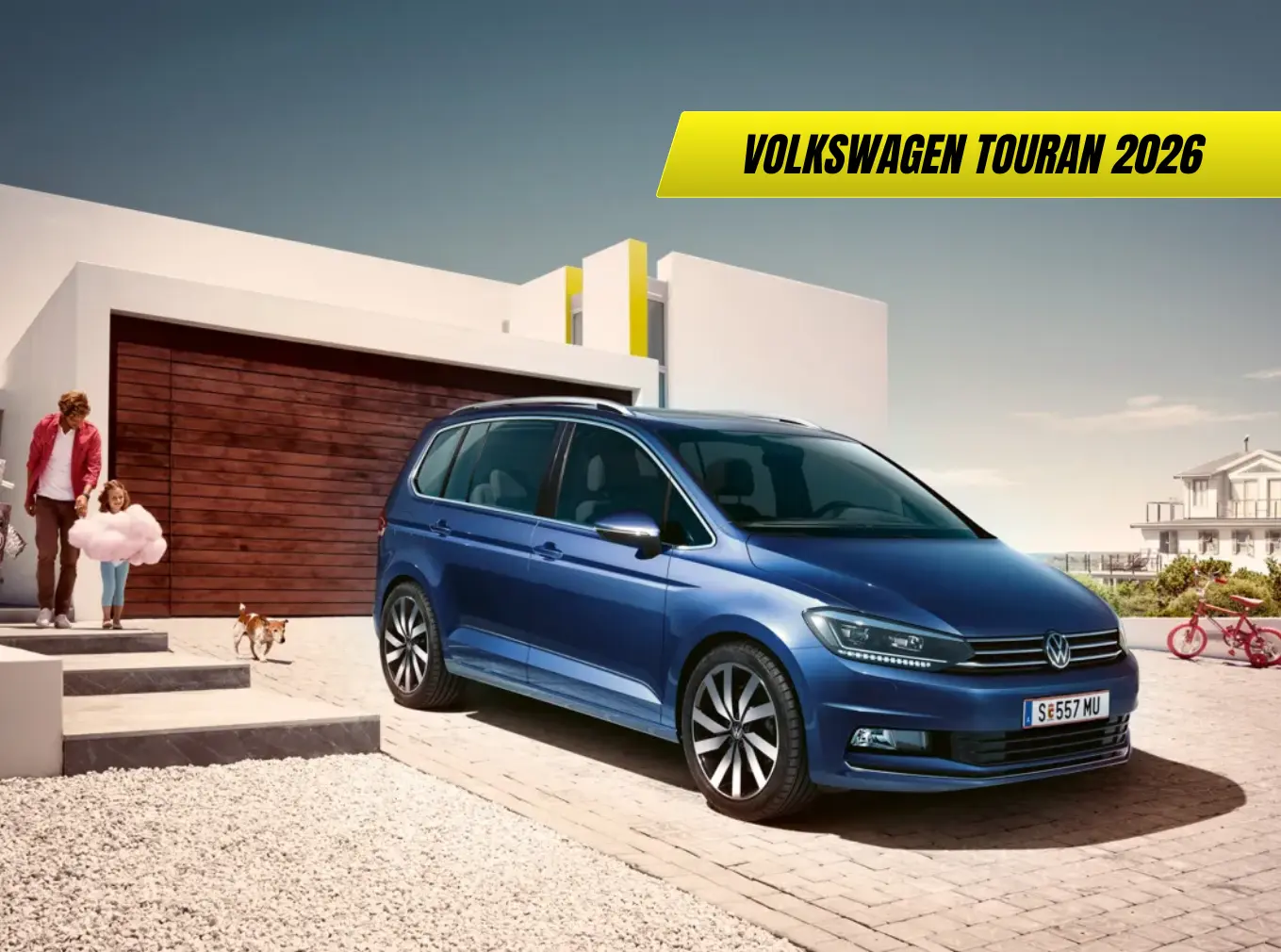
After 23 years and two generations, Volkswagen has confirmed the end of Touran production at the Wolfsburg plant — a farewell that marks the near-extinction of the traditional family MPV in the UK and European market.
The Volkswagen Touran has been a fixture of British family motoring since 2003 — a sensible, spacious seven-seat people carrier that earned a loyal following among families who prioritised practicality over style. In April 2026, the Wolfsburg production line built its last Touran, ending a 23-year production run that saw over 2.5 million examples sold worldwide. The cause of death, as with so many MPVs before it, is the relentless rise of the family SUV. For families now searching for a seven-seat alternative, our guides to the best SUVs under £40k and the Dacia Jogger Facelift 2025 offer practical alternatives.
Volkswagen Touran: Key Facts
- Production ended at Wolfsburg, Germany in April 2026 after 23 years
- Two generations produced: 2003–2015 (Mk1) and 2015–2026 (Mk2)
- Seven-seat layout with folding third-row seats integrated into the boot floor
- Withdrawn from the UK market in 2022/2023 as consumer preferences shifted to SUVs
- Replaced in VW’s European lineup by the larger Tayron as the brand’s biggest non-SUV family car
- Peak UK sales year: approximately 18,000 units in 2007
Why Did the Touran Die?
The Touran’s demise is a microcosm of one of the most significant shifts in automotive consumer behaviour of the past two decades. When it launched in 2003, the compact MPV was the default choice for family buyers who needed seven seats — offering car-like dynamics, efficient packaging and sensible running costs in a format that was specifically designed around family life.
By the mid-2010s, the segment was already contracting sharply as manufacturers launched a wave of SUV crossovers — taller, more visually dramatic vehicles that offered comparable interior space with a more aspirational image. Buyers who once would have automatically chosen a Touran, Ford C-Max or Renault Scenic began choosing a Volkswagen Tiguan, Ford Kuga or Renault Kadjar instead — even when the MPV was objectively the more practical vehicle for their needs.
Volkswagen’s own data confirmed the trend: by 2022, UK Touran sales had fallen to a level that made continued market investment commercially unviable, and the model was quietly removed from UK price lists. Production continued for other European markets, but the Wolfsburg line’s end in April 2026 closes the chapter entirely.
The Touran’s Legacy
For all its unassuming character, the Touran was an exceptionally well-engineered car. Several features were genuinely ahead of their time:
- Fold-flat third row: The rear seats folded completely flat into the boot floor — a genuinely clever packaging solution that made the Touran usable as both a five-seat practical estate and a true seven-seater
- Sliding middle row: The centre bench slid fore and aft to balance boot space and rear legroom — a flexibility that many modern SUVs still do not offer
- Boot volume of up to 1,857 litres: With all seats folded, the Touran offered van-like load capacity in a car-sized package
- Efficient diesel options: The 2.0 TDI variants returned genuine 50+ MPG in real-world use, making the Touran one of the most economical family seven-seaters available
What Replaces the Touran for UK Families?
With the Touran gone and the compact MPV segment reduced to just a handful of survivors — the Renault Scenic E-Tech Electric, Ford Tourneo Connect and the remarkably value-focused Dacia Jogger — UK families in the market for a practical seven-seater have a narrower choice than at any point in the past two decades.
| Model | Seats | Boot (max L) | UK Price (from) | Powertrain |
|---|---|---|---|---|
| Volkswagen Tayron | 7 | 1,920 | £37,425 | Petrol/Hybrid/PHEV |
| Dacia Jogger Facelift | 7 | 1,819 | £17,595 | Petrol/Hybrid |
| Renault Scenic E-Tech | 5 | 1,670 | £36,995 | Full Electric |
| Ford Tourneo Connect | 7 | 2,387 | £29,995 | Petrol/Diesel |
| Toyota Corolla Cross | 5 | 596 | £34,925 | Hybrid |
In my experience, the Dacia Jogger is the closest spiritual successor to what the Touran represented at its best — a genuinely practical, seven-seat family car at an honest price. For families who want more premium positioning, the Volkswagen Tayron — essentially the Touran’s spiritual successor within VW’s own lineup — is the logical alternative.
The Broader MPV Decline: A UK Story
The Touran’s end is part of a much wider extinction event for the traditional family MPV in the UK. Consider what has been lost in just the past decade:
- Ford C-Max — discontinued 2019
- Ford Grand C-Max — discontinued 2019
- Vauxhall Zafira — discontinued 2019
- Citroën C4 Picasso/Grand C4 Picasso — discontinued 2023
- SEAT Alhambra — discontinued 2022
- Volkswagen Sharan — discontinued 2022
- Volkswagen Touran — discontinued 2026
The segment has contracted from over 15 mainstream models to fewer than five in the space of a decade — a collapse almost entirely driven by SUV crossover competition. The irony is that most family SUVs are objectively less practical than the MPVs they replaced — lower rooflines, smaller boots and more compromised third-row seating — yet the market’s preference for style over function has proved overwhelming.
A Final Word on the Touran
“The Touran was never exciting. It was never aspirational. But it was always exactly what it needed to be — a brilliantly engineered, supremely practical family car that got on with the job without complaint.” — Auto Express
From my point of view, the automotive industry is slightly poorer for the Touran’s passing. It represented a philosophy — function over form, practicality over image — that deserves more respect than the market has been willing to give it. If you can find a late example in good condition, I would recommend it unreservedly as a used family purchase: outstanding value, proven reliability and a boot that genuinely swallows everything a family can throw at it.
FAQ
Why did Volkswagen discontinue the Touran?
Declining sales driven by the shift of family buyers towards SUV crossovers made continued production commercially unviable. Volkswagen ended Touran production at Wolfsburg in April 2026.
When did the Touran leave the UK market?
The Touran was withdrawn from the UK price list in 2022/2023, though European production continued until April 2026.
What replaces the Volkswagen Touran?
Within Volkswagen’s own lineup, the Tayron (from £37,425) is the brand’s largest non-SUV family car. For budget-conscious buyers, the Dacia Jogger (from £17,595) is the most practical affordable alternative.
How many Volkswagen Tourans were sold?
Over 2.5 million examples were produced and sold worldwide across 23 years of production.
How many seats did the Volkswagen Touran have?
The Touran was available in five and seven-seat configurations, with the rear seats folding flat into the boot floor.
What is the best alternative to the Touran for UK families?
For value, the Dacia Jogger from £17,595. For premium positioning, the Volkswagen Tayron from £37,425. Both offer seven seats and comparable practicality.
Is the Touran still available to buy in the UK?
The Touran is no longer sold new in the UK, but late used examples are available through the used car market. Check AutoTrader or your nearest Volkswagen dealer for pre-owned stock.
Conclusion
The Volkswagen Touran’s end of production marks the passing of an era for British family motoring. For 23 years it served hundreds of thousands of UK families with quiet, unfussy competence — seven seats, a massive boot and genuinely low running costs in a package that never demanded attention or admiration. The SUV may have won the style war, but the Touran won the practicality argument every single time. Its absence from the new car market is a genuine loss, and I suspect many families who dismissed it in favour of a crossover will look back with a degree of regret.





