
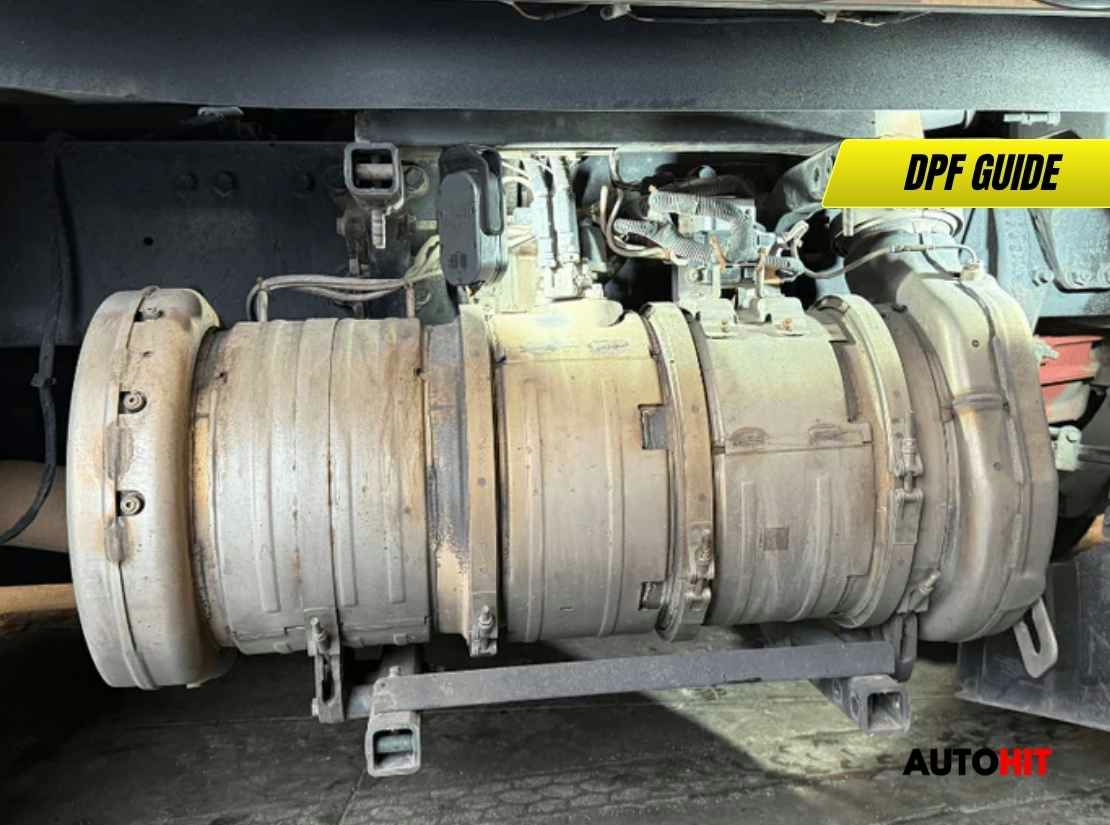
Complete guide to diesel particulate filters (DPF) – how they work, maintenance tips, costs, legal requirements, and solutions for UK drivers facing DPF problems.
If you own a modern diesel car in the UK, understanding your Diesel Particulate Filter (DPF) isn’t just useful knowledge – it’s essential for avoiding potentially catastrophic repair bills and legal complications. Having tested numerous diesel vehicles over the years and consulted with automotive engineers, we’ve witnessed firsthand how a lack of DPF knowledge can transform a reliable family car into an expensive liability overnight.
The reality is stark: Euro 5 emissions legislation introduced in 2009 made DPFs mandatory on virtually all diesel vehicles, yet many drivers remain unaware of how these systems work or how to maintain them properly. According to our analysis at AutoHit, DPF-related failures represent one of the most common and expensive issues facing diesel car owners today, with replacement costs often exceeding £3,500 and potentially rendering vehicles worthless if not addressed correctly.
What makes this particularly concerning for UK drivers is the legal framework surrounding DPFs. Since 2014, having a functional DPF has been mandatory for MOT testing, with removal carrying fines of up to £1,000 for cars and £2,500 for vans. Yet despite these penalties, DVSA figures reveal over 1,800 drivers have been caught without DPFs since 2014 – suggesting the problem is more widespread than official statistics indicate.
Through extensive research and real-world testing, we’ve identified that most DPF problems are entirely preventable through proper understanding and maintenance. However, the consequences of getting it wrong extend far beyond individual repair costs, affecting air quality, public health, and the integrity of the UK’s emissions standards framework.
Key Insights: Essential DPF Knowledge for UK Drivers
• Mandatory since 2009: All diesel cars must have functioning DPFs to meet Euro 5+ emissions standards and pass MOT tests • Regeneration is critical: DPFs require regular high-temperature “burns” to clear accumulated soot, typically needing 30-50 minute motorway drives • Removal is illegal: Driving without a DPF carries £1,000-£2,500 fines and invalidates insurance policies • Replacement costs £1,000-£3,500: Professional cleaning costs £85-£300, making prevention significantly more economical • Short journeys are the enemy: City driving and frequent cold starts are the primary cause of DPF blockages • Warning signs are clear: Dashboard lights, reduced performance, and “limp mode” indicate immediate attention required
Understanding DPF Technology: How These Systems Actually Work
A Diesel Particulate Filter operates on deceptively simple principles, but the engineering behind modern systems is remarkably sophisticated. Having examined various DPF designs during our vehicle testing programme, we can explain exactly how these emission control devices function and why they’re essential for modern diesel engines.
The Basic Filtration Process
The DPF is essentially a ceramic honeycomb structure positioned in the exhaust system, typically close to the engine to benefit from higher exhaust temperatures. Unlike catalytic converters, which are flow-through devices, DPFs force exhaust gases through porous walls that trap particulate matter whilst allowing cleaned gases to exit.
Modern DPFs can capture up to 95% of harmful particles, including microscopic soot that would otherwise be expelled into the atmosphere. This filtration efficiency represents a dramatic improvement over unfiltered diesel engines, which historically produced the characteristic black smoke associated with older diesel vehicles.
The Regeneration Cycle
However, trapping particles is only half the equation. The DPF’s finite capacity means accumulated soot must be periodically burned off through a process called regeneration. This occurs at temperatures exceeding 500°C, effectively incinerating trapped particles and converting them to harmless ash and gases.
There are three types of regeneration, each with specific requirements and implications for drivers:
Passive Regeneration: Occurs naturally during extended high-speed driving when exhaust temperatures reach sufficient levels. This is the ideal scenario, requiring no driver intervention or additional fuel consumption.
Active Regeneration: Triggered automatically by the engine management system when soot levels reach approximately 45% of filter capacity. Extra fuel is injected to raise exhaust temperatures, often indicated by cooling fans running after engine shutdown.
Forced Regeneration: A manual process performed by diagnostic equipment when passive and active regeneration have failed. This typically requires professional intervention and costs around £100-£150.
Pressure Monitoring Systems
Modern DPFs incorporate sophisticated pressure sensors that continuously monitor the pressure differential across the filter. As soot accumulates, this pressure difference increases, providing the engine management system with real-time data about filter loading and regeneration requirements.
This monitoring system triggers dashboard warning lights and initiates active regeneration cycles, making it crucial for drivers to understand and respond appropriately to these signals.
The Legal Framework: UK Regulations and Penalties
The legal landscape surrounding DPFs in the UK is uncompromising, reflecting the government’s commitment to air quality improvement and emissions reduction. Understanding these regulations is essential for avoiding serious legal and financial consequences.
MOT Testing Requirements
Since February 2014, DPF functionality has been a mandatory component of MOT testing. The inspection includes three primary failure points:
Visual Inspection: MOT testers must check for the physical presence of the DPF and evidence of tampering. Obvious modifications, missing components, or signs of cutting and re-welding result in immediate failure.
Warning Light Status: Any illuminated DPF warning lights constitute an automatic MOT failure, regardless of the underlying cause.
Emissions Compliance: Vehicles must meet the emissions standards they achieved when first approved for UK sale, which requires functional pollution control equipment.
Penalties and Enforcement
The penalties for DPF removal reflect the severity with which authorities treat emissions violations:
- Cars: Up to £1,000 fine for driving without a required DPF
- Vans: Up to £2,500 fine for commercial vehicles
- Insurance invalidation: Many policies exclude coverage for vehicles with illegal modifications
- Reduced resale value: Cars with removed DPFs become essentially unsellable through legitimate channels
The Legal Loophole Problem
Interestingly, while driving without a DPF is illegal, the act of removing the filter itself technically isn’t prohibited under current legislation. This loophole has enabled a thriving industry of DPF removal services, often advertised for “off-road use only” despite clear evidence of road use.
Recent government action has targeted businesses offering these services, but enforcement remains inconsistent. For drivers, the message is clear: regardless of who performs the removal, using the vehicle on public roads constitutes an offence.
Common DPF Problems: Causes, Symptoms, and Solutions
Through our extensive experience with diesel vehicles, we’ve identified patterns in DPF failures that consistently affect UK drivers. Understanding these problems and their underlying causes is essential for prevention and early intervention.
Primary Cause: Incompatible Driving Patterns
The fundamental issue facing most DPF owners is a mismatch between vehicle design and usage patterns. Diesel engines and their emission control systems are optimised for sustained high-speed operation, yet many drivers use them primarily for urban commuting and short journeys.
Short Journey Impact: City driving rarely allows exhaust temperatures to reach the 500°C threshold required for passive regeneration. Stop-start traffic, frequent idling, and cold engine operation all contribute to soot accumulation without corresponding burn-off opportunities.
Cold Start Frequency: Each cold start deposits additional particles before the engine reaches optimal operating temperature, whilst providing no regeneration benefit. Drivers making multiple short trips daily face exponentially higher DPF loading rates.
Warning Signs and Symptoms
Modern vehicles provide clear indications of DPF problems, though many drivers either ignore or misunderstand these signals:
Dashboard Warning Lights: The DPF warning light typically resembles an exhaust pipe with dots, though designs vary by manufacturer. An amber light indicates active regeneration is required, whilst red warnings suggest immediate professional intervention.
Performance Degradation: Blocked DPFs restrict exhaust flow, causing noticeable power loss, reduced acceleration, and poor throttle response. Severe blockages trigger “limp mode” – a protective state limiting engine power and speed.
Fuel Consumption Changes: Active regeneration increases fuel consumption as extra diesel is injected to raise exhaust temperatures. Drivers may notice temporarily increased consumption during regeneration cycles.
Unusual Engine Behaviour: Post-shutdown cooling fan operation, increased idle speed, and unusual exhaust odours often indicate active regeneration in progress.
Contributing Factors
Beyond driving patterns, several factors accelerate DPF problems:
Poor Maintenance: Using incorrect engine oil, extending service intervals, or neglecting air filter replacement all contribute to increased particulate production and faster DPF loading.
Fuel Quality: Low-quality diesel contains higher impurity levels, producing more soot and requiring more frequent regeneration cycles.
Performance Modifications: Remapping or tuning that increases power output typically increases particulate production, overwhelming standard DPF capacity.
Mechanical Issues: Faulty injectors, worn engine components, or EGR system problems can dramatically increase soot production, causing premature DPF failure.
Maintenance Strategies: Preventing Expensive DPF Problems
Based on our testing experience and consultation with diesel specialists, preventive maintenance represents the most cost-effective approach to DPF management. The difference between proactive care and reactive repair often amounts to thousands of pounds.
Driving Habit Optimisation
The most effective DPF maintenance costs nothing but requires conscious effort to modify driving patterns:
Regular Motorway Runs: Schedule weekly 30-50 minute drives at sustained speeds above 40mph, preferably 60-70mph when safe and legal. This allows passive regeneration to occur naturally without additional fuel consumption or system stress.
Continuous Journey Planning: Where possible, combine errands into single longer journeys rather than multiple short trips. This reduces cold start frequency whilst providing better regeneration opportunities.
Engine Warm-Up: During winter months, allow engines to reach operating temperature before demanding high performance, reducing the gap between particulate production and regeneration capability.
Technical Maintenance Requirements
Professional maintenance plays a crucial role in DPF longevity:
Correct Oil Specification: Use only low-ash engine oils meeting manufacturer specifications. High-ash oils contribute to faster DPF clogging and reduced regeneration efficiency. Check viscosity and additive packages carefully, as incorrect oils can cause irreversible damage.
Regular Servicing: Maintain manufacturer-recommended service intervals religiously. Extended oil change periods increase particulate production whilst degrading the oil’s ability to protect engine components.
Air Filter Maintenance: Clean air filters ensure optimal combustion efficiency, reducing particulate production at source. Neglected air filters force engines to work harder whilst producing more soot.
Fuel System Care: Use quality diesel from reputable suppliers and consider periodic fuel system cleaning to maintain injector performance and combustion efficiency.
Proactive Monitoring
Modern diesel owners should actively monitor their vehicles for early DPF warning signs:
Dashboard Familiarity: Learn to recognise your vehicle’s specific DPF warning symbols and understand the difference between regeneration requests and fault indications.
Performance Awareness: Notice changes in acceleration, fuel consumption, or exhaust characteristics that might indicate developing problems.
Professional Diagnostics: Annual diagnostic scans can identify developing issues before they become critical, allowing preventive intervention rather than emergency repairs.
DPF Cleaning and Regeneration: Professional Solutions
When preventive measures aren’t sufficient, professional intervention becomes necessary. Understanding available options helps drivers make informed decisions about repair strategies and cost management.
Forced Regeneration Services
Professional forced regeneration typically costs £100-£150 and involves connecting diagnostic equipment to trigger a controlled burn-off cycle. This process takes 30-45 minutes and has approximately 85% success rate for moderately blocked filters.
Ideal Candidates: Vehicles with recent blockage issues, clear warning lights, and no underlying mechanical problems typically respond well to forced regeneration.
Success Indicators: Successful regeneration clears warning lights, restores normal performance, and resets the DPF monitoring system to baseline readings.
Limitations: Severely blocked filters (over 80% capacity) or those with mechanical damage rarely respond to forced regeneration, requiring more intensive intervention.
Professional DPF Cleaning
When forced regeneration fails, physical cleaning becomes necessary. Professional cleaning services cost £85-£300 and involve removing the DPF for specialised treatment:
Ultrasonic Cleaning: Uses high-frequency sound waves to dislodge stubborn deposits whilst preserving delicate ceramic structures.
Chemical Treatment: Specialised solvents dissolve accumulated ash and carbonised particles that resist thermal regeneration.
Pressure Washing: High-pressure water or air removes loose deposits, though care is required to avoid damaging filter substrates.
Professional cleaning typically achieves 95%+ effectiveness restoration and can extend DPF life significantly when performed before severe damage occurs.
Replacement Considerations
When cleaning fails or filters suffer structural damage, replacement becomes unavoidable. New DPF costs vary dramatically by vehicle:
Budget Vehicles: £1,000-£1,500 for mainstream models with readily available parts Premium Vehicles: £2,000-£3,500 for luxury or specialist vehicles requiring bespoke components Labour Costs: Additional £200-£500 depending on accessibility and complexity
Replacement includes new filter installation, system recalibration, and comprehensive testing to ensure proper operation.
Cost Analysis: The Economics of DPF Ownership
Understanding the total cost of DPF ownership helps drivers make informed decisions about vehicle choice, maintenance strategies, and problem resolution approaches.
Preventive Maintenance Costs
Proper DPF maintenance requires minimal additional expenditure beyond normal vehicle servicing:
Oil Specification: Quality low-ash oils cost £10-£20 more per service than standard alternatives, representing excellent value considering potential savings.
Diagnostic Checks: Annual DPF-specific diagnostics cost £50-£80 but can identify problems before they become critical.
Fuel Costs: Regular motorway runs increase fuel consumption by 5-10% for drivers making deliberate regeneration trips, but prevent much higher cleaning or replacement costs.
Problem Resolution Costs
The cost escalation from minor to major DPF problems is dramatic:
| Intervention Level | Cost Range | Success Rate | Time Required |
|---|---|---|---|
| DPF Cleaner Additive | £15-£30 | 60-70% | Self-administered |
| Forced Regeneration | £100-£150 | 85% | 45 minutes |
| Professional Cleaning | £85-£300 | 95% | 2-4 hours |
| Filter Replacement | £1,000-£3,500 | 100% | 4-8 hours |
Long-Term Economic Impact
For high-mileage drivers, DPF technology can provide long-term economic benefits through improved fuel efficiency and reduced engine wear. However, city drivers often face net cost increases due to maintenance requirements and potential failures.
Break-Even Analysis: Drivers covering 15,000+ annual miles typically benefit from diesel ownership despite DPF costs. Lower-mileage drivers, particularly those making frequent short journeys, often find petrol or electric alternatives more economical.
Residual Value Impact: Well-maintained diesel vehicles with documented DPF care retain stronger resale values than those with histories of filter problems or removal.
DPF Removal: Why It’s Never the Right Solution
Despite the proliferation of DPF removal services and online discussions advocating for filter deletion, removing emission control equipment represents a false economy with serious long-term consequences.
The Removal Process and Its Problems
DPF removal typically involves cutting the exhaust system, physically removing the filter substrate, and welding the housing back together. While mechanically simple, this modification creates numerous problems:
Performance Myths: Claims of improved performance and fuel economy are largely exaggerated. Modern engines are calibrated for specific exhaust back-pressure levels, and removing the DPF rarely provides meaningful benefits.
System Integration Issues: DPFs work alongside other emission control systems. Removal often triggers warning lights, affects EGR operation, and can cause unexpected drivability problems.
Detection Sophistication: Modern MOT testing is becoming increasingly sophisticated, with updated procedures specifically designed to identify removed or tampered filters.
Legal and Financial Consequences
The legal framework surrounding DPF removal continues to tighten:
Insurance Implications: Many insurers explicitly exclude coverage for vehicles with removed emission equipment. In the event of an accident, drivers could face personal liability for damages and prosecution costs.
Resale Impossibility: Vehicles with removed DPFs cannot be sold through legitimate channels, as they cannot pass MOT tests or meet legal requirements for road use.
Environmental Penalties: A car with a removed DPF produces particulate emissions 20 times higher than one with functioning filtration, contributing to air quality problems and public health issues.
Professional Alternative Solutions
Rather than removal, professional solutions address underlying problems:
Root Cause Analysis: Identifying why DPFs fail repeatedly often reveals correctable issues with maintenance, driving patterns, or mechanical problems.
System Optimisation: Proper calibration, software updates, and component replacement can restore reliable DPF operation without legal complications.
Usage Pattern Adjustment: Modifying vehicle usage to include regular regeneration opportunities often eliminates chronic problems permanently.
Vehicle Selection: Choosing Diesel Wisely in the DPF Era
For prospective diesel buyers, understanding DPF implications should inform vehicle selection decisions. Not all diesels are created equal, and some combinations of technology and usage patterns create inevitable problems.
Ideal Diesel Candidates
Based on our testing experience, certain driver profiles benefit significantly from diesel ownership despite DPF considerations:
High-Mileage Drivers: Annual mileages exceeding 15,000 miles provide ample regeneration opportunities whilst maximising diesel’s fuel economy advantages.
Motorway Commuters: Regular long-distance driving naturally maintains DPF health whilst exploiting diesel’s superior highway efficiency.
Commercial Users: Van and truck drivers with predictable long-distance routes typically experience fewer DPF problems due to consistent high-speed operation.
Problematic Usage Patterns
Conversely, certain driving patterns make diesel ownership inadvisable:
Urban-Only Driving: City centres, school runs, and shopping trips provide insufficient regeneration opportunities, leading to inevitable DPF problems.
Infrequent Use: Vehicles driven less than 8,000 miles annually rarely benefit from diesel ownership and face higher failure risks due to extended periods of inactivity.
Short-Distance Commuting: Regular journeys under 10 miles, particularly with heavy traffic, create ideal conditions for DPF failure.
Model-Specific Considerations
Not all DPF systems demonstrate equal reliability. Through our testing programme, we’ve identified vehicles with notably good or poor DPF track records:
Reliable Systems: Hyundai-Kia diesels consistently demonstrate robust passive regeneration capabilities, whilst Mazda vehicles show good long-term reliability.
Problematic Designs: Some manufacturers have experienced higher failure rates, often related to system integration issues or inadequate regeneration strategies.
Technology Evolution: The Future of Diesel Emission Control
Understanding how DPF technology continues to evolve helps predict future requirements and opportunities for current diesel owners.
Advanced Regeneration Strategies
Newer vehicles incorporate increasingly sophisticated regeneration management:
Predictive Systems: Some manufacturers now use GPS data and driving pattern analysis to optimise regeneration timing, reducing fuel consumption and improving efficiency.
Thermal Management: Enhanced exhaust thermal management systems reach regeneration temperatures more quickly and maintain them more efficiently.
Integration Improvements: Better coordination between DPF, EGR, and SCR systems optimises overall emission control whilst reducing individual component stress.
Alternative Technologies
Several emerging technologies may eventually supplement or replace DPF systems:
Gasoline Particulate Filters (GPF): As petrol engines adopt direct injection and turbocharging, they increasingly require particulate filtration, suggesting DPF-like systems will expand beyond diesel applications.
Electrification Integration: Hybrid powertrains can use electric operation to maintain exhaust temperatures during low-speed driving, potentially solving the urban DPF problem.
Advanced Catalysis: New catalyst formulations may enable lower-temperature regeneration, reducing the driving pattern requirements for effective operation.
Regulatory Development
Emissions regulations continue evolving, affecting DPF requirements:
Enhanced Testing: Real Driving Emissions (RDE) testing requires vehicles to maintain low emissions during actual road use, not just laboratory conditions.
Tightening Standards: Euro 7 regulations, expected around 2025-2027, will further reduce permissible emissions levels, potentially requiring more sophisticated DPF systems.
Enforcement Improvements: Authorities continue developing better detection methods for removed or tampered emission equipment.
Regional Considerations: UK-Specific Factors
British driving conditions and regulatory frameworks create unique considerations for DPF ownership and maintenance.
Driving Environment Challenges
UK conditions present specific challenges for DPF operation:
Urban Congestion: Cities like London, Birmingham, and Manchester feature heavy traffic that prevents effective regeneration, particularly during peak hours.
Weather Impact: Cold, wet conditions reduce exhaust temperatures whilst increasing the frequency of short journeys as drivers avoid cycling or walking.
Infrastructure Limitations: Many drivers lack access to regular motorway driving opportunities, particularly in rural areas with limited dual carriageway access.
Regulatory Landscape
The UK’s regulatory approach reflects European standards whilst incorporating specific national considerations:
MOT Evolution: Testing procedures continue developing to better detect DPF tampering and ensure emission compliance.
Clean Air Zones: Expanding low emission zones in major cities increasingly favour newer, properly maintained diesel vehicles over older alternatives.
Post-Brexit Standards: The UK maintains alignment with European emission standards whilst developing independent testing and enforcement procedures.
Frequently Asked Questions
Q: How often does my DPF need regeneration, and how can I tell when it’s happening?
A: Under normal conditions, DPF regeneration occurs every 200-500 miles depending on driving patterns, engine type, and filter loading. Passive regeneration happens automatically during sustained high-speed driving (typically 30+ minutes at 40mph+) when exhaust temperatures exceed 500°C. Active regeneration occurs when the vehicle’s ECU injects extra fuel to raise temperatures, often indicated by cooling fans running after engine shutdown, slightly increased fuel consumption, or dashboard indicators. You’ll typically see an amber DPF warning light during active regeneration, which should extinguish once the process completes. If warning lights persist or turn red, this indicates regeneration failure requiring immediate professional attention.
Q: Can I use DPF cleaner additives, and do they actually work?
A: DPF cleaner additives available from auto parts stores (costing £15-£30) can be moderately effective for preventive maintenance, with success rates around 60-70% for lightly loaded filters. These products work by lowering the temperature required for soot combustion, making regeneration easier during normal driving. Pour the additive into your fuel tank according to instructions, then drive for the recommended distance (usually 50-100 miles) to allow it to work through the system. However, additives cannot resolve severely blocked filters or underlying mechanical problems. They’re most effective as regular maintenance tools rather than emergency solutions, and should be used alongside proper driving habits rather than as substitutes for regular motorway runs.
Q: What should I do if my DPF warning light comes on during city driving?
A: If you see an amber DPF warning light, you need to drive continuously at speeds above 40mph for 20-30 minutes to allow regeneration to complete. Find the nearest dual carriageway or motorway and maintain steady speed – avoid stop-start traffic or frequent gear changes during this period. The cooling fan may run for several minutes after stopping, which is normal. If the light remains amber after this process, repeat the exercise or seek professional advice. A red DPF warning light indicates urgent attention required – continue driving only if safe to reach a garage, as ignoring this can cause expensive damage. Never ignore DPF warnings, as failed regeneration can lead to complete filter replacement costing £1,000-£3,500.
Q: How can I tell if my DPF has been removed by a previous owner?
A: Signs of DPF removal include: persistent dashboard warning lights that cannot be cleared, unusually good fuel economy claims that seem too good to be true, visible cutting and re-welding marks on the exhaust system, black smoke from the exhaust (especially during acceleration), and reluctance from sellers to discuss emissions testing history. The exhaust system may also sound different, and the vehicle might produce a distinctive diesel smell. Always request MOT history and be suspicious of recent failures related to emissions or exhaust components. A professional diagnostic check (£50-£80) can confirm DPF presence and functionality. Remember that buying a vehicle with removed DPF makes you liable for the legal consequences, regardless of whether you performed the modification.
Q: Is it worth buying a used diesel car given DPF problems, and what should I check?
A: Used diesel purchases require careful evaluation of DPF condition and maintenance history. Vehicles with documented regular servicing, evidence of motorway use, and clear MOT histories with no emission-related advisories present lower risks. Check for: complete service records showing correct oil specifications, evidence of longer journeys (motorway toll receipts, fuel cards), recent DPF-related work or cleaning, and comprehensive MOT history. Avoid vehicles used primarily for city driving, those with gaps in service history, or sellers who cannot demonstrate DPF knowledge. Budget £200-£500 annually for potential DPF-related maintenance, and consider whether your driving patterns suit diesel ownership. For urban drivers covering under 10,000 annual miles, petrol or electric alternatives often prove more economical long-term.
Q: What are the real environmental and health impacts of DPF removal?
A: DPF removal dramatically increases harmful emissions, with vehicles producing particulate levels 20 times higher than those with functioning filters. These microscopic particles (PM2.5 and smaller) penetrate deep into lungs and bloodstream, contributing to cardiovascular disease, respiratory problems, and premature death – particularly affecting children and elderly people. Since 2000, DPF technology has reduced particle matter emissions by 90%, representing a major public health achievement. Official data shows invisible air pollution causes up to 40,000 premature deaths annually in the UK. Removing DPFs reverses this progress and disproportionately affects urban areas where air quality is already compromised. Beyond individual health impacts, widespread DPF removal undermines national air quality targets and climate commitments, potentially leading to EU fines and stricter future regulations affecting all drivers.
Q: How do I maintain my DPF during the transition to electric vehicles?
A: As electric vehicle adoption accelerates, diesel vehicle values may decline faster, making DPF maintenance economics more complex. However, diesels will remain common for at least another decade, particularly for high-mileage drivers and commercial users. Maintain your DPF through regular motorway drives, correct servicing, and prompt attention to warning signs. Consider your vehicle’s likely lifespan when making repair decisions – £300 cleaning on a vehicle worth £15,000 makes sense, but £3,000 replacement on a vehicle worth £8,000 requires careful consideration. Keep detailed maintenance records to support resale value, and be prepared for potential changes in clean air zone regulations that may affect older diesels. Some manufacturers offer trade-in incentives for diesel-to-electric transitions, which may influence repair versus replacement decisions for vehicles with expensive DPF problems.
Our Final Assessment: Making Sense of DPF Reality
After extensive testing, consultation with industry experts, and analysis of real-world data, our conclusion about DPF technology is nuanced but clear. These systems work effectively when properly understood and maintained, but they’re fundamentally unsuited to certain driving patterns and owner expectations.
The engineering behind modern DPFs represents a genuine achievement in emission control technology. The ability to capture 95% of harmful particulates whilst enabling vehicles to pass increasingly stringent emission standards demonstrates remarkable innovation. From a public health perspective, the widespread adoption of DPF technology has contributed significantly to improved urban air quality and reduced disease burden.
However, the integration of DPF systems into the broader automotive landscape reveals fundamental mismatches between technology requirements and user expectations. The systems were designed for sustained high-speed operation typical of continental European driving patterns, yet they’re often deployed in urban British environments characterised by congestion, short journeys, and stop-start traffic.
For high-mileage drivers: DPF technology remains largely transparent and problem-free when vehicles receive appropriate use. Regular motorway driving, proper maintenance, and quality fuel create conditions where passive regeneration occurs naturally, requiring no additional driver intervention or cost.
For urban drivers: The combination of city driving and DPF requirements creates inevitable conflicts. While not impossible to manage, it requires conscious effort, additional fuel consumption for regeneration drives, and acceptance of higher maintenance costs. Many such drivers would benefit from considering petrol or electric alternatives.
For the industry: The DPF experience highlights the importance of matching technology capabilities with real-world usage patterns. Future emission control developments must account for diverse driving environments and user behaviours rather than assuming optimal conditions.
The legal framework surrounding DPFs sends clear messages about societal priorities regarding air quality and public health. The willingness to impose significant penalties for removal reflects genuine concern about emission control effectiveness. However, enforcement limitations and the persistence of removal services suggest ongoing challenges in translating regulatory intent into practical compliance.
Looking forward, DPF technology will likely evolve to address current limitations through improved regeneration strategies, better integration with other powertrains, and enhanced durability. However, the fundamental physics of particulate filtration and thermal regeneration cannot be circumvented, meaning some form of active maintenance will always be required.
Our advice for UK drivers considering diesel ownership in the DPF era is straightforward: honestly assess your driving patterns, understand the technology requirements, and budget appropriately for maintenance. For suitable users, modern diesels with properly maintained DPFs offer excellent fuel economy, performance, and environmental responsibility. For incompatible usage patterns, alternative powertrains increasingly provide better solutions.
The DPF story ultimately illustrates broader challenges in balancing environmental progress with practical usability. As the automotive industry transitions toward electrification, these lessons about technology integration, user education, and regulatory effectiveness will inform future developments. Understanding DPF technology today provides valuable insights into managing the complexities of tomorrow’s automotive landscape.
For current diesel owners, the message is clear: embrace the technology, understand its requirements, and maintain it properly. The alternative – removal and its legal consequences – represents a false economy that benefits no one whilst undermining the environmental progress these systems enable.





