
Find out how the 2025 EU proposal for 17-year-old driving licences compares with UK laws. Learn the new age limits, training requirements, and safety implications for young drivers.
The debate over lowering the driving age to 17—or even earlier—has gained new momentum in 2025. The European Parliament has backed a proposal to allow 17-year-olds to drive under supervision across EU member states, aligning with safety reforms and driver training updates.
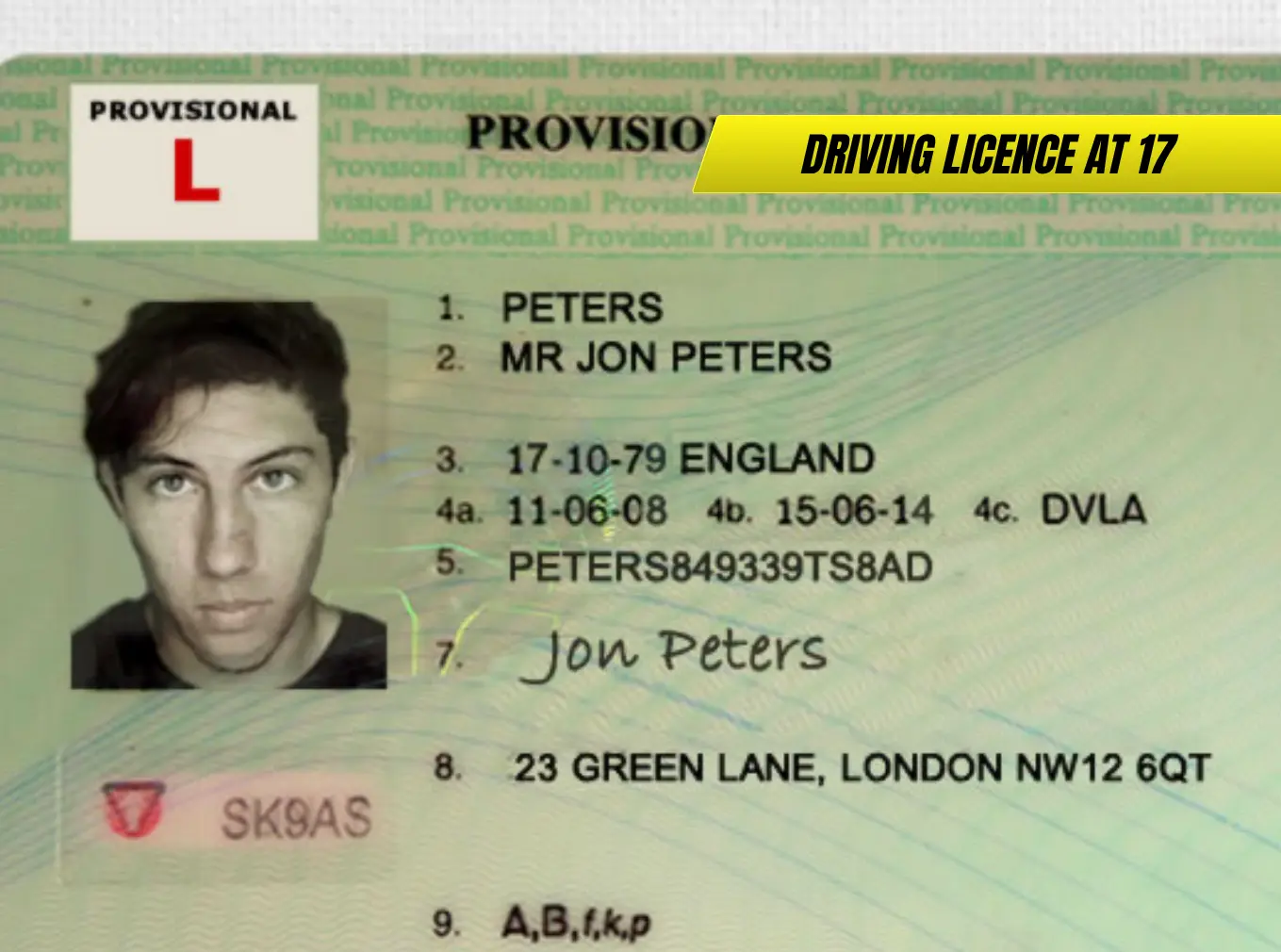
In the UK, however, driving rules remain distinct following Brexit. British teenagers can already apply for a provisional licence at 17, but upcoming safety reforms could change how young drivers are trained, tested, and insured.
Key Points
- The EU plans to allow 17-year-olds to drive under supervision before full licensing at 18.
- The UK already allows driving from 17, but stricter graduated licence proposals are under review.
- New telematics (“black box”) insurance will be mandatory for some young drivers by 2026.
- Road safety agencies aim to reduce accidents among under-21 drivers by 30% by 2030.
- Digital and biometric licences will become standard across both the UK and EU.
The EU’s 2025 Driving Licence Reform
In March 2025, the European Parliament approved a draft reform to harmonise driver training across Europe.
The key change: allowing learner drivers aged 17 to drive under the supervision of an experienced adult.
Other highlights include:
- A new digital EU driving licence accessible on smartphones.
- Stronger penalties for cross-border offences (speeding, drink driving).
- Enhanced medical and vision checks every 15 years.
“This reform is designed to make driving safer, greener, and more consistent across the Union,” stated Karima Delli, Chair of the European Parliament’s Transport Committee.
While this reform does not apply automatically to the UK, it could influence future British policy, especially around youth driver training and road safety education.
The Current UK Driving Age Rules
In the United Kingdom, you can:
- Apply for a provisional licence at 15 years and 9 months.
- Start driving lessons at 17 (16 for some disabled drivers).
- Take the theory and practical driving tests from 17 onwards.
The DVSA (Driver and Vehicle Standards Agency) oversees testing, while the DVLA manages licensing.
Full driving privileges are granted only after passing both tests.
For comparison, see How to Renew Your Driving Licence in the UK 2025 – Full Guide for renewal requirements and documentation.
Proposed UK Graduated Licence System
The UK government has considered adopting a Graduated Driving Licence (GDL) system, similar to Canada and Australia.
Although not yet law, the plan under review in 2025 includes:
- A minimum learning period of 12 months.
- Night-time and passenger restrictions for new drivers under 21.
- A zero-alcohol limit for the first two years.
- Compulsory telematics insurance for young motorists.
This aims to reduce high-risk driving behaviour among new licence holders.
According to the Department for Transport, drivers aged 17–19 are four times more likely to be involved in fatal collisions than older adults.
Insurance Implications for 17-Year-Old Drivers
Insurance remains one of the biggest challenges for young motorists.
In 2025:
- The average annual premium for 17–19-year-olds exceeds £2,200.
- Telematics policies, which monitor driving behaviour, can cut costs by up to 40%.
- Some insurers offer “parental supervision discounts” for accompanied driving.
Popular insurers such as Admiral, Direct Line, and Aviva now integrate black-box technology with real-time driver feedback apps.
For context on how points affect coverage, check UK Driving Licence Points – What Happens at 12 Points.
How the UK Compares with the EU
| Category | United Kingdom | European Union (Proposed 2025 Reform) |
|---|---|---|
| Minimum driving age | 17 | 17 (with supervision) |
| Full licence age | 17 (after passing test) | 18 |
| Alcohol limit | 0.8 g/L (0 for learner drivers proposed) | 0.5 g/L (0 for novice drivers) |
| Telematics insurance | Optional (may become mandatory) | Optional |
| Digital driving licence | In testing phase | Standardised by 2026 |
Although the UK left the EU, it continues to align with some European standards for safety and technology.
Road Safety and Training Reforms
In 2025, the DVSA introduced several updates to improve young driver safety:
- Extended hazard perception modules in the theory test.
- Optional motorway driving lessons before the test.
- Integration of AI-based driver performance feedback during training.
Pilot programmes in Manchester and Bristol also test simulator-based learning for young drivers to handle emergency situations safely.
Expert Opinion
From my point of view, the UK system already provides earlier independence than the EU proposal, but lacks sufficient post-test supervision.
Allowing 17-year-olds to drive is reasonable if supported by:
- Stronger coaching frameworks.
- Insurance-linked safety incentives.
- Technology monitoring real-world driving habits.
The EU’s gradual approach could reduce accident rates significantly if combined with proper enforcement and parent involvement.
FAQs
Can you legally drive in the UK at 17?
Yes, once you hold a provisional licence and are supervised by a qualified instructor or driver over 21.
Will the EU’s 17-year-old licence rule apply in the UK?
No. The UK has its own licensing laws, though similar reforms may follow.
What is a graduated driving licence?
A phased system that limits new drivers’ conditions (night driving, alcohol) to reduce risk.
Can 17-year-olds drive alone in the UK?
Only after passing both theory and practical tests.
Will insurance costs drop for young drivers?
Possibly, through telematics and new safety-based incentive schemes expected in 2026.
Conclusion
The 2025 EU proposal for a 17-year-old supervised licence marks a major shift in European mobility policy.
Meanwhile, UK teenagers already enjoy earlier driving rights, but face high insurance costs and stricter safety expectations.
In my experience, the future of young driving in the UK will focus less on lowering age limits and more on smarter, safer training supported by technology.
Graduated licences, telematics, and digital IDs will define the next era of responsible young motorists.





