
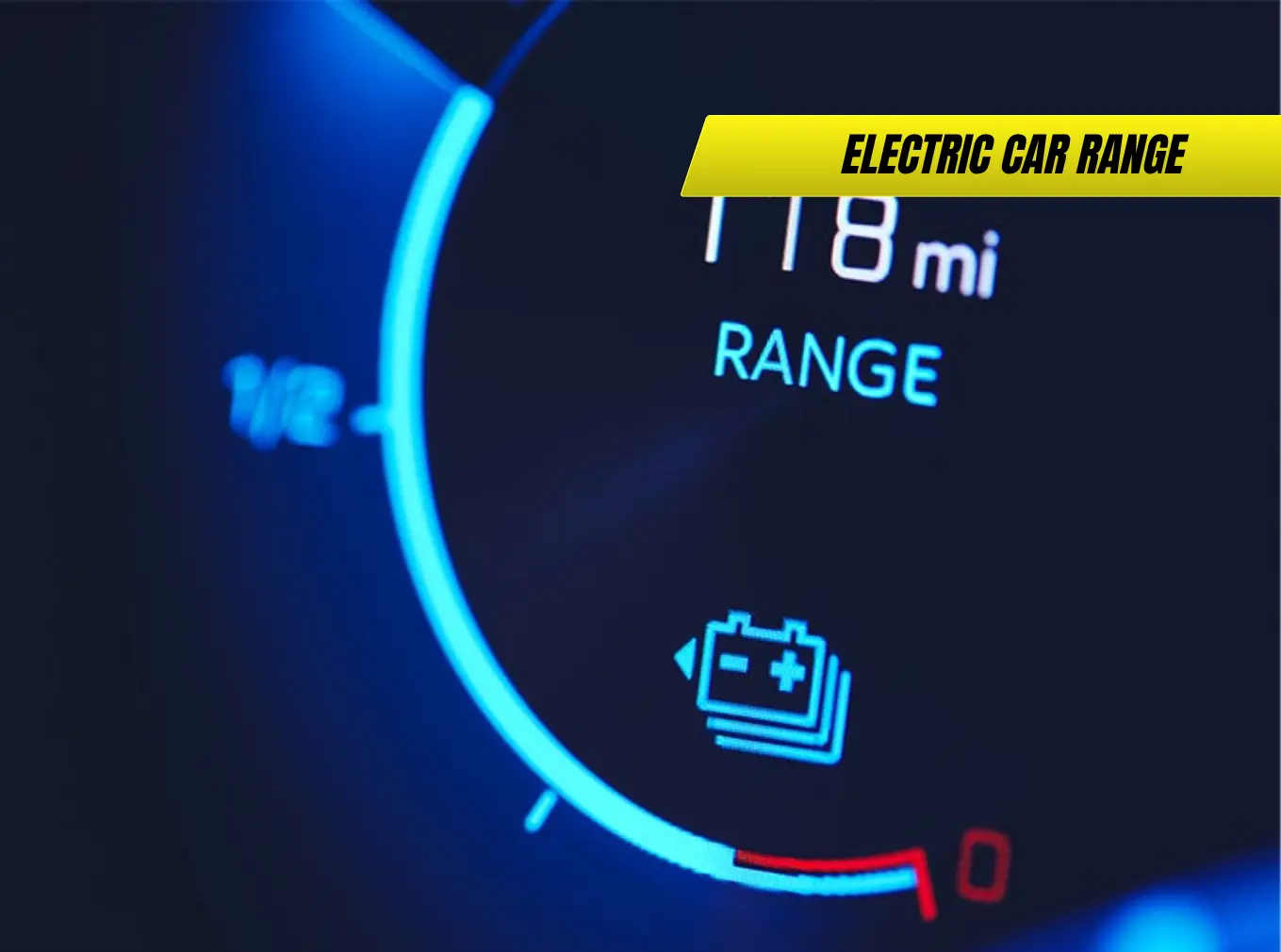
As electric vehicles dominate new car registrations in 2025, range anxiety is fading—but efficiency still depends heavily on driving habits, weather, and charging strategy. Manufacturers often quote optimistic WLTP figures, but real-world distances vary by as much as 25%. This guide explains how far the latest EVs travel per charge, what affects range, and how to get the most out of every kilowatt-hour on British roads.
Key Points
- Average real-world range in 2025: 230–300 miles.
- Official WLTP figures can be 15–25% higher than real data.
- Temperature, speed, and tyre pressure are the top range killers.
- Heat pumps and regen braking improve winter efficiency.
- Top 2025 models exceed 400 miles on a single charge.
Understanding EV Range Ratings
The Worldwide Harmonised Light Vehicles Test Procedure (WLTP) remains the EU and UK benchmark for EV range measurement.
However, WLTP assumes ideal temperatures (23°C), smooth driving, and no extra loads—conditions rarely met in Britain.
| Term | Meaning | Real Use |
|---|---|---|
| WLTP Range | Lab figure under optimal conditions | Ideal benchmark |
| Real-world Range | Based on average UK driving | 80–85% of WLTP |
| Highway Range | Sustained 70 mph motorway driving | 65–75% of WLTP |
From my point of view, the WLTP figure is a ceiling, not a promise.
Real-World Range of 2025’s Best-Selling EVs
| Model | Battery Size (kWh) | WLTP (miles) | Real Range (miles) | Fast-Charge Time (10–80%) |
|---|---|---|---|---|
| Tesla Model 3 Long Range | 75 | 390 | 330 | 25 min |
| Hyundai Ioniq 6 | 77.4 | 382 | 325 | 20 min |
| Kia EV6 | 77.4 | 328 | 290 | 18 min |
| VW ID.4 Pro | 77 | 322 | 280 | 28 min |
| MG4 EV Long Range | 64 | 281 | 240 | 35 min |
| Nissan Ariya | 87 | 329 | 295 | 30 min |
Cold weather, motorways, or strong headwinds can reduce those figures by 10–20%.
Factors That Affect Range
- Speed – Air resistance grows exponentially above 60 mph.
- Temperature – Batteries perform best between 15°C–25°C.
- Terrain – Hills increase consumption, though regen braking recovers energy downhill.
- Tyre pressure – Underinflation of 0.5 bar can cut range by 5%.
- Payload and roof racks – Extra weight or drag reduce efficiency.
- Climate control use – Cabin heating uses up to 10% of stored energy.
Efficiency by Season
| Season | Average Efficiency | Typical Range (60 kWh EV) |
|---|---|---|
| Spring / Autumn | 4.1 mi/kWh | 246 miles |
| Summer | 4.4 mi/kWh | 264 miles |
| Winter | 3.5 mi/kWh | 210 miles |
Heat pumps, now standard on most mid-range EVs, reduce winter range loss by 20–30%.
How to Maximise EV Range
- Use Eco or Efficiency mode to soften throttle response.
- Precondition the cabin while plugged in to save battery power.
- Avoid 100% charges—operate between 20–80% for best longevity.
- Plan routes with regenerative braking zones.
- Keep tyres inflated and remove roof boxes when not in use.
- Use cruise control on motorways to stabilise speed.
Modern EV navigation systems now integrate real-time consumption data and suggest optimal speeds for arrival with buffer charge.
Charging Strategy and Range Recovery
Charging speed depends on both charger power and the battery’s current state of charge.
| Charger Type | Power | 100 miles of Range Added | Time Required |
|---|---|---|---|
| 3-pin plug | 2.3 kW | 8 hours | 100 miles overnight |
| Home wallbox | 7.4 kW | 2 hours 30 min | 100 miles |
| Public rapid | 50 kW | 30 min | 100 miles |
| Ultra-rapid | 150–350 kW | 10–15 min | 100 miles |
Using smart tariffs like Octopus Go or OVO Charge Anytime saves roughly £500/year when charging mostly at home.
For a full breakdown of energy costs, see Electric Car Charging Costs UK 2025.
Long-Distance Driving in 2025
Thanks to over 70,000 charge points nationwide, including 10,000 ultra-rapids, range planning is simpler than ever.
Modern EVs with integrated route planners—like Tesla, Hyundai, and BMW systems—automatically map chargers along your route with live availability and pricing data.
Apps such as Zap-Map and A Better Routeplanner (ABRP) remain essential tools for long journeys.
Range vs Vehicle Type
| Category | Typical Battery | WLTP Range | Real Range |
|---|---|---|---|
| City car (Fiat 500e, MINI Electric) | 40 kWh | 190 | 160 |
| Compact hatchback (MG4, ID.3) | 60 kWh | 280 | 240 |
| SUV (EV6, Ariya, Enyaq) | 80 kWh | 330 | 290 |
| Luxury saloon (Model S, i7) | 100+ kWh | 400–450 | 360–400 |
| Pickup / Van (Transit E-Custom) | 75 kWh | 200 | 160 |
Efficiency drops as weight and frontal area increase.
Upcoming Range Milestones (2025–2026)
- Solid-state batteries expected to debut in late 2026 with 500+ mile range.
- BYD Blade 2.0 and Toyota’s solid-state prototype show degradation below 10% after 200,000 miles.
- Next-gen heat pumps and aerodynamic tyres could add 20–25 miles to average daily driving range.
These advances make the 400-mile EV the new standard for the decade’s end.
Real-World Example
A 2024 Hyundai Ioniq 5 owner driving 15,000 miles annually in mixed conditions reports:
- 4.0 mi/kWh summer average.
- 3.3 mi/kWh winter average.
- £420 total home-charging cost per year.
The result: consistent 250–270 mile range between charges, proving lab figures can align closely with practical use.
Expert Opinion
From my point of view, EV range is now more a question of planning than limitation.
Most modern electric cars easily cover typical UK weekly mileage on a single charge.
For commuters, off-peak home charging paired with regenerative driving eliminates anxiety and keeps energy costs predictable.
FAQs
How far can electric cars go in 2025?
Most models achieve 230–300 real miles, with premium EVs exceeding 400.
Does driving faster reduce range?
Yes. At 70 mph, energy use can double compared to urban speeds.
How much range do heaters or AC consume?
Around 5–10% depending on temperature.
What happens if I run out of charge?
Roadside recovery services now include mobile fast-chargers that add 20–30 miles in 15 minutes.
Will EV range improve soon?
Yes. 2026 models will reach 450–500 miles with new solid-state batteries.
In 2025, electric car range in the UK is no longer a barrier—it’s a manageable variable.
In my experience, disciplined charging, balanced speed, and efficient route planning keep most British EVs driving farther, cleaner, and cheaper than any petrol alternative on the road.





