
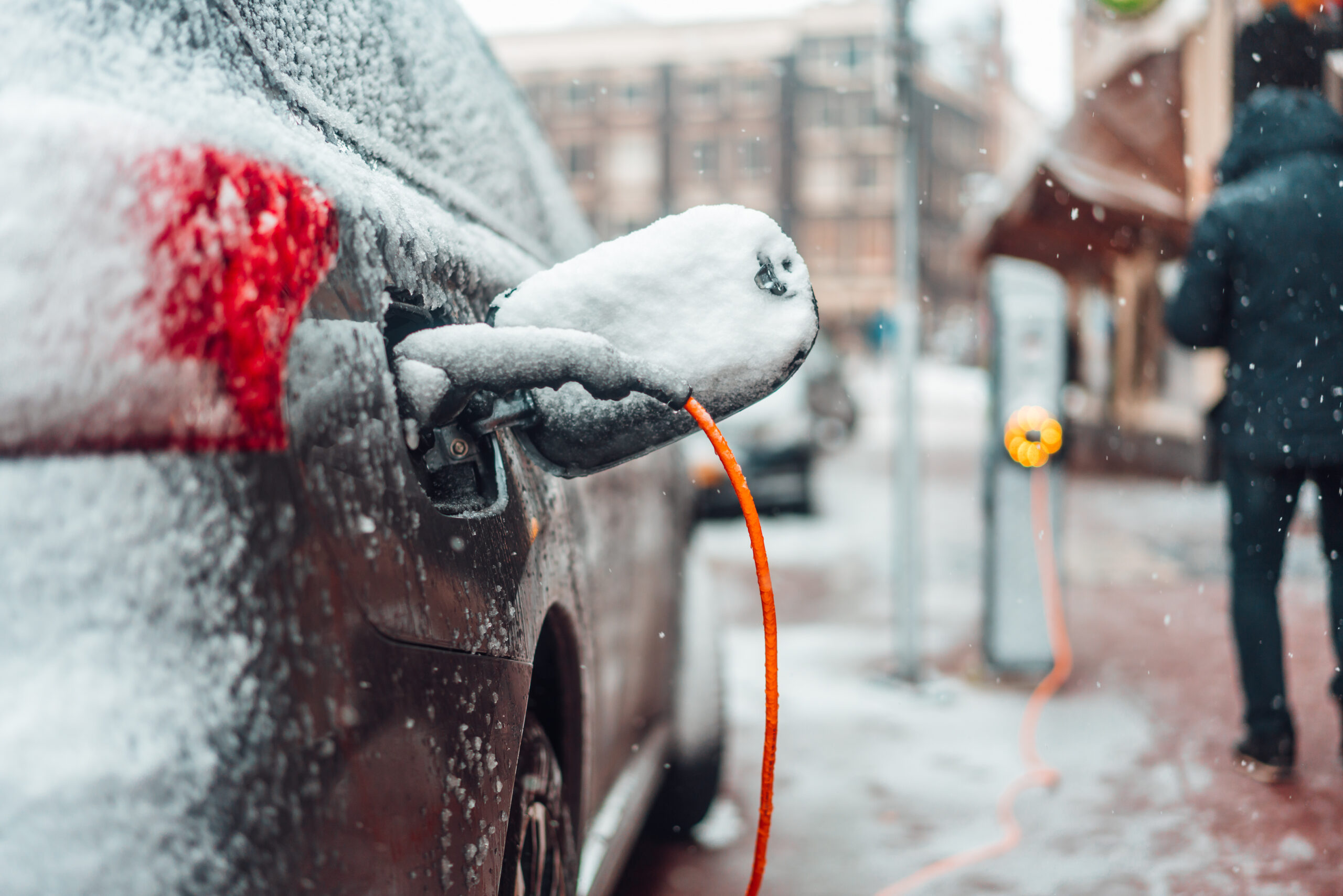
The complete guide to electric car performance in UK winter conditions — covering real-world range reduction, battery management in cold temperatures, charging behaviour, and how EV traction compares to petrol equivalents.
Winter is the season that most concerns prospective electric car buyers — and with good reason. Cold temperatures affect EV performance in ways that petrol cars simply do not experience. Understanding exactly what to expect, and how to manage it, transforms winter EV ownership from a concern into a manageable reality.
Electric Cars in Winter: Key Points
- Cold temperatures reduce EV battery range by 15–30% on average, with some older battery chemistries losing up to 40% in extreme cold
- The reduction is caused by both the battery’s reduced output capacity at low temperatures and the significant energy draw of the heating system — which in a petrol car is free waste heat from the engine
- Pre-conditioning — heating the cabin and battery while still connected to the charger — is the single most effective strategy for preserving winter range
- Cold batteries charge more slowly — ultra-rapid chargers deliver reduced power until the battery reaches operating temperature
- Modern EVs with heat pump systems are significantly more efficient in winter than those with resistive heating — potentially reducing heating energy consumption by up to 50%
- Traction on snow and ice is generally excellent in EVs — instant torque delivery and low centre of gravity, combined with sophisticated stability control, make most modern EVs very capable in winter conditions
How Much Range Do You Actually Lose?
The honest answer is: more than most EV manufacturers highlight prominently, but less than worst-case scenarios suggest. Real-world winter range figures vary by model, temperature, and driving style:
| Temperature | Approximate Range Reduction |
|---|---|
| 10°C (mild UK autumn/spring) | 5–10% |
| 5°C (typical UK winter) | 15–20% |
| 0°C (cold UK winter) | 20–25% |
| -5°C (cold snap, Scotland/northern England) | 25–35% |
| -10°C or below (rare UK conditions) | 30–40% |
These figures assume the heating system is in use — which it will be in all but the mildest conditions. A driver who can tolerate a cold cabin will see smaller range reductions, but this is not a practical strategy for most everyday use.
For a car with a 300-mile WLTP range — a figure measured under relatively benign test conditions — a realistic winter range in UK conditions at 5°C with heating in use is approximately 220–240 miles. Planning should be based on this lower figure rather than the WLTP headline.
Why Does Cold Reduce Range?
Battery Chemistry
Lithium-ion batteries — the chemistry used in all current mainstream EVs — experience reduced electrochemical activity at low temperatures. The internal resistance of the battery increases, reducing the voltage it can deliver and therefore the power available. The battery management system responds by limiting power delivery and, in some cases, restricting regenerative braking to protect the cells from damage.
The battery also takes longer to accept a charge when cold — a factor that becomes apparent at rapid charging stations, where cold-soaked batteries may accept only 50–100kW rather than their maximum rated speed until the cells warm to operating temperature (typically 20–30°C for optimal charging).
Cabin Heating: The EV’s Achilles Heel in Winter
In a petrol or diesel car, cabin heat is essentially free — it is waste heat from the engine cooling system, redirected through the heater matrix. No additional fuel is consumed to heat the car.
In a battery electric vehicle, cabin heat must come from the battery. A basic resistive heating element (the older, simpler technology) consumes approximately 3–5kW continuously when heating the cabin from cold — a significant draw on the battery pack that directly reduces range. On a -5°C morning with a cold-soaked cabin, the heater may consume a disproportionate share of the battery’s available energy for the first 20–30 minutes of a journey.
Heat pump systems — standard on most EVs launched from 2020 onward, including the Nissan Leaf e+, Hyundai Ioniq 5/6, Volkswagen ID.4, and most Tesla models from 2021 — use the same principles as a domestic heat pump to extract ambient heat from outside air and concentrate it for cabin heating. A heat pump consumes approximately 1–2kW to deliver the same cabin warmth as a 3–5kW resistive heater, reducing winter heating’s impact on range by up to 50%.
When buying a used EV for winter UK use, checking whether the car has a heat pump is one of the most important specification checks. It is not always listed prominently in dealer specifications.
Pre-Conditioning: The Winter Game-Changer
Pre-conditioning is the most effective tool for managing winter EV range — and it is available on virtually every current electric car via the manufacturer’s smartphone app. The process is straightforward:
- While the car is still plugged in to the home charger or a public charger, activate pre-conditioning via the app — typically 15–30 minutes before departure
- The car heats (or cools) the cabin to the set temperature and warms the battery to optimal operating temperature, all using grid electricity rather than battery energy
- The driver departs with a full charge, a warm cabin, and a battery already at optimal temperature for both range delivery and charging acceptance
The range and charging benefits of pre-conditioning are not marginal. A cold-soaked battery at 0°C may deliver 15–20% less range than the same battery at 20°C. Pre-conditioning to operating temperature before departure effectively eliminates this penalty at no cost to the vehicle’s range.
Setting a departure time in the car’s or app’s scheduling system automates this process — the car pre-conditions itself to be ready at the specified departure time without any manual intervention beyond the initial setup.
Charging in Cold Weather
Cold batteries charge slowly — this is the most practically inconvenient aspect of winter EV ownership for drivers who rely on public rapid charging rather than home charging.
A battery at 5°C may accept only 50–80kW at an ultra-rapid charger rated at 150–350kW — limiting the charge speed to well below what the infrastructure can deliver. As the battery warms during charging (a natural byproduct of the charging process itself), speed typically increases progressively over 10–20 minutes.
Battery pre-conditioning for charging — a feature on more sophisticated EVs including Kia EV6/EV9, Hyundai Ioniq 5/6, and Mercedes EQ models — automatically warms the battery to optimal temperature when a rapid charging destination is entered in the navigation system. The car effectively prepares for fast charging while still driving to the charger, arriving with a battery already at optimal temperature and immediately accepting maximum charge speed.
For home charging, cold temperatures have minimal practical impact — overnight charging at 7kW AC proceeds normally regardless of ambient temperature, as the charging process itself generates sufficient heat to maintain battery temperature during a multi-hour session.
Grip and Traction in Winter Conditions
One of the least-discussed advantages of electric vehicles in winter conditions is their traction behaviour. Several characteristics of EVs make them particularly capable on snow and ice:
Low centre of gravity: Battery packs are mounted in the floor pan of all modern EVs, keeping the heaviest component as low as possible. This inherently reduces the tendency to roll in corners and improves stability in emergency manoeuvres — beneficial in all conditions but particularly valuable on slippery surfaces.
Instant, precise torque control: Electric motors deliver torque instantaneously and with exceptional precision. Modern EV traction control systems can modulate power delivery to individual driven wheels in milliseconds — faster than any mechanical system. This makes controlled, progressive wheel spin on ice significantly less likely than in a petrol car where throttle response involves mechanical delays.
Regenerative braking: When lifting off the accelerator, most EVs apply regenerative braking — using the motor as a generator to recover energy and slow the vehicle. On slippery surfaces, this can be used as a smooth, progressive alternative to the brake pedal, allowing the driver to modulate deceleration without the risk of locking wheels. Many EV drivers find one-pedal driving particularly beneficial on snow, as it reduces the number of inputs required and maintains smoother speed management.
Tyre choice remains critical: No amount of EV sophistication replaces the need for appropriate tyres in winter conditions. An EV on summer tyres in snow or ice is as limited as any other vehicle — the physical grip available at the tyre-road interface is the fundamental constraint. All-season or winter tyres are as important on an EV as on any other vehicle.
Practical Winter EV Tips for UK Drivers
- Set a departure time in the car’s schedule so pre-conditioning activates automatically — no manual app operation required each morning
- Charge to 90% rather than 80% in winter — the additional buffer accounts for range reduction without stressing the battery through regular 100% charges
- Use heated seats and steering wheel instead of full cabin heating where possible — they consume significantly less energy and warm the occupants directly
- Reduce motorway speed from 70mph to 60mph where safe and legal to do so on long winter journeys — aerodynamic drag at 70mph consumes substantially more energy than at 60mph, and the range impact in winter compounds the cold-temperature reduction
- Plan charging stops conservatively — add 15–20% to normal charging stop intervals in winter to account for range reduction
- Keep the battery above 20% in cold conditions — very low state of charge combined with low temperature significantly limits available performance and can trigger battery protection modes
For guidance on the broader EV charging infrastructure and cost comparison, our complete EV charging guide covers home and public charging options in full detail.
How much range does an EV lose in UK winter conditions?
At a typical UK winter temperature of 5°C with heating in use, most EVs lose 15–25% of their WLTP-rated range. A car rated at 300 miles realistically delivers 220–250 miles in these conditions. Pre-conditioning and a heat pump significantly reduce this penalty.
Do EVs work in snow?
Yes — many EVs perform very well in snow. Their low centre of gravity, precise torque control, and sophisticated traction systems make them inherently capable in slippery conditions. The same tyre advice applies as to any vehicle — summer tyres on snow are inadequate regardless of the drivetrain; winter or all-season tyres are required for safe snow driving.
Does cold weather damage an EV battery permanently?
No — cold temperatures temporarily reduce performance and charging speed but do not cause permanent damage to a modern lithium-ion battery. The battery management system protects cells from harmful charging conditions automatically. Sustained operation at very high temperatures is a greater long-term degradation risk than cold-weather use.
Is a heat pump worth specifying on an EV?
Yes — for UK use, where cold weather is present for four to six months of the year, a heat pump meaningfully reduces winter range loss and is one of the most valuable specifications on any EV intended for year-round use. When buying new, specify it if available; when buying used, check whether it is fitted before purchase.
Which EVs cope best with UK winter conditions?
The Kia EV9, Hyundai Ioniq 6, and Tesla Model Y (with heat pump from 2021) consistently perform well in independent winter range tests. The Kia EV9’s battery conditioning for charging feature is particularly useful in cold weather, and its large battery provides sufficient range buffer that even a 25% winter reduction leaves substantial real-world range available.





