
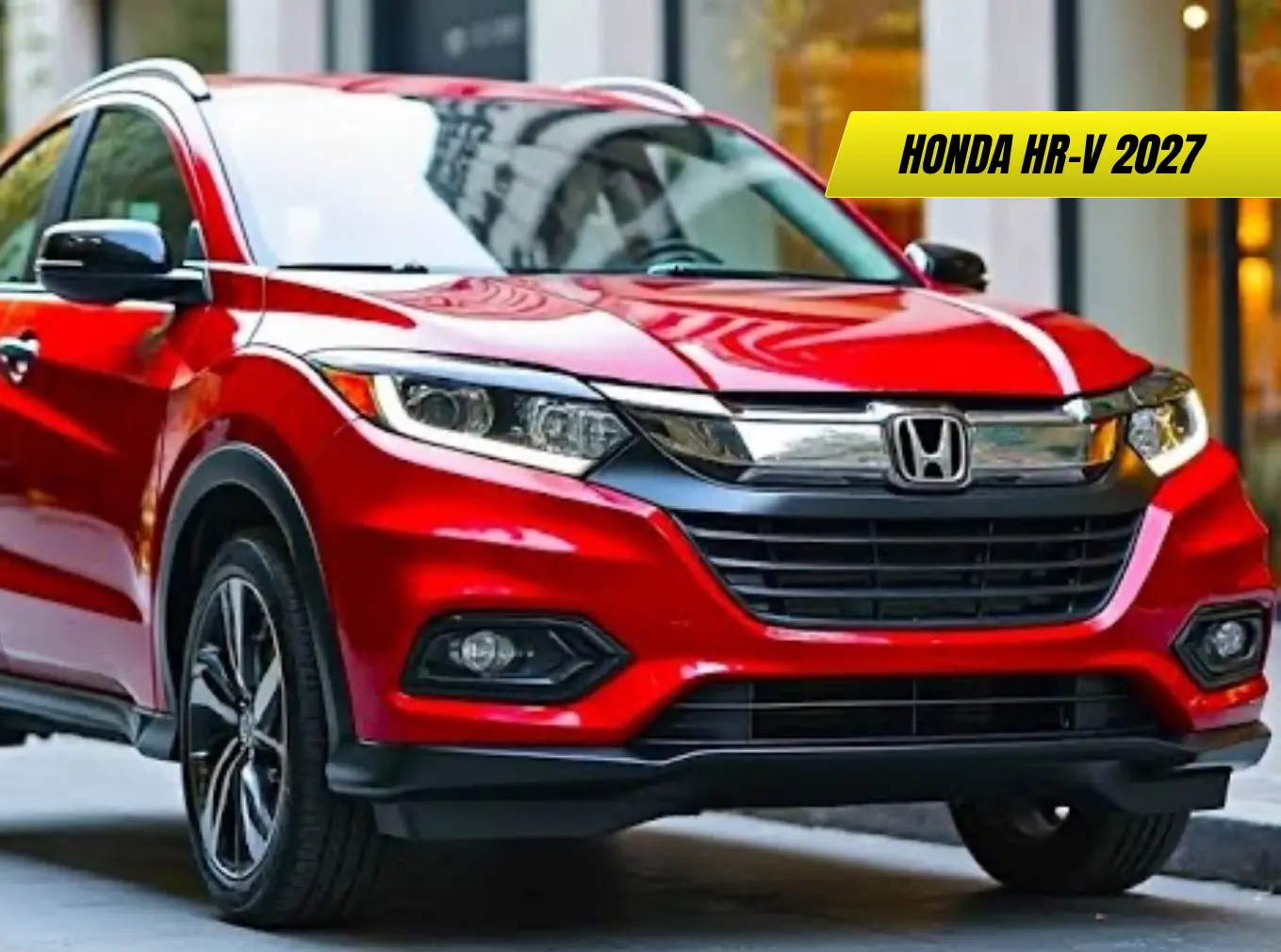
Honda prepares next-generation HR-V compact SUV spotted testing Japan ahead 2027 global launch introducing sharper Range Rover-inspired design, dual-motor e:HEV hybrid system delivering 160-180hp targeting improved efficiency and gearbox-like driving feel, while current third-generation model continues 2026 model year with 158hp 2.0L naturally-aspirated engine starting $26,200 USA or £26,000 UK maintaining 460-mile range and Honda Sensing safety suite.
Japanese manufacturer Honda Motor Company develops fourth-generation HR-V subcompact crossover spotted undergoing testing in Japan ahead anticipated 2027 calendar year launch introducing comprehensive redesign featuring bolder exterior styling channeling premium Range Rover aesthetic through upright proportions, prominent shoulder line, and clean surfacing departing from current generation’s softer curves toward more assertive road presence, while mechanical foundation transitions toward advanced dual-motor e:HEV hybrid system (shared architecture with Civic Hybrid and upcoming Prelude) delivering estimated 160-180hp combined output replacing current 2.0-liter naturally-aspirated gasoline engine’s 158hp through enhanced efficiency and instant electric torque mirroring conventional automatic transmission feel via Honda’s sophisticated power management algorithms. The confirmed non-electric powertrain visible through exposed exhaust pipes indicates Honda maintaining internal combustion presence alongside hybrid electrification rather than pure battery-electric transition, acknowledging market diversity where budget-conscious buyers require affordable conventional powertrains during extended electrification transition period before regulatory mandates and infrastructure maturity enable universal EV adoption. Meanwhile, current third-generation HR-V continues 2026 model year sales unchanged across global markets with e:HEV full hybrid dominating European/Japanese sales (131hp 1.5L + electric motors, 5.4 l/100km consumption) while North American market exclusively receives conventional 158hp 2.0L gasoline engine paired with CVT automatic transmission achieving 27-28 mpg combined (8.4-8.7 l/100km) and maintaining Honda’s Magic Seat versatile rear cargo system, Honda Sensing comprehensive driver assistance, and $26,200-31,550 USD pricing ($36,000-43,000 CAD, £26,000-32,000 UK) positioning competitively against Toyota Corolla Cross, Mazda CX-30, Hyundai Kona, and Nissan Qashqai within fiercely-contested B-segment crossover category representing fastest-growing automotive segment globally as traditional sedan buyers migrate toward higher-riding SUV alternatives prioritizing perceived safety, versatility, and modern styling over conventional three-box sedan architecture.
Current 2026 Model: Third-Generation Specifications
While next-generation HR-V development proceeds, the current third-generation model serves as Honda’s mainstream compact crossover through 2026-2027 transition period.
North American Market (2026 Model Year)
Powertrain Specifications
2.0L i-VTEC 4-Cylinder Engine
- Displacement: 1,993 cc (2.0 liters)
- Configuration: Inline-4, naturally-aspirated, multi-point fuel injection
- Valvetrain: DOHC i-VTEC (intelligent Variable Valve Timing and Lift Electronic Control)
- Power output: 158 hp @ 6,500 rpm
- Torque: 138 lb-ft (187 Nm) @ 4,200 rpm
- Compression ratio: 13.0:1 (high for naturally-aspirated gasoline)
- Redline: ~6,800 rpm
- Fuel requirement: Regular unleaded 87 octane
Transmission and Performance
- Transmission: Continuously Variable Transmission (CVT) with Sport mode
- Drive options: Front-wheel drive (2WD) or Real Time AWD with Intelligent Control System
- 0-60 mph: ~9.5 seconds (2WD), ~10.0 seconds (AWD)
- Top speed: ~120 mph electronically limited
- Towing capacity: 1,500 lbs when properly equipped
Fuel Economy (EPA Ratings)
| Configuration | City | Highway | Combined | Annual Fuel Cost |
|---|---|---|---|---|
| FWD | 26 mpg | 32 mpg | 28 mpg | ~$1,800 @ $3.50/gal |
| AWD | 25 mpg | 30 mpg | 27 mpg | ~$1,900 @ $3.50/gal |
Dimensions and Practicality
- Length: 179.8 inches (4,568 mm)
- Wheelbase: 104.5 inches (2,654 mm)
- Width: 72.4 inches (1,839 mm)
- Height: 63.2 inches (1,605 mm)
- Ground clearance: 8.2 inches (208 mm)
- Curb weight: 3,118 lbs FWD / 3,297 lbs AWD
- Passenger volume: 100.1 cubic feet
- Cargo volume: 24.3 cu ft (seats up) / 55.9 cu ft (seats folded)
Magic Seat Configuration
Honda’s signature versatile rear seating system enables multiple cargo arrangements:
- Utility Mode: Rear seats fold flat creating 55.9 cubic feet cargo space
- Long Mode: Rear seat cushions flip up enabling tall items (houseplants, floor lamps)
- Tall Mode: Front passenger seat folds flat accommodating items up to 8 feet long
- Refresh Mode: Rear seatbacks recline for passenger comfort
European/UK Market (2026 Model Year)
e:HEV Full Hybrid Powertrain
System Architecture
- Gasoline engine: 1.5-liter i-VTEC 4-cylinder naturally-aspirated (105 hp)
- Generator motor: Electric motor primarily driving engine operating as generator
- Propulsion motor: Primary electric motor driving front wheels (109 hp)
- Combined output: 131 hp (97 kW) / 253 Nm torque
- Battery: Lithium-ion positioned under rear seats
- Drive: Front-wheel drive only (no AWD option Europe)
Operating Modes
- EV Drive: Pure electric propulsion low speeds and light loads
- Hybrid Drive: Electric motor propulsion with gasoline engine charging battery
- Engine Drive: Direct gasoline engine drive at cruising speeds via clutch engagement
- Regenerative Braking: Energy recovery during deceleration recharging battery
Performance and Efficiency
- 0-62 mph: 10.6 seconds
- Top speed: 106 mph (170 km/h)
- WLTP fuel consumption: 5.4 l/100 km (52.3 mpg UK) combined
- CO₂ emissions: 122 g/km
- Real-world efficiency: 45-50 mpg typical driving conditions
- Range: ~460 miles from 40-liter fuel tank
UK Pricing Structure (2026 Model Year)
| Trim Level | Equipment Highlights | UK Price |
|---|---|---|
| Elegance | 18″ alloys, LED lights, 9″ touchscreen, Honda Sensing | £29,995 |
| Advance | Heated seats/wheel, wireless charging, upgraded audio | £31,995 |
| Advance Style | Two-tone paint, privacy glass, premium trim | £33,495 |
The e:HEV hybrid system positions European HR-V as efficiency leader versus gasoline-only North American variant, though 131 hp modest output trails turbocharged competitors offering 150-200 hp within similar pricing brackets.
Next-Generation HR-V: 2027+ Preview
Spy photographs and industry reports reveal significant details regarding fourth-generation HR-V development ahead official 2027 launch.
Design Evolution
Exterior Styling Changes
Inspiration and Philosophy
Recent testing prototypes display Range Rover-inspired design language representing departure from Honda’s traditional smooth organic forms toward more assertive premium aesthetic:
- Upright proportions: Taller stance and vertical surfaces suggesting rugged capability
- Strong shoulder line: Pronounced character line creating muscular haunches
- Cleaner surfacing: Reduced sculpting and creases versus current generation’s complex body sides
- Distinctive lighting: Sharp LED headlight and taillight signatures creating technological identity
Front Fascia
- Larger hexagonal grille integrating with headlight clusters
- Bold lower bumper with functional air intakes
- Horizontal elements creating wider visual stance
- Possible illuminated Honda emblem (following CR-V trend)
Rear Design
- Subtle tail changes: Evolutionary taillights maintaining L-shaped signature
- Integrated spoiler within rear hatch
- Clean bumper design with hidden exhaust finishers
- Wider track evident through prominent wheel arches
Dimensional Expectations (Estimated)
- Length: ~4,580-4,600 mm (+12-32 mm versus current)
- Wheelbase: ~2,670-2,680 mm (+16-26 mm for increased rear legroom)
- Width: ~1,850-1,860 mm (similar to current generation)
- Height: ~1,610-1,620 mm (maintaining compact profile)
- Ground clearance: 200-210 mm (adequate for light off-road capability)
Powertrain Strategy: Dual-Motor Hybrid Focus
Advanced e:HEV Hybrid System
Honda confirms next-generation HR-V adopting latest dual-motor hybrid architecture representing evolution from current European single-motor system toward more sophisticated setup debuting in Civic Hybrid and upcoming Prelude sports coupe.
Technical Specifications (Estimated)
Gasoline Engine Base
- Displacement: 1.5-liter or 2.0-liter turbocharged 4-cylinder (market-dependent)
- Output: ~140-150 hp from gasoline engine alone
- Direct injection: High-pressure fuel delivery maximizing efficiency and power
- Atkinson cycle: Optimized combustion timing prioritizing efficiency over peak power
Electric Motor Configuration
- Primary propulsion motor: ~80-100 hp driving front wheels
- Secondary motor: Integrated starter-generator and assist motor
- Combined system output: 160-180 hp estimated
- Combined torque: ~300+ Nm enabling strong acceleration feel
- Battery: Lithium-ion positioned under rear seats (similar current e:HEV)
Transmission Technology
Honda’s innovative approach eliminates traditional CVT or dual-clutch transmissions:
- Direct electric drive: Electric motor propulsion at low/medium speeds
- Multi-speed logic: Software simulates gearbox behavior through power delivery modulation
- Engine clutch: Direct mechanical connection at cruising speeds reducing electrical losses
- “Fixed-gear feel”: Mimics traditional automatic transmission eliminating CVT rubber-band sensation
Driving Modes (Expected)
- EV Mode: Pure electric operation (limited range, city driving)
- Hybrid Mode: Intelligent gasoline/electric blending optimizing efficiency
- Sport Mode: Maximum performance utilizing full system output
- Eco Mode: Prioritizes efficiency through conservative throttle mapping and electric bias
Performance and Efficiency Projections
Acceleration and Dynamics
- 0-60 mph: ~8.0-8.5 seconds (improvement from current 9.5-10.0 seconds)
- Top speed: ~115-120 mph electronically limited
- Handling: Improved chassis rigidity and suspension tuning versus current generation
- Drivetrain options: Front-wheel drive standard, potential all-wheel drive hybrid system
Fuel Economy Targets
- Combined consumption: 5.0-5.5 l/100 km WLTP (45-55 mpg UK equivalent)
- CO₂ emissions: 110-125 g/km meeting tightening European regulations
- Real-world efficiency: 10-15% improvement versus current e:HEV system
- Range: 500+ miles from ~45-liter fuel tank
Competitive Positioning
The 160-180 hp dual-motor hybrid positions next-generation HR-V competitively against:
- Toyota Corolla Cross Hybrid: 196 hp, proven reliability, conservative styling
- Mazda CX-30: 186 hp turbo or 150 hp mild hybrid, driver-focused dynamics
- Hyundai Kona Hybrid: 141 hp full hybrid, aggressive pricing, comprehensive warranty
- Nissan Qashqai e-Power: 190 hp electric drive with gasoline generator, innovative technology
Honda’s strategy balances performance adequacy (160-180 hp competitive if not class-leading) against efficiency focus (targeting best-in-class fuel economy) and driving refinement (eliminating CVT rubber-banding through dual-motor sophistication).
Technology and Safety Features
Honda confirms comprehensive technology updates alongside mechanical evolution for next-generation HR-V.
Interior Modernization
Digital Cockpit (Expected 2027+ Model)
- Digital instrument cluster: 10.2-12.3 inch TFT display replacing analog gauges
- Central touchscreen: 10.25-12 inch infotainment system (size dependent on trim)
- Wireless connectivity: Apple CarPlay and Android Auto standard across range
- Physical controls: Retained climate and volume controls addressing customer feedback regarding touchscreen-only interfaces
Materials and Build Quality
- Soft-touch surfaces: Expanded use premium materials dashboard and door panels
- Ambient lighting: Customizable LED mood lighting creating upscale atmosphere
- Sound insulation: Enhanced acoustic materials reducing road and wind noise
- Fit and finish: Tighter panel gaps and improved material consistency
Honda Sensing Suite Evolution
Current Honda Sensing Features (2026 Model)
- Collision Mitigation Braking System (CMBS) with pedestrian detection
- Road Departure Mitigation System (RDM)
- Adaptive Cruise Control (ACC) with Low-Speed Follow
- Lane Keeping Assist System (LKAS)
- Traffic Sign Recognition (TSR)
- Auto High-Beam Headlights
Expected Next-Generation Enhancements (2027+)
- Enhanced ACC: Stop-and-go capability with extended duration (3+ seconds versus current 3-second limit)
- Lane Centering: More confident automatic steering intervention versus current gentle guidance
- Traffic Jam Assist: Semi-autonomous driving congested conditions combining ACC and lane centering
- Parking Assist: Automated parallel and perpendicular parking (currently unavailable HR-V)
- 360-degree camera: Surround-view monitoring replacing current rear-view-only camera
- Blind Spot Monitoring: Finally standard across range (currently optional higher trims only)
Production Timeline and Market Strategy
Honda’s global manufacturing network enables regional customization while maintaining platform commonalities.
Development and Launch Timeline
| Milestone | Expected Timing | Details |
|---|---|---|
| Engineering complete | Q2 2026 | Finalized specifications and supplier commitments |
| Tooling installation | Q3 2026 | Production line preparation Japanese factories |
| Pre-production | Q4 2026 | Validation builds and quality testing |
| Official reveal | Q1 2027 | Likely Tokyo Auto Salon or Geneva Motor Show |
| Japan launch | Q2 2027 | Domestic market sales commence |
| North America launch | Q3-Q4 2027 | US/Canada/Mexico availability |
| Europe launch | Q4 2027/Q1 2028 | European/UK deliveries begin |
Manufacturing Locations
Japan (Primary Production)
- Suzuka Plant: Main HR-V production for Japanese domestic market and exports
- Capacity: ~100,000 annual units HR-V allocation
Thailand (ASEAN Market)
- Prachinburi Plant: Southeast Asian market production (Thailand, Philippines, Indonesia, Malaysia)
- Localization: Regional specification variations addressing climate and regulatory requirements
Mexico (North American Market)
- Celaya Plant: Potential North American production alongside Civic (unconfirmed)
- Rationale: USMCA agreement benefits and reduced shipping costs versus Japanese imports
Regional Specification Differences
Honda maintains tradition offering distinct HR-V variants across global markets:
- North America: Likely continues offering conventional gasoline option alongside hybrid (customer preference for simpler, lower-cost powertrains)
- Europe/UK: Hybrid-exclusive lineup meeting CO₂ regulations and customer efficiency expectations
- Japan: Comprehensive hybrid offerings including potential e:HEV and stronger hybrid variants
- China: Separate Honda-branded and joint-venture partner variants (Dongfeng Honda, GAC Honda) potentially including electric e:NS1/e:NP1 siblings
Pricing Expectations
Estimating next-generation HR-V pricing requires analyzing current model positioning and inflationary pressures.
2027+ Projected Pricing
North America (USD, estimated)
- Base LX FWD: $28,500-29,500 (+$2,300-3,300 versus current $26,200)
- Sport FWD: $30,000-31,000
- EX-L AWD: $33,000-34,000
- Top trim AWD: $35,500-36,500 (versus current $31,550 top)
Price Increase Justification
- Hybrid powertrain addition ($1,500-2,000 system cost)
- Enhanced technology and safety features ($800-1,200)
- Inflation adjustment 2024-2027 (~3% annually = $1,500-2,000)
- Improved materials and build quality ($500-800)
Europe/UK (GBP, estimated)
- Base trim: £28,000-29,000 (versus current £29,995 Elegance)
- Mid trim: £30,500-31,500
- Top trim: £34,000-35,000 (versus current £33,495 Advance Style)
European pricing potentially decreases as Honda achieves economies of scale with expanded hybrid production offsetting technology costs.
Competitive Price Positioning
| Model | Powertrain | Starting Price (UK) | Value Proposition |
|---|---|---|---|
| Honda HR-V 2027 | 160-180 hp hybrid | £28,000-29,000 est | Advanced hybrid, proven reliability |
| Toyota Corolla Cross | 196 hp hybrid | £30,000-32,000 | Toyota reputation, conservative styling |
| Mazda CX-30 | 150 hp mild hybrid | £26,000-28,000 | Driver-focused, premium interior |
| Hyundai Kona | 141 hp hybrid | £27,500-29,500 | 5-year warranty, aggressive pricing |
| Nissan Qashqai | 158 hp e-Power | £29,000-31,000 | Innovative series hybrid technology |
| Volkswagen T-Roc | 150 hp turbo | £28,000-30,000 | German brand cache, MQB platform |
Honda’s strategy targets mid-market positioning balancing competitive pricing against technology leadership and reliability reputation avoiding premium pricing (Mazda) or budget positioning (Dacia).
Frequently Asked Questions
When does the new Honda HR-V launch?
Next-generation (fourth-generation) HR-V expected 2027 calendar year launch beginning Japan (Q2 2027), followed by North America (Q3-Q4 2027) and Europe/UK (Q4 2027/Q1 2028). Current third-generation model continues 2026-2027 model years with unchanged specifications enabling buyers unable waiting purchasing proven existing generation before transition.
Will the new HR-V be hybrid only?
Likely hybrid-focused but not exclusively hybrid depending on market. Europe/UK probably receives hybrid-only lineup meeting emissions regulations. North America likely offers both conventional gasoline and hybrid variants addressing customer preference for simpler, lower-cost powertrains. Official confirmation pending Honda announcement expected Q4 2026/Q1 2027.
How much will the 2027 HR-V cost?
Estimated $28,500-36,500 USD North America (+$2,300-5,000 versus current pricing) or £28,000-35,000 UKdepending on trim level. Price increases justified by hybrid powertrain addition, enhanced technology, improved materials, and inflation adjustment 2024-2027 period. Exact pricing announced closer to launch following competitive market analysis and production cost finalization.
What’s the fuel economy of the new HR-V hybrid?
Estimated 50+ mpg combined UK equivalent (45-55 mpg realistic range) or 5.0-5.5 l/100 km WLTP representing 10-15% improvement versus current e:HEV system through dual-motor architecture efficiency gains. Real-world consumption depends on driving patterns with city driving maximizing hybrid benefits while highway cruising relies more on gasoline engine reducing efficiency advantages.
How does HR-V compare to CR-V?
HR-V: Subcompact B-segment, 179 inches length, 5-passenger, 160-180 hp estimated (2027), $28,500-36,500 USD projected, targets singles/couples/small families prioritizing efficiency and urban maneuverability. CR-V: Compact C-segment, 185 inches length, 5-passenger, 190-204 hp (current), $30,000-40,000 USD, larger cargo space, more powerful engines, targets growing families requiring maximum practicality. Choose HR-V for lower costs and easier parking, CR-V for interior space and highway performance.
Does the HR-V have all-wheel drive?
Current North American model offers Real Time AWD option (+$1,500-2,000). Next-generation likely continues AWD availability though implementation depends on hybrid architecture integration. European market historically FWD-only due to efficiency priorities and customer preference. Confirm AWD availability specific markets following official launch announcements.
Is Honda HR-V reliable?
Honda consistently ranks among most reliable automotive brands with HR-V specifically earning strong dependability ratings. 2023-2025 models show minimal issues though relatively new preventing long-term reliability data. Previous 2016-2022 generation demonstrated excellent reliability averaging 85-90% problem-free ownership based on consumer surveys. Next-generation hybrid complexity potentially introduces additional components requiring maintenance though Honda’s proven e:HEV system in Civic/CR-V suggests reliable execution.
Will there be HR-V electric version?
Not immediately. Honda offers e:NS1 and e:NP1 battery-electric crossovers (China market) sharing basic HR-V proportions but different platforms and branding. Global markets receive hybrid HR-V prioritizing range flexibility and charging infrastructure independence over pure-electric commitment. Future HR-V electric possible 2028-2030 timeframe as battery costs decrease and charging networks mature, though Honda’s strategy focuses hybrid mainstream models with dedicated EV offerings (Prologue, upcoming Acura EVs) targeting specific customer segments.
Conclusion
The next-generation Honda HR-V entering 2027 launch cycle represents strategic evolution balancing proven compact crossover formula against advancing electrification requirements through sophisticated dual-motor hybrid systemdelivering estimated 160-180 hp and 50+ mpg efficiency while maintaining Honda’s legendary reliability reputation and practical Magic Seat versatility distinguishing HR-V from conventional competitors offering merely adequate cargo flexibility. The Range Rover-inspired design language signals Honda’s ambition elevating perceived premiumness challenging Mazda CX-30’s driver-focused positioning and Toyota Corolla Cross’s conservative reliability appeal through bolder styling, advanced hybrid technology, and comprehensive Honda Sensing safety suite creating compelling mainstream package targeting young professionals, small families, and urban dwellers prioritizing efficiency, versatility, and modern aesthetics over segment-leading performance or maximum interior space characterizing larger CR-V sibling.
For prospective buyers, the timing decision proves challenging: current 2026 third-generation model offers proven reliability, immediate availability, and potential end-of-cycle discounting ($2,000-3,000 incentives possible) versus waiting 12-18 months for next-generation delivering superior efficiency, enhanced technology, refreshed styling, but unproven reliability and higher pricing ($28,500+ versus current $26,200 entry). Conservative buyers prioritizing dependability over latest features favor purchasing current generation benefiting from 3+ years real-world validation and negotiable pricing as dealers clear inventory ahead new model arrival, while technology enthusiasts and efficiency-focused customers justify waiting accepting early-adopter risks capturing meaningful 15-20% fuel economy improvements and modernized digital interface eliminating current generation’s aging infotainment and basic driver assistance suites trailing competitive offerings from Hyundai, Toyota, and Volkswagen continuously updating throughout product cycles maintaining feature parity versus Honda’s traditional mid-cycle update reluctance leaving early-generation buyers enduring outdated technology until comprehensive refreshes or generational replacements.





