Winter road salt often causes the most trouble below eye level. Salt and grit can corrode unpainted metal and affect bodywork, wheels and lower surfaces, so regular washing is about more than keeping a car looking clean. Which? and Rooster both include cleaning as part of sensible winter car care.
The areas most likely to be overlooked are the wheel arches, underside and running gear. Guidance from a Nissan owner’s manual, the Motor Ombudsman and TÜV Nord recommends cleaning these areas periodically during winter.
A practical winter cleaning routine
Wash beyond the visible paint
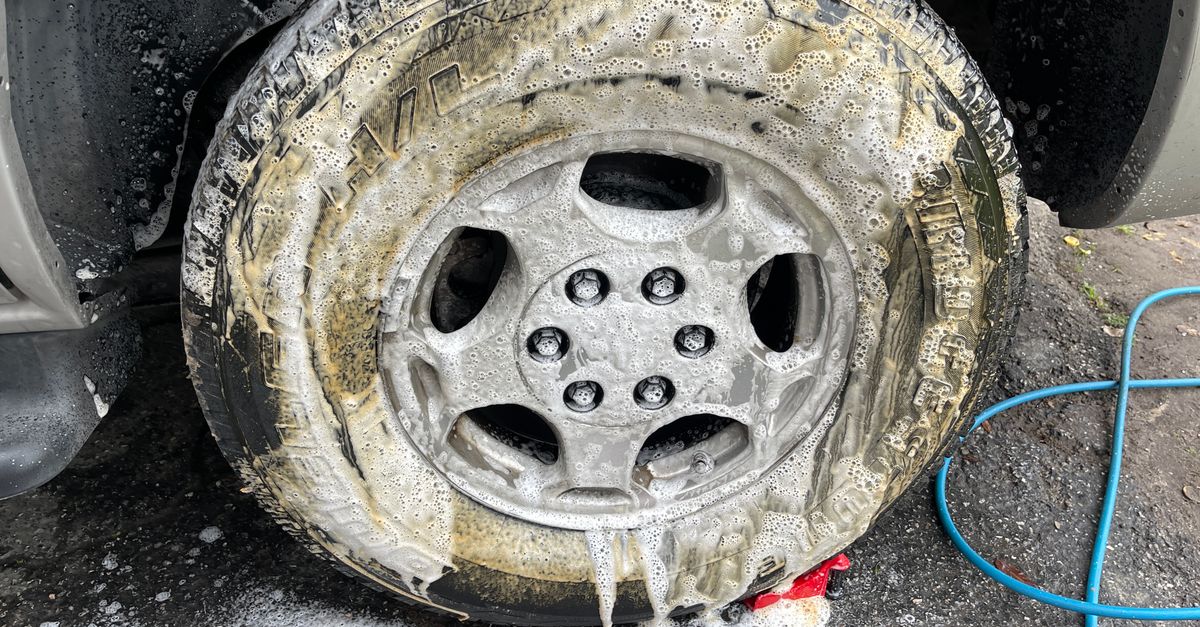
When cleaning the car after driving on gritted roads, include the wheel arches and lower bodywork rather than concentrating only on the bonnet, roof and doors. The underside should also be cleaned periodically where this can be done safely. Haynes highlights bodywork and wheel-arch cleaning as useful ways to reduce the build-up of winter salt.
Use cleaning products and methods suitable for your vehicle, following the handbook where it gives specific instructions. Do not crawl beneath a car that is not safely supported; if the underside cannot be checked securely, a qualified workshop can do it.
Look for paint damage after cleaning
Salt protection is also an opportunity to inspect the car. Check for stone chips, scratches and other damaged paint, particularly on lower surfaces that are exposed to road debris. Cleaning will not repair existing damage, but it can make problems easier to spot and deal with before further winter exposure.
A visible mark is not proof that corrosion has started, so avoid making a definite diagnosis from appearance alone. If paint is lifting, metal is flaking or damage is spreading, ask a suitable body repairer or garage for an assessment.
Check the protective coating underneath
Vehicle manuals advise checking the underbody protective coating before and after winter. The SEAT Toledo owner’s manual and Exeo owner’s manual state that damaged protection should be reinstated where necessary.
This is different from simply looking for surface dirt. If the coating is damaged or the underside shows significant corrosion, arrange a professional inspection rather than treating the problem as a cleaning job.
Do not assume generic underseal is suitable
An off-the-shelf underbody spray is not automatically right for every car. Protective coatings, cleaning products and the areas that can safely be treated vary between vehicles. The owner’s manuals above, together with Nissan’s Juke manual, advise consulting an authorised service centre or qualified workshop about corrosion protection and cleaning products.
That advice is worth following if you are considering adding protection, particularly when the correct product or application area is unclear. A qualified technician can also distinguish damaged coating from corrosion or damage to an important component.
Keep the rest of the car ready for winter
Salt removal is only one part of winter preparation. The RAC and the Motor Ombudsman recommend checking tyres, the battery, fluids, lights and screenwash as part of basic cold-weather preparation.
A simple routine is therefore:
- wash the bodywork, wheel arches and lower surfaces regularly during periods of gritted roads;
- clean the underside and running gear periodically, using the vehicle handbook as a guide;
- inspect paint for chips, scratches and other damage;
- check the underbody protective coating before and after winter;
- ask a qualified workshop about damaged protection, corrosion or unsuitable cleaning products; and
- check tyres, battery, fluids, lights and screenwash as well as the bodywork.
There is no universal coating or cleaning schedule that suits every vehicle. Removing salt regularly, checking the areas that are normally hidden and following the manufacturer’s guidance is the safest way to protect a car through a UK winter.
Source 1 · Source 2 · Source 3 · Source 4 · Source 5 · Source 6 · Source 7 · Source 8 · Source 9 · Source 10