
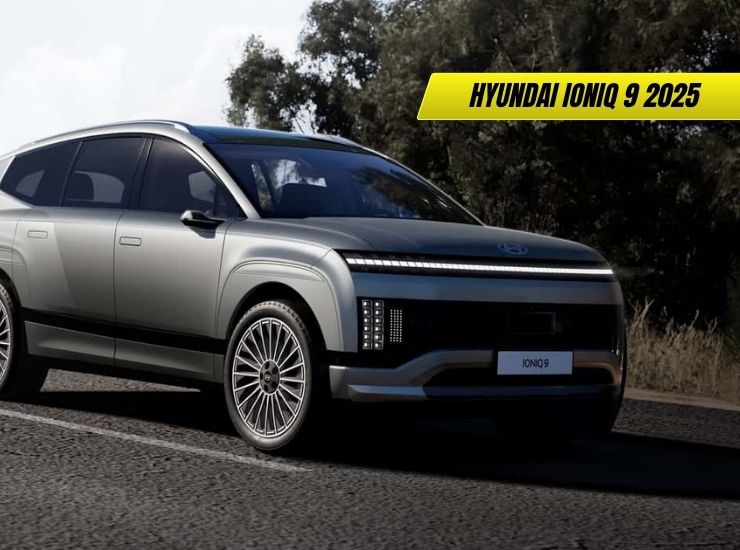
The arrival of the Hyundai IONIQ 9 2025 marks a significant moment for British families seeking a genuinely capable electric seven-seater. After years of compromising between electric efficiency and proper family space, Hyundai’s flagship SUV promises to deliver both without the typical trade-offs we’ve come to expect.
Having examined the specifications and early international reviews, it’s clear that the IONIQ 9 isn’t just another electric SUV with a third row squeezed in as an afterthought. This is a purpose-built family hauler that happens to be electric, rather than an electric car trying to be a family vehicle. The distinction matters enormously when you’re dealing with the school run, weekend trips to the Lake District, and everything in between.
Based on what we know so far, the IONIQ 9 could genuinely challenge the premium seven-seat establishment while offering running costs that make sense for British families. But as with any ambitious new model, the devil will be in the detail – and the pricing.
Key Highlights
• Impressive Range: Up to 385 miles on the WLTP cycle for the Long Range RWD variant, significantly outpacing the Kia EV9’s 303-mile maximum • Rapid Charging: 800V architecture supports up to 233kW charging speeds, adding 304km of range in just 15 minutes at compatible chargers • Genuine Seven-Seater Layout: Choice of six or seven-seat configurations with swivelling second-row seats and fully reclining ‘Relaxation Seats’ • Spacious Interior: 610 litres boot capacity with all seats up, expanding to an enormous 2,494 litres with rear rows folded • Expected UK Pricing: Likely to start around £63,000, undercutting the Kia EV9 by a few thousand pounds • Three Powertrain Options: From 215hp rear-wheel drive to 429hp Performance AWD with sub-5.2-second 0-62mph capability
Design and Exterior: Aerodynamic Ambition Meets Family Functionality
The IONIQ 9’s design philosophy centres around what Hyundai calls “aerosthetic” engineering – essentially making aerodynamic efficiency look genuinely appealing rather than just functional. At first glance, the proportions are undeniably large; this is Hyundai’s biggest car ever, fractionally longer than a Range Rover at just over five metres.
The front end carries the family resemblance to other IONIQ models through its parametric pixel LED lighting signature, but the overall stance is more confident and Range Rover-like than the quirky IONIQ 5. Those high-set lights and wide grille give it genuine road presence, while the single curved roofline helps achieve that impressive 0.259 Cd drag coefficient – remarkably slippery for something this substantial.
From the side, it’s an interesting blend of boxy practicality and rounded elegance. The roofline curves gently downward before dropping abruptly to the tailgate, creating a silhouette that’s both distinctive and functional. Those blistered wheel arches add visual interest while housing wheels up to 21 inches in diameter.
The rear design echoes the SEVEN concept with a ring of LEDs circling the entire back end – there’s something faintly Volvo-esque about the lighting signature, which certainly isn’t a criticism. Sixteen paint colour options will be available, including metallic, pearl, and matte finishes, with five completely new shades developed specifically for the IONIQ 9.
Interior and Practicality: Where the IONIQ 9 Truly Excels
Step inside and the IONIQ 9’s party piece becomes immediately apparent: this is genuinely spacious in a way that many seven-seat SUVs simply aren’t. The E-GMP platform’s benefits are most obvious here, with a completely flat floor and wheels pushed to the corners maximising interior volume.
The cabin design emphasises calm, lounge-like atmosphere with elliptical elements and soothing colour schemes. Seven interior colourways are available, six of which feature two-tone combinations like Dark Teal and Dove Grey. Sustainable materials feature throughout, including recycled fabric, wool, and bio suede – even the paint incorporates recycled tyre waste.
Seating Configurations and Comfort
The IONIQ 9 offers both six and seven-seat configurations. The seven-seat layout features a traditional 2-3-2 arrangement, while the six-seat version replaces the middle bench with two individual captain’s chairs that can swivel 180 degrees when stationary. These ‘Relaxation Seats’ in both first and second rows can fully recline with leg rests – genuinely useful during charging stops rather than just a gimmick.
The sliding Universal Island 2.0 console is particularly clever, providing substantial storage while creating a walk-through from the front seats to the rear. Second and third-row headroom and legroom are genuinely generous, with almost 75 inches of combined rear legroom according to Hyundai’s figures.
Cargo Capacity
Boot space figures are impressive: 610 litres with all seven seats in place, rising to 1,321 litres with the third row folded. Drop both rear rows and you unlock a van-like 2,494 litres of cargo space. There’s also a small frunk under the bonnet – ideal for charging cables or muddy football boots.
The flexible seating arrangements allow for practical combinations: you can fold just the driver’s side second and third-row seats for transporting long items while retaining passenger space on the other side. Perfect for those inevitable IKEA runs.
Performance and Powertrain: Three Flavours of Electric Excellence
All IONIQ 9 variants share the same substantial 110.3kWh battery pack (106kWh usable), but performance and range vary significantly depending on motor configuration.
Long Range RWD: The entry-level variant features a single 160kW (215hp) rear motor. While 0-62mph in 9.4 seconds might sound leisurely, it’s perfectly adequate for family duties and delivers the headline 385-mile range figure. This is likely to be the volume seller in the UK market.
Long Range AWD: Adding a 70kW front motor brings total system output to 308hp, dropping the 0-62mph time to 6.7 seconds while maintaining a respectable 372-mile range. This represents the sweet spot for most families wanting decent performance without sacrificing too much efficiency.
Performance AWD: The flagship version employs dual 160kW motors for 429hp combined. The 0-62mph time drops to just 5.2 seconds – genuinely rapid for a seven-seat SUV. Range inevitably suffers, dropping to around 311 miles, but that’s still competitive with most premium electric SUVs.
The 800V electrical architecture enables exceptionally rapid charging speeds up to 233kW on compatible chargers. In real-world terms, this means charging from 10-80% state of charge in just 24 minutes – among the fastest charging times available on any current EV.
Technology and Features: Premium Aspirations Realised
The IONIQ 9’s technology offering reflects its premium positioning. The dashboard centres around paired 12.3-inch displays – one for instruments, another for infotainment – curved toward the driver for better visibility and reach. The system supports both Android Auto and Apple CarPlay, plus Hyundai’s own features including an AI-enabled voice recognition system.
Features on Demand (FoD) allows buyers to purchase additional functionality post-purchase through an online store. This includes enhanced dynamic lighting, streaming entertainment options, and other digital upgrades. While the concept remains somewhat controversial, it’s becoming increasingly common across the premium EV segment.
Rear-seat entertainment comes via optional touchscreens mounted on the front seat backs, allowing passengers to watch content while travelling. The system includes camping mode for the climate control – useful for overnight stays during long journeys.
Practical technology includes Vehicle-to-Load (V2L) capability up to 3.6kW, allowing you to power camping equipment, electric bikes, or even household appliances during power cuts. Six 100-watt USB-C ports distributed across all three rows ensure devices stay charged throughout the journey.
The IONIQ 9 will be among the first non-Tesla vehicles sold in some markets with native NACS ports for Tesla Supercharger compatibility, though UK specifications may differ given our existing charging infrastructure.
Driving Experience: Comfort Over Excitement
Early international driving impressions suggest the IONIQ 9 prioritises refinement and comfort over dynamic excitement – entirely appropriate for its intended role. The ride quality on straight roads receives particular praise, with impressive noise suppression creating a serene cabin environment.
The steering is described as accurate without being overly communicative, while body control remains composed despite the substantial dimensions. Given that the IONIQ 9 measures over five metres long, the fact that it doesn’t feel cumbersome around town is noteworthy.
Visibility is generally excellent thanks to the high driving position and large windows, though the sharply sloping bonnet disappears from view entirely. The optional digital centre mirror helps when peering beyond multiple rows of passengers.
One limitation noted in early testing is the lack of air suspension – unlike many European rivals in this segment, the IONIQ 9 relies on conventional suspension which can feel somewhat unsettled at higher speeds, particularly with larger wheels fitted.
UK Market Positioning and Pricing Expectations
While official UK pricing remains unconfirmed, industry sources suggest the IONIQ 9 will start around £63,000 – undercutting the Kia EV9 by approximately £2,000. Range-topping Performance AWD Calligraphy models are expected to peak around £75,000.
This positions it directly against the Kia EV9 while significantly undercutting premium alternatives like the Volvo EX90. The positioning makes sense: offering genuine seven-seat practicality and premium features without the badge premium of traditional luxury marques.
UK Tax Implications
All IONIQ 9 variants will be subject to the current VED regulations: £195 annually plus the additional £410 yearly levy for cars exceeding £40,000 for the first five years. Total annual tax burden will therefore be £605 for the initial five-year period.
Company car drivers face Benefit-in-Kind rates starting at 3% for 2025, rising gradually to 5% by 2028. Even at these increased rates, the BiK implications remain vastly more favourable than equivalent ICE seven-seaters.
Comparison: IONIQ 9 vs Key Rivals
Kia EV9: The most obvious comparison given shared underpinnings. The IONIQ 9 offers slightly more range thanks to its larger battery and superior aerodynamics, while expected pricing suggests it will undercut its sister model. Interior space and features are broadly comparable.
Volkswagen ID. Buzz LWB: Offers more interior space and a more distinctive design, but significantly less range and slower charging capabilities. The van-based architecture also means a less car-like driving experience.
Peugeot e-5008: Considerably cheaper but offers less space, lower build quality, and inferior technology. The French seven-seater makes sense for budget-conscious families but lacks the IONIQ 9’s premium aspirations.
Range Rover: While not electric, the traditionally British luxury SUV represents what many buyers in this segment ultimately aspire to. The IONIQ 9’s challenge is demonstrating that electric efficiency and premium luxury aren’t mutually exclusive.
For context, models we’ve recently tested in the broader SUV market demonstrate that buyers increasingly prioritise practicality and efficiency over traditional brand prestige. The IONIQ 9 arrives at precisely the right moment to capitalise on this shift.
| Feature | IONIQ 9 RWD | IONIQ 9 AWD | Kia EV9 | VW ID.Buzz LWB |
|---|---|---|---|---|
| Range (WLTP) | 385 miles | 372 miles | 303 miles | 291 miles |
| Power | 215hp | 308hp | 201-378hp | 286hp |
| 0-62mph | 9.4s | 6.7s | 6.0-9.9s | 8.5s |
| Charging Speed | 233kW | 233kW | 210kW | 200kW |
| Boot Space | 610L | 610L | 333L | 1,340L |
| Expected UK Price | £63,000 | £68,000 | £65,000 | £58,000 |
| Our Take | Best range | Sweet spot | Proven | Unique space |
Frequently Asked Questions
How much will the IONIQ 9 actually cost to run day-to-day?
Based on current electricity prices and the projected real-world efficiency, expect running costs around 8-12p per mile for home charging, or 25-35p per mile using public rapid chargers. The 385-mile range means fewer charging stops for long journeys. Annual servicing costs should be minimal given the electric drivetrain, while the 5-year warranty provides additional peace of mind.
Is the third row genuinely usable for adults?
Yes, unlike many seven-seat SUVs where the third row is strictly for children, the IONIQ 9’s rear seats can accommodate adults for reasonable distances. The flat floor and generous headroom make a significant difference. However, access remains via the second-row seats, so it’s not ideal for regular adult passengers.
How does the charging experience compare to Tesla’s Supercharger network?
The IONIQ 9’s 233kW charging capability matches or exceeds most current rapid chargers. While Tesla’s network remains more comprehensive, the UK’s Ionity, Gridserve, and other networks provide adequate coverage for most journeys. The 24-minute 10-80% charging time is competitive with any current EV.
What’s the real-world winter range likely to be?
Electric vehicles typically lose 20-30% range in cold weather. Based on the official 385-mile figure, expect real-world winter range of 270-310 miles – still comfortably ahead of most rivals. The efficient heat pump system should help minimize winter range loss compared to older EVs.
How does the IONIQ 9 handle UK country lanes and city centres?
At over five metres long, the IONIQ 9 is undeniably substantial. However, early reviews praise its surprisingly manageable feel around town, with good visibility and accurate steering. Electronic parking aids and the optional camera mirrors help with tight spaces, though it’ll never feel as nimble as smaller SUVs.
Is the technology genuinely useful or just marketing gimmick?
The swivelling seats and reclining function are genuinely practical during charging stops – something you’ll appreciate on longer journeys. The V2L power capability is useful for camping or emergency situations. However, some features like in-car streaming might appeal more to tech enthusiasts than typical families.
Should I wait for the IONIQ 9 or buy the Kia EV9 now?
If you need a seven-seat EV immediately, the EV9 is excellent and proven. However, the IONIQ 9’s superior range, expected lower pricing, and slightly more refined design make it worth waiting for if you can. Both share fundamentals, so your choice may come down to styling preference and dealer relationships.
AutoHit’s Verdict: A Genuine Game-Changer for Electric Family Transport
The IONIQ 9 represents everything we’ve been waiting for in the electric seven-seater segment: genuine space, impressive range, rapid charging, and expected pricing that doesn’t require remortgaging the house. While we’ll reserve final judgment until we drive it on British roads, the fundamentals are exceptionally promising.
Hyundai has clearly learned from the successes and limitations of both the EV9 and its own IONIQ 5. The result appears to be a more refined, efficient, and practical proposition that addresses the real-world needs of British families transitioning to electric motoring.
The timing couldn’t be better. With the 2030 ICE ban approaching and charging infrastructure continuing to expand, families need genuinely capable electric alternatives to traditional seven-seat SUVs. As highlighted in our comprehensive guide, the transition to electrification is accelerating, and the IONIQ 9 positions itself perfectly for this shift.
Our prediction: if Hyundai delivers on the expected £63,000 starting price and the IONIQ 9 drives as well as early international reviews suggest, it could become the default choice for electric family transport in the UK. The combination of range, space, technology, and value proposition is simply compelling.
For families currently running something like a Volvo XC90, Audi Q7, or even a Range Rover, the IONIQ 9 offers similar space and significantly superior efficiency at a competitive price point. The BiK advantages for company car drivers make the financial case even more compelling.
We’re genuinely excited to get behind the wheel when UK deliveries begin later this year. Based on everything we’ve seen so far, the IONIQ 9 could represent the moment when electric seven-seaters truly came of age – and British families finally got the EV they’ve been waiting for.
The Hyundai IONIQ 9 is expected to arrive in UK showrooms in the second half of 2025, with pricing and final specifications to be confirmed closer to launch.
Want to stay updated on the latest seven-seater developments? Check out our guide to the best 8-seater SUVs currently available, or explore our comprehensive overview of 20 best SUVs under £50k in 2025 for more family-friendly options.





