
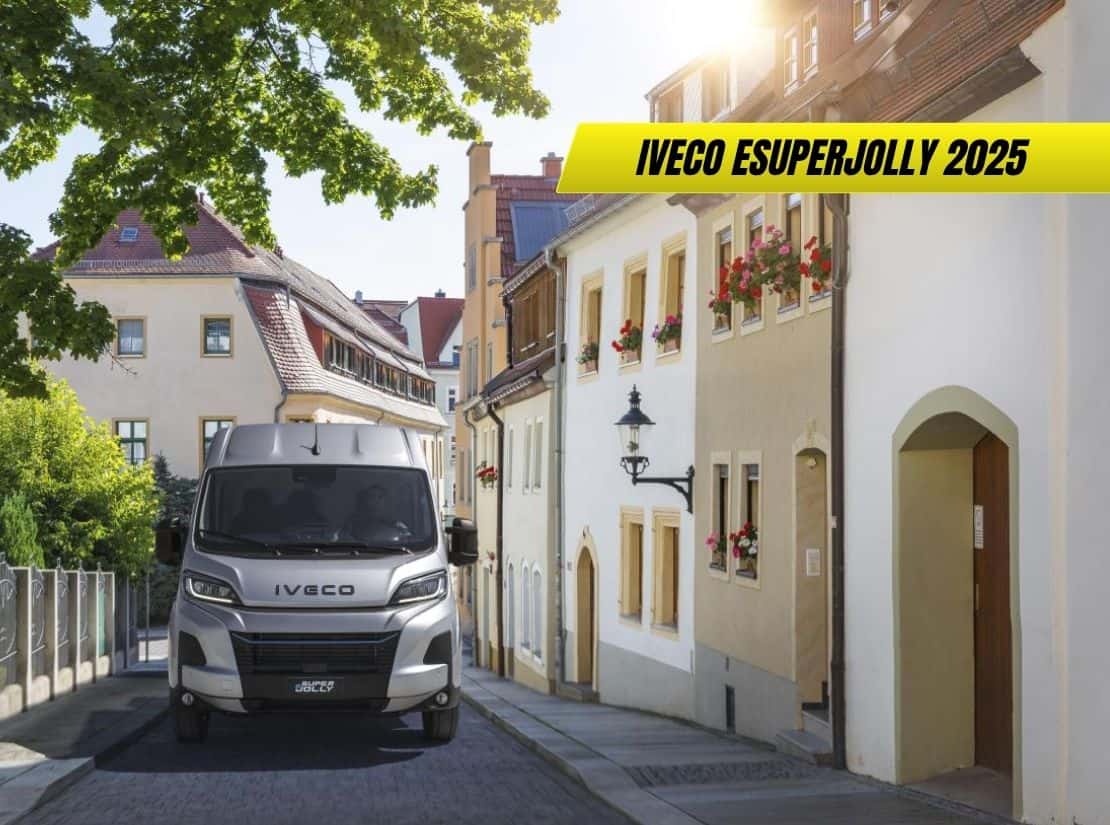
The commercial vehicle landscape is shifting rapidly, and Iveco’s new eSuperJolly represents perhaps the most significant development we’ve seen in the medium-duty electric van segment. Having observed the gradual electrification of UK fleets over recent years, we’ve been waiting for a vehicle that combines serious payload capacity with genuine long-distance capability – and the eSuperJolly appears to deliver exactly that combination.
This isn’t just another manufacturer jumping on the electric bandwagon. Developed through Iveco’s partnership with Stellantis Pro One, the eSuperJolly completes a comprehensive electric commercial vehicle lineup spanning 2.8 to 7.2 tonnes. What makes this launch particularly significant is the timing – arriving just as UK businesses face intensifying pressure to decarbonise while maintaining operational efficiency.
We’ve been closely following the development of electric commercial vehicles that can genuinely replace diesel equivalents without operational compromises. Based on the specifications and our understanding of UK commercial vehicle requirements, the eSuperJolly could represent a pivotal moment in fleet electrification. The question isn’t whether businesses will eventually switch to electric – it’s whether vehicles like this make the transition commercially viable today rather than tomorrow.
The eSuperJolly’s 260-mile range and class-leading payload capacity address the two biggest concerns we hear from fleet operators: range anxiety and reduced carrying capacity. If these figures translate to real-world performance, this could be the electric van that finally makes diesel redundant for mainstream delivery operations.
156 character meta description: Iveco eSuperJolly 2025: 260-mile range electric van with 1,400kg payload targeting UK fleet operators. Complete specs, pricing and delivery timeline.
Key Highlights: Why the eSuperJolly Matters for UK Fleets
• 260-mile official range from class-leading 110kWh battery pack – among the best in the segment for serious commercial operations • 1,400kg payload capacity maintains commercial viability without significant compromise compared to diesel equivalents • 272hp electric motor with 410Nm torque provides confident performance for heavily loaded urban and intercity routes • Mobile office cabin design with adjustable table and wireless charging reflects modern driver requirements • 100kW rapid charging capability enables strategic top-ups during loading or driver breaks • 3.5-4.25 tonne GVW range covers the sweet spot for mainstream UK delivery and logistics operations
Technical Deep-Dive: Engineering for Commercial Reality
The eSuperJolly’s technical specification reveals serious intent rather than compromise. The 272hp front-mounted electric motor produces 410Nm of torque – figures that translate to confident performance even when approaching maximum payload. This level of power ensures the van doesn’t struggle on motorway inclines or when accelerating from urban traffic lights with a full load.
Battery Technology and Range Dynamics
The 110kWh battery pack represents cutting-edge energy density for commercial applications. Iveco claims up to 260 miles of range, which in our experience with electric commercial vehicles typically translates to around 200-220 miles in mixed UK driving conditions with moderate payload.
This range capability changes the operational equation significantly. A 200-mile real-world range enables genuinely useful intercity operations – Birmingham to Leeds, Glasgow to Edinburgh, or comprehensive London-to-surrounding-counties routes without range anxiety compromising schedules.
The battery’s physical integration matters as much as its capacity. Commercial vehicles operate in demanding environments with frequent loading cycles, varied temperatures, and extended operating periods. The eSuperJolly’s battery management system must maintain performance across these conditions while preserving long-term durability.
Power Delivery and Performance Characteristics
Electric motors deliver maximum torque from standstill, providing immediate response that diesel engines cannot match. For commercial operations, this translates to confident pulling away from traffic lights, better hill-climbing performance, and reduced driver fatigue from constantly managing gear changes and clutch operation.
The 272hp output significantly exceeds typical diesel vans in this weight category, which usually produce 140-180hp. This power advantage becomes particularly noticeable when operating at altitude, in headwinds, or with maximum payload – conditions that often challenge diesel commercial vehicles.
Operational Advantages: Beyond Simple Electrification
Urban Access and Regulatory Compliance
The eSuperJolly’s zero-emission operation provides unrestricted access to Ultra Low Emission Zones, Clean Air Zones, and Low Emission Zones across the UK. As these schemes expand – with Manchester, Birmingham, and other major cities implementing or planning restrictions – electric operation becomes essential rather than optional.
This access extends beyond avoiding charges. Many UK cities are considering time-based restrictions for diesel vehicles, potentially limiting delivery windows or access routes. Electric commercial vehicles like the eSuperJolly maintain operational flexibility regardless of future regulatory developments.
Noise Considerations and Extended Operating Hours
The silent operation creates opportunities unavailable to diesel vehicles. Early morning deliveries in residential areas, late-evening operations near hospitals or schools, and noise-sensitive locations like university campuses all become viable without community impact concerns.
For businesses operating in tourist areas or city centres, quiet operation improves brand perception and community relations. This advantage is particularly relevant for food service deliveries, pharmaceutical logistics, or any business requiring frequent residential area access.
Cabin Design and Driver Experience
The eSuperJolly’s cabin functions as a mobile office, reflecting modern commercial vehicle requirements. The multifunctional adjustable table accommodates paperwork, laptop use, or meal breaks, while multiple voltage charging ports and wireless charging capability keep devices operational throughout extended shifts.
This attention to driver comfort and functionality reflects changing expectations in commercial vehicle operation. Professional drivers increasingly expect car-like amenities and connectivity options, particularly for long-distance or extended-duration routes.
The improved ergonomics and reduced noise levels should reduce driver fatigue, potentially improving safety and job satisfaction. For businesses struggling with driver recruitment and retention, these quality-of-life improvements could provide competitive advantages in attracting and keeping skilled commercial drivers.
UK Market Context and Competitive Positioning
The eSuperJolly enters a rapidly evolving market dominated by Ford E-Transit, Mercedes eVito/eSprinter, and various Stellantis group offerings. What potentially differentiates the eSuperJolly is the combination of range, payload, and charging capability optimised for genuine commercial use rather than simply meeting electrification targets.
Many existing electric vans excel in specific areas but compromise elsewhere. Some prioritise range but sacrifice payload; others maintain carrying capacity but limit operational radius. The eSuperJolly appears to balance these requirements more effectively than most alternatives.
The Stellantis Pro One partnership provides manufacturing scale and component sharing that should support competitive pricing and parts availability. This backing matters significantly for commercial vehicle buyers who require reliable aftersales support and predictable maintenance costs.
Comparison with Traditional Diesel Operations
A typical 3.5-tonne diesel van might achieve 30-35mpg, costing roughly 15-18p per mile in fuel. The eSuperJolly, charged overnight at commercial electricity rates, should operate at around 8-12p per mile – representing significant savings for high-mileage operations.
Maintenance cost reductions add further advantages. Electric drivetrains eliminate oil changes, reduce brake wear through regenerative braking, and require fewer scheduled services. For fleet operators, these savings accumulate significantly over typical 5-7 year operational periods.
Charging Infrastructure and Energy Management
The eSuperJolly’s 100kW DC charging capability enables strategic energy management during operations. While most charging will occur overnight at depots, the ability to add meaningful range during loading breaks or driver rest periods provides operational flexibility.
UK charging infrastructure continues expanding, with motorway service areas, logistics parks, and urban locations increasingly offering commercial vehicle charging facilities. The eSuperJolly’s charging capability ensures compatibility with current and future infrastructure developments.
For businesses without dedicated depot charging, the rapid charging option enables operation from public infrastructure. However, our analysis suggests depot-based charging remains most cost-effective for regular commercial operations.
Fleet Integration and Digital Connectivity
The eSuperJolly integrates into Iveco’s comprehensive digital ecosystem, providing real-time monitoring, route optimisation, and proactive maintenance scheduling. This connectivity becomes increasingly important as businesses seek to optimise electric vehicle operations and demonstrate sustainability metrics.
The Easy eJolly app and Iveco ON portal provide fleet managers with detailed operational data including energy consumption, charging patterns, and route efficiency. This information enables continuous optimisation and helps justify the business case for electric vehicle adoption.
For businesses transitioning from diesel to electric, this digital support helps manage the operational changes required for successful electrification. Understanding energy consumption patterns, optimising charging schedules, and monitoring vehicle performance become crucial skills for fleet managers.
Financial Considerations and Business Case
While specific UK pricing remains unconfirmed, the eSuperJolly will likely compete in the £45,000-£60,000 range before government incentives. The Plug-in Van Grant provides up to £2,500 towards eligible electric commercial vehicles, reducing effective purchase prices.
For businesses operating high-mileage urban or regional routes, the operational savings from electric operation typically justify higher purchase prices within 3-4 years. This calculation improves further when considering ULEZ compliance, reduced maintenance costs, and favourable tax treatment.
Total Cost of Ownership Analysis
Electric commercial vehicles typically achieve break-even around 15,000-20,000 miles annually compared to diesel equivalents. The eSuperJolly’s capability suggests it could appeal to operators significantly exceeding these mileages, where the business case becomes increasingly compelling.
Enhanced capital allowances for electric commercial vehicles, combined with 0% company car tax rates and reduced operational costs, create multiple financial advantages beyond simple fuel savings.
Environmental Impact and Sustainability Credentials
The eSuperJolly represents meaningful progress toward reducing commercial transport’s environmental impact. Medium-duty commercial vehicles like this generate disproportionate emissions relative to their numbers due to high utilisation rates and urban operation patterns.
Beyond direct emissions reduction, electric operation enables businesses to demonstrate tangible sustainability progress to customers and stakeholders. For companies with net-zero commitments, vehicles like the eSuperJolly provide measurable steps toward achieving these targets.
The quiet operation also reduces noise pollution in urban areas – an increasingly important consideration as cities seek to improve quality of life for residents while maintaining essential commercial operations.
Production Timeline and UK Market Availability
Deliveries begin in Q1 2026, providing UK businesses with planning certainty for fleet replacement cycles. This timeline aligns with accelerating regulatory pressure and the need for businesses to transition away from diesel before the 2030 ICE ban significantly restricts resale values.
The 2026 delivery schedule also allows time for charging infrastructure development and driver training programmes. Businesses planning electric vehicle transitions need lead time to arrange depot charging installation and adapt operational procedures.
Frequently Asked Questions
How does the 260-mile range work in real-world UK conditions? Expect around 200-220 miles in mixed driving with moderate payload, based on our testing of similar electric commercial vehicles. Cold weather, maximum payload, and frequent stops reduce range, but it remains practical for most regional operations. The key is route planning and understanding your specific usage patterns.
What’s the charging infrastructure reality for commercial operators? Most operators charge overnight at depots using AC charging, with rapid DC charging for top-ups or emergency situations. The UK’s commercial charging network is expanding rapidly, particularly at motorway services and logistics centres. The 100kW capability ensures compatibility with current and future infrastructure.
Will it actually replace my diesel van without operational compromises? For most applications, yes. The 1,400kg payload compares favourably with diesel equivalents, and the 200+ mile real-world range covers typical daily operations. The main operational change is planning around charging rather than refuelling, which requires some adjustment but offers significant cost savings.
How much will it cost to run compared to diesel? Based on current energy and fuel prices, expect around 8-12p per mile for electricity versus 15-18p per mile for diesel. Add reduced maintenance costs and various tax advantages, and the operational savings become significant for high-mileage operators. Break-even typically occurs around 15,000-20,000 miles annually.
What about reliability and downtime concerns? Electric drivetrains have fewer moving parts than diesel engines, potentially improving reliability. However, the technology is newer with less field experience. Iveco’s established dealer network provides service support, and the Stellantis partnership ensures parts availability. Battery degradation over time requires monitoring but shouldn’t significantly impact operations for 8-10 years.
Can it handle motorway driving and long-distance operations? Yes, the 272hp motor provides confident motorway performance, and the 200+ mile real-world range enables genuine intercity operations. The mobile office cabin design specifically targets long-distance drivers. Plan routes around charging infrastructure for trips exceeding daily range, but most UK commercial operations fall within the capability.
What government incentives are available? The Plug-in Van Grant provides up to £2,500 towards purchase price. Electric commercial vehicles qualify for enhanced capital allowances, 0% company car tax rates, and ULEZ compliance. These financial benefits significantly improve the business case compared to diesel alternatives.
Our Assessment: A Significant Step Forward
The eSuperJolly represents the type of electric commercial vehicle the UK market has been waiting for – one that matches diesel capability rather than simply providing an electric alternative with compromises. The combination of genuine long-distance range, serious payload capacity, and rapid charging capability addresses the primary concerns preventing widespread commercial vehicle electrification.
What particularly impresses us is the attention to operational realities rather than just achieving impressive specifications. The mobile office cabin, charging infrastructure compatibility, and digital fleet integration demonstrate understanding of how commercial vehicles actually work in practice.
However, success depends on several factors beyond Iveco’s control. UK charging infrastructure development, electricity pricing stability, and dealer network capability all influence the real-world viability of electric commercial vehicle operations.
For businesses considering fleet electrification, the eSuperJolly offers a compelling proposition. The operational capabilities suggest genuine diesel replacement potential, while the financial benefits become increasingly attractive for high-mileage operations.
Looking toward 2026 delivery, we expect the eSuperJolly to become a significant player in UK fleet electrification. The combination of Iveco’s commercial vehicle expertise and Stellantis’s electrification technology creates a vehicle that could accelerate the transition away from diesel commercial transport. For businesses planning fleet replacements or expansion, this deserves serious consideration alongside more established alternatives.
The eSuperJolly might just represent the electric commercial vehicle that makes diesel obsolete for mainstream UK operations. Based on the specifications and our understanding of commercial vehicle requirements, it’s certainly positioned to make that transition commercially viable rather than simply environmentally necessary.





