
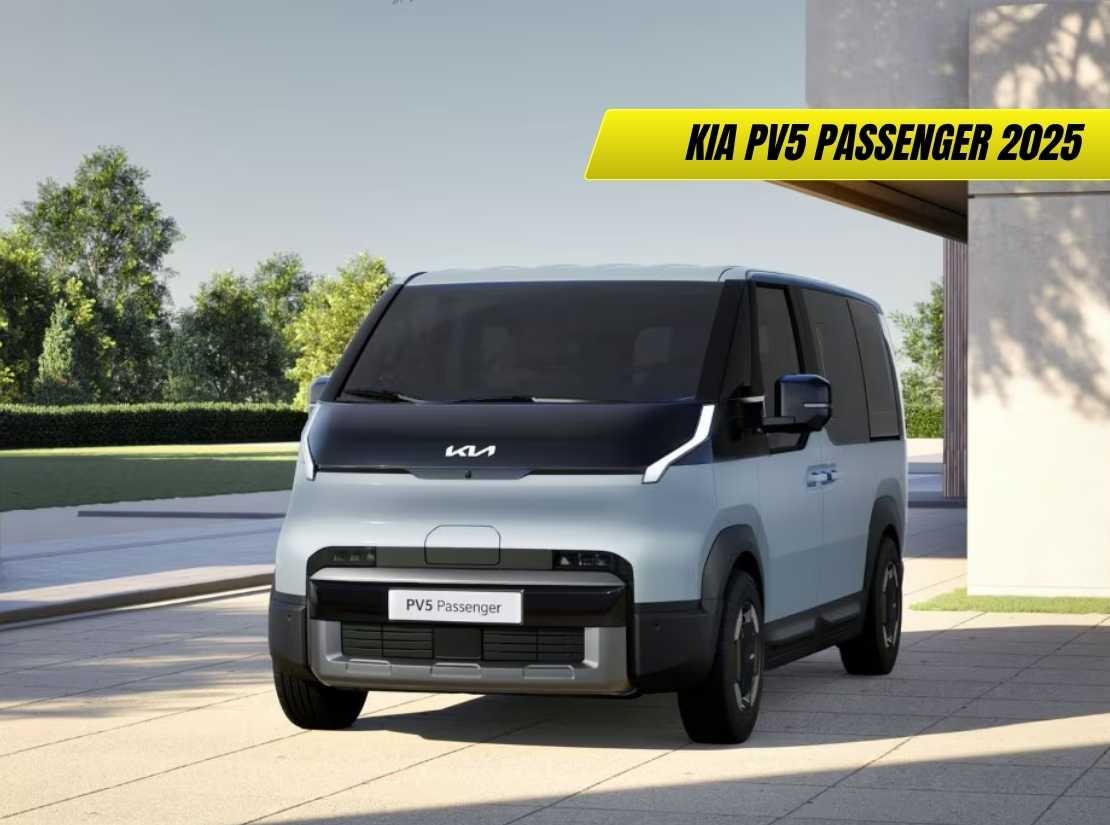
The Kia PV5 Passenger 2025 launches in the UK from £32,995, offering 249-mile range and modular design to challenge the VW ID.Buzz at half the price. Full specifications and launch details.
According to our analysis at AutoHit, the arrival of the Kia PV5 Passenger represents one of the most significant disruptions to the UK electric van market in years. When Volkswagen launched the ID.Buzz, it seemed to have the premium electric passenger van segment largely to itself, despite its eye-watering £59,135 starting price. Now, Kia has entered the fray with a compelling alternative that costs almost exactly half as much whilst offering comparable space and superior range.
We’ve been following the PV5’s development since its concept debut at CES 2024, and having seen the production model at the 2025 CV Show in Birmingham, we’re convinced this represents a genuine game-changer for UK buyers seeking electric family transport or commercial passenger solutions. The combination of aggressive pricing, practical design, and genuinely impressive range figures suggests Kia has identified a substantial gap in the market that Volkswagen has inadvertently created through premium positioning.
This isn’t just another electric van with a few extra seats. Built on Kia’s dedicated E-GMP.S platform – a commercial derivative of the architecture that underpins the award-winning EV6 and EV9 – the PV5 Passenger promises to deliver the sort of flexibility and capability that could make it appealing to everyone from large families to taxi operators. For UK buyers, the timing couldn’t be better, with order books opening in May 2025 and deliveries expected from October.
Key Highlights of the Kia PV5 Passenger
• Aggressive pricing: Starting from £32,995, representing £25,000 less than the cheapest VW ID.Buzz passenger variant • Impressive range: Up to 249 miles WLTP with the 71.2kWh battery, compared to the ID.Buzz’s 234-mile maximum range • Modular flexibility: Available in 5-seater, 7-seater, taxi-optimised, and wheelchair-accessible configurations • Rapid charging: 10-80% charge in 30 minutes using 150kW DC fast charging • UK launch timeline: Order books open May 2025, deliveries begin October 2025 • Commercial focus: Dedicated Kia PBV dealer network with 50 outlets planned across the UK
Market Disruption: Redefining Electric Van Value
The PV5 Passenger’s pricing strategy appears designed to fundamentally reset expectations in the electric passenger van market. At £32,995 for the entry-level Essential variant with 51.5kWh battery, it undercuts not just the VW ID.Buzz but also traditional van-derived MPVs from Ford, Citroën, and Peugeot in many configurations.
This aggressive positioning reflects Kia’s broader strategy with its Platform Beyond Vehicle (PBV) business. Rather than treating commercial vehicles as an afterthought, the company has developed a dedicated platform specifically optimised for light commercial applications, allowing for the sort of cost efficiencies that make this pricing possible.
The VW ID.Buzz Reality Check
When the ID.Buzz finally arrived in UK showrooms, its retro styling and electric credentials generated significant interest. However, the reality of ownership quickly dampened enthusiasm for many potential buyers. Starting prices of £59,135 for passenger variants, combined with limited payload capacity and the typical VW approach of charging extra for features that many consider essential, created a substantial value gap in the market.
The PV5 Passenger appears specifically designed to exploit this gap. Where the ID.Buzz feels like a premium lifestyle statement, the Kia presents itself as a practical solution for buyers who need electric passenger transport without the luxury car price tag.
Design and Engineering: Functionality Over Fashion
The PV5 Passenger eschews the ID.Buzz’s retro nostalgia for a more purposeful, forward-looking aesthetic. At 4,695mm long, 1,895mm wide, and 1,923mm tall, it’s marginally smaller than the VW but offers comparable interior space thanks to more efficient packaging.
The design language feels distinctly modern without being unnecessarily aggressive. LED lighting elements wrap around the short nose, whilst vertical taillights and largely flat side glass maximise interior space. The overall effect is utilitarian but sophisticated – exactly what you’d want from a vehicle that needs to work equally well dropping children at school or ferrying business passengers to airports.
Platform Advantages: E-GMP.S Delivers
The E-GMP.S platform represents a significant advantage over competitors using adapted passenger car platforms. Unlike the ID.Buzz, which must make compromises due to its MEB passenger car origins, the PV5 benefits from architecture designed specifically for commercial applications from the ground up.
This translates into practical benefits: better payload capacity, more flexible interior configurations, and the ability to accommodate different battery sizes without major structural changes. The modular approach also allows Kia to offer multiple variants from the same basic platform, spreading development costs across a broader range of applications.
Interior Space and Versatility: The Practical Advantage
Inside, the PV5 Passenger prioritises space efficiency over design flourishes. The standard five-seater configuration can be reconfigured in numerous ways, with seats that fold, slide, and in some cases remove entirely to create different combinations of passenger and cargo space.
The entry-level Essential trim features cloth-leather combination seat covers, reclining rear seatbacks, USB-C charging ports front and rear, and comprehensive storage solutions throughout. Moving to Plus trim adds genuine leather-effect upholstery, heated seats front and rear, and electrically adjustable front seats with ventilation.
Seven-Seater and Specialist Variants
Kia plans to expand the PV5 Passenger range significantly beyond the initial five-seater offering. A seven-seater variant with 2-2-3 seating configuration will cater to larger families, whilst a taxi-optimised six-seater (1-2-3 configuration) provides additional luggage space next to the driver.
Perhaps most importantly for UK buyers, a wheelchair-accessible vehicle (WAV) variant will feature a deployable side ramp and universal wheelchair attachment system. This represents a significant opportunity in the UK market, where suitable electric passenger vehicles for mobility applications remain scarce and expensive.
Performance and Range: Exceeding Expectations
The PV5 Passenger offers two battery options: 51.5kWh providing up to 179 miles range, and 71.2kWh delivering up to 249 miles. Both use front-wheel drive with a 120kW (161bhp) electric motor producing 250Nm of torque.
Performance figures are adequate rather than exciting: 0-62mph in 10.7 seconds for the long-range version, 12.8 seconds for the standard battery, with both limited to 84mph top speed. These numbers reflect the van’s commercial origins, prioritising efficiency and practicality over outright performance.
Charging and Infrastructure
With 400V architecture and 150kW maximum charging speed, the PV5 can charge from 10-80% in 30 minutes under optimal conditions. Whilst this doesn’t match the 800V systems found in Kia’s premium passenger cars, it represents competitive performance for the commercial vehicle segment.
Kia Charge membership provides access to over 170,000 charging points across 27 European countries, with 99% coverage of public chargers in Germany. UK buyers will receive special discounts during the first twelve months of ownership, helping offset one of the common concerns about electric vehicle adoption.
UK Market Positioning: Strategic Timing
The PV5 Passenger’s arrival coincides perfectly with several UK market trends. The government’s Zero Emission Vehicle (ZEV) mandate is driving increased demand for electric commercial vehicles, whilst traditional van-derived MPVs are becoming increasingly expensive as manufacturers focus on higher-margin SUVs.
Kia’s decision to establish a dedicated PBV dealer network – with 50 outlets planned by end of May 2025 – demonstrates serious commitment to the UK market. Around 60% of these will be standalone facilities rather than additions to existing passenger car dealerships, suggesting the company recognises commercial buyers’ different needs and preferences.
Target Markets: Beyond Traditional Boundaries
The PV5 Passenger’s versatility allows it to target multiple market segments simultaneously. Large families seeking affordable electric transport represent an obvious demographic, particularly those currently considering expensive seven-seat SUVs or hybrid MPVs.
Commercial applications offer perhaps greater potential. Taxi and private hire operators face increasing pressure to electrify their fleets, particularly in cities with expanding Ultra Low Emission Zones. The PV5’s combination of reasonable range, rapid charging, and competitive pricing could make it an attractive alternative to purpose-built cab vehicles or premium electric saloons.
As highlighted in our comprehensive guide to the best SUVs under £40k, the PV5 Passenger offers genuine seven-seat capability at a price point that undercuts most premium SUV alternatives whilst providing superior space efficiency.
Competition Analysis: Standing Alone in Its Segment
The PV5 Passenger faces limited direct competition in the UK market. The VW ID.Buzz remains its closest rival in terms of concept, but the dramatic price difference places them in essentially different market segments. Traditional van-derived MPVs like the Ford Transit Connect and Citroën Berlingo offer lower prices but lack the PV5’s electric-specific design advantages.
Models we’ve recently tested in the best 8-seater SUVs category typically cost £10,000-20,000 more than the PV5 whilst offering less interior space and no electric powertrain option. This positions the Kia as a genuinely unique proposition in the UK market.
Tesla’s Absence Creates Opportunity
Tesla’s decision to abandon plans for a passenger van variant leaves a significant gap in the market that the PV5 is well-positioned to fill. Whilst Tesla focuses on robotaxis and autonomous vehicle development, practical buyers seeking electric passenger transport today have limited options.
The PV5’s conventional approach – prioritising proven technology over revolutionary features – may prove more appealing to conservative UK buyers than Tesla’s typical high-tech solutions.
Technology and Equipment: Practical Innovation
The PV5 Passenger debuts Kia’s first Android Automotive-based infotainment system, running on a 7.5-inch driver display paired with a 12.9-inch central touchscreen. The separation of these displays – rather than the merged approach used in many Kia passenger cars – reflects the commercial vehicle’s focus on functionality over visual drama.
Standard equipment across the range includes automatic LED lighting, heated door mirrors, automatic climate control, front and rear parking sensors, reversing camera, keyless entry, and comprehensive safety systems. This represents significantly more generous specification than typically found on commercial vehicles at this price point.
Fleet and Telematics Integration
Business users benefit from fleet telematics provided by GeoTab, allowing operators to monitor vehicle location, performance, and maintenance requirements remotely. This capability, increasingly essential for professional fleets, comes as standard rather than an expensive option.
Vehicle-to-load (V2L) functionality on Plus-spec models allows the PV5 to power external devices from its battery, opening possibilities for mobile businesses or emergency response applications. The system can provide up to 3.6kW of power through standard UK plugs.
Real-World Ownership: UK-Specific Considerations
For UK buyers, the PV5 Passenger offers several practical advantages over alternatives. The 249-mile maximum range should comfortably handle most British driving patterns, with London to Manchester achievable on a single charge in good conditions.
Urban driving, where many electric passenger vehicles will spend most of their time, should yield even better efficiency than WLTP figures suggest. The instant torque delivery and quiet operation will prove particularly beneficial for taxi and private hire applications.
Charging Infrastructure and Daily Use
The UK’s expanding rapid charging network makes long-distance travel increasingly viable. The PV5’s 30-minute charging time aligns well with typical break patterns for professional drivers, whilst overnight charging at depot or home locations can handle daily urban requirements.
For families, the combination of home charging and occasional rapid top-ups should prove sufficient for most UK usage patterns. The lower electricity costs compared to petrol or diesel fuel can provide significant savings, particularly for high-mileage users.
Commercial Applications: Transforming Business Transport
The PV5 Passenger’s modular design makes it particularly suited to UK commercial applications. Private hire operators can benefit from the taxi-specific variant’s optimised layout, whilst the wheelchair-accessible model addresses growing demand for inclusive transport solutions.
Corporate shuttle services, hotel transfers, and airport run operations could find the PV5’s combination of professional appearance, low running costs, and flexible seating arrangements ideal for their requirements. The seven-year warranty provides additional peace of mind for business users planning long-term fleet operations.
Government and Public Sector Potential
With increasing emphasis on net-zero commitments across UK public sector organisations, the PV5 Passenger could prove attractive for council transport, NHS patient transport, and educational establishment needs. The competitive pricing makes fleet electrification more financially viable than premium alternatives.
Manufacturing and Supply: Korean Efficiency
The PV5 will be manufactured at Kia’s dedicated EVO plant in South Korea, specifically designed for flexible production of PBV variants. This purpose-built facility can produce up to 150,000 units annually whilst accommodating the sort of small-batch customisation that commercial buyers often require.
Kia’s partnership with established conversion specialists allows for factory-approved modifications including refrigeration units, wheelchair accessibility features, and specialised commercial fitments. This approach ensures quality control whilst providing the flexibility that distinguishes successful commercial vehicle manufacturers.
Environmental Impact: Genuine Green Credentials
Beyond zero tailpipe emissions, the PV5 Passenger’s environmental credentials extend to its manufacturing process. The Korean plant uses renewable energy for production, whilst the modular design approach reduces waste through efficient material utilisation.
For UK buyers concerned about lifecycle environmental impact, the PV5’s seven-year warranty and robust construction suggest long service life, maximising the environmental benefits of electrification. The battery chemistry uses responsibly sourced materials with established recycling pathways.
Future Developments: The PBV Roadmap
The PV5 represents just the beginning of Kia’s PBV ambitions. The larger PV7 is planned for 2027, whilst the substantial PV9 will arrive in 2029. This suggests a comprehensive electric commercial vehicle strategy that could challenge established European manufacturers.
Concept variants including camping conversions, mobile offices, and specialist service vehicles hint at the platform’s broader potential. For UK buyers, this roadmap suggests ongoing development and support for the PBV concept rather than a short-term market experiment.
Our Assessment: Genuine Value in a Premium Market
The PV5 Passenger represents exactly the sort of practical electrification that the UK market needs. Rather than chasing headlines with extreme performance or luxury features, Kia has developed a sensible electric passenger vehicle that addresses real-world requirements at a competitive price.
The £25,000 price advantage over the VW ID.Buzz cannot be ignored, particularly when the Kia offers superior range and comparable space. For UK buyers seeking electric passenger transport without premium car pricing, the PV5 presents a compelling proposition.
However, questions remain about long-term reliability and resale values. Kia’s improved reputation for quality and the comprehensive warranty provide some reassurance, but the PBV concept remains unproven in UK conditions.
UK Dealer Network: Commercial Focus
Kia’s investment in dedicated PBV dealers demonstrates understanding that commercial buyers have different requirements from passenger car customers. The planned 50-outlet network should provide adequate coverage for most UK buyers, with specialist knowledge of fleet requirements and conversion options.
The mix of standalone facilities and existing dealership expansion reflects Kia’s recognition that one size doesn’t fit all in commercial vehicle sales. Local businesses may prefer the familiarity of existing dealers, whilst larger fleet operators might value specialist facilities.
Our Verdict: Disrupting the Status Quo
The 2025 Kia PV5 Passenger represents a genuine disruption to the UK electric passenger van market. By prioritising value and practicality over premium positioning, Kia has created a product that addresses real market needs rather than lifestyle aspirations.
The combination of competitive pricing, impressive range, and flexible configuration options makes it genuinely compelling for UK buyers. Whether you’re a large family seeking affordable electric transport or a business operator planning fleet electrification, the PV5 offers capabilities that were previously available only at significantly higher prices.
The timing is perfect, arriving just as UK emission regulations make electric commercial vehicles increasingly necessary whilst traditional alternatives become prohibitively expensive. For buyers who’ve been waiting for affordable electric passenger transport that doesn’t compromise on space or capability, the PV5 appears to deliver exactly what was needed.
That said, success isn’t guaranteed. The UK market can be conservative about new brands in commercial applications, and Kia will need to prove the PBV concept’s durability and reliability over time. The dealer network’s effectiveness in supporting commercial customers will also prove crucial.
On balance, the PV5 Passenger feels like a significant step forward for electric vehicle adoption in the UK. By making electric passenger transport accessible to buyers previously priced out of the market, it could accelerate the transition away from fossil fuel dependence whilst proving that electrification doesn’t require compromise on practicality or affordability.
For UK buyers seeking an electric passenger vehicle that prioritises substance over style, the PV5 Passenger deserves serious consideration. It may not have the ID.Buzz’s retro appeal, but it offers something arguably more valuable: genuine capability at a realistic price.
Frequently Asked Questions
How much does the Kia PV5 Passenger cost in the UK?
The Kia PV5 Passenger starts from £32,995 for the Essential trim with 51.5kWh battery, offering up to 179 miles of range. The long-range version with 71.2kWh battery (249 miles range) pricing has yet to be confirmed, but expect a modest premium. Plus trim pricing is also to be announced, though Kia has indicated increases will be “modest.” This represents exceptional value compared to the VW ID.Buzz passenger variants, which start from £59,135, making the Kia approximately £25,000 cheaper for comparable functionality.
When will the PV5 Passenger be available for delivery in the UK?
Order books for the Kia PV5 Passenger opened on 1st May 2025, with first deliveries scheduled for October 2025. Additional variants including the 7-seater, taxi-optimised 6-seater, and wheelchair-accessible models will follow during 2026. The initial launch focuses on the 5-seater configuration in both Essential and Plus trim levels. Kia is establishing a dedicated network of 50 PBV dealer outlets across the UK by the end of May 2025 to support sales and service.
How does the PV5 Passenger compare to the VW ID.Buzz?
The PV5 Passenger offers significant advantages over the VW ID.Buzz in several key areas. It’s £25,000 cheaper at entry level, provides up to 15 miles more range (249 vs 234 miles), and offers more flexible seating configurations. The Kia also includes more standard equipment and doesn’t charge extra for features like navigation that VW treats as costly options. However, the ID.Buzz offers more premium interior materials, stronger brand recognition, and potentially better resale values, though these advantages come at a substantial price premium.
What range can I expect in real-world UK driving conditions?
While the official WLTP range is up to 249 miles for the long-range battery, real-world UK driving typically yields 80-90% of official figures. Expect around 200-220 miles in mixed driving conditions, dropping to 160-180 miles in winter with heating use. Urban driving should achieve better efficiency than the WLTP cycle suggests, whilst motorway driving at 70mph will reduce range. The 51.5kWh battery variant offers up to 179 miles WLTP, translating to roughly 140-160 miles real-world range.
Is the PV5 Passenger suitable for commercial use like taxi or private hire?
Absolutely. Kia specifically developed a taxi-optimised variant with 1-2-3 seating configuration providing extra luggage space next to the driver. The professional appearance, low running costs, quiet operation, and rapid charging capability make it ideal for urban commercial use. The seven-year warranty provides peace of mind for high-mileage operators, whilst the comprehensive standard equipment reduces additional costs. Fleet telematics come standard, and the vehicle qualifies for various commercial EV grants and incentives available to UK operators.
What warranty and support does Kia offer for the PV5?
The PV5 Passenger comes with Kia’s comprehensive seven-year/100,000-mile warranty, providing exceptional coverage for both private and commercial users. The battery receives separate coverage under the same terms. Kia is establishing a dedicated PBV dealer network of 50 outlets across the UK, with specialist commercial vehicle knowledge and parts support. Additionally, Kia Charge membership provides access to over 170,000 charging points across Europe, with special discounts for PV5 owners during the first twelve months.
Will there be different seating configurations available?
Yes, Kia plans multiple PV5 Passenger variants. The initial 5-seater launch will be followed by a 7-seater with 2-2-3 configuration for larger families, a 6-seater taxi variant (1-2-3) with enhanced luggage space, and a wheelchair-accessible vehicle (WAV) with side-entry ramp and universal wheelchair attachment system. All variants feature flexible seating that can fold, slide, or remove to create different combinations of passenger and cargo space. Multiple seat-folding options even allow creating a flat sleeping platform for camping applications.





