
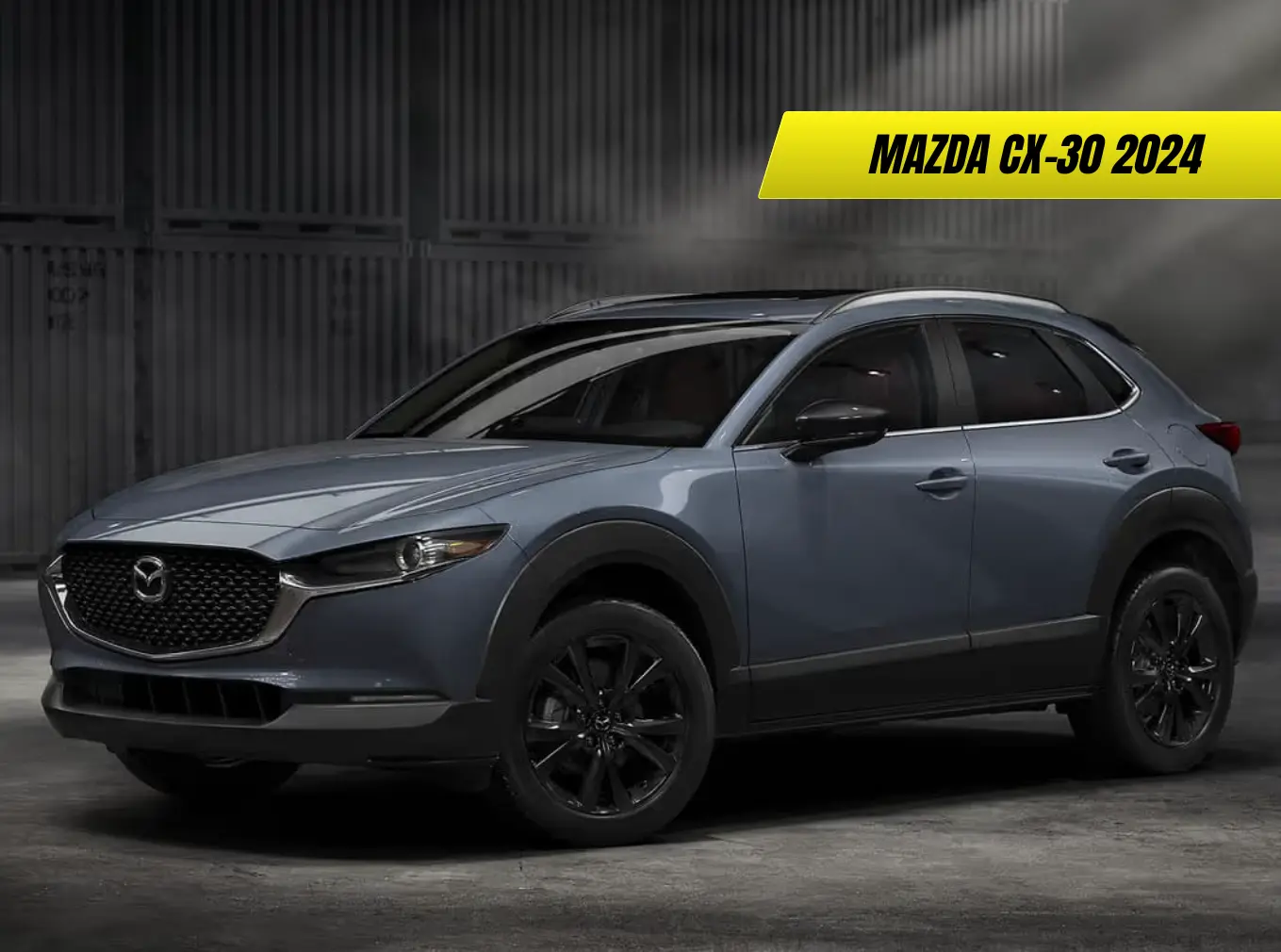
Mazda CX-30 2025 UK review: Japanese compact crossover with Kodo Design, 2.5-litre Skyactiv engine, pricing from £27,850, and how it compares to Volkswagen T-Roc and Toyota C-HR. The Mazda CX-30 continues as the brand’s compact crossover success story, bridging the gap between the smaller CX-3 and larger CX-5 with sophisticated styling and driver-focused dynamics. Based on the Mazda 3 platform, it combines elegant design inspired by Japanese calligraphy with practical crossover versatility. UK pricing starts from approximately £27,850 for the new 2.5-litre naturally-aspirated petrol engine, targeting buyers seeking premium quality and engaging handling without German brand price premiums.
Kodo Design philosophy and dimensions
At 4,400 mm long, 1,800 mm wide and 1,540 mm tall, the CX-30 occupies compact crossover territory with proportions emphasizing elegance over maximum interior volume. The design follows Mazda’s Kodo philosophy inspired by Japanese calligraphy, with fluid surfaces and minimal character lines creating sophisticated aesthetics that avoid the aggressive styling common among rivals. The prominent triangular grille connects to Full LED headlights through taut lines, whilst robust wheelarches linked by a continuous lower line create muscular presence.
The Homura specification tested features 18-inch black gloss alloy wheels, matching door mirrors and darkened rear glass that enhance the sporty character. From my perspective, the CX-30 represents one of the most elegantly proportioned compact crossovers available, prioritizing visual harmony over bold design statements that may date quickly.
Human-centric interior philosophy
The cabin demonstrates Mazda’s human-centric design philosophy through thoughtful ergonomics and quality materials. The dashboard employs three horizontal layers emphasizing width and spaciousness, extending continuously to the doors. Soft-touch materials cover even lower surfaces, delivering perceived quality exceeding many competitors at similar pricing. Seats upholstered in black fabric with red contrast stitching combine comfort with visual refinement.
The minimalist “less is more” approach enhances driving pleasure through uncluttered design, whilst the ergonomic steering wheel features intuitive controls. The dark-toned switchgear adds subtle modernity without garish chrome accents. Build quality feels exceptionally solid with precise panel gaps and damped controls that reinforce premium positioning despite mainstream pricing.
Mazda CX-30 interior features
| Feature | Specification |
|---|---|
| Display | 10.25-inch screen, rotary controller (non-touchscreen when driving) |
| Connectivity | Wireless Apple CarPlay/Android Auto |
| Instrumentation | Traditional analog dials with central display |
| Charging | Wireless phone charging pad, USB-C ports |
| Head-Up Display | Optional (standard on Takumi) |
Balanced technology approach
The 10.25-inch central display employs a non-touchscreen design whilst driving, controlled via a rotary dial on the center console—a deliberate choice prioritizing driving safety over touchscreen convenience. Wireless Apple CarPlay and Android Auto integration projects navigation directions onto the available Head-Up Display, creating seamless information flow. USB-C ports and wireless phone charging provide connectivity, though the infotainment graphics appear dated versus more recent rivals.
The instrument cluster maintains traditional analog dials rather than adopting fully-digital displays, appealing to drivers who prefer classic layouts over screen-dominated cockpits. From my experience, Mazda’s approach prioritizes driving focus over technological showmanship, though some buyers may find the graphics less impressive than competitors offering fully-digital environments.
Rear space and boot practicality
Rear passengers enjoy adequate space for two adults with reasonable knee clearance and headroom, though the central fifth passenger feels cramped due to transmission tunnel intrusion. Rear climate vents maintain comfort, though USB charging ports remain absent—a surprising omission for family-focused buyers. The central armrest incorporates two cupholders for added convenience.
Boot capacity measures 430 litres, reducing to 422 litres with the optional Bose audio system, expanding to 1,406 or 1,398 litres respectively with rear seats folded. The Smart Cargo System enables modular configuration for varying loads, though 12V power outlets are notably absent. Compared with alternatives like the Toyota C-HR, the CX-30 offers similar practicality with more engaging driving dynamics.
New 2.5-litre Skyactiv engine
The 2025 model introduces a 2.5-litre four-cylinder naturally-aspirated Skyactiv engine producing 140 hp and 175 lb-ft at 3,300 rpm, joining the existing 2.0-litre mild-hybrid options. The larger displacement addresses the 2.0’s lack of low and mid-range torque, which peaked at 157 lb-ft at 4,000 rpm. Performance includes 0-62 mph in 9.7 seconds, quicker than the 122 hp variant (10.6 seconds) but slower than the 150 hp version (8.8 seconds).
The six-speed manual transmission offers precise, engaging shifts that enhance driver involvement, whilst a six-speed automatic adds £2,000 for buyers prioritizing convenience over engagement. Real-world fuel economy achieved 7.2 l/100 km (approximately 39 mpg) during careful driving—acceptable rather than exceptional for a naturally-aspirated engine without hybrid assistance.
Engaging driving dynamics
The CX-30 prioritizes driving pleasure through balanced chassis tuning and the G-Vectoring Control Plus system that applies subtle braking to outer wheels during cornering to improve stability and turn-in response. Steering provides natural weight and feedback rare among modern crossovers, whilst body roll remains controlled during spirited driving. The manual transmission enhances involvement, rewarding enthusiastic drivers who appreciate traditional engagement over automated convenience.
However, the rear suspension exhibits stiffness over rough surfaces including speed bumps and potholes, transmitting impacts more directly than softer-tuned rivals. The cabin benefits from excellent sound insulation that minimizes wind noise and vibration at motorway speeds, creating refined long-distance cruising despite the firm ride. From my experience, the CX-30 suits drivers who prioritize handling engagement over maximum comfort, accepting firmer suspension as the trade-off for dynamic competence.
Comprehensive ADAS suite
All major driver assistance systems come standard including adaptive cruise control, lane-keeping assist, autonomous emergency braking and blind-spot monitoring. However, the lane-keeping system requires improvement—it tends to ping-pong between lane edges rather than maintaining centered positioning, creating an unsettled feeling on motorways. This remains a common Mazda ADAS weakness that detracts from otherwise excellent execution.
For understanding UK driving regulations, guides to UK speed camera regulations 2025 provide comprehensive coverage of current enforcement practices.
UK pricing and six trim levels
The CX-30 range spans six specifications: Prime Line, Centre Line, Homura, Nagisa, Exclusive Line and Takumi. Pricing starts from £27,850 for Prime Line with the 2.5-litre engine, rising to £35,550 for flagship Takumi specification including Matrix LED headlights, Head-Up Display and semi-autonomous driving functions as standard.
The pricing positions the CX-30 competitively against mainstream rivals whilst undercutting premium German alternatives, offering Mazda’s signature quality and driving engagement at accessible prices. Three-year/60,000-mile warranty matches industry norms, though it falls short of Kia and Hyundai’s seven-year coverage.
Running costs and ownership considerations
Real-world fuel economy of approximately 39 mpg (7.2 l/100 km) translates to around 14p per mile at current UK fuel prices of £1.40 per litre. Insurance groups sit around 15-18 depending on specification, keeping premiums reasonable for family buyers. Service intervals follow Mazda’s standard schedules with routine maintenance costs remaining competitive for the segment.
For information about UK road charging, guides to UK toll roads and charges 2025 cover motorway service costs affecting longer journeys.
How it compares to key rivals
The CX-30 battles the Volkswagen T-Roc, Toyota C-HR and Nissan Qashqai for compact crossover buyers. The VW offers more modern infotainment but trails in driving engagement, whilst the Toyota provides superior hybrid efficiency at the expense of handling involvement. Against the Nissan Qashqai, the Mazda counters with more sophisticated design and engaging dynamics.
From my assessment, the CX-30 suits buyers who prioritize driving pleasure and design elegance over maximum practicality or cutting-edge technology, accepting firmer ride quality and dated infotainment graphics for genuinely rewarding handling.
Frequently asked questions
Is the 2.5-litre engine better than the 2.0?
The 2.5 delivers more low and mid-range torque (175 lb-ft at 3,300 rpm versus 157 lb-ft at 4,000 rpm), improving everyday drivability without sacrificing refinement. It represents the sweet spot in the range for buyers seeking naturally-aspirated smoothness with adequate performance.
What is the real-world fuel economy?
Testing achieved approximately 39 mpg (7.2 l/100 km) during careful driving, dropping toward 32 mpg in predominantly urban use and rising to 45 mpg on gentle motorway cruises. The naturally-aspirated engine trails hybrid rivals in efficiency.
Is the manual gearbox worth choosing over the automatic?
The six-speed manual offers precise, engaging shifts that enhance driving pleasure for enthusiasts, whilst the automatic adds £2,000 for buyers prioritizing convenience. The manual suits drivers who enjoy traditional involvement.
How does the ride comfort compare to rivals?
The firm rear suspension transmits bumps and rough surfaces more directly than softer-tuned competitors, creating a sportier but less comfortable ride. Buyers prioritizing maximum comfort should test-drive carefully versus rivals with more compliant suspension.
Is boot space adequate for families?
The 430-litre capacity handles weekly shopping and sports equipment adequately, though it trails some rivals offering 500+ litres. Families needing maximum cargo volume should consider larger alternatives like the Mazda CX-5.
What warranty does Mazda provide?
Three years or 60,000 miles covers the vehicle, matching most European brands but falling short of Korean manufacturers’ seven-year coverage. Extended warranties are available for buyers planning longer ownership.
What are common dashboard warning lights?
Like all modern vehicles, the CX-30 features comprehensive warnings for service needs and faults. UK drivers should understand indicators including the spanner warning light for maintenance intervals and handbrake warning light which may indicate brake system issues.
The Mazda CX-30 2025 delivers sophisticated design and engaging driving dynamics wrapped in practical compact crossover packaging, targeting buyers who refuse to sacrifice handling pleasure for crossover versatility. It excels on challenging roads where the balanced chassis and responsive steering shine, though firm suspension and dated infotainment graphics reveal compromises. For UK buyers seeking a driver-focused alternative to anonymous mainstream crossovers with genuine quality and elegant aesthetics, the CX-30 represents one of the segment’s most rewarding choices, particularly in manual specification that maximizes involvement whilst controlling costs.





