
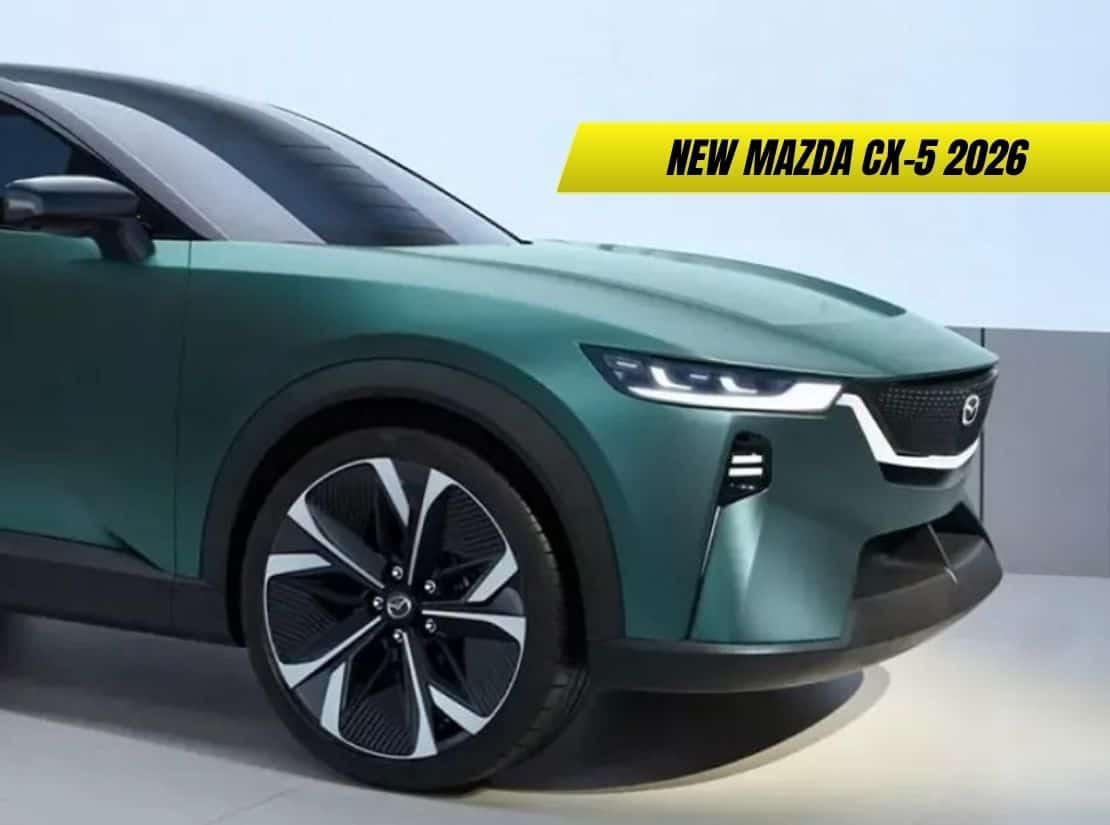
After nearly nine years of stalwart service, the Mazda CX-5 is finally receiving the comprehensive redesign it deserves. The third-generation model, set for July 10th global debut, represents more than evolutionary styling updates – it signals Mazda’s commitment to maintaining relevance in an increasingly competitive compact SUV segment whilst introducing groundbreaking hybrid technology that could reshape how we think about Japanese efficiency.
Having observed Mazda’s careful approach to electrification compared to rivals’ rushed EV transitions, we at AutoHit find the CX-5’s hybrid strategy particularly compelling. Rather than abandoning proven combustion technology, Mazda is developing its revolutionary Skyactiv-Z engine – described as approaching “the ideal internal combustion engine” – specifically for hybrid applications. This thoughtful approach addresses UK buyers’ concerns about charging infrastructure whilst delivering meaningful efficiency improvements.
The timing proves particularly significant for British compact SUV buyers. With the Toyota RAV4 receiving comprehensive updates and Honda’s CR-V establishing hybrid credentials, the CX-5 needed more than cosmetic changes to maintain its position as a driver-focused alternative. The combination of increased dimensions, advanced technology, and imminent hybrid availability positions the new CX-5 to reclaim its position as the thinking driver’s choice in this crucial segment.
Key Highlights
• Revolutionary Hybrid Technology: In-house developed Skyactiv-Z hybrid system arriving 2027, promising superior efficiency without compromising driving dynamics • Significant Size Increase: 4.5 inches longer overall with 3-inch wheelbase extension, delivering substantially improved passenger and cargo space • Advanced Technology Integration: Large touchscreen replaces rotary controller, with Amazon Alexa integration and driver personalisation systems • Evolutionary Styling: Sharper Kodo design language inspired by larger CX-90, maintaining familiar proportions whilst adding contemporary edge • Competitive Pricing Strategy: Expected to maintain sub-£30,000 entry point despite substantial improvements and hybrid availability • Proven Powertrain Bridge: Carryover 2.5-litre Skyactiv-G engine for launch, ensuring reliability whilst hybrid technology develops
Third-Generation Platform and Dimensions
The 2026 CX-5 addresses one of the most consistent criticisms of its predecessor through significant dimensional improvements. The 4.5-inch length increase and 3-inch wheelbase extension transform interior space whilst maintaining the manageable exterior dimensions that suit UK parking constraints and narrow roads.
These changes deliver tangible benefits for British families. Rear passengers gain meaningful legroom, whilst cargo capacity improvements address the previous model’s limitations compared to rivals like the Honda CR-V or Kia Sportage. However, Mazda maintains that the larger CX-50 remains the superior choice for maximum cargo volume, positioning the CX-5 as the more urban-focused option.
Platform Efficiency and Engineering
The new platform demonstrates Mazda’s commitment to engineering efficiency through what the company terms “complexity reduction” – a 60% decrease in manufacturing complexity compared to the outgoing model. This approach enables cost control whilst improving build quality, potentially maintaining the CX-5’s traditional value positioning despite enhanced capabilities.
For UK buyers, this engineering philosophy translates to vehicles that prioritise essential improvements over unnecessary complexity. The focus on fundamental enhancements rather than gimmicky features aligns with British preferences for substance over superficial technology integration.
Revolutionary Skyactiv-Z Hybrid Technology
The most significant development in the new CX-5 involves Mazda’s in-house hybrid system, scheduled for 2027 introduction. Unlike the CX-50’s Toyota-sourced hybrid technology, the CX-5 will feature Mazda’s proprietary system built around the revolutionary Skyactiv-Z engine.
Mazda describes Skyactiv-Z as approaching “the ideal internal combustion engine” through optimization of seven key control factors: compression ratio, air-fuel ratio, wall surface heat transfer, combustion period, combustion timing, pumping loss, and mechanical loss. This comprehensive approach promises efficiency improvements without sacrificing the driving dynamics that distinguish Mazda from competitors.
Hybrid System Architecture
The expected configuration includes electric generator and propulsion motors with a battery capacity under 1.5kWh, providing limited electric-only capability whilst maximizing efficiency gains. Power output should exceed 200 horsepower with combined fuel economy approaching 40mpg – figures that would position the CX-5 Hybrid competitively against established rivals.
This approach differs significantly from plug-in hybrid systems, focusing on seamless integration rather than electric-only range. For UK buyers concerned about charging infrastructure or range anxiety, this self-charging system provides environmental benefits without operational complications.
Design Evolution and Contemporary Appeal
The 2026 CX-5’s styling represents evolutionary rather than revolutionary change, maintaining the recognisable silhouette whilst incorporating sharper details inspired by Mazda’s larger SUV models. The front end features slimmer vertical headlights, a more upright grille, and contemporary LED lighting that enhances visual presence without abandoning brand identity.
The rear design adopts aggressive new taillights reminiscent of recent BMW concepts, whilst crisp LED graphics align with Mazda’s current SUV family. These changes create visual cohesion across the range whilst ensuring the CX-5 appears contemporary rather than dated – crucial for maintaining appeal in a segment where styling strongly influences purchasing decisions.
Interior Transformation
The cabin receives comprehensive updates including a large touchscreen that replaces Mazda’s previous rotary controller system. This change addresses criticism about interface complexity whilst enabling integration of modern connectivity features like Amazon Alexa voice control and comprehensive smartphone integration.
Materials quality receives significant attention, with soft-touch surfaces standard across the range and range-topping models featuring Nappa leather and premium amenities. This approach reinforces Mazda’s positioning as a premium mainstream brand whilst ensuring the CX-5 competes effectively against increasingly sophisticated competitors.
UK Market Positioning and Competitive Strategy
The 2026 CX-5 enters an intensely competitive UK compact SUV market, facing renewed challenges from the updated Toyota RAV4, Honda CR-V Hybrid, and increasingly sophisticated Korean alternatives. Mazda’s strategy focuses on maintaining traditional strengths – driving dynamics, build quality, and design appeal – whilst addressing previous weaknesses in space and technology.
The pricing strategy proves crucial for UK success. Mazda aims to maintain the sub-£30,000 entry point despite substantial improvements, though modest increases for higher trim levels seem inevitable. Hybrid variants targeting the high-£30,000 range would position competitively against established rivals whilst providing meaningful efficiency advantages.
Value Proposition Analysis
The CX-5’s traditional appeal in the UK market stems from offering premium-feeling capability at mainstream prices. The 2026 model must maintain this value equation whilst incorporating technologies and features that justify any price increases. Early indications suggest Mazda understands this balance, focusing on meaningful improvements rather than expensive gimmicks.
For UK buyers, the CX-5’s continued emphasis on driving dynamics provides differentiation in a segment increasingly focused on efficiency over engagement. This positioning could prove particularly valuable as other manufacturers prioritise electrification over driving pleasure.
Technology Integration and Modern Features
The 2026 CX-5’s technology suite addresses previous criticisms whilst maintaining Mazda’s philosophy of intuitive operation. The large touchscreen enables comprehensive smartphone integration whilst physical controls remain for essential functions – balancing modern expectations with practical usability.
Advanced driver assistance features receive updates including traffic sign recognition and traffic jam assist, whilst safety technology meets current European standards. The driver personalisation system, borrowed from larger Mazda models, enables multiple users to customise vehicle settings automatically.
Connectivity and Convenience
Amazon Alexa integration provides voice control capabilities increasingly expected by UK buyers, whilst comprehensive smartphone connectivity ensures compatibility with both Apple and Android devices. The infotainment system promises improved response times and graphics quality compared to previous Mazda systems.
These improvements address one of the CX-5’s few competitive weaknesses whilst maintaining the brand’s reputation for intuitive operation. For UK buyers, this balance between capability and simplicity provides advantages over more complex competitor systems.
Competitive Landscape Analysis
The 2026 CX-5 faces unprecedented competition in the UK compact SUV segment. The Toyota RAV4’s comprehensive redesign, Honda CR-V’s established hybrid credentials, and the emergence of capable Korean alternatives create challenges that require more than incremental improvements.
However, the CX-5’s unique positioning as the driver-focused choice in the segment provides differentiation opportunities. Whilst competitors prioritise efficiency or practicality, Mazda’s emphasis on engaging dynamics could attract buyers seeking more than mere transportation appliances.
| Model | Power | Economy | Starting Price (est.) | Hybrid Available | Key Strength |
|---|---|---|---|---|---|
| 2026 Mazda CX-5 | 187hp (256hp Turbo) | TBC (~35mpg) | ~£29,000 | 2027 (40mpg est.) | Driving dynamics |
| 2026 Toyota RAV4 | 196hp (219hp Hybrid) | 50mpg+ hybrid | ~£32,000 | Standard | Proven reliability |
| Honda CR-V Hybrid | 204hp hybrid | 41mpg | ~£35,000 | Standard | Space efficiency |
| Kia Sportage | 180hp (230hp Hybrid) | 44mpg hybrid | ~£30,000 | Available | Value/warranty |
| Hyundai Tucson | 180hp (230hp Hybrid) | 42mpg hybrid | ~£31,000 | Available | Style/technology |
Manufacturing Strategy and Quality Assurance
Mazda’s approach to the new CX-5 emphasises manufacturing efficiency through complexity reduction whilst maintaining build quality standards. The streamlined production process enables cost control without compromising the attention to detail that distinguishes Mazda from mass-market competitors.
For UK buyers, this philosophy translates to vehicles that prioritise essential improvements over unnecessary features. The focus on fundamental enhancements aligns with British preferences for substance over superficial complexity, potentially providing long-term ownership advantages.
Timeline and Market Introduction
The July 10th global debut positions the 2026 CX-5 for introduction as a 2026 model year vehicle in major markets. UK availability should follow shortly thereafter, enabling Mazda to capitalise on improved product whilst competitors transition between generations.
The hybrid variant’s 2027 introduction timeline allows infrastructure development whilst ensuring the technology achieves production readiness. This gradual approach reduces risk whilst providing customers immediate access to improved conventional powertrains.
Environmental Credentials and Future Planning
The Skyactiv-Z hybrid system’s emphasis on combustion efficiency rather than pure electrification aligns with realistic assessments of UK infrastructure development. This approach provides meaningful emissions reductions without requiring charging infrastructure investment or range anxiety concerns.
The Euro 7 compliance built into Skyactiv-Z technology ensures regulatory compliance whilst maintaining performance characteristics. For UK buyers, this future-proofing provides confidence in long-term ownership viability as regulations evolve.
Frequently Asked Questions
When will the 2026 Mazda CX-5 arrive in the UK, and what can buyers expect from pricing?
The 2026 CX-5 debuts globally on July 10th, with UK market introduction expected in late 2025 or early 2026. Mazda aims to maintain entry-level pricing below £30,000 despite substantial improvements, though higher trim levels may see modest increases. The hybrid variant, arriving in 2027, will likely target the high-£30,000 range to compete with established rivals whilst providing superior efficiency and driving dynamics.
How does the new Skyactiv-Z hybrid system differ from competitors like Toyota’s RAV4 Hybrid?
Mazda’s in-house Skyactiv-Z hybrid prioritises combustion engine efficiency optimization through seven key control factors, rather than relying on electric assistance to mask engine limitations. This approach promises around 40mpg efficiency whilst maintaining Mazda’s signature driving dynamics. Unlike Toyota’s system, which emphasizes electric operation, Mazda’s approach provides seamless integration that preserves the engaging character that distinguishes the CX-5 from appliance-like competitors.
What are the main improvements in interior space and practicality for the 2026 model?
The new CX-5 stretches 4.5 inches longer overall with a 3-inch wheelbase extension, delivering meaningful improvements in rear passenger legroom and cargo capacity. The wider body provides better shoulder room, whilst the improved packaging addresses previous complaints about space compared to rivals like the Honda CR-V. However, Mazda maintains that the CX-50 remains the choice for maximum cargo volume, positioning the CX-5 as the more urban-focused alternative.
Will the driving dynamics that made the CX-5 popular be maintained in the hybrid version?
Mazda specifically developed its hybrid system to preserve driving dynamics rather than prioritising maximum efficiency. The Skyactiv-Z engine’s optimization approach maintains throttle response and power delivery characteristics whilst adding electric assistance for efficiency gains. Unlike some hybrid systems that feel disconnected, Mazda’s approach promises seamless integration that enhances rather than compromises the driving experience that distinguishes the CX-5 from mainstream competitors.
How does the technology update address previous criticisms while maintaining Mazda’s intuitive approach?
The large touchscreen replaces Mazda’s occasionally criticised rotary controller whilst retaining physical controls for essential functions. Amazon Alexa integration and comprehensive smartphone connectivity address modern expectations, whilst the interface design maintains Mazda’s philosophy of intuitive operation. The driver personalisation system from larger Mazda models enables multiple users to customise settings automatically without complex menu navigation.
What advantages does waiting for the 2027 hybrid offer compared to buying the 2026 conventional model?
The 2027 hybrid will feature Mazda’s revolutionary Skyactiv-Z technology, promising approximately 40mpg efficiency compared to the current engine’s ~28mpg combined. The hybrid system adds power whilst reducing emissions, potentially offering the best balance of performance and efficiency in the segment. However, the 2026 conventional model provides immediate access to improved space, technology, and refinement with proven powertrain reliability. The choice depends on individual priorities regarding efficiency versus immediate availability.
How does the 2026 CX-5 position against the updated Toyota RAV4 and other hybrid competitors?
The CX-5 maintains its traditional focus on driving dynamics and design appeal whilst addressing previous weaknesses in space and technology. Against the efficiency-focused RAV4 or practical CR-V, the CX-5 offers superior driving engagement and premium feel at competitive pricing. The delayed hybrid availability is offset by the proven reliability of Mazda’s conventional powertrains and the promise of more sophisticated hybrid technology when it arrives in 2027.
Conclusion: Strategic Evolution for Sustained Relevance
The 2026 Mazda CX-5 represents precisely the type of thoughtful evolution that the segment demands – meaningful improvements that address real customer concerns whilst maintaining the distinctive character that attracted buyers originally. The dimensional increases solve practical complaints, technology updates provide modern convenience, and the promise of revolutionary hybrid technology offers future efficiency without compromising driving appeal.
Mazda’s decision to develop proprietary hybrid technology rather than sourcing from Toyota demonstrates confidence in its engineering capabilities whilst ensuring the hybrid CX-5 maintains brand character. This approach contrasts with competitors who often prioritise efficiency over engagement, potentially providing differentiation as the market matures.
The timeline strategy proves particularly intelligent, providing immediate improvements through the conventional 2026 model whilst allowing hybrid technology to achieve full development. This approach reduces risk whilst maintaining momentum in a competitive segment where standing still means falling behind.
Our assessment: The 2026 CX-5 successfully addresses its predecessor’s few weaknesses whilst preserving the driving dynamics and premium feel that distinguished it from mainstream alternatives. The combination of increased space, modern technology, competitive pricing, and future hybrid availability creates a compelling proposition for UK buyers seeking more than mere transportation appliances.
For British compact SUV buyers, the new CX-5 maintains Mazda’s traditional appeal – offering premium-feeling capability at mainstream prices whilst providing the driving engagement that separates it from efficiency-focused rivals. The promise of revolutionary hybrid technology adds future-proofing value without forcing immediate compromise.
The success of this strategy will ultimately depend on execution rather than specification. If Mazda delivers the promised improvements whilst maintaining build quality and driving dynamics, the 2026 CX-5 could reclaim its position as the thinking driver’s choice in an increasingly competitive segment.





