
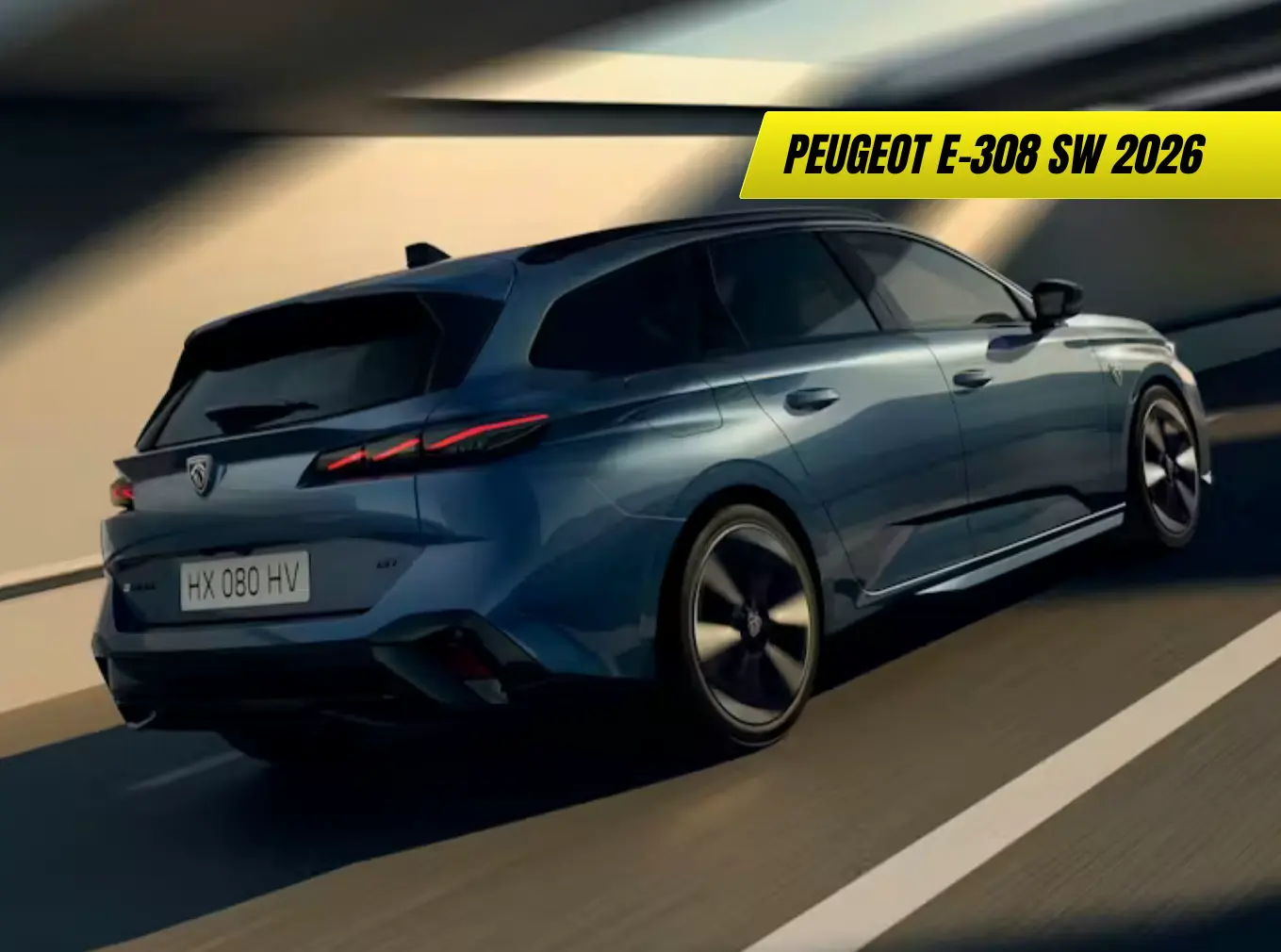
The latest Peugeot 308 has become one of the most distinctive family hatchbacks in the UK, combining sharp French design with a wide choice of electrified powertrains. For 2026, the range has been updated with more efficient hybrid and plug‑in hybrid options and a fully electric e‑308, making it one of the most future‑proof compact cars you can buy. It competes directly with the Volkswagen Golf, Vauxhall Astra, Toyota Corolla and Hyundai i30, but stands out for its bold styling, high‑tech interior and strong plug‑in and EV offering.
Key points (summary)
- Available in the UK as hatchback and 308 SW estate, with petrol hybrid, plug‑in hybrid and full‑electric e‑308 options.
- Facelifted models bring a bigger battery for the plug‑in hybrid and a longer range for the e‑308.
- Boot space of around 412 litres in the hatchback (412 L / 1,323 L seats folded), among the largest in its class.
- Trim levels (Allure, GT, GT Premium) start from under £30,000 for hybrid models, with EV pricing not much higher after grants.
- Interior uses Peugeot’s i‑Cockpit layout with digital dials and a compact steering wheel, creating a very modern feel.
2026 Peugeot 308 UK range and positioning
In the UK, the 308 sits as Peugeot’s core family hatchback, available both as:
- 308 Hatchback – compact, stylish, ideal for urban and mixed driving.
- 308 SW Estate – longer body with a much larger boot for families and high‑mileage users.
Recent updates have refreshed the design and tech, with the 308 now showcasing Peugeot’s latest front end: a more pronounced grille, illuminated emblem and the three‑claw light signature, giving it a strong presence on UK roads. It is also pitched as a serious alternative to premium‑leaning rivals thanks to its cabin design and tech.
From my point of view, the 308 is aimed at buyers who want something more characterful than a conventional Golf or Corolla, and who are ready to embrace electrified powertrains without giving up style or comfort.
Engines, hybrid systems and performance
The 308 range in 2026 offers one of the broadest powertrain choices in the segment:
- Hybrid petrol (self‑charging style)
- Combines a small petrol engine with electric assistance.
- Capable of running on electric power for a significant portion of urban driving.
- Designed to cut fuel use and CO₂ without needing to plug in.
- Plug‑in hybrid (PHEV)
- 1.6‑litre petrol engine paired with an electric motor and a larger battery.
- Updated powertrain now produces around 195 hp and uses a new dual‑clutch automatic gearbox.
- Battery increased to around 17.2 kWh, giving an electric‑only range of up to 60 miles for the hatchback (slightly less for the SW estate).
- Ideal for UK drivers who can charge at home and do a lot of trips under 30–40 miles.
- BlueHDi diesel (from March 2026)
- 1.5‑litre diesel engine aimed at long‑distance drivers.
- Expected to offer the best motorway fuel economy in the range.
- e‑308 (fully electric)
- Battery around 58 kWh (55 kWh usable).
- Official range up to around 281 miles, depending on spec.
- Suitable for many UK commuters and families who can charge at home or work.
The plug‑in hybrid system is particularly interesting: with a usable electric‑only range around 50–60 miles, many British drivers will be able to do their weekly commuting mostly on electric power, using petrol only for longer trips. In my experience, this makes the PHEV 308 especially attractive for those who want low running costs but still need flexibility for occasional motorway journeys.
A helpful visual here would be a side‑by‑side bar chart showing electric‑only range for the 308 PHEV vs the e‑308’s total range, and estimated annual fuel/charging costs at typical UK mileages.
Prices, trims and equipment
Peugeot has streamlined the 308 trim hierarchy for the facelift:
- Allure – entry point, but already well equipped.
- GT – more sporty and upmarket.
- GT Premium – range‑topper with the most equipment.
Indicative UK pricing for the facelifted cars:
- From around £29,995 for an Allure hatchback with the hybrid petrol engine.
- The e‑308 electric is only roughly £1,000 more once the typical £1,500 electric car grant is factored in, making it surprisingly competitive.
- The plug‑in hybrid starts from around £35,000, making it the most expensive in the range but also the most versatile.
- The 308 SW estate versions cost about £1,200 more than equivalent hatchback trims.
All trim levels get the Peugeot i‑Cockpit with digital dials, compact steering wheel and central touchscreen. GT and GT Premium add features like:
- Matrix LED headlights and sequential indicators.
- More advanced driver‑assistance systems.
- Upgraded seats with heating and massage functions.
From my point of view, GT strikes the best balance for UK buyers: it gets most of the desirable features without climbing too close to premium‑brand prices.
Interior, tech and driving position
The 308’s cabin is one of its biggest selling points. Peugeot’s i‑Cockpit concept is built around:
- A compact, low‑set steering wheel.
- High‑mounted digital instrument cluster.
- A strongly angled central touchscreen with configurable shortcut tiles.
It looks and feels very modern, and the materials in higher trims feel close to premium territory. Ambient lighting, sculpted surfaces and distinctive seat designs make the car feel special in a way few mainstream rivals do.
However, the driving position may not suit absolutely everyone. Some drivers find the small steering wheel partially blocks the view of the instruments if they cannot get the seat and wheel exactly how they like it. It’s something UK buyers should test carefully on a long test drive.
A comparison table could illustrate this:
| Feature | Peugeot 308 | Typical rival (e.g. Golf) |
|---|---|---|
| Instrument layout | High digital cluster | Traditional mid‑level dials/screen |
| Steering wheel | Small, low‑set | Larger, more conventional |
| Cabin design | Bold, angular, techy | More conservative and minimalist |
From my point of view, if you like something a bit different and more design‑led, the 308’s cabin is one of the best reasons to buy it.
Boot space and practicality
Despite its stylish, low roofline, the 308 hatchback is impressively practical for its size:
- Boot space (non‑PHEV hatchback): around 412 litres with seats up, and roughly 1,323 litres with seats folded.
- This is more than a Golf hatch and many other rivals.
- In plug‑in hybrid versions, battery placement reduces capacity, dropping to about 361 litres with seats up and 1,271 litres with seats folded – still competitive, but less generous than the pure petrol/hybrid models.
For drivers who need maximum space, the 308 SW estate is particularly strong:
- Up to around 608 litres of space with seats up, and about 1,634 litres with seats folded in newer versions.
- A long, wide boot opening that can comfortably swallow flat‑pack furniture, multiple suitcases and pushchairs, making it a very capable family or load‑lugging car.
In practical UK terms, that means:
- The hatchback is ideal for urban and suburban families who want style and usability.
- The SW estate is a serious alternative to compact SUVs for those who value a low loading height and better aerodynamics.
Driving experience on UK roads
The 308 has been tuned to offer a more refined and slightly sportier drive than previous generations:
- Ride comfort: well‑controlled, with a firm edge on larger wheels but generally compliant enough for typical British roads.
- Handling: the small steering wheel gives a sense of agility, and the chassis feels sharp and responsive, especially on GT trims.
- Noise levels: good isolation from tyre and wind noise, aided by the aerodynamic body and well‑sealed doors.
Hybrid and plug‑in hybrid models feel particularly smooth in town, thanks to electric assistance and the ability to glide in near‑silent EV mode at low speeds. On the motorway, the 308 is stable and relaxed, making it suitable for longer UK journeys.
From my point of view, the 308 is one of the more enjoyable mainstream hatchbacks to drive if you appreciate both style and composure. It doesn’t quite match the pure driver involvement of a Mazda 3, but it feels more special than many rivals.
Running costs, grants and UK ownership
Running costs depend heavily on which 308 variant you choose:
- Hybrid petrol: good for mixed driving, with decent fuel economy and lower emissions than pure petrols.
- Plug‑in hybrid: potentially excellent if you regularly plug in and mostly drive short distances; can become less efficient if used like a normal petrol.
- Diesel BlueHDi: likely the best choice for high motorway mileages due to low consumption.
- e‑308: very low running costs if you can charge at home on a competitive tariff; ideal for urban and regional driving.
Thanks to UK electric car grants and plug‑in vehicle incentives, the e‑308 can actually end up close in price to the hybrid petrol, making it a serious contender for cost‑conscious drivers ready to go fully electric.
For UK buyers, this section aligns well with content about plug‑in hybrids, UK toll roads and charges, and vehicle‑tax rules, because all these factors influence which 308 variant makes most financial sense.
Peugeot 308 vs main rivals
| Model | Key strengths | Main compromises |
|---|---|---|
| Peugeot 308 | Bold design, strong PHEV/EV options, big boot | Driving position not for everyone |
| VW Golf | Refinement, image, broad engine choice | Less adventurous design, often pricier |
| Vauxhall Astra | Tech‑rich, also offers EV and PHEV | Interior feel less distinctive |
| Toyota Corolla | Superb hybrid efficiency, reliability | Less stylish, smaller boot in hatch form |
| Hyundai i30 | Excellent value, big boot, long warranty | Fewer electrified options, less flair |
For UK drivers who value design, high‑end tech and the flexibility of plug‑in or full‑electric power, the 308 deserves to be near the top of the shortlist.
FAQs
Is the 2026 Peugeot 308 a good choice for UK families?
Yes. The hatchback offers one of the largest boots in its class, and the 308 SW estate provides SUV‑rivaling space, making both strong options for family use.
Which 308 engine is best for UK commuting?
For shorter commutes with home charging, the plug‑in hybrid or e‑308 offer very low running costs. For mixed use without charging, the hybrid petrol is a safe, efficient choice, while the BlueHDi diesel suits high‑mileage motorway drivers.
Is the Peugeot 308 comfortable on long journeys?
Generally yes. The suspension tuning and supportive seats, especially in GT/GT Premium trims, make it comfortable for motorway trips and longer drives.
How practical is the 308 plug‑in hybrid compared with the regular hatch?
The PHEV loses some boot space due to the battery, but still offers useful capacity. If maximum cargo room is a priority, the non‑PHEV hatch or the SW estate are better choices.
Does the 308 work well as a first EV in e‑308 form?
Yes. With an official range in the high‑200‑mile region and hatchback practicality, the e‑308 is a very usable first electric car for UK drivers who can charge at home or work.
Conclusion
The 2026 Peugeot 308 stands out in the crowded UK hatchback market by offering a rare combination of striking design, a high‑tech cabin and a compelling mix of hybrid, plug‑in hybrid and full‑electric powertrains. With strong boot space, especially in the SW estate, and pricing that undercuts many premium rivals, it provides a stylish yet rational alternative for British drivers. For those ready to move into electrified motoring without sacrificing comfort, practicality or visual appeal, the 308 is one of the most interesting and forward‑looking choices available.





