
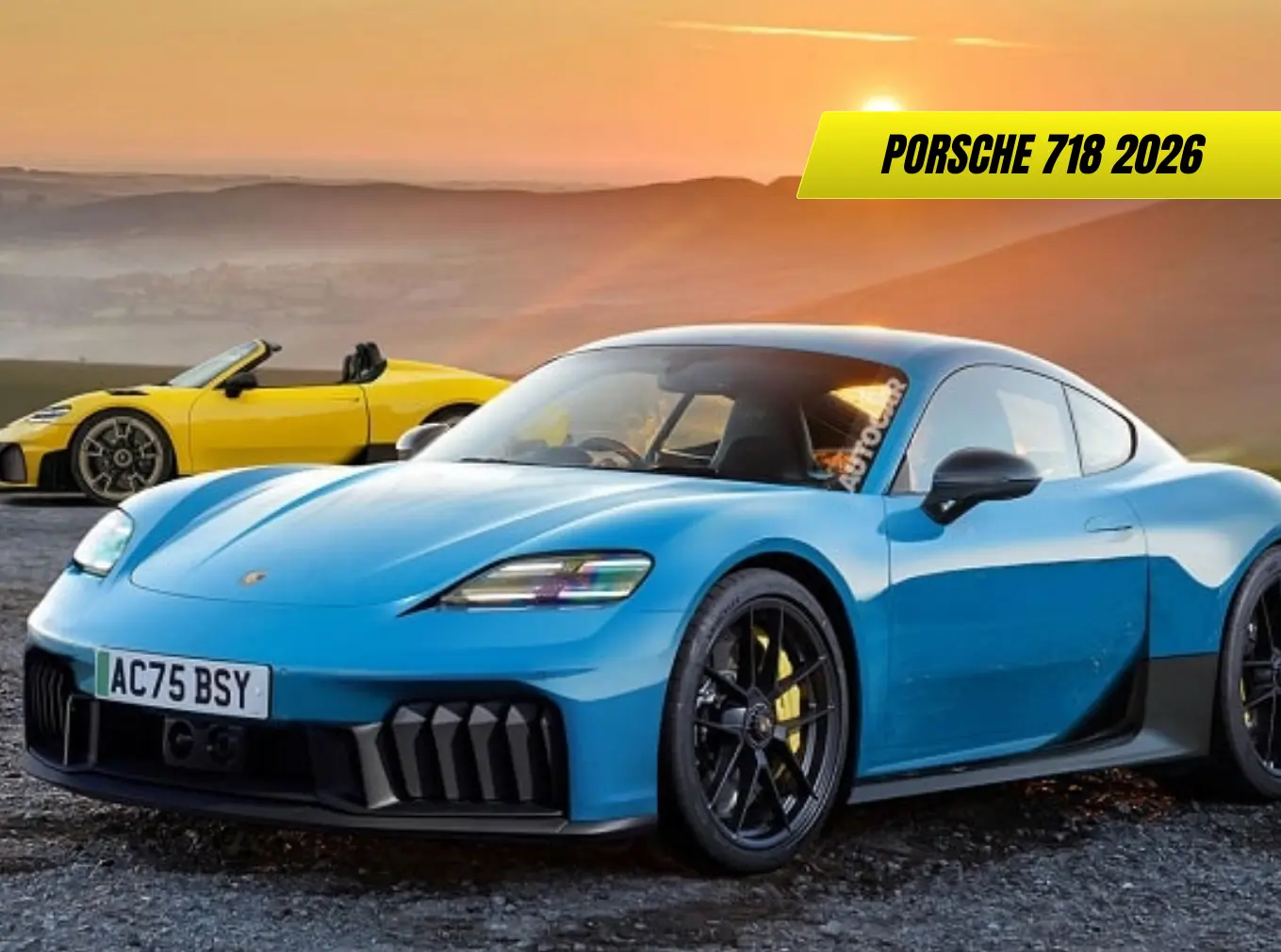
Porsche cancels electric 718 Boxster and Cayman development originally scheduled 2026-2027 launch citing budget constraints, rising costs, development delays, and Northvolt battery supplier bankruptcy forcing strategic reversal toward extending internal combustion engine production instead of EV-only sports car transition.
German sports car manufacturer Porsche AG abandons long-planned all-electric 718 Boxster and Cayman program representing dramatic strategic U-turn under newly-appointed CEO Michael Leiters who faces mounting pressure controlling development budgets, reversing profit declines, and responding to slower-than-expected EV market adoption following years anticipating smooth transition from iconic flat-six boxer engines toward battery-electric mid-engine sports cars built on modified PPE platform (Premium Platform Electric) shared with Macan EV and upcoming Cayenne EV. The cancellation follows multiple delays pushing initial 2026 reveal toward 2027-2028 timeframe, Northvolt bankruptcy November 2025 eliminating preferred Swedish battery cell supplier, unspecified powertrain component issues discovered during development, and rising engineering costs exceeding original €2 billion budget allocation amid company-wide profitability pressures from slumping China sales (down 29% 2025) and EV strategy revisions acknowledging customer resistance pure-electric sports cars demanding engaging driving character beyond straight-line acceleration. Bloomberg reports Porsche stock gained 0.6% following cancellation news suggesting investor relief regarding capital allocation discipline, though decision represents embarrassing reversal after years public commitments including October 2025 final internal combustion 718 production ending creating inventory gap originally intended filled by electric successors arriving early 2026 before delays pushed availability into uncertain future now abandoned entirely. The strategic pivot enables Porsche extending current-generation ICE 718 production potentially through 2027-2029 while engineering resources redirect toward more profitable Cayenne/Macan refreshes, hybrid 911 variants, and Panamera successor serving luxury sedan segment versus niche mid-engine sports cars representing just ~4-5% annual Porsche sales (approximately 16,000 units 2024) insufficient justifying dedicated EV platform development amid tightening budgets and conservative future demand projections.
Cancellation Context: Budget Pressures and Market Realities
Understanding why Porsche abandoned electric 718 requires examining broader corporate challenges facing Volkswagen Group’s premium sports car brand entering 2026.
Porsche’s Deteriorating Financial Position
| Metric | 2024 Performance | 2025 Performance | Trend | Impact |
|---|---|---|---|---|
| Global deliveries | 320,221 units | ~298,000 units (est) | -7% decline | Volume pressure |
| China sales | 79,283 units | ~56,300 units | -29% collapse | Largest growth market evaporating |
| Operating margin | 18.0% | ~15-16% (est) | -200-300 bps | Profitability declining |
| EV sales mix | ~13% (Taycan) | ~16% (Taycan + Macan EV) | Growing but slower than targets | EV adoption challenges |
| 718 sales | ~16,000 units | ~14,500 units (est) | Declining niche | Justifying development costs difficult |
China Market Collapse
The 29% China sales decline represents existential threat given market historically contributed 25-30% Porsche’s global volume and disproportionate profits through premium pricing. Causes include:
- Local EV competition: BYD, NIO, Li Auto offering comparable luxury EVs 30-50% cheaper
- Economic slowdown: Chinese luxury consumer confidence weakening amid property crisis
- Nationalistic preferences: Shifting toward domestic brands versus Western imports
- Tariff concerns: Geopolitical tensions affecting German automotive exports
Development Cost Escalation
The electric 718 program encountered multiple expensive challenges:
- PPE platform adaptation: Modifying SUV-focused architecture for low-slung sports car packaging
- Thermal management: Mid-engine battery placement creating cooling complexity
- Weight targets: Maintaining sub-1,700kg curb weight (goal matching current 718) despite heavy batteries
- Driving dynamics: Engineering engaging sports car character versus instant-but-sterile EV acceleration
- Northvolt bankruptcy: Preferred battery supplier’s Chapter 11 filing eliminating cost-competitive cell source requiring expensive alternative supplier negotiations
Original €2 billion budget reportedly exceeded by 20-30% pushing total investment toward €2.4-2.6 billion – unsustainable for vehicle line producing just 16,000 annual units versus Macan (80,000+ units) or Cayenne (95,000+ units) spreading development costs across far greater volumes.
CEO Michael Leiters’ Strategic Reassessment
Appointed September 2025 replacing Oliver Blume (elevated Volkswagen Group CEO), Leiters faces mandate delivering cost discipline and profitability focus versus predecessor’s growth-at-any-cost expansion. His immediate priorities include:
- Canceling unprofitable programs (718 EV primary target)
- Extending profitable ICE models (911, Cayenne, Macan combustion variants)
- Accelerating hybrid development (bridging ICE to BEV without forcing pure-electric)
- Reducing headcount (voluntary buyouts, hiring freeze)
- Consolidating suppliers (reducing engineering complexity and negotiating volume discounts)
The 718 EV cancellation represents most visible manifestation of this strategic pivot prioritizing short-term profitability over long-term electrification commitments made during more optimistic 2021-2023 period when EV demand appeared inevitable and unlimited, similar to considerations affecting BMW i4 2026.
What Was Planned: Electric 718 Specifications
Before cancellation, Porsche engineers developed substantial portions of electric 718 Boxster/Cayman program providing glimpses into what might have been.
Platform and Architecture (Planned)
Modified PPE Platform
- Base architecture: Premium Platform Electric shared with Macan EV, Cayenne EV, Audi Q6 e-tron
- Modifications required: Shortened wheelbase, lowered ride height, mid-mounted battery packaging
- Voltage: 800V architecture enabling 270kW+ DC fast charging
- Target weight: 1,650-1,700 kg (attempting parity with current 1,450-1,530 kg 718 despite batteries)
- Weight distribution: 40/60 front/rear target (mid-battery placement optimizing balance)
Battery and Range (Estimated)
| Configuration | Battery Capacity | Range (WLTP) | Target Market |
|---|---|---|---|
| Base RWD | ~70-75 kWh | 350-380 km (220-235 mi) | Entry buyers prioritizing affordability |
| S AWD | ~85-90 kWh | 400-420 km (250-260 mi) | Mainstream performance variant |
| GTS/Turbo | ~90-100 kWh | 380-400 km (235-250 mi) | Maximum performance (range sacrificed for power) |
The modest range targets reflected sports car priorities emphasizing handling, weight distribution, and driving dynamics over maximum touring capability – philosophy alienating potential customers accustomed EV bragging rights centered around 400-500+ mile ranges typical luxury EVs.
Powertrain Configurations (Planned)
Boxster/Cayman Base (RWD)
- Single rear motor: ~300 hp / 400 Nm
- 0-100 km/h: ~5.5 seconds
- Top speed: ~250 km/h (electronically limited)
- Target: Entry enthusiasts accepting modest performance for electric experience
718 S (AWD)
- Front motor: ~150 hp / 200 Nm
- Rear motor: ~350 hp / 450 Nm
- Combined: ~500 hp / 650 Nm
- 0-100 km/h: ~3.5 seconds
- Top speed: ~270 km/h
- Target: Mainstream performance buyers
718 GTS / Turbo (AWD)
- Front motor: ~200 hp / 250 Nm
- Rear motor: ~500 hp / 600 Nm
- Combined: ~700 hp / 850 Nm
- 0-100 km/h: ~2.8-3.0 seconds
- Top speed: ~280-290 km/h
- Target: Maximum performance enthusiasts
Pricing Strategy (Estimated)
| Model | Estimated Price | Rationale |
|---|---|---|
| Electric Boxster Base | €78,000-82,000 | Premium over current base (~€68,000) |
| Electric Cayman Base | €76,000-80,000 | Premium over current base (~€66,000) |
| 718 S variants | €90,000-95,000 | Mid-range positioning |
| 718 GTS variants | €110,000-120,000 | High-performance positioning |
| 718 Turbo variants | €130,000-140,000 | Flagship performance |
The €10,000-15,000 premium versus current ICE models represented necessary markup covering expensive battery technology while avoiding overlap with Taycan (starting €99,000) and Macan EV (starting €80,000) creating internal cannibalization concerns.
Strategic Alternatives: What Happens Now?
With electric 718 cancelled, Porsche faces immediate question: what fills mid-engine sports car lineup through remainder decade?
Option 1: Extended Current-Generation ICE Production (Most Likely)
Implementation Strategy
- Resume 718 Boxster/Cayman production 2026-2027 after brief hiatus
- Continue current 982.2-generation platform through 2028-2029
- Incremental updates: revised styling, updated infotainment, mild powertrain tweaks
- No fundamental engineering changes minimizing investment requirements
Powertrain Updates (Possible)
- Current 2.0L turbo flat-4: 300 hp (base), 394 hp (GTS), 420 hp (GT4/Spyder RS) continue
- Potential mild hybrid: 48V system adding modest efficiency without expensive full electrification
- Euro 7 compliance: Updated emissions controls meeting 2026+ European regulations
- Synthetic fuels: Porsche’s e-fuel investment positioning ICE continuation as “carbon neutral”
Advantages
- Proven platform: Minimal engineering risk and development cost
- Customer demand: Enthusiasts prefer engaging flat-4/flat-6 engines over electric alternatives
- Profitability: Existing tooling amortized enabling higher margins versus new EV development
- Time: Immediate production resumption versus years developing alternatives
Disadvantages
- Regulatory risk: Tightening emissions standards potentially forcing discontinuation 2030+
- Brand image: Perception as backwards-looking versus innovation-focused competitors
- Technology gap: Falling behind electrified rivals (Lotus Emira, Alpine A110 possible hybrids)
- Residual values: Future collectibility uncertain if ICE sports cars become obsolete
Option 2: Hybrid 718 Development (Possible Medium-Term)
Architecture
- Plug-in hybrid combining 2.0L turbo flat-4 with electric motor(s)
- ~400-500 hp combined output competing against Corvette E-Ray (655 hp hybrid)
- 30-50 km electric range satisfying urban zero-emission requirements
- Added weight (~150-200 kg) compromising handling purity
Challenges
- Development costs still substantial (~€800 million – €1.2 billion)
- Complex packaging mid-engine layout with batteries and dual powertrains
- Customer appeal uncertain (neither pure ICE engagement nor EV instant torque)
- Delayed availability (earliest 2028-2029) leaving extended gap
Option 3: 718 Discontinuation (Possible Long-Term)
Radical Alternative
- Abandon mid-engine sports car segment entirely
- Focus resources on profitable SUVs (Cayenne, Macan) and 911 halo model
- Let Lotus, Alpine, Chevrolet Corvette serve orphaned enthusiast segment
Rationale
- 718 represents just 4-5% Porsche sales insufficient justifying continued investment
- Margins lower than SUVs and 911 despite similar engineering complexity
- Brand strength stems from 911 heritage; 718 dispensable without existential threat
- Resources redirected toward electric Cayenne/Panamera serving luxury buyers
Disadvantages
- Dealer impact: Entry-level sports cars drive showroom traffic converting to higher-margin 911/Cayenne sales
- Brand positioning: Losing affordable enthusiast gateway risks premium-only perception
- Competitive vacuum: Abandoning segment allows rivals establishing dominance
- Heritage contradiction: Porsche historically defined by sports cars; SUV-only lineup betrays brand DNA
UK and European Market Implications
The 718 EV cancellation particularly impacts European markets where EV adoption rates highest and regulatory pressures most severe.
UK Market Context
| Factor | Impact on UK 718 Sales |
|---|---|
| 2030 ICE ban | New combustion car sales prohibited after 2030 (original deadline; subject to revision) |
| 2035 realistic deadline | Conservative government delayed ban creating extended ICE window |
| Right-hand-drive | UK requires RHD engineering adding costs for low-volume 718 |
| Premium positioning | UK buyers willing paying £65,000-120,000 for sports cars including EVs |
| Charging infrastructure | Adequate public charging supporting EV sports car ownership |
UK Pricing Context (What Was Expected)
- Electric Boxster: £72,000-78,000 estimated
- Electric Cayman: £70,000-76,000 estimated
- Current ICE 718: £62,000-98,000 depending on variant
UK Competitive Landscape
| Competitor | Status | Impact |
|---|---|---|
| Lotus Emira | ICE V6/4-cylinder, £75,000-95,000 | Continues serving UK enthusiasts |
| Alpine A110 | ICE turbo 4-cylinder, £51,000-70,000 | French alternative maintains presence |
| Chevrolet Corvette | Limited UK availability, £80,000+ import costs | Minimal impact given rarity |
| BMW Z4 | ICE inline-6, £45,000-65,000 | Mainstream competitor continues |
| Jaguar F-Type | Discontinued 2025 | Former competitor already exited |
Regulatory Compliance Challenges
Euro 7 Emissions Standards (2026+ Implementation)
- Stricter NOx and particulate limits requiring expensive aftertreatment
- Real-world emissions testing (RDE) catching dynamometer-optimized cheating
- On-board diagnostics (OBD) monitoring throughout vehicle lifetime
- Durability requirements (200,000 km emissions compliance)
Current 718 powertrains require €50-100 million investment meeting Euro 7 standards – expensive but fraction of €2+ billion full EV development, making ICE extension economically rational despite regulatory headwinds.
Frequently Asked Questions
Is the Porsche 718 being discontinued?
Not immediately. Current internal combustion 718 Boxster/Cayman production ended October 2025 but Porsche likely resuming manufacturing 2026-2027 following electric variant cancellation. Extended ICE production probable through 2028-2029 with incremental updates meeting Euro 7 emissions standards. Long-term future uncertain beyond decade’s end depending on regulatory environment and market demand.
Why did Porsche cancel the electric 718?
Multiple factors: budget constraints amid declining profits (especially 29% China sales collapse), development costs exceeding €2+ billion budget, Northvolt battery supplier bankruptcy eliminating preferred cell source, slower-than-expected EV adoption among sports car buyers preferring engaging ICE character, and strategic prioritization focusing resources on profitable SUV/911 models versus niche 16,000-unit-annually sports car line insufficient justifying massive EV development investment.
Will there be a hybrid 718 instead?
Possible but unconfirmed. Plug-in hybrid 718 combining 2.0L turbo flat-4 with electric motor(s) could offer compromise delivering ~400-500 hp while satisfying zero-emission urban driving requirements. However, development costs still substantial (~€800 million – €1.2 billion), packaging challenges significant in mid-engine layout, and customer appeal uncertain. Earliest availability 2028-2029 if approved. Currently no official announcement regarding hybrid development.
Can I still buy a new Porsche 718?
Yes, but availability depends on timing. Dealers exhaust remaining 2025 model year inventory through Q1-Q2 2026. Production expected resuming late 2026 or early 2027 with minimal changes to current generation enabling continued sales through decade. Right-hand-drive markets (UK, Australia, Japan) may face longer delays given lower volumes requiring engineering investment justification. Contact local Porsche dealer for specific market availability and delivery timelines.
How does this affect 718 resale values?
Potentially positive for ICE 718 owners. Cancellation of electric successor extends current generation’s lifecycle reducing obsolescence concerns. Classic 718 variants (GT4, Spyder, GTS 4.0) likely appreciating as final naturally-aspirated/manual transmission examples become collectible. However, long-term uncertainty remains if Porsche ultimately discontinues 718 entirely without replacement, though rarity could enhance rather than diminish values among enthusiast collectors.
What are alternatives to electric 718?
Sports car enthusiasts considering electric options: Tesla Roadster (delayed indefinitely, $200,000+ if launched), Lotus Eletre (electric SUV, not sports car), Porsche Taycan (4-door sports sedan, £80,000-160,000), BMW i8(discontinued), Alpine A110 E-ternité concept (development status uncertain). ICE alternatives continuing: Lotus Emira (£75,000-95,000), Alpine A110 (£51,000-70,000), BMW Z4 (£45,000-65,000), Toyota GR Supra (£52,000-65,000).
Will Porsche develop electric sports car eventually?
Likely yes, but timeline uncertain. Porsche committed long-term electrification but immediate focus prioritizes profitable models (Cayenne, Macan, 911 hybrid variants) over niche sports cars. Possible 2030+ electric 718 successor if battery technology advances reducing costs/weight while EV market matures demonstrating sustainable demand. Alternatively, Porsche might position 911 as sole sports car offering both ICE and electric variants while abandoning 718 entirely depending on profitability assessments throughout remainder decade.
Does this signal broader Porsche EV strategy failure?
Not necessarily but indicates recalibration. Taycan remains commercially successful (40,000+ annual sales), Macan EV launched successfully 2024, and Cayenne EV scheduled 2026. However, Porsche acknowledging EV adoption slower than 2020-2022 projections and adjusting strategy accordingly: extending profitable ICE models, accelerating hybrid development as bridge technology, and canceling marginal EV programs (718) unable justifying investment. Strategic flexibility rather than outright failure, though embarrassing after years public commitments electric sports cars.
Conclusion
The Porsche 718 electric cancellation represents automotive industry’s broader reckoning with EV transition timelines, development costs, and market demand realities differing substantially from optimistic 2020-2022 projections when unlimited EV growth appeared inevitable and traditional manufacturers feared obsolescence without rapid electrification commitments. The decision abandoning €2+ billion investment after years development demonstrates newly-appointed CEO Michael Leiters’ willingness prioritizing profitability discipline over maintaining previous leadership’s strategic commitments amid mounting pressures from 29% China sales collapse, declining operating margins, and slower-than-expected customer acceptance pure-electric sports cars sacrificing engaging driving character for instant-but-sterile acceleration and heavy battery compromises undermining handling purity enthusiasts demand from Porsche badge regardless of environmental credentials or regulatory compliance advantages.
For UK and European enthusiasts, the cancellation delivers mixed outcomes: disappointment losing anticipated electric 718 combining zero-emission capability with Porsche sports car heritage, but relief current-generation ICE models continuing availability through remainder decade enabling traditional flat-four boxer engines, manual transmissions, and lightweight handling dynamics electric alternatives cannot replicate regardless of superior straight-line performance or reduced operating costs. The extended ICE 718 production enables enthusiasts enjoying final years engaging analog sports cars before inevitable regulatory prohibitions, economic pressures, or technological obsolescence ultimately force electrification transitions regardless of manufacturer preferences or customer desires, with cancellation potentially enhancing rather than diminishing current 718 collectibility as final examples of disappearing breed representing century-long internal combustion heritage approaching extinction amid automotive industry’s uncertain electrified future.
Whether Porsche’s strategic reversal proves prescient or shortsighted depends on EV market evolution throughout remainder decade, regulatory environment developments, and competitive dynamics as rivals (Tesla, Lotus, Chinese manufacturers) potentially filling abandoned mid-engine electric sports car niche Porsche abdicated through budgetary constraints and conservative demand projections. However, immediate commercial logic favors cancellation given niche 16,000-unit segment insufficient justifying €2+ billion investment amid profitability pressures and uncertain returns, with resources better deployed toward high-volume SUVs and 911 halo model anchoring brand identity regardless of 718’s absence from lineup potentially unnoticed by mainstream luxury buyers prioritizing practicality and prestige over mid-engine sports car thrills representing increasingly marginalized enthusiasm within broader automotive landscape dominated by SUVs, crossovers, and electrified family transportation solutions.





